 Romantic
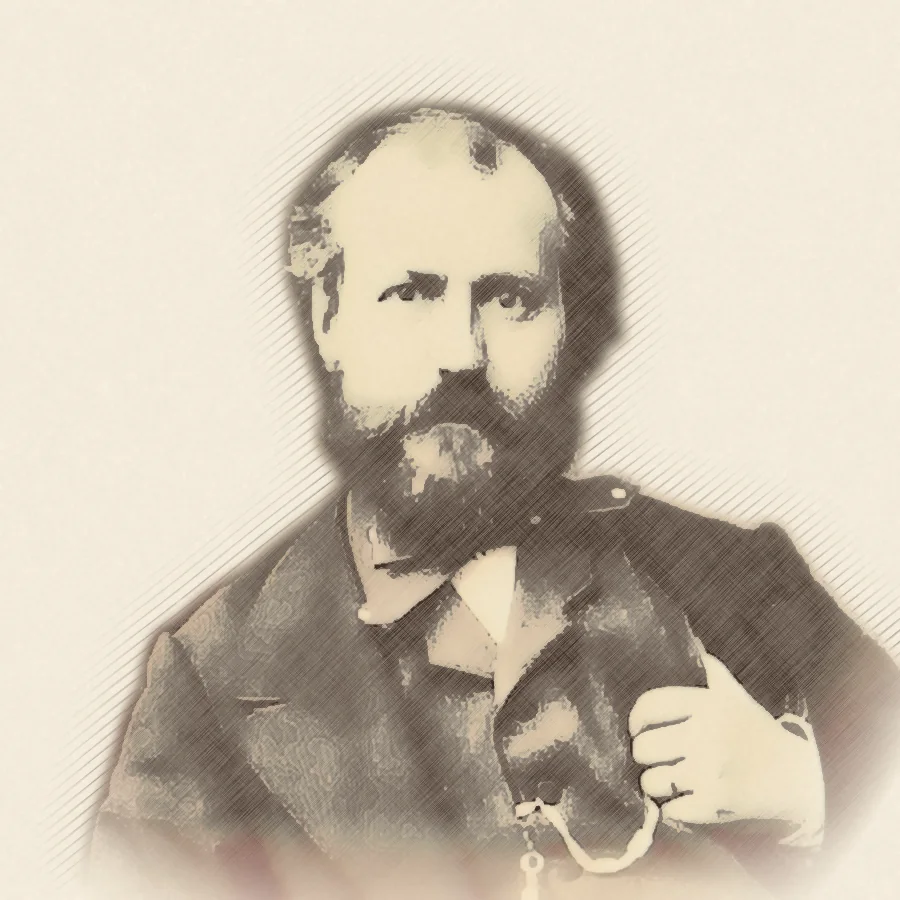
Charles Gounod
A French composer who shaped Romantic opera and sacred music.
A life and its times
The milestones of the life and work, the contemporaries and the major world events, on a single line of time.
A life at a glance
- 1818Birth
Born in Paris on 17 June, son of a painter and a pianist
- 1822Meanwhile
Champollion deciphers hieroglyphs
- 1830Meanwhile
July Revolution in France
- 1836Trainingage 18
Enters the Paris Conservatoire
- 1839Careerage 21
Wins the Grand Prix de Rome
- 1840Journeyage 22
In Rome, discovers Palestrina and befriends Fanny Mendelssohn
- 1840Meanwhile
Adolphe Sax invents the saxophone (c. 1840)
- 1843Careerage 25
Organist and choirmaster at the Missions étrangères in Paris
- 1846Trainingage 28
Considers the priesthood and studies theology
- 1848Meanwhile
Revolutions of 1848; slavery abolished in France
- 1852Private lifeage 34
Marries Anna Zimmerman
- 1853Workage 35
Meditation on Bach’s Prelude, the future ‘Ave Maria’
- 1859Workage 41
Faust, his greatest success
- 1864Workage 46
Mireille, after Frédéric Mistral
- 1865Meanwhile
End of the American Civil War; slavery abolished in the USA
- 1867Workage 49
Roméo et Juliette
- 1870Journeyage 52
Takes refuge in London during the Franco-Prussian War
- 1872Workage 54
Funeral March of a Marionette
- 1874Meanwhile
First exhibition of the Impressionist painters
- 1875Meanwhile
The Palais Garnier opera house opens in Paris
- 1885Workage 67
Petite symphonie for winds
- 1889Meanwhile
The Eiffel Tower opens for the World’s Fair
- 1893Deathage 75
Dies in Saint-Cloud on 18 October
Listen
Excerpts from freely licensed recordings, with their performers and licences.
Excerpts last up to 90 seconds. Charles Gounod’s compositions are in the public domain; each recording is streamed from Wikimedia Commons under the licence shown, credited to its performers or uploader.
Listen to complete works on Wikimedia Commons
Wikimedia Commons is a free media library: you will find the complete recordings there, with their reuse conditions.
- Complete recordingAve Maria (on Bach’s Prelude)
- Complete recordingFuneral March of a Marionette
- Complete recordingPetite Symphonie for winds — I
- Search for the workFaust
- Search for the workAve Maria (on Bach)
- Search for the workRoméo et Juliette
- Search for the workFuneral March of a Marionette
- Search for the workSt Cecilia Mass
- Search for the workMireille
- Search for the workPetite symphonie
- Everything on CommonsAll recordings of Charles Gounod
The life of Charles Gounod
Charles Gounod was born in Paris on 17 June 1818. His father, François-Louis Gounod, was a renowned painter and his mother, Victoire Lemachois, an excellent pianist. His father died when he was only five, and it was his mother who brought him up and gave him his first music lessons. He received a solid education at the Lycée Saint-Louis while taking composition lessons from Anton Reicha. As a child he was dazzled by a performance of Rossini’s Otello and by Mozart’s Don Giovanni, which remained his absolute model.
In 1836 he entered the Paris Conservatoire, where he studied with Fromental Halévy and Jean-François Lesueur. In 1839 he won the Grand Prix de Rome with the cantata Fernand. He spent three years at the Villa Medici, where he passionately discovered Palestrina’s music in the Sistine Chapel. He became friends with the composer Fanny Mendelssohn, then visiting Rome, who introduced him to Bach and Beethoven. Returning via Vienna and Germany, he met Felix Mendelssohn in Leipzig.
Back in Paris in 1843, he became organist and choirmaster of the church of the Missions Étrangères. Deeply religious, he went through a mystical crisis: he attended theology classes at the seminary of Saint-Sulpice, wore clerical dress for a time and signed his letters “Abbé Gounod”. In the end he gave up the priesthood and returned to music. In 1851 his first opera, Sapho, written for the singer Pauline Viardot, was politely received. In 1852 he married Anna Zimmerman, daughter of a piano professor at the Conservatoire.
In 1853 he improvised a melody over the First Prelude of Bach’s Well-Tempered Clavier. His father-in-law had it published; later, with the Latin words of the Ave Maria, it became one of the most famous religious pieces in the world. In 1855 his Messe solennelle de sainte Cécile was a great success. He also wrote two symphonies and directed the Orphéon de la Ville de Paris, a network of popular choirs.
On 19 March 1859 he premiered Faust at the Théâtre-Lyrique, after Goethe: the story of the old scholar who sells his soul to the devil, Méphistophélès, to regain his youth and seduce Marguerite. At first received with reserve, the opera became one of the most performed of all time, with famous numbers such as the “Jewel Song” and the Soldiers’ Chorus. In 1864 he premiered Mireille, after Frédéric Mistral’s Provençal poem, then in 1867 Roméo et Juliette, after Shakespeare, with Juliette’s waltz “Je veux vivre”.
During the Franco-Prussian War of 1870 Gounod took refuge in London with his family. He stayed four years, founded a choir and composed many songs and choral pieces. He lived with the singer Georgina Weldon, whose influence and the lawsuits that followed caused a scandal. It was also in London that he composed the Funeral March of a Marionette (1872), a humorous little piece that decades later became the theme of Alfred Hitchcock’s television series.
Back in France in 1874, he devoted himself increasingly to sacred music: the oratorios La Rédemption (1882) and Mors et Vita (1885), masses and motets. In 1885 he also composed a Petite symphonie for nine wind instruments, still widely played. A Grand Officer of the Legion of Honour, he was the most famous French composer of his time. He died at Saint-Cloud on 18 October 1893 while working on a Requiem for his grandson. He influenced many composers, including Bizet, Massenet and Fauré.
Works to know
- 1855
St Cecilia Mass
Festive, radiant Mass.
Listen on Wikimedia Commons - 1859
Faust
Opera of a scholar who sells his soul; with the ‘Jewel Song’.
Listen on Wikimedia Commons - 1859
Ave Maria (on Bach)
A melody laid over Bach’s first Prelude.
Listen on Wikimedia Commons - 1864
Mireille
Provençal opera after Mistral.
Listen on Wikimedia Commons - 1867
Roméo et Juliette
Romantic opera after Shakespeare.
Listen on Wikimedia Commons - 1872
Funeral March of a Marionette
Humorous piece, later the theme of Alfred Hitchcock Presents.
Listen on Wikimedia Commons - 1885
Petite symphonie
Charming piece for nine wind instruments.
Listen on Wikimedia Commons
Anecdotes
His Funeral March of a Marionette was the theme tune of Alfred Hitchcock’s TV series.
Faust has been performed over 2,000 times at the Paris Opéra.
He almost became a priest and for a time signed his letters “Abbé Gounod”.
His “Ave Maria” is a melody added on top of a Bach prelude.
Same era · Romantic
 1811 – 1886Romantic
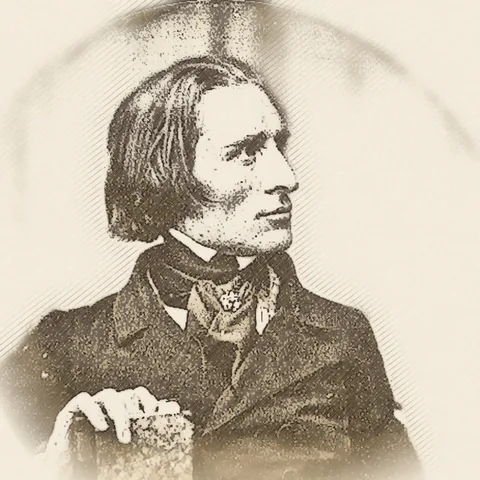
Franz Liszt
A star pianist, he invented new forms and developed the symphonic poem.
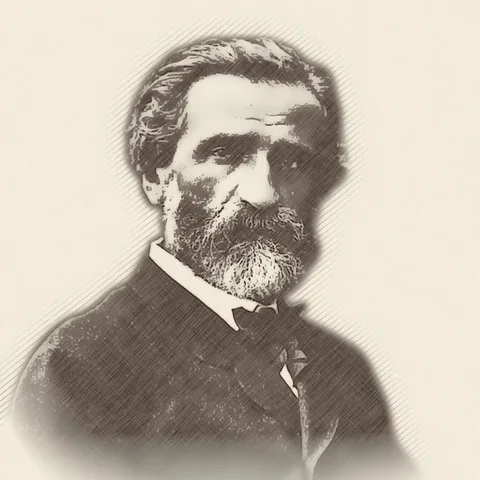 1813 – 1901Romantic
Giuseppe Verdi
His operas give unforgettable voice to human passions and conflicts.
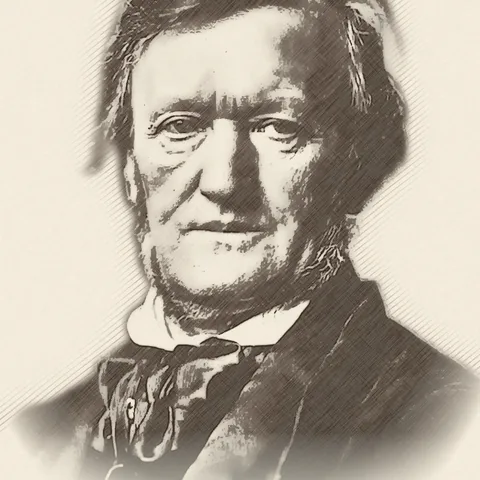 1813 – 1883Romantic
Richard Wagner
He envisioned music drama as a unity of orchestra, poetry and stagecraft.
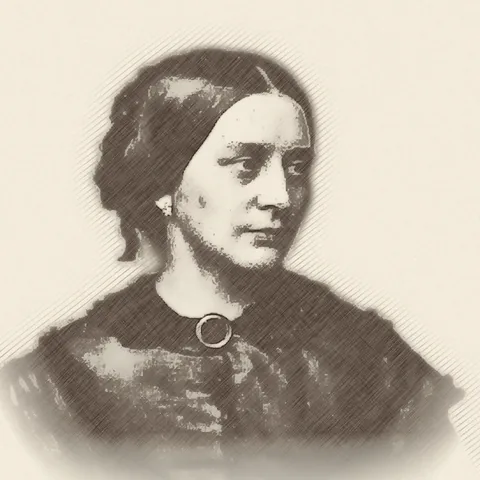 1819 – 1896Romantic
Clara Schumann
An internationally renowned pianist and composer, she also championed contemporary music.
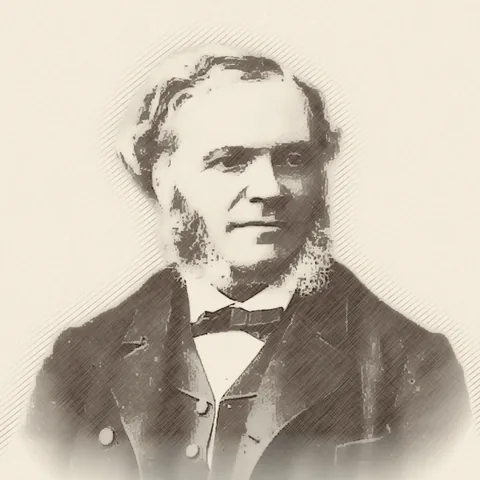 1822 – 1890Romantic
César Franck
An organist and teacher who developed cyclic forms in French music.
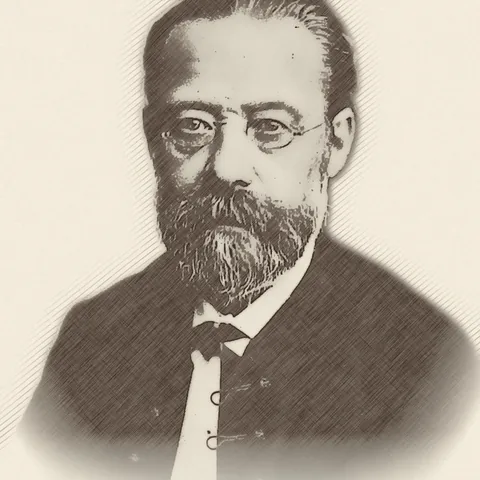 1824 – 1884Romantic
Bedřich Smetana
A leading Czech composer who joined opera, symphonic poetry and national identity.