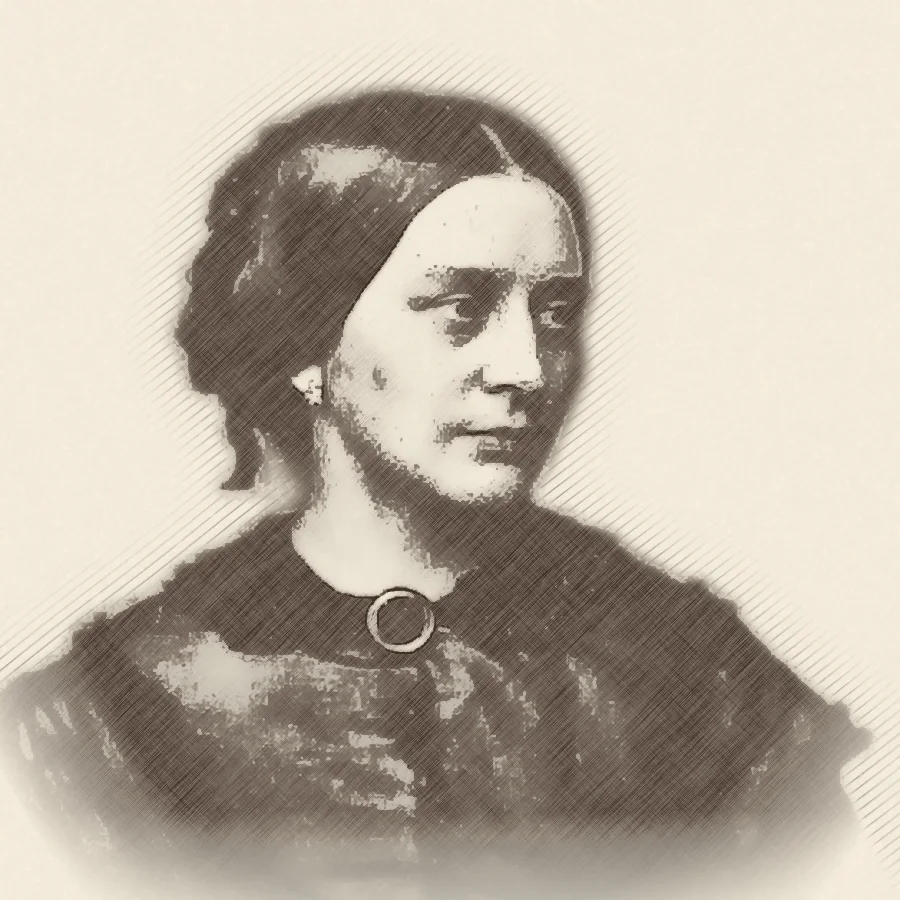
A life and its times
The milestones of the life and work, the contemporaries and the major world events, on a single line of time.
A life at a glance
- 1819Birth
Born in Leipzig on 13 September, daughter of the teacher Friedrich Wieck
- 1825Meanwhile
First public passenger railway (England)
- 1828Careerage 9
Debuts at the Leipzig Gewandhaus aged 9
- 1831Journeyage 12
Tour to Paris; plays for Goethe in Weimar
- 1835Workage 16
Premieres her Piano Concerto Op. 7 under Mendelssohn, aged 16
- 1838Careerage 19
Named Imperial Chamber Virtuoso in Vienna
- 1839Meanwhile
Photography is invented (daguerreotype)
- 1840Private lifeage 21
Marries Robert Schumann despite her father’s opposition
- 1840Meanwhile
Adolphe Sax invents the saxophone (c. 1840)
- 1846Workage 27
Piano Trio Op. 17
- 1853Workage 34
Romances for violin and piano; meets Brahms
- 1854Private lifeage 35
Robert falls gravely ill; she supports their seven children by touring
- 1856Private lifeage 37
Death of Robert Schumann
- 1859Meanwhile
Darwin publishes On the Origin of Species
- 1869Meanwhile
The Suez Canal opens
- 1875Meanwhile
The Palais Garnier opera house opens in Paris
- 1877Meanwhile
Edison invents the phonograph: sound can be recorded!
- 1878Careerage 59
Piano professor at the Hoch Conservatory in Frankfurt
- 1891Careerage 72
Last concert, after a 61-year career
- 1895Meanwhile
The Lumière brothers’ first cinema show
- 1896Deathage 77
Dies in Frankfurt on 20 May
Listen
Excerpts from freely licensed recordings, with their performers and licences.
Clara Schumann’s music is in the public domain, but Wikimedia Commons does not yet offer a freely licensed recording of these works. The links below lead to scores and searches on Commons; as soon as a free recording is published, it can be added here.
Listen to complete works on Wikimedia Commons
Wikimedia Commons is a free media library: you will find the complete recordings there, with their reuse conditions.
- Search for the workPiano Concerto Op. 7
- Search for the workThree Romances for violin and piano Op. 22
- Search for the workPiano Trio Op. 17
- Search for the workVariations on a Theme by Robert Schumann Op. 20
- Search for the workThree Romances for piano Op. 21
- Search for the workLiebesfrühling (songs)
- Everything on CommonsAll recordings of Clara Schumann
The life of Clara Schumann
Clara Wieck was born in Leipzig on 13 September 1819. Her father, Friedrich Wieck, was an ambitious, authoritarian piano teacher and piano dealer who resolved to make her a great virtuoso. Her mother, Marianne Tromlitz, an excellent pianist and singer, left the household when Clara was five. The little girl hardly spoke before the age of four but learned piano, composition, singing, violin and theory with extreme rigour under her father’s direction; he kept a diary of her progress.
On 20 October 1828, aged nine, she made her debut at the Leipzig Gewandhaus. In 1831 she toured to Paris, where she met Paganini and Chopin, and played for Goethe in Weimar, who gave her a medal. She also composed very early: polonaises, variations and, between thirteen and fifteen, a Piano Concerto in A minor, Op. 7, which she premiered in 1835 at the Gewandhaus under Felix Mendelssohn. In 1838, aged eighteen, she triumphed in Vienna and received the title of Imperial “Chamber Virtuoso”.
Robert Schumann, nine years her senior, was her father’s pupil and had lodged with them since 1830. A deep friendship grew between them, turning into love around 1835. Friedrich Wieck violently opposed their union: he forbade Clara to see Robert, took her on tour to separate them and slandered the young composer. The lovers wrote to each other in secret for years. In the end they took the matter to court and were able to marry on 12 September 1840, the day before Clara turned twenty-one.
Clara had eight children, seven of whom survived infancy. While raising her family she continued her career as a pianist and introduced audiences to her husband’s works, notably his Piano Concerto, which she premiered in 1845. She continued composing: songs, a Piano Trio in G minor Op. 17 (1846) of great beauty, and in 1853 the Three Romances for violin and piano Op. 22, dedicated to the violinist Joseph Joachim, and the Variations on a Theme by Robert Schumann Op. 20. That same year the couple welcomed a twenty-year-old composer: Johannes Brahms.
In 1854 Robert fell seriously ill and entered a clinic at Endenich, where he died in 1856. Clara, at thirty-six, found herself alone with seven children. She decided to live from her concerts. Brahms, now her closest friend, helped and supported her; their friendship lasted more than forty years. She almost stopped composing, probably believing, as she wrote in her diary, that a woman could not be a composer, and devoted herself to performance.
For more than sixty years Clara Schumann was one of the greatest pianists in Europe. She gave some 1,300 concerts in Germany, in England, which she visited nearly twenty times, in Russia and elsewhere. She was one of the first to play from memory in concert and championed a demanding repertoire: Bach, Beethoven, Chopin, Schumann and Brahms, many of whose works she premiered. She also published the complete edition of her husband’s works.
In 1878 she became professor of piano at the new Hoch Conservatory in Frankfurt, where she trained many pupils from all over the world. She gave her last concert in 1891, after more than sixty years on stage. She died in Frankfurt on 20 May 1896, aged seventy-six, and Brahms followed her to the grave less than a year later. She is buried in Bonn beside Robert. Her portrait appeared on German 100-mark banknotes from 1989 to 2001.
Works to know
- 1835
Piano Concerto Op. 7
Partly written at 14, premiered at 16.
Listen on Wikimedia Commons - 1841
Liebesfrühling (songs)
Song collection written with Robert.
Listen on Wikimedia Commons - 1846
Piano Trio Op. 17
Her most important chamber work.
Listen on Wikimedia Commons - 1853
Three Romances for violin and piano Op. 22
Written for the violinist Joachim.
Listen on Wikimedia Commons - 1853
Variations on a Theme by Robert Schumann Op. 20
Birthday present for her husband.
Listen on Wikimedia Commons - 1853
Three Romances for piano Op. 21
Intimate pieces dedicated to Brahms.
Listen on Wikimedia Commons
Anecdotes
Her portrait was printed on the German 100-mark banknote.
She gave about 1,300 concerts in her lifetime.
She was one of the first pianists to play her concerts from memory, without a score.
At twelve she played for Goethe, who gave her a medal.
Same era · Romantic
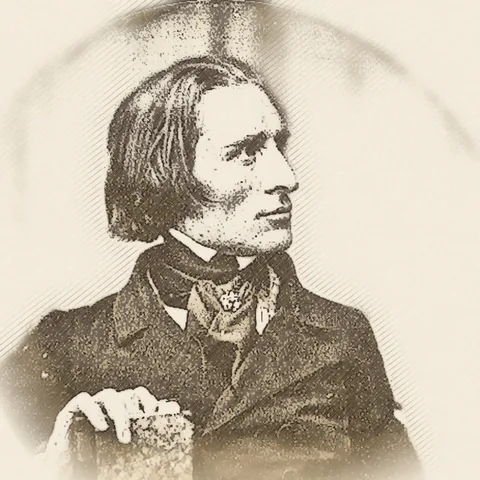 1811 – 1886Romantic
Franz Liszt
A star pianist, he invented new forms and developed the symphonic poem.
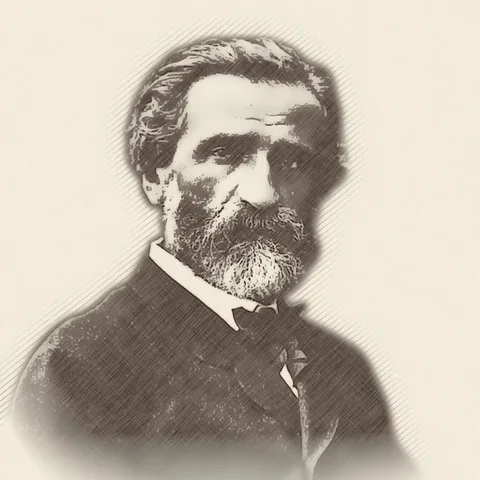 1813 – 1901Romantic
Giuseppe Verdi
His operas give unforgettable voice to human passions and conflicts.
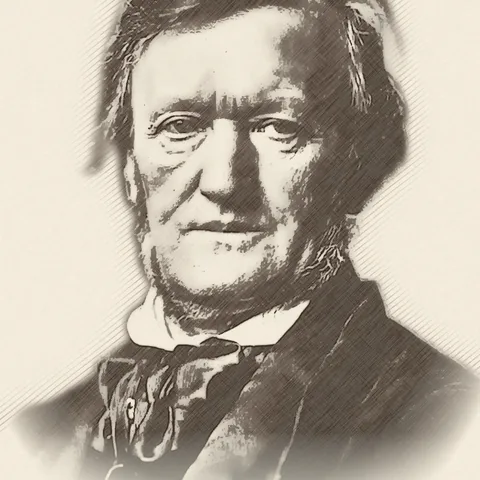 1813 – 1883Romantic
Richard Wagner
He envisioned music drama as a unity of orchestra, poetry and stagecraft.
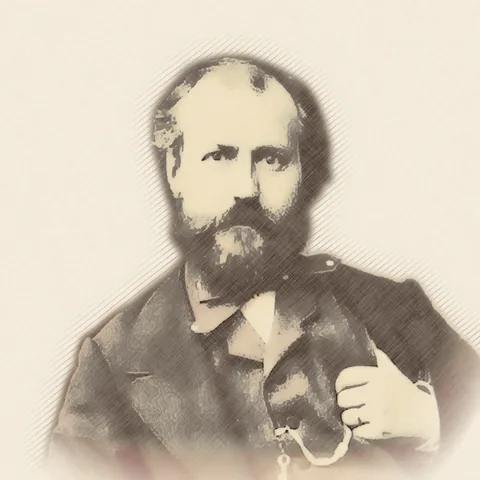 1818 – 1893Romantic
Charles Gounod
A French composer who shaped Romantic opera and sacred music.
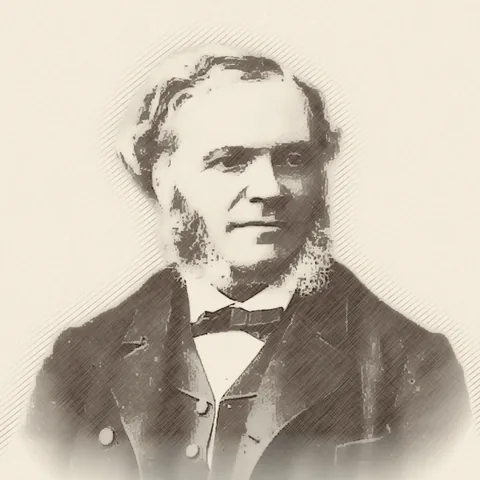 1822 – 1890Romantic
César Franck
An organist and teacher who developed cyclic forms in French music.
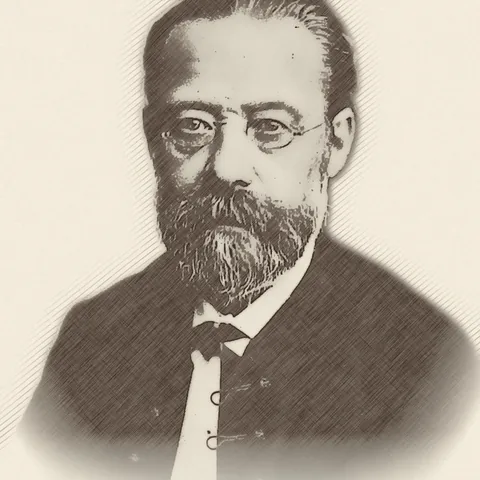 1824 – 1884Romantic
Bedřich Smetana
A leading Czech composer who joined opera, symphonic poetry and national identity.