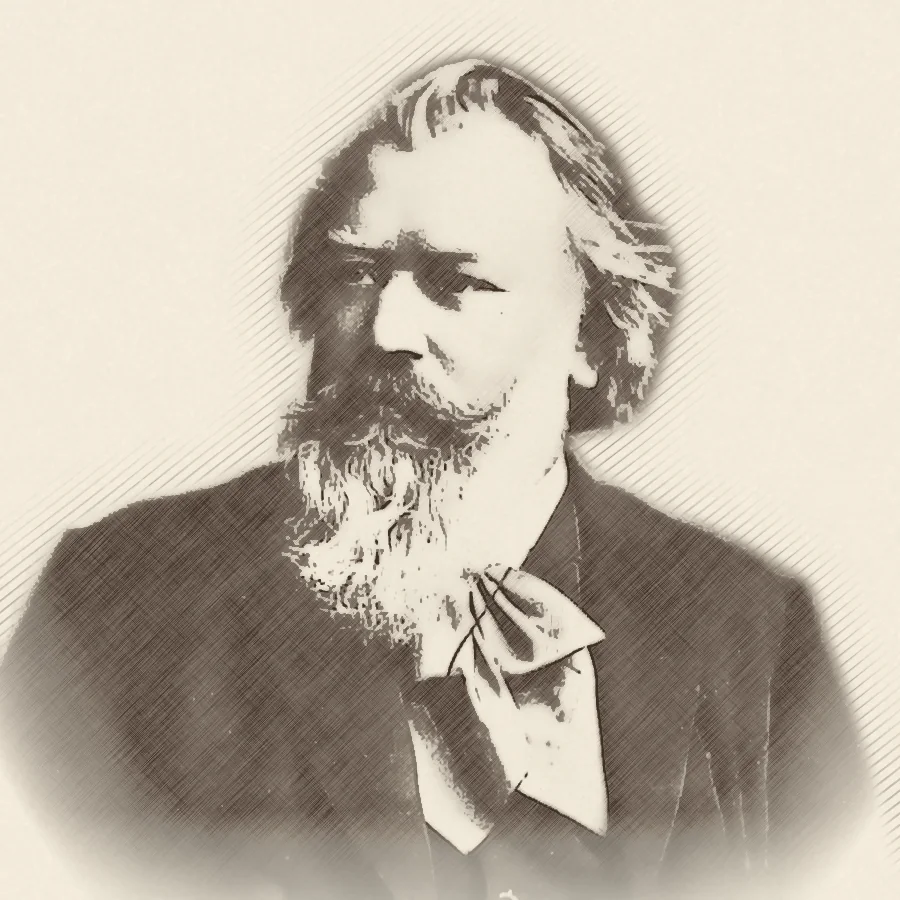
 Romantic
Johannes Brahms
He reinvented classical forms with Romantic intensity and dense thematic craft.
A life and its times
The milestones of the life and work, the contemporaries and the major world events, on a single line of time.
A life at a glance
- 1833Birth
Born in Hamburg on 7 May, son of a double-bass player
- 1839Meanwhile
Photography is invented (daguerreotype)
- 1840Meanwhile
Adolphe Sax invents the saxophone (c. 1840)
- 1846Careerage 13
As a teenager, plays piano in harbour taverns to help his family
- 1853Journeyage 20
Tour with the violinist Reményi; meets Joachim and Liszt
- 1853Private lifeage 20
Meets Robert and Clara Schumann; Robert hails him as the awaited genius
- 1859Workage 26
Piano Concerto No. 1 (a difficult reception)
- 1859Meanwhile
Darwin publishes On the Origin of Species
- 1862Milestoneage 29
Settles in Vienna
- 1865Meanwhile
End of the American Civil War; slavery abolished in the USA
- 1868Workage 35
A German Requiem; the Lullaby Op. 49 No. 4
- 1869Workage 36
Hungarian Dances
- 1873Workage 40
Variations on a Theme by Haydn
- 1874Meanwhile
First exhibition of the Impressionist painters
- 1875Meanwhile
The Palais Garnier opera house opens in Paris
- 1876Workage 43
Symphony No. 1, after more than twenty years’ work
- 1877Meanwhile
Edison invents the phonograph: sound can be recorded!
- 1878Workage 45
Violin Concerto, for Joachim
- 1885Workage 52
Symphony No. 4
- 1889Landmarkage 56
Records part of a Hungarian Dance on an Edison cylinder
- 1895Meanwhile
The Lumière brothers’ first cinema show
- 1896Private lifeage 63
Death of Clara Schumann
- 1897Deathage 64
Dies in Vienna on 3 April
Listen
Excerpts from freely licensed recordings, with their performers and licences.
Excerpts last up to 90 seconds. Johannes Brahms’s compositions are in the public domain; each recording is streamed from Wikimedia Commons under the licence shown, credited to its performers or uploader.
Listen to complete works on Wikimedia Commons
Wikimedia Commons is a free media library: you will find the complete recordings there, with their reuse conditions.
- Complete recordingHungarian Dance No. 1 — played by Brahms himself (1889)
- Complete recordingLullaby (Wiegenlied), Op. 49 No. 4
- Complete recordingVariations on a Theme by Haydn — theme
- Complete recordingSymphony No. 1 — III. Un poco allegretto
- Search for the workLullaby (Wiegenlied)
- Search for the workHungarian Dances
- Search for the workA German Requiem
- Search for the workSymphony No. 1
- Search for the workViolin Concerto
- Search for the workSymphony No. 4
- Search for the workAcademic Festival Overture
- Everything on CommonsAll recordings of Johannes Brahms
The life of Johannes Brahms
Johannes Brahms was born in Hamburg on 7 May 1833 in a working-class district near the port. His father, Johann Jakob, was a modest musician who played double bass and horn in the city’s orchestras; his mother, Christiane, seventeen years older than her husband, was a seamstress. Johannes learned violin, cello and horn from his father early on, then piano with Otto Cossel and Eduard Marxsen, an excellent teacher who introduced him to Bach and Beethoven and taught him composition.
To help his family the teenager played piano in the evenings in harbour taverns and restaurants, according to a tradition perhaps exaggerated by his biographers. He also gave lessons and arranged light music for a publisher. In 1853 he went on tour as accompanist to the Hungarian violinist Ede Reményi, who introduced him to Gypsy music. On this journey he met the great violinist Joseph Joachim, who became his lifelong friend, and then Liszt in Weimar, in front of whom he is said to have fallen asleep while Liszt was playing.
On Joachim’s advice he went to Düsseldorf in September 1853 and knocked on the door of Robert and Clara Schumann. He played them his piano sonatas. Robert was overwhelmed and published an enthusiastic article, “New Paths”, presenting the twenty-year-old as the genius Germany had been waiting for. A few months later Robert fell seriously ill. Brahms moved in near Clara to help her raise her seven children. A deep friendship, perhaps love, united Clara and Johannes for more than forty years.
The fame Schumann had announced weighed heavily on Brahms, who was very demanding of himself. His Piano Concerto No. 1 (1859) was hissed in Leipzig. He destroyed many works he was not satisfied with. In 1862 he settled in Vienna, where he spent the rest of his life, directing for a time the Singakademie and then the Society of Friends of Music. He never married, despite several broken engagements, and lived simply in a small flat.
In 1868 he premiered in Bremen A German Requiem, on biblical texts he chose himself, meant to comfort the living rather than pray for the dead. Its success was immense and made him the most famous composer in Germany. That same year he wrote the Lullaby (Wiegenlied), given to a friend for the birth of her son, now one of the best-known melodies in the world. His Hungarian Dances for piano four hands (1869), inspired by Gypsy music, were a huge popular success.
He hesitated for a long time to write a symphony, overawed by Beethoven: “You cannot imagine what it is like to hear behind you the footsteps of a giant,” he wrote. His First Symphony, begun around 1855, was completed only in 1876 after more than twenty years of work; the conductor Hans von Bülow nicknamed it “Beethoven’s Tenth”. The next three came more quickly, the Fourth dating from 1885. He also composed the Violin Concerto (1878) for Joachim, the Piano Concerto No. 2 (1881) and a wealth of chamber music.
In the quarrel between supporters of Wagner and Liszt, looking to the “music of the future”, and those of the classical tradition, Brahms was presented, often against his will, as the leader of the conservative camp. Yet Schoenberg later showed how innovative his writing was. In 1889 he recorded an excerpt from a Hungarian Dance on an Edison cylinder, one of the very first recordings by a great composer. Clara’s death in May 1896 affected him deeply. Suffering from liver cancer, he died in Vienna on 3 April 1897.
Works to know
- 1868
Lullaby (Wiegenlied)
The most famous lullaby in the world.
Listen on Wikimedia Commons - 1868
A German Requiem
A requiem of consolation for the living.
Listen on Wikimedia Commons - 1869
Hungarian Dances
21 fiery dances with Romani colours.
Listen on Wikimedia Commons - 1876
Symphony No. 1
Nicknamed ‘Beethoven’s Tenth’.
Listen on Wikimedia Commons - 1878
Violin Concerto
A summit of the violin repertoire.
Listen on Wikimedia Commons - 1880
Academic Festival Overture
A medley of student songs.
Listen on Wikimedia Commons - 1885
Symphony No. 4
Finale of variations on a ground bass.
Listen on Wikimedia Commons
Anecdotes
In 1889 Brahms recorded a piece on an Edison cylinder — you can still hear him play!
He burned the scores he wasn’t satisfied with.
The conductor Hans von Bülow nicknamed his First Symphony “Beethoven’s Tenth”.
It is said that he fell asleep while Liszt was playing for him in Weimar.
Same era · Romantic
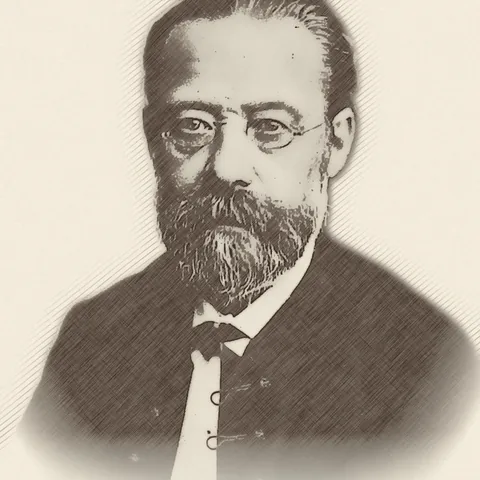 1824 – 1884Romantic
Bedřich Smetana
A leading Czech composer who joined opera, symphonic poetry and national identity.
 1833 – 1887Romantic
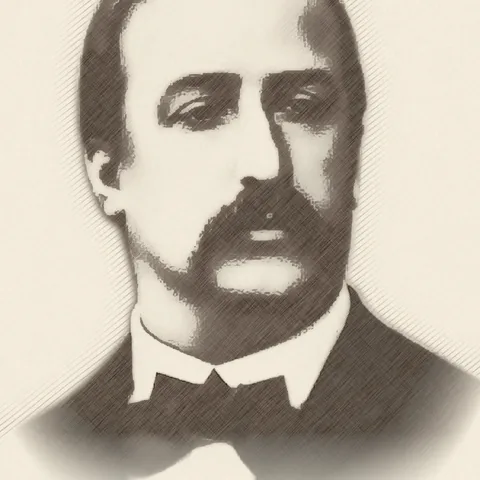
Alexandre Borodine
A chemist and composer who combined scientific research and musical creativity.
 1838 – 1875Romantic
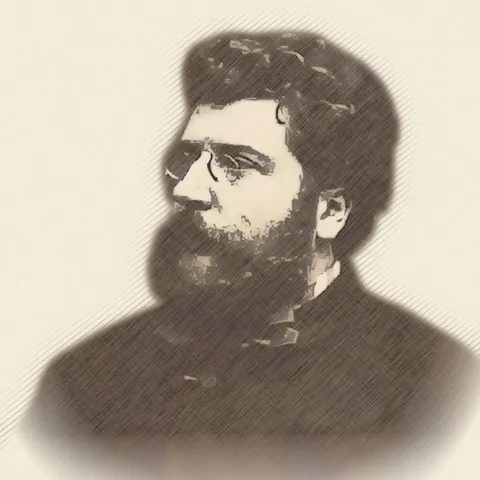
Georges Bizet
His opera Carmen, initially controversial, became a landmark of musical theatre.
 1839 – 1881Romantic
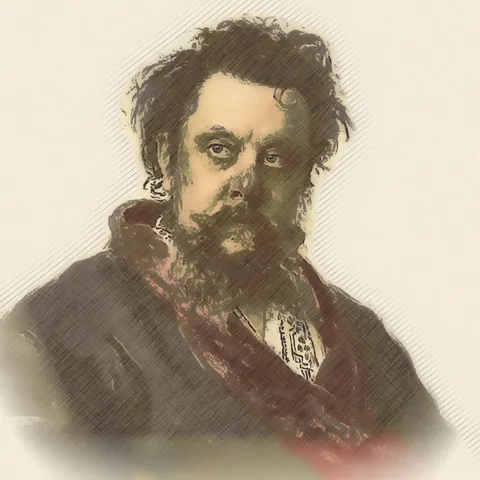
Modeste Moussorgski
A member of The Five, he sought an original dramatic and vocal language.
 1840 – 1893Romantic
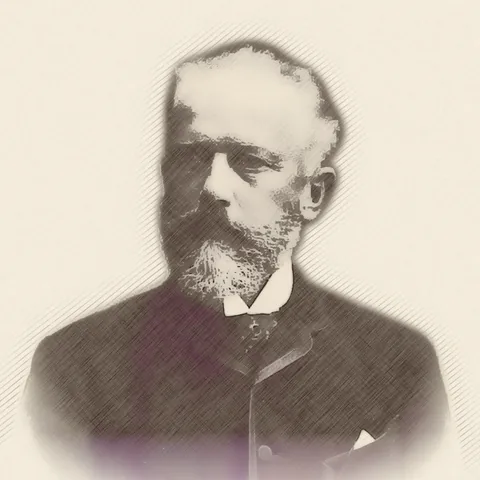
Piotr Ilitch Tchaïkovski
His ballets and symphonies unite memorable melodies and dramatic emotion.
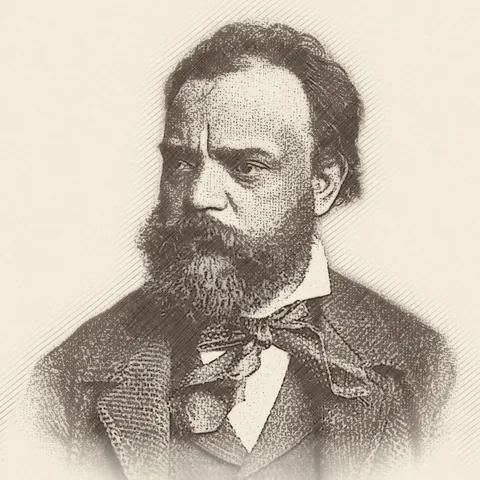 1841 – 1904Romantic
Antonín Dvořák
He blended symphonic tradition with Czech and American folk inspirations.