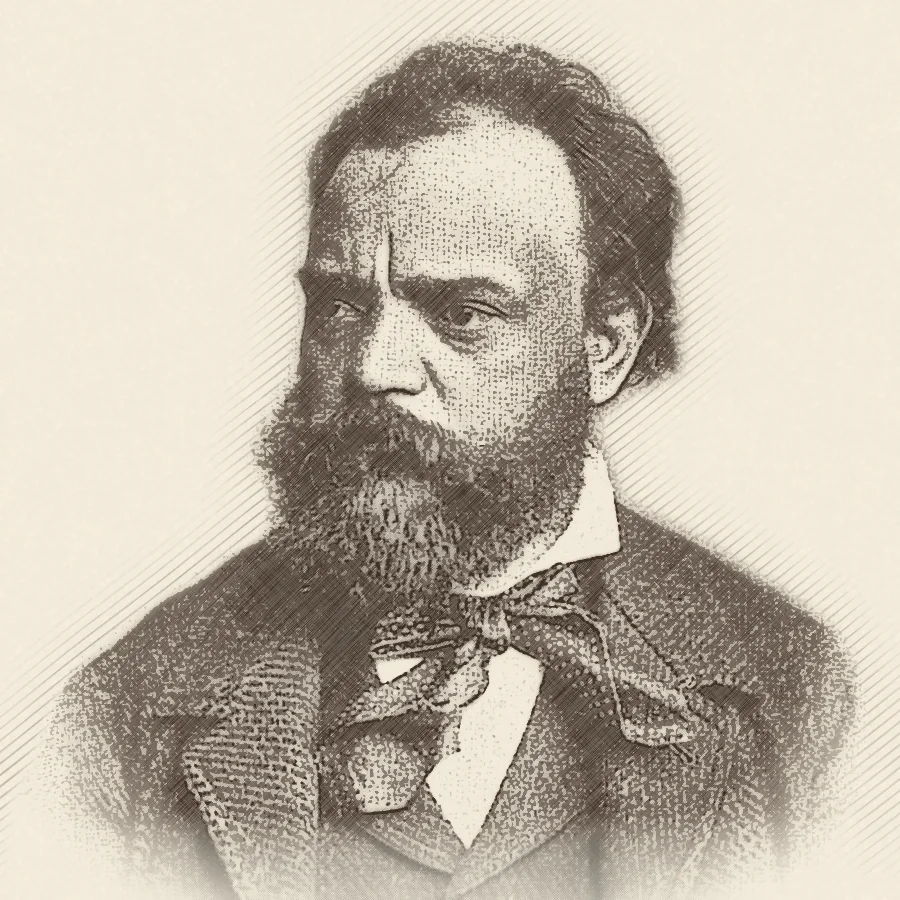
 Romantic
Antonín Dvořák
He blended symphonic tradition with Czech and American folk inspirations.
A life and its times
The milestones of the life and work, the contemporaries and the major world events, on a single line of time.
A life at a glance
- 1841Birth
Born in Nelahozeves on 8 September, son of a butcher and innkeeper
- 1848Meanwhile
Revolutions of 1848; slavery abolished in France
- 1857Trainingage 16
Prague Organ School
- 1859Careerage 18
Violist in a dance band, then at the Provisional Theatre (under Smetana)
- 1859Meanwhile
Darwin publishes On the Origin of Species
- 1869Meanwhile
The Suez Canal opens
- 1873Private lifeage 32
Marries Anna Čermáková; first success with the hymn The Heirs of the White Mountain
- 1874Careerage 33
Austrian state grant; Brahms, on the jury, notices him
- 1874Meanwhile
First exhibition of the Impressionist painters
- 1875Meanwhile
The Palais Garnier opera house opens in Paris
- 1877Meanwhile
Edison invents the phonograph: sound can be recorded!
- 1878Workage 37
Slavonic Dances: international success
- 1884Journeyage 43
First of nine triumphant trips to England
- 1891Careerage 50
Professor at the Prague Conservatory
- 1892Milestoneage 51
Director of the National Conservatory in New York
- 1893Workage 52
‘New World’ Symphony; ‘American’ Quartet
- 1895Workage 54
Cello Concerto; returns to Bohemia
- 1895Meanwhile
The Lumière brothers’ first cinema show
- 1901Workage 60
Rusalka, with the Song to the Moon
- 1903Meanwhile
First powered aeroplane flight (Wright brothers)
- 1904Deathage 63
Dies in Prague on 1 May
Listen
Excerpts from freely licensed recordings, with their performers and licences.
Excerpts last up to 90 seconds. Antonín Dvořák’s compositions are in the public domain; each recording is streamed from Wikimedia Commons under the licence shown, credited to its performers or uploader.
Listen to complete works on Wikimedia Commons
Wikimedia Commons is a free media library: you will find the complete recordings there, with their reuse conditions.
- Complete recording“New World” Symphony — Largo
- Complete recordingHumoresque No. 7
- Complete recordingCello Concerto — Adagio (P. Fournier)
- Search for the workSymphony No. 9 ‘From the New World’
- Search for the workSlavonic Dances
- Search for the workCello Concerto
- Search for the workRusalka
- Search for the workHumoresque No. 7
- Search for the work‘American’ Quartet
- Everything on CommonsAll recordings of Antonín Dvořák
The life of Antonín Dvořák
Antonín Dvořák was born on 8 September 1841 at Nelahozeves, a Bohemian village on the Vltava north of Prague. His father, František, was a butcher and innkeeper who played the zither. The eldest of nine children, Antonín learned the violin from the village schoolmaster and played in the family inn and at church. His father wanted him to take over the butcher’s shop and sent him to Zlonice to learn German and the trade. But his teacher, the organist Antonín Liehmann, noticed his talent and persuaded the family to let him study music.
In 1857 he entered the Prague Organ School, where he received a solid training. He played viola in a dance band and then, from 1862, at the Provisional Theatre in Prague, where operas were performed in Czech. He played there for nine years, partly under Bedřich Smetana, whom he admired. He earned little and gave piano lessons. He composed a great deal in secret but destroyed many of his early works, which did not satisfy him.
In 1873 he married Anna Čermáková, a singer and the sister of a pupil he had once loved. That same year he had his first success with a patriotic cantata, The Heirs of the White Mountain. He became organist of St Adalbert’s Church. In 1874 he won an Austrian state grant for young, poor artists. Among the jury was Johannes Brahms, who was enthusiastic about his music. Brahms recommended him to his Berlin publisher, Fritz Simrock, and became a loyal friend and supporter.
Simrock commissioned Slavonic Dances for piano four hands, modelled on Brahms’s Hungarian Dances. Published in 1878, they were an immediate international success, and their orchestral version was played throughout Europe. Dvořák became famous. He composed symphonies, chamber music and sacred works such as the Stabat Mater (1877), written after the deaths of his first three children. In 1884 he made his first trip to England, where he was acclaimed; he returned eight more times.
In 1891 he became professor of composition at the Prague Conservatory. The following year a wealthy American patron, Jeannette Thurber, invited him to direct the National Conservatory of Music in New York at a salary twenty-five times higher. She wanted him to help Americans create their own national music. Dvořák took an interest in African American spirituals, sung to him by his pupil Harry Burleigh, and in Native American music. He declared that the future music of America should be founded on these melodies.
In America he composed in 1893 his Symphony No. 9, “From the New World”, triumphantly premiered at Carnegie Hall, and then, on holiday in Spillville, a Czech village in Iowa, the “American” Quartet. He also wrote the famous Cello Concerto (1895), completed after his return. Despite his success he was homesick and returned to Bohemia in 1895. A train enthusiast, he spent hours watching locomotives at Prague station, knowing all their timetables; he also bred pigeons.
Back in Prague he composed mainly symphonic poems inspired by Czech legends, and operas. The most famous, Rusalka (1901), tells the story of a water nymph who wants to become human for love of a prince; her “Song to the Moon” has become a very popular aria. In 1901 he became director of the Prague Conservatory. He died in Prague on 1 May 1904 and was buried in the Vyšehrad cemetery. In 1969 a recording of his New World Symphony accompanied the astronauts of the Apollo 11 mission.
Works to know
- 1878
Slavonic Dances
Energetic Czech folk dances.
Listen on Wikimedia Commons - 1893
Symphony No. 9 ‘From the New World’
Impressions of America and longing for Bohemia.
Listen on Wikimedia Commons - 1893
‘American’ Quartet
Written during a summer in Iowa.
Listen on Wikimedia Commons - 1894
Humoresque No. 7
Charming, playful little piano piece.
Listen on Wikimedia Commons - 1895
Cello Concerto
The most famous cello concerto.
Listen on Wikimedia Commons - 1901
Rusalka
A water nymph in love with a prince.
Listen on Wikimedia Commons
Anecdotes
A recording of the New World Symphony was taken to the Moon by Neil Armstrong in 1969.
He was passionate about locomotives and racing pigeons.
He played viola at the Provisional Theatre in Prague, where Smetana conducted the orchestra.
Brahms, on the jury of a grant, discovered him and recommended him to his publisher.
Same era · Romantic
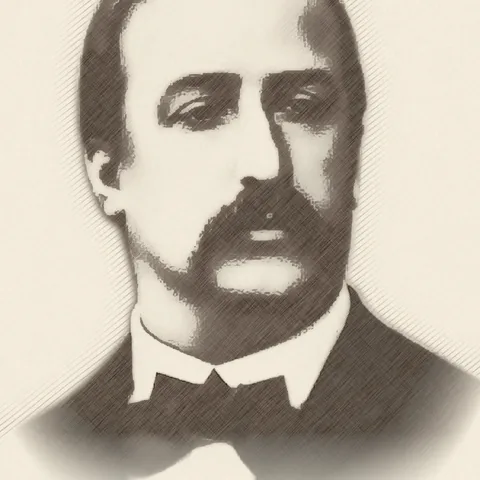 1833 – 1887Romantic
Alexandre Borodine
A chemist and composer who combined scientific research and musical creativity.
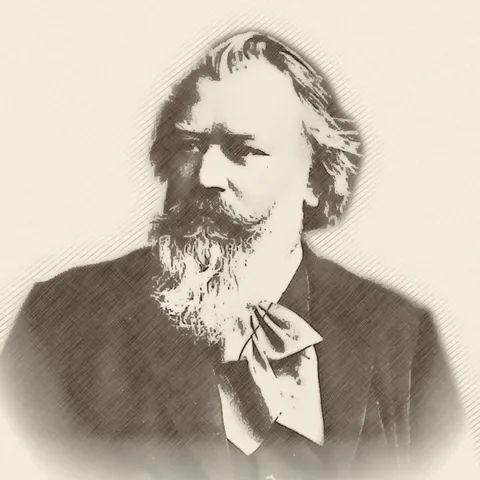 1833 – 1897Romantic
Johannes Brahms
He reinvented classical forms with Romantic intensity and dense thematic craft.
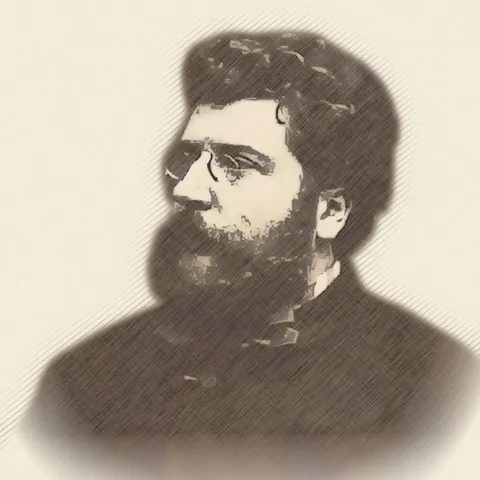 1838 – 1875Romantic
Georges Bizet
His opera Carmen, initially controversial, became a landmark of musical theatre.
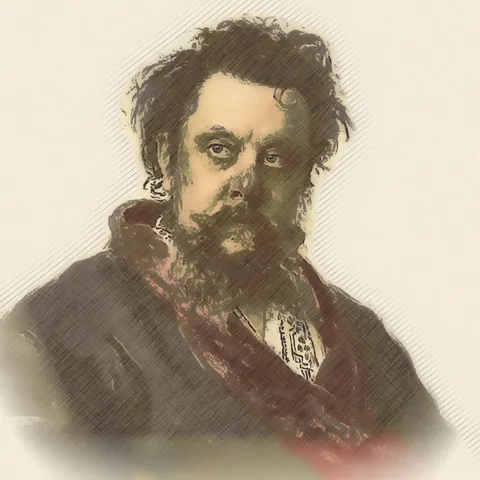 1839 – 1881Romantic
Modeste Moussorgski
A member of The Five, he sought an original dramatic and vocal language.
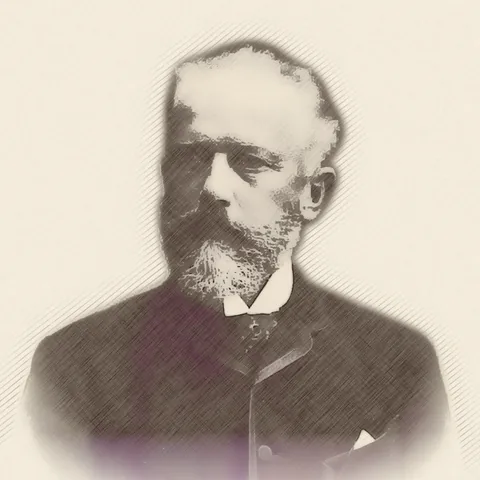 1840 – 1893Romantic
Piotr Ilitch Tchaïkovski
His ballets and symphonies unite memorable melodies and dramatic emotion.
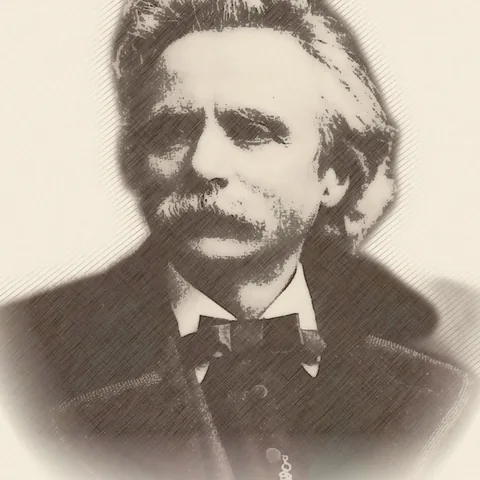 1843 – 1907Romantic
Edvard Grieg
He created evocative soundscapes inspired by Norwegian traditions.