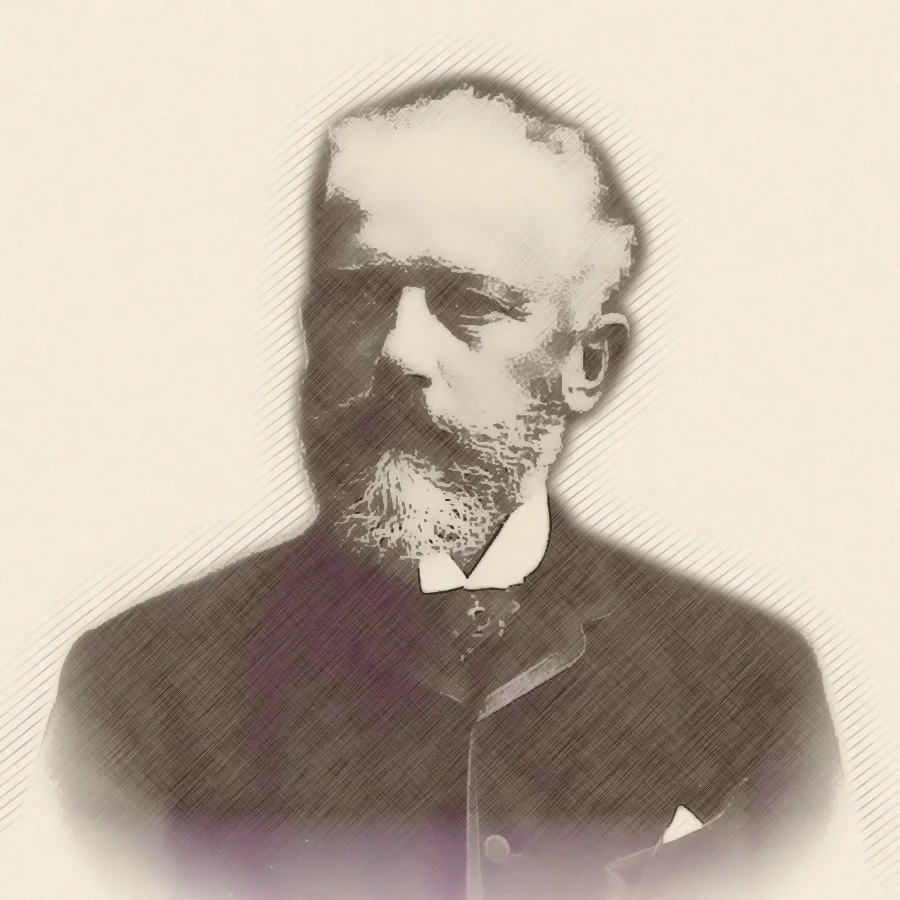
A life and its times
The milestones of the life and work, the contemporaries and the major world events, on a single line of time.
A life at a glance
- 1840Birth
Born in Votkinsk on 7 May, son of a mining engineer
- 1840Meanwhile
Adolphe Sax invents the saxophone (c. 1840)
- 1848Meanwhile
Revolutions of 1848; slavery abolished in France
- 1850Trainingage 10
School of Jurisprudence in St Petersburg
- 1854Private lifeage 14
Death of his mother, a shock he never got over
- 1859Careerage 19
Clerk at the Ministry of Justice
- 1859Meanwhile
Darwin publishes On the Origin of Species
- 1862Trainingage 22
Enters the brand-new St Petersburg Conservatory
- 1865Meanwhile
End of the American Civil War; slavery abolished in the USA
- 1866Careerage 26
Professor of harmony at the Moscow Conservatory
- 1874Meanwhile
First exhibition of the Impressionist painters
- 1875Workage 35
Piano Concerto No. 1
- 1875Meanwhile
The Palais Garnier opera house opens in Paris
- 1876Workage 36
Swan Lake
- 1877Careerage 37
Begins 13 years of letters with his patron Nadezhda von Meck, whom he never meets
- 1877Meanwhile
Edison invents the phonograph: sound can be recorded!
- 1879Workage 39
Eugene Onegin
- 1880Workage 40
1812 Overture
- 1889Meanwhile
The Eiffel Tower opens for the World’s Fair
- 1890Workage 50
The Sleeping Beauty; The Queen of Spades
- 1891Journeyage 51
Conducts at the opening of Carnegie Hall in New York
- 1892Workage 52
The Nutcracker
- 1893Workage 53
Symphony No. 6 ‘Pathétique’
- 1893Deathage 53
Dies in St Petersburg on 6 November
Listen
Excerpts from freely licensed recordings, with their performers and licences.
Excerpts last up to 90 seconds. Piotr Ilitch Tchaïkovski’s compositions are in the public domain; each recording is streamed from Wikimedia Commons under the licence shown, credited to its performers or uploader.
Listen to complete works on Wikimedia Commons
Wikimedia Commons is a free media library: you will find the complete recordings there, with their reuse conditions.
- Complete recordingSwan Lake — Act I excerpt
- Complete recordingThe Nutcracker — the Sugar Plum Fairy’s celesta
- Complete recording1812 Overture
- Complete recordingRomeo and Juliet, Fantasy Overture
- Search for the workThe Nutcracker
- Search for the workSwan Lake
- Search for the workThe Sleeping Beauty
- Search for the workPiano Concerto No. 1
- Search for the workSymphony No. 6 ‘Pathétique’
- Search for the work1812 Overture
- Search for the workViolin Concerto
- Everything on CommonsAll recordings of Piotr Ilitch Tchaïkovski
The life of Piotr Ilitch Tchaïkovski
Pyotr Ilyich Tchaikovsky was born on 7 May 1840 at Votkinsk, a small industrial town in the Urals, where his father, Ilya, managed ironworks and mines. His mother, Alexandra, partly of French descent, sang and played the piano. A French governess, Fanny Dürbach, took charge of his education and described him as a very sensitive child whom she called “the porcelain child”. He discovered music through an orchestrion, a mechanical organ playing tunes by Mozart, and began piano at five.
In 1850 the family enrolled him at the School of Jurisprudence in St Petersburg, a boarding school training future civil servants. Separation from his mother was heartbreaking. In 1854 she died of cholera; Tchaikovsky never fully recovered from the loss. In 1859 he became a civil servant at the Ministry of Justice, but he was bored and continued to study music as an amateur.
In 1862 he entered the brand-new St Petersburg Conservatory, founded by the pianist Anton Rubinstein, and left the civil service in 1863 to devote himself entirely to music. In 1866 Nikolai Rubinstein, Anton’s brother, hired him as professor of harmony at the Moscow Conservatory he had just founded. Tchaikovsky taught there for twelve years. He composed his first symphonies, overtures such as Romeo and Juliet (1869) and the Piano Concerto No. 1 (1875), at first rejected by Nikolai Rubinstein and then triumphantly premiered in Boston by Hans von Bülow.
In 1876 he composed his first ballet, Swan Lake, for the Bolshoi in Moscow: the premiere was a failure, and the work only became famous after his death, thanks to new choreography. In 1877 he married a former pupil, Antonina Milyukova, though he knew he could not love her: the marriage turned into a disaster within weeks and plunged him into a serious crisis. That same year began a strange relationship with a wealthy widow, Nadezhda von Meck, who paid him a generous annual allowance on condition that they never meet.
For thirteen years they exchanged more than 1,200 letters in which he confided freely about his life and music. Thanks to this allowance he left the Conservatory and devoted himself to composition. He wrote the opera Eugene Onegin (1879), after Pushkin, the Violin Concerto (1878), the Fourth Symphony, dedicated to “my best friend”, and the 1812 Overture (1880), celebrating the Russian victory over Napoleon with bells and cannon fire.
In the 1880s Tchaikovsky became famous worldwide. He conducted his works across Europe, and in 1891 he was invited to the opening of Carnegie Hall in New York. In 1890 he composed The Sleeping Beauty for the Mariinsky Theatre in St Petersburg, choreographed by Marius Petipa, and the opera The Queen of Spades. In 1892 The Nutcracker, based on a tale by Hoffmann, introduced for the first time the celesta, a brand-new instrument he had discovered in Paris, for the Dance of the Sugar Plum Fairy.
In 1893 he composed his Symphony No. 6, the “Pathétique”, which, contrary to tradition, ends with a slow, despairing movement. He conducted it himself in St Petersburg on 28 October 1893. Nine days later, on 6 November, he died, officially of cholera, perhaps after drinking unboiled water. The circumstances of his death have given rise to many theories. He is buried at the Alexander Nevsky Monastery in St Petersburg. His ballets remain among the most performed in the world.
Works to know
- 1875
Piano Concerto No. 1
Grand opening with powerful chords.
Listen on Wikimedia Commons - 1876
Swan Lake
Odette, a princess turned into a swan.
Listen on Wikimedia Commons - 1878
Violin Concerto
One of the most performed concertos.
Listen on Wikimedia Commons - 1880
1812 Overture
With bells and cannon fire!
Listen on Wikimedia Commons - 1889
The Sleeping Beauty
Fairy-tale ballet after Perrault.
Listen on Wikimedia Commons - 1892
The Nutcracker
Christmas ballet with the Dance of the Sugar Plum Fairy.
Listen on Wikimedia Commons - 1893
Symphony No. 6 ‘Pathétique’
Overwhelming symphony that ends in silence.
Listen on Wikimedia Commons
Anecdotes
He wrote over 1,200 letters to a patron he never met.
He conducted at the opening of New York’s Carnegie Hall in 1891.
He was the first to use the celesta, discovered in Paris, in the Dance of the Sugar Plum Fairy in The Nutcracker.
Swan Lake was a failure at its premiere; it only became famous after his death.
Same era · Romantic
 1833 – 1887Romantic
Alexandre Borodine
A chemist and composer who combined scientific research and musical creativity.
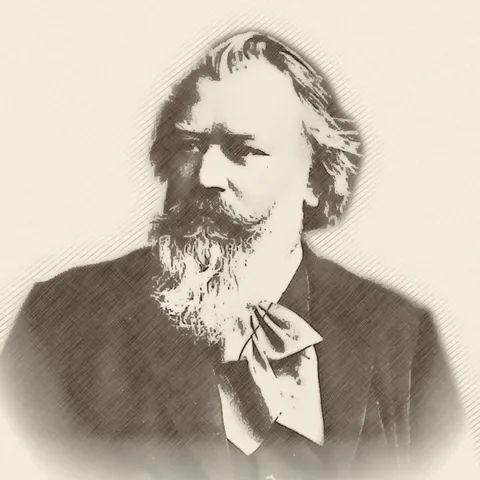 1833 – 1897Romantic
Johannes Brahms
He reinvented classical forms with Romantic intensity and dense thematic craft.
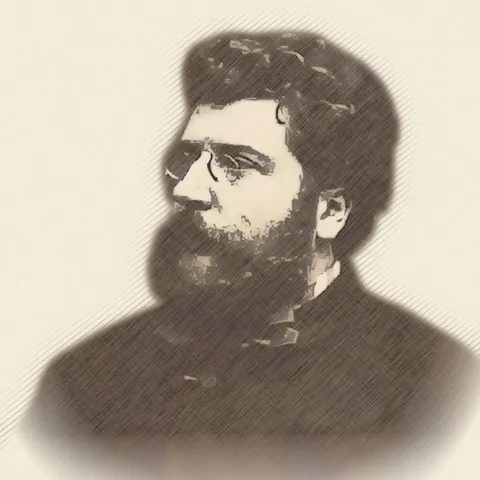 1838 – 1875Romantic
Georges Bizet
His opera Carmen, initially controversial, became a landmark of musical theatre.
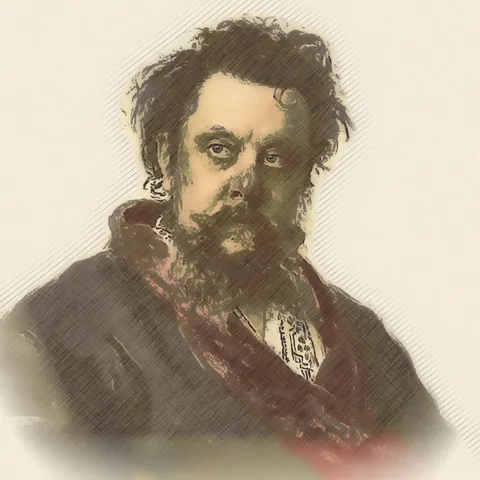 1839 – 1881Romantic
Modeste Moussorgski
A member of The Five, he sought an original dramatic and vocal language.
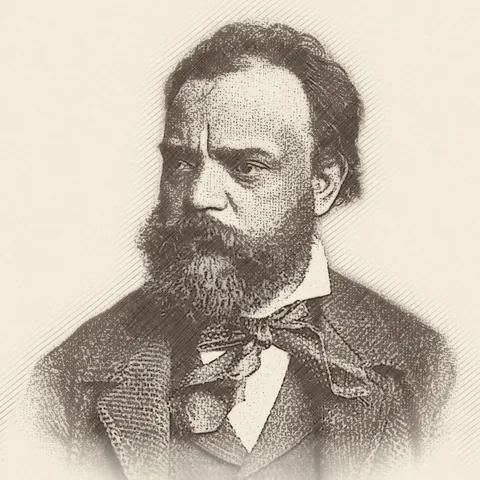 1841 – 1904Romantic
Antonín Dvořák
He blended symphonic tradition with Czech and American folk inspirations.
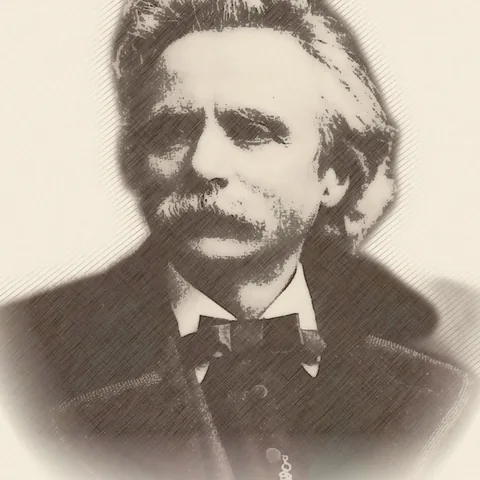 1843 – 1907Romantic
Edvard Grieg
He created evocative soundscapes inspired by Norwegian traditions.