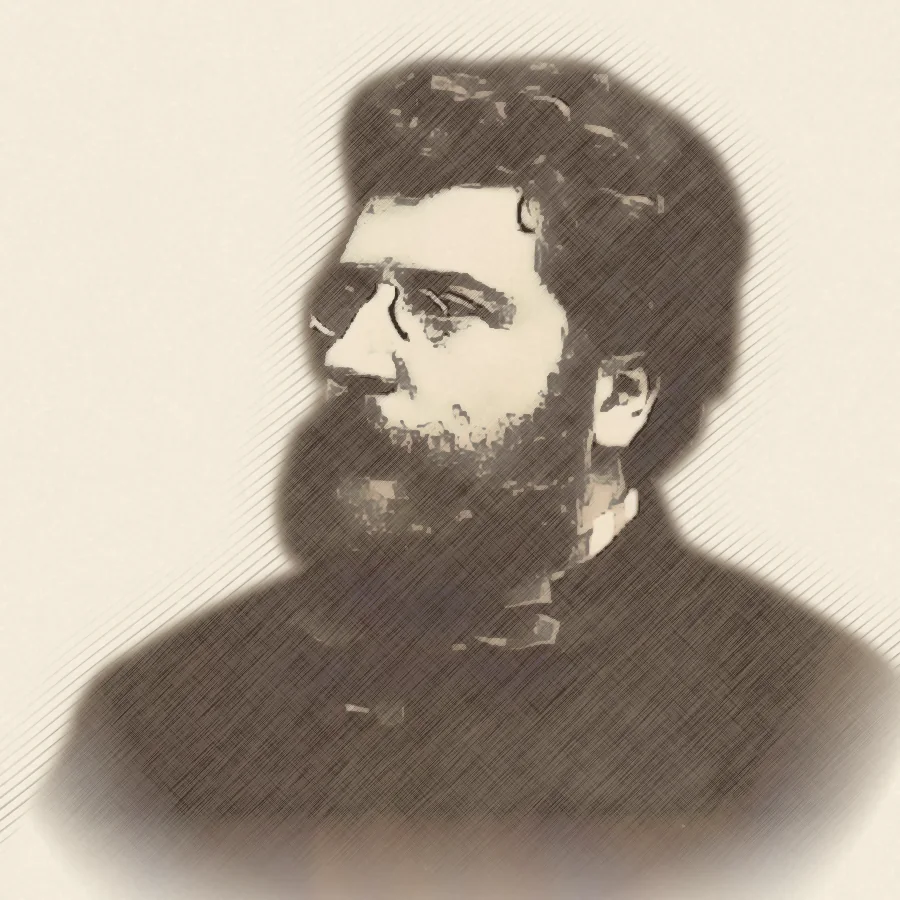
A life and its times
The milestones of the life and work, the contemporaries and the major world events, on a single line of time.
A life at a glance
- 1838Birth
Born in Paris on 25 October into a family of musicians
- 1839Meanwhile
Photography is invented (daguerreotype)
- 1840Meanwhile
Adolphe Sax invents the saxophone (c. 1840)
- 1848Trainingage 10
Enters the Paris Conservatoire before turning 10
- 1848Meanwhile
Revolutions of 1848; slavery abolished in France
- 1855Workage 17
Symphony in C, at 17 (rediscovered in 1933)
- 1857Careerage 19
Prix de Rome; winner of an operetta contest run by Offenbach
- 1858Journeyage 20
Three years at the Villa Medici in Rome
- 1859Meanwhile
Darwin publishes On the Origin of Species
- 1863Workage 25
The Pearl Fishers
- 1865Meanwhile
End of the American Civil War; slavery abolished in the USA
- 1869Private lifeage 31
Marries Geneviève Halévy, his teacher’s daughter
- 1869Meanwhile
The Suez Canal opens
- 1870Landmarkage 32
Franco-Prussian War; he serves in the National Guard
- 1871Workage 33
Jeux d’enfants, for piano duet
- 1872Workage 34
Incidental music for Daudet’s L’Arlésienne
- 1874Meanwhile
First exhibition of the Impressionist painters
- 1875Workage 37
Premiere of Carmen on 3 March at the Opéra-Comique
- 1875Deathage 37
Dies in Bougival on 3 June, aged 36
- 1875Meanwhile
The Palais Garnier opera house opens in Paris
Listen
Excerpts from freely licensed recordings, with their performers and licences.
Excerpts last up to 90 seconds. Georges Bizet’s compositions are in the public domain; each recording is streamed from Wikimedia Commons under the licence shown, credited to its performers or uploader.
Listen to complete works on Wikimedia Commons
Wikimedia Commons is a free media library: you will find the complete recordings there, with their reuse conditions.
- Complete recordingCarmen — Prelude
- Complete recordingCarmen — Toreador Song
- Complete recordingL’Arlésienne Suite No. 1 — Prelude
- Search for the workCarmen
- Search for the workL’Arlésienne
- Search for the workThe Pearl Fishers
- Search for the workSymphony in C
- Search for the workJeux d’enfants
- Everything on CommonsAll recordings of Georges Bizet
The life of Georges Bizet
Georges Bizet was born in Paris on 25 October 1838. Christened Alexandre César Léopold, he was always called Georges. His father, Adolphe-Amand, a former hairdresser turned singing teacher, and his mother, Aimée Delsarte, a good pianist, gave him his first lessons. A child prodigy, he learned his notes at the same time as his letters. He entered the Paris Conservatoire in 1848, before he was even ten, and collected first prizes in piano, organ and fugue.
There he studied composition with Fromental Halévy, composer of La Juive, and received advice from Charles Gounod, who influenced him deeply. In 1855, aged seventeen, he composed a fresh, lively Symphony in C major, which was forgotten in the Conservatoire archives and not performed until 1935. In 1857 he won an operetta competition organised by Jacques Offenbach with Le Docteur Miracle, sharing the prize with Charles Lecocq, and then the Grand Prix de Rome.
From 1858 to 1860 he stayed at the Villa Medici in Rome. He discovered Italian life, travelled throughout the country and composed the comic opera Don Procopio. He was also an exceptional pianist: Liszt himself, having heard him sight-read flawlessly one of his most difficult pieces, considered him one of the best pianists in Europe. But Bizet did not want a virtuoso career: he dreamed only of the theatre.
Back in Paris he had to earn his living by teaching and making transcriptions and arrangements for publishers. In 1863 he premiered Les Pêcheurs de perles at the Théâtre-Lyrique, the story of two friends in love with the same priestess in Ceylon. The work had a mixed reception, but Berlioz defended it, and its duet “Au fond du temple saint” became famous. He then composed La Jolie Fille de Perth (1867) and began many projects he later abandoned.
In 1869 he married Geneviève Halévy, daughter of his former teacher; they had a son, Jacques. During the Franco-Prussian War of 1870 he served in the National Guard during the siege of Paris. In 1871 he composed Jeux d’enfants, a suite of twelve pieces for piano four hands evoking the spinning top, the doll, the merry-go-round, soap bubbles and blind man’s buff. He later orchestrated five of them. These charming little works have remained very popular.
In 1872 he wrote incidental music for L’Arlésienne, a play by Alphonse Daudet set in Provence. The play failed, but the music, which uses Provençal tunes such as the “March of the Kings” and a saxophone, was so successful that Bizet drew an orchestral suite from it. The Opéra-Comique then commissioned an opera from him: he chose Prosper Mérimée’s novella Carmen, the story of a free, passionate Gypsy woman in Seville who would rather die than give up her freedom.
Carmen was premiered at the Opéra-Comique on 3 March 1875. The audience, used to a respectable family theatre, was shocked by the violence, sensuality and realism of the work, and the critics were harsh. Bizet, disappointed and ill, died at Bougival near Paris on 3 June 1875 of a heart attack, aged thirty-six, on the very night of the thirty-third performance. He never knew that Carmen, admired by Tchaikovsky, Brahms and Nietzsche, would become one of the most performed operas in the world, with its Habanera and Toreador Song.
Works to know
- 1855
Symphony in C
Sparkling work by a 17-year-old.
Listen on Wikimedia Commons - 1863
The Pearl Fishers
Exotic opera with a famous duet.
Listen on Wikimedia Commons - 1871
Jeux d’enfants
12 pieces about games: spinning top, doll, leapfrog…
Listen on Wikimedia Commons - 1872
L’Arlésienne
Provençal suites with the Farandole.
Listen on Wikimedia Commons - 1875
Carmen
The world’s most performed opera: Habanera, Toreador Song…
Listen on Wikimedia Commons
Anecdotes
Carmen is one of the most performed operas in the world.
His symphony written at 17 wasn’t performed until 1935!
Liszt saw him sight-read one of his hardest pieces flawlessly and ranked him among the best pianists in Europe.
He used a saxophone, then a very new instrument, in L’Arlésienne.
Same era · Romantic
 1833 – 1887Romantic
Alexandre Borodine
A chemist and composer who combined scientific research and musical creativity.
 1833 – 1897Romantic
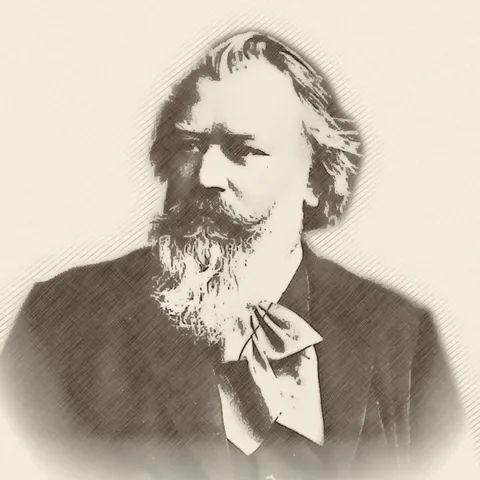
Johannes Brahms
He reinvented classical forms with Romantic intensity and dense thematic craft.
 1839 – 1881Romantic
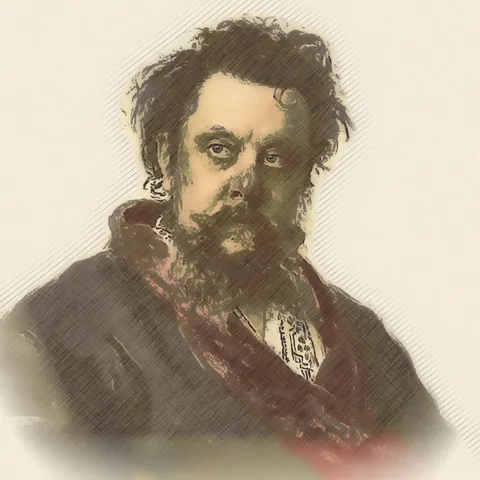
Modeste Moussorgski
A member of The Five, he sought an original dramatic and vocal language.
 1840 – 1893Romantic
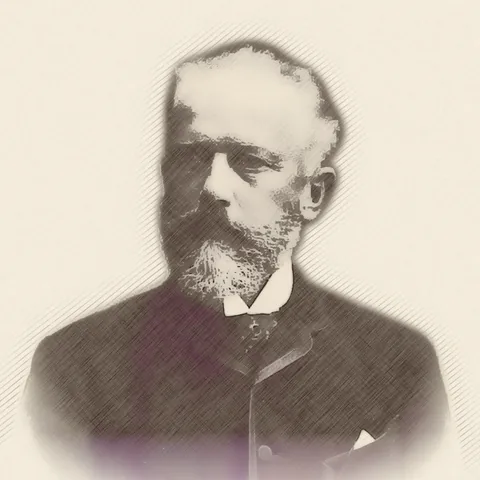
Piotr Ilitch Tchaïkovski
His ballets and symphonies unite memorable melodies and dramatic emotion.
 1841 – 1904Romantic
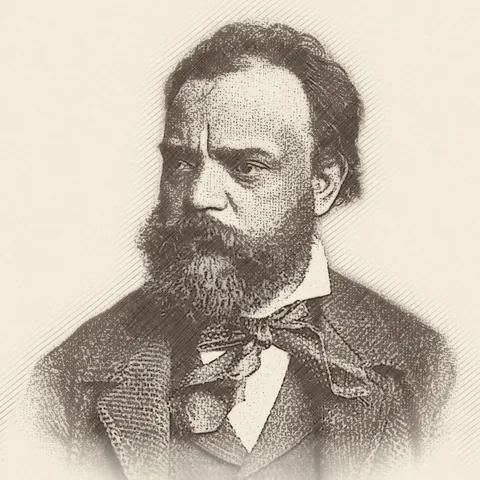
Antonín Dvořák
He blended symphonic tradition with Czech and American folk inspirations.
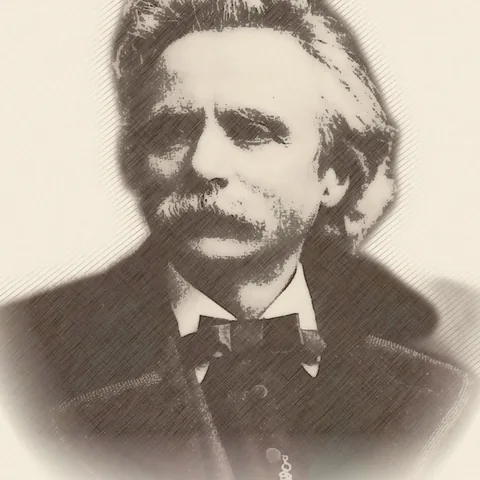 1843 – 1907Romantic
Edvard Grieg
He created evocative soundscapes inspired by Norwegian traditions.