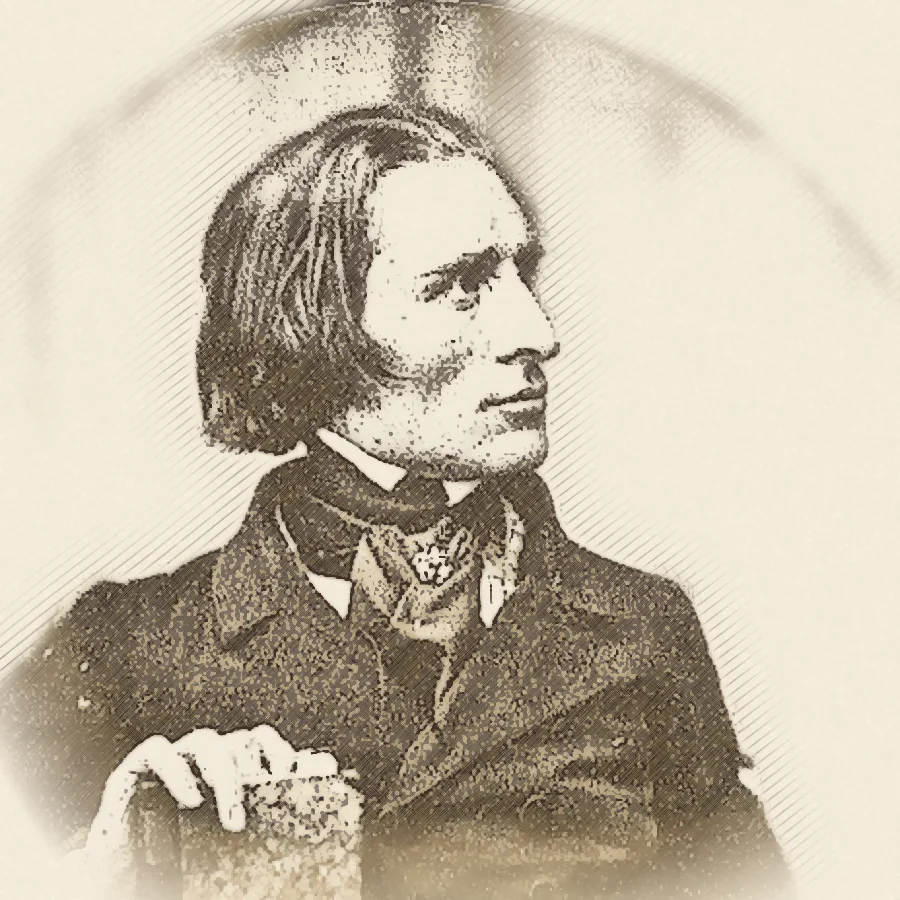
 Romantic
Franz Liszt
A star pianist, he invented new forms and developed the symphonic poem.
A life and its times
The milestones of the life and work, the contemporaries and the major world events, on a single line of time.
A life at a glance
- 1811Birth
Born in Raiding (Doborján), Hungary, on 22 October
- 1816Meanwhile
Maelzel patents the metronome (1815–16)
- 1822Trainingage 11
Pupil of Czerny and Salieri in Vienna
- 1822Meanwhile
Champollion deciphers hieroglyphs
- 1823Milestoneage 12
Moves to Paris; the Conservatoire turns him down as a foreigner
- 1830Meanwhile
July Revolution in France
- 1832Private lifeage 21
Hears Paganini and resolves to become ‘the Paganini of the piano’
- 1835Private lifeage 24
Leaves for Switzerland with Countess Marie d’Agoult; three children including Cosima
- 1839Journeyage 28
Begins eight years of triumphant tours: ‘Lisztomania’
- 1840Careerage 29
Invents the solo piano recital
- 1840Meanwhile
Adolphe Sax invents the saxophone (c. 1840)
- 1848Careerage 37
Settles in Weimar as Kapellmeister
- 1848Meanwhile
Revolutions of 1848; slavery abolished in France
- 1850Workage 39
Conducts the premiere of Wagner’s Lohengrin; Liebesträume
- 1853Workage 42
Sonata in B minor
- 1854Workage 43
Les Préludes, symphonic poem
- 1865Careerage 54
Takes minor orders in Rome — known as ‘Abbé Liszt’
- 1865Meanwhile
End of the American Civil War; slavery abolished in the USA
- 1874Meanwhile
First exhibition of the Impressionist painters
- 1875Careerage 64
President of the Budapest Academy of Music
- 1875Meanwhile
The Palais Garnier opera house opens in Paris
- 1886Deathage 75
Dies in Bayreuth on 31 July
Listen
Excerpts from freely licensed recordings, with their performers and licences.
Excerpts last up to 90 seconds. Franz Liszt’s compositions are in the public domain; each recording is streamed from Wikimedia Commons under the licence shown, credited to its performers or uploader.
Listen to complete works on Wikimedia Commons
Wikimedia Commons is a free media library: you will find the complete recordings there, with their reuse conditions.
- Complete recordingLa Campanella
- Complete recordingLiebestraum No. 3
- Complete recordingHungarian Rhapsody No. 2
- Complete recordingConsolation No. 3
- Search for the workSonata in B minor
- Search for the workLa Campanella
- Search for the workLiebestraum No. 3
- Search for the workHungarian Rhapsody No. 2
- Search for the workLes Préludes
- Search for the workAnnées de pèlerinage
- Search for the workFaust Symphony
- Everything on CommonsAll recordings of Franz Liszt
The life of Franz Liszt
Franz Liszt was born on 22 October 1811 at Raiding (Doborján in Hungarian), a village in the Kingdom of Hungary, now in Austria. His father, Adam, was a steward to the Esterházy princes and an amateur cellist who had even played in Haydn’s orchestra. He taught piano to his son, whose gifts were astonishing. At nine Franz gave his first concert. Amazed Hungarian nobles funded his studies: in 1822 the family moved to Vienna.
In Vienna he studied piano with Carl Czerny, a former pupil of Beethoven, and composition with Antonio Salieri. According to a famous anecdote, Beethoven kissed him on the forehead after a concert. In 1823 the family moved to Paris, but the Conservatoire refused the young prodigy because he was a foreigner. Liszt then toured France, England and Switzerland and composed a little opera, Don Sanche. In 1827 his father’s death left him alone with his mother; he earned his living by teaching.
In 1832 he heard Paganini in Paris and resolved to become “the Paganini of the piano”. He practised for hours every day to invent a new technique that could make the piano sing like an orchestra. He befriended Chopin, Berlioz — whose Symphonie fantastique he transcribed for piano — George Sand and Lamartine. In 1835 he left for Switzerland and then Italy with Countess Marie d’Agoult, who had left her husband for him. They had three children, including Cosima, Wagner’s future wife. These travels gave rise to the Années de pèlerinage.
From 1839 to 1847 Liszt made triumphant tours throughout Europe, from Lisbon to Constantinople, from Ireland to Russia. He gave more than a thousand concerts. He invented the solo piano recital, playing alone for an entire concert from memory, and placed the piano side-on so the audience could see his face. His charisma caused hysteria: women fainted and fought over his gloves or locks of hair. The poet Heinrich Heine coined the word “Lisztomania”. Liszt gave much of his earnings to charity.
In 1847, aged thirty-six, he gave up his virtuoso career. With Princess Carolyne zu Sayn-Wittgenstein he settled in Weimar, where he became Kapellmeister. There he conducted works by modern composers, premiered his friend Wagner’s Lohengrin in 1850, and composed his great works: the Sonata in B minor (1853), the Liebesträume, the Transcendental Études, the Faust Symphony and twelve symphonic poems, including Les Préludes (1854). He thus invented the symphonic poem, an orchestral work that tells a story or depicts a scene.
In 1861 he moved to Rome hoping to marry the princess, but the pope refused to annul her first marriage. Liszt turned to religion: in 1865 he received minor orders and took clerical dress, hence his nickname “Abbé Liszt”. He composed oratorios and sacred music. In his last years he divided his time between Rome, Weimar and Budapest, where from 1875 he presided over the Academy of Music he had helped to found.
A generous teacher, he gave free lessons to hundreds of pupils from all over the world. His late piano works, such as La lugubre gondola and the Bagatelle without Tonality, are astonishingly modern and foreshadow twentieth-century music. In July 1886 he went to Bayreuth to attend the festival run by his daughter Cosima, Wagner’s widow. He caught a chill there and died on 31 July 1886, aged seventy-four. He is buried in Bayreuth.
Works to know
- 1847
Hungarian Rhapsody No. 2
Fireworks inspired by Romani music.
Listen on Wikimedia Commons - 1850
Liebestraum No. 3
A tender, famous melody.
Listen on Wikimedia Commons - 1851
La Campanella
Étude after Paganini in which the piano imitates a little bell.
Listen on Wikimedia Commons - 1853
Sonata in B minor
A single immense one-movement sonata.
Listen on Wikimedia Commons - 1854
Les Préludes
A symphonic poem, a genre he invented.
Listen on Wikimedia Commons - 1855
Années de pèlerinage
Musical travel diaries of Switzerland and Italy.
Listen on Wikimedia Commons - 1857
Faust Symphony
Three portraits: Faust, Gretchen, Mephistopheles.
Listen on Wikimedia Commons
Anecdotes
The word ‘Lisztomania’ was coined in 1844 by the poet Heinrich Heine.
His daughter Cosima married Richard Wagner.
He invented the solo piano recital and placed the piano side-on so the audience could see his face.
He gave his lessons free of charge to hundreds of pupils.
Same era · Romantic
 1805 – 1847Romantic
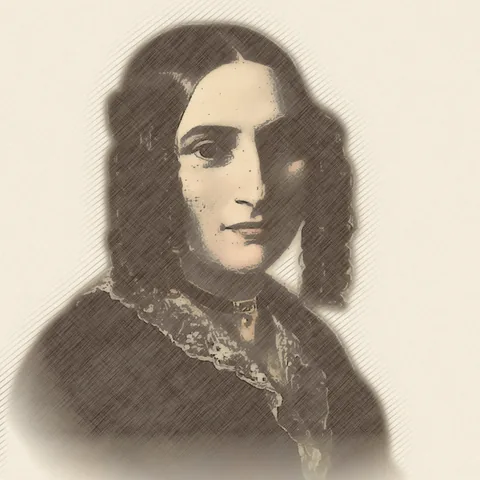
Fanny Mendelssohn
A composer and pianist who wrote hundreds of works despite social constraints.
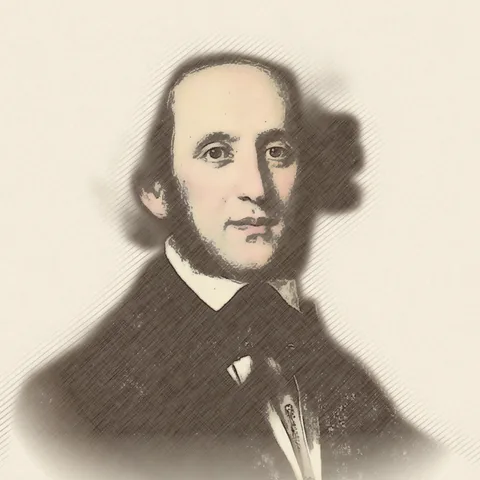 1809 – 1847Romantic
Felix Mendelssohn
A conductor and composer who revived Bach and wrote music of great clarity.
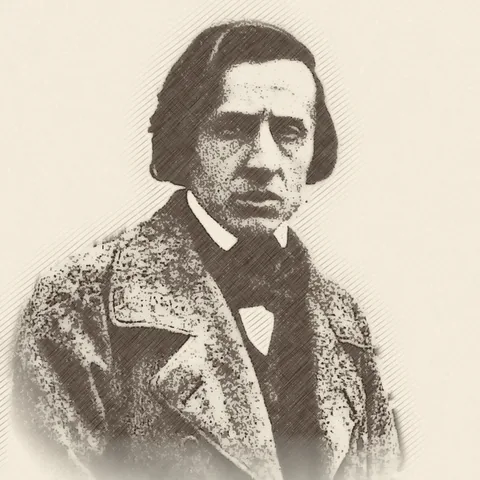 1810 – 1849Romantic
Frédéric Chopin
At the piano, he combined virtuosity, poetry and memories of Polish dance.
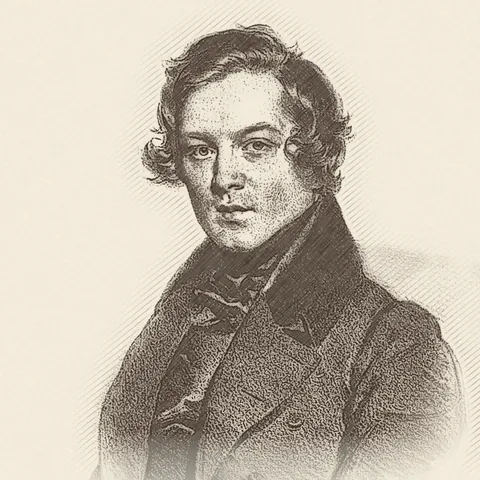 1810 – 1856Romantic
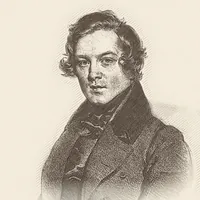
Robert Schumann
A composer and critic, he explored psychological contrasts in piano music.
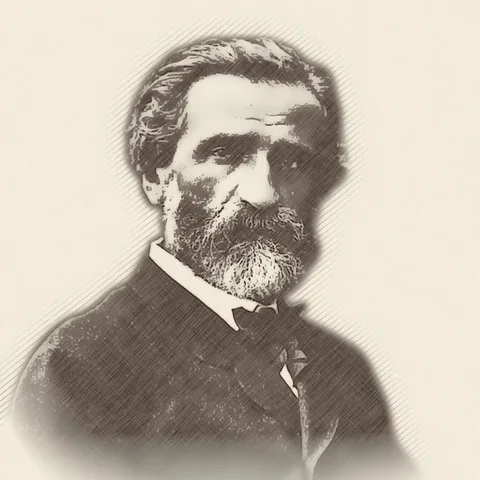 1813 – 1901Romantic
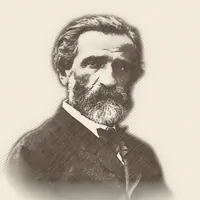
Giuseppe Verdi
His operas give unforgettable voice to human passions and conflicts.
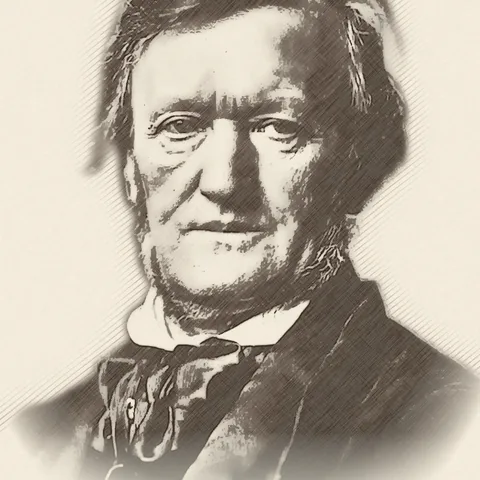 1813 – 1883Romantic
Richard Wagner
He envisioned music drama as a unity of orchestra, poetry and stagecraft.