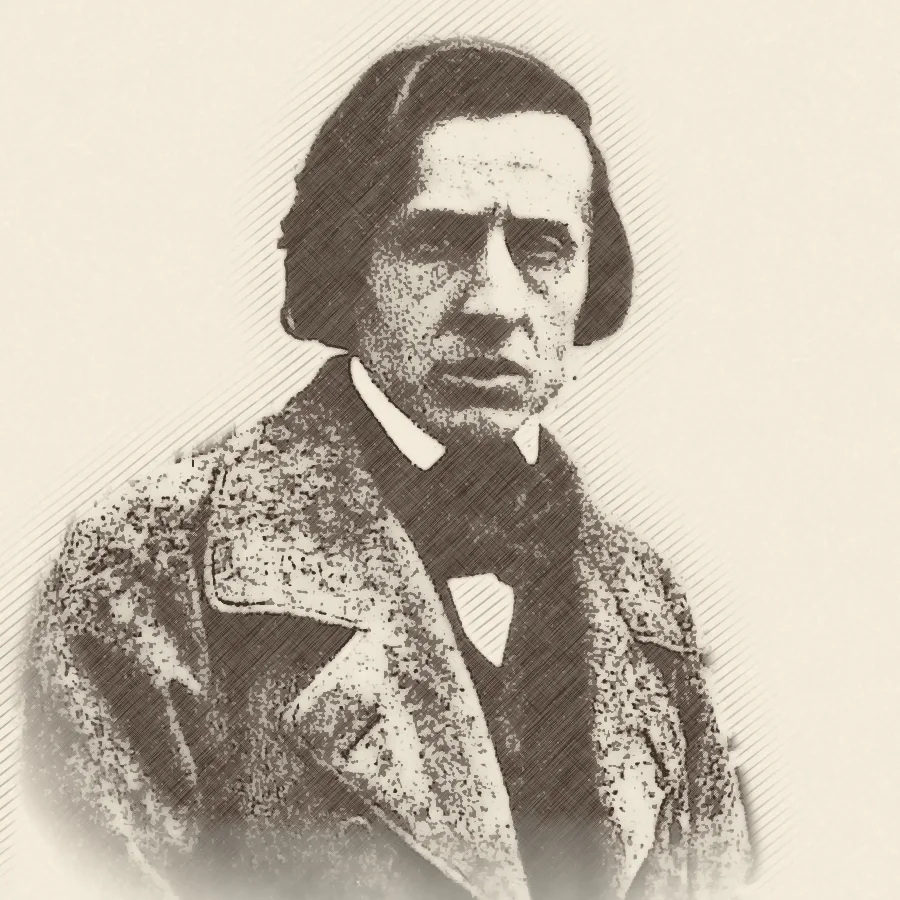
A life and its times
The milestones of the life and work, the contemporaries and the major world events, on a single line of time.
A life at a glance
- 1810Birth
Born on 1 March in Żelazowa Wola, near Warsaw
- 1815Meanwhile
Battle of Waterloo
- 1816Meanwhile
Maelzel patents the metronome (1815–16)
- 1817Workage 7
Publishes his first polonaise at 7
- 1822Meanwhile
Champollion deciphers hieroglyphs
- 1825Meanwhile
First public passenger railway (England)
- 1826Trainingage 16
Studies at the Warsaw Conservatory with Józef Elsner
- 1829Journeyage 19
First triumphant concerts in Vienna
- 1830Journeyage 20
Leaves Poland; the Warsaw uprising breaks out soon after
- 1830Meanwhile
July Revolution in France
- 1831Milestoneage 21
Settles in Paris for good
- 1832Careerage 22
First Paris concert; becomes the darling of the salons
- 1833Workage 23
Études Op. 10
- 1836Private lifeage 26
Meets the novelist George Sand
- 1838Journeyage 28
Winter in Majorca; completes the 24 Preludes
- 1839Milestoneage 29
Summers at Nohant with George Sand, his most productive years
- 1839Meanwhile
Photography is invented (daguerreotype)
- 1840Meanwhile
Adolphe Sax invents the saxophone (c. 1840)
- 1842Workage 32
‘Heroic’ Polonaise Op. 53
- 1847Private lifeage 37
Break-up with George Sand
- 1848Journeyage 38
Last Paris concert; trip to England and Scotland
- 1848Meanwhile
Revolutions of 1848; slavery abolished in France
- 1849Deathage 39
Dies in Paris on 17 October; his heart is taken to Warsaw
Listen
Excerpts from freely licensed recordings, with their performers and licences.
Excerpts last up to 90 seconds. Frédéric Chopin’s compositions are in the public domain; each recording is streamed from Wikimedia Commons under the licence shown, credited to its performers or uploader.
Listen to complete works on Wikimedia Commons
Wikimedia Commons is a free media library: you will find the complete recordings there, with their reuse conditions.
- Complete recordingNocturne in E-flat major, Op. 9 No. 2
- Complete recordingFantaisie-Impromptu, Op. 66
- Complete recordingWaltz in C-sharp minor, Op. 64 No. 2
- Complete recordingÉtude Op. 10 No. 1
- Search for the workNocturne Op. 9 No. 2
- Search for the work24 Preludes Op. 28
- Search for the workBallade No. 1
- Search for the work‘Heroic’ Polonaise
- Search for the workFantaisie-Impromptu
- Search for the work‘Minute’ Waltz
- Search for the workÉtudes Op. 10
- Search for the workPiano Concerto No. 1
- Everything on CommonsAll recordings of Frédéric Chopin
The life of Frédéric Chopin
Frédéric Chopin was born on 1 March 1810 (some documents give 22 February) at Żelazowa Wola, a village near Warsaw in Poland. His father, Nicolas Chopin, was a Frenchman from Lorraine who had settled in Poland and become a French teacher; his mother, Justyna Krzyżanowska, was Polish. Shortly after his birth the family moved to Warsaw, where his father taught at the lyceum. Frédéric grew up in a cultured home with three sisters, the youngest of whom, Emilia, died of tuberculosis at fourteen.
A child prodigy, he took his first piano lessons from Wojciech Żywny, a Czech musician devoted to Bach and Mozart. At seven he published his first polonaise, and at eight he gave his first public concert. He was compared to Mozart. Warsaw’s aristocratic salons fought over him. During country holidays he discovered Polish folk music and dances such as the mazurka, which he remembered all his life.
From 1826 to 1829 he studied at the Warsaw Conservatory with the composer Józef Elsner, who wrote in his final report: “exceptional talent, musical genius”. In 1829 he gave two triumphant concerts in Vienna. He composed his two piano concertos and premiered them in Warsaw. On 2 November 1830 he left Poland; his friends reportedly gave him a cup filled with Polish soil. A few weeks later the Warsaw uprising against Russian rule broke out. Its crushing in 1831 devastated him: he never saw his country again.
In September 1831 Chopin arrived in Paris, where he settled for good. He mixed with the greatest artists of his time: Liszt, Berlioz, Delacroix, who painted his portrait, Heine and Balzac. He gave few public concerts, preferring the intimacy of salons, where his delicate, nuanced, dreamy playing fascinated listeners. He earned his living by teaching piano to the aristocracy and publishing his works. He wrote almost exclusively for the piano: nocturnes, études, preludes, waltzes, mazurkas, polonaises, ballades and scherzos.
In 1836 he met the novelist George Sand, a free-spirited woman who dressed as a man and smoked cigars. They became lovers in 1838 and spent the winter in Majorca, in a former monastery at Valldemossa. The stay was an ordeal: it rained, the monastery was damp, and Chopin, suffering from tuberculosis, fell seriously ill. Yet there he completed his 24 Preludes Op. 28, one in each key, like Bach in The Well-Tempered Clavier.
From 1839 to 1846 he spent his summers at Nohant, George Sand’s country house in the Berry. These were his most productive years: there he composed the “Heroic” Polonaise Op. 53, the “Funeral March” Sonata, the Fantaisie Op. 49, the Berceuse and many mazurkas. His Études Op. 10 and Op. 25, which turn technical exercises into true poems, are among the summits of piano literature. In 1847, after family conflicts, Chopin and Sand separated.
Weakened by illness, he gave his last Paris concert in February 1848, just before the revolution. He went to England and Scotland at the invitation of his pupil Jane Stirling, but the climate and fatigue exhausted him. Back in Paris he died on 17 October 1849, aged thirty-nine. Mozart’s Requiem was performed at his funeral, as he had wished. He was buried in Père-Lachaise Cemetery, but his heart, according to his last wish, was taken back to Warsaw by his sister Ludwika and kept in the Holy Cross Church.
Works to know
- 1830
Piano Concerto No. 1
Written at 20 before leaving Poland.
Listen on Wikimedia Commons - 1832
Nocturne Op. 9 No. 2
Dreamy, ornate melody, like an opera aria on the piano.
Listen on Wikimedia Commons - 1833
Études Op. 10
Exercises turned into works of art.
Listen on Wikimedia Commons - 1834
Fantaisie-Impromptu
A whirlwind of notes around a famous melody.
Listen on Wikimedia Commons - 1835
Ballade No. 1
Dramatic, passionate piano narrative.
Listen on Wikimedia Commons - 1838
24 Preludes Op. 28
A miniature in each of the 24 keys.
Listen on Wikimedia Commons - 1842
‘Heroic’ Polonaise
A proud hymn to Poland.
Listen on Wikimedia Commons - 1847
‘Minute’ Waltz
A quick waltz (actually a bit longer than a minute!).
Listen on Wikimedia Commons
Anecdotes
His heart is kept in a Warsaw church, as he wished.
The ‘Minute’ Waltz actually lasts more like a minute and a half!
He wrote almost all his music for the piano, his favourite instrument.
His 24 Preludes go through every key, like Bach’s Well-Tempered Clavier, which he admired.
Same era · Romantic
 1805 – 1847Romantic
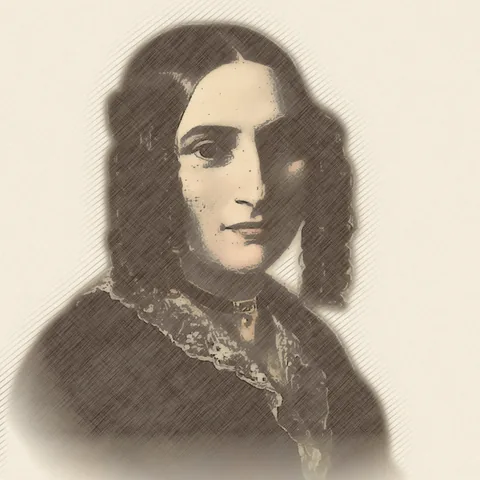
Fanny Mendelssohn
A composer and pianist who wrote hundreds of works despite social constraints.
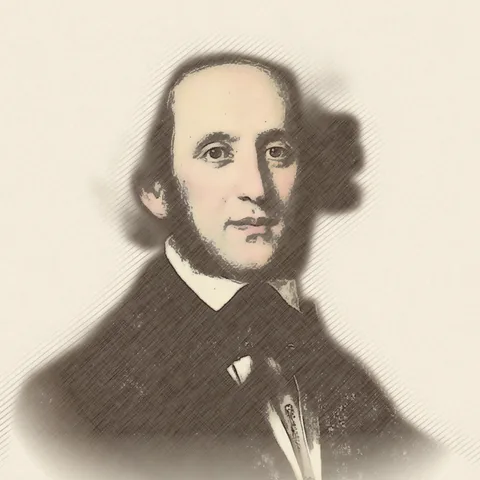 1809 – 1847Romantic
Felix Mendelssohn
A conductor and composer who revived Bach and wrote music of great clarity.
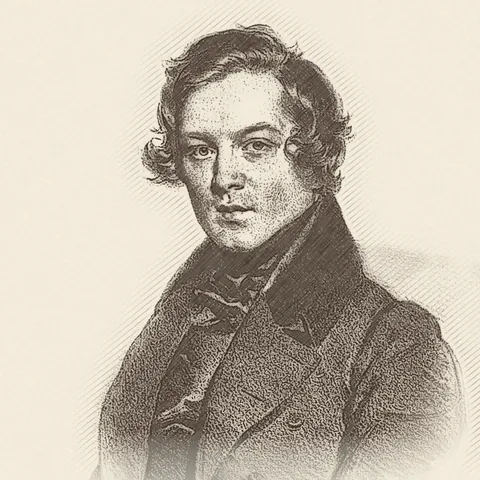 1810 – 1856Romantic
Robert Schumann
A composer and critic, he explored psychological contrasts in piano music.
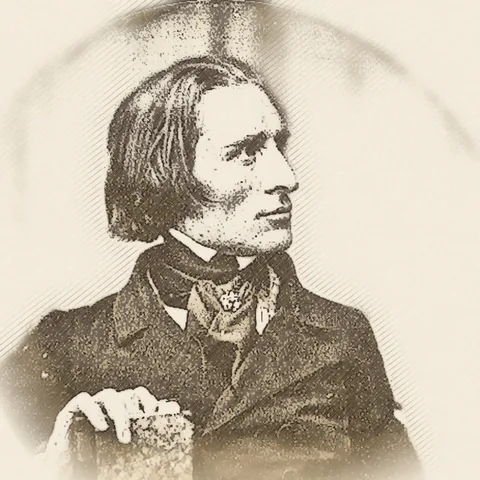 1811 – 1886Romantic
Franz Liszt
A star pianist, he invented new forms and developed the symphonic poem.
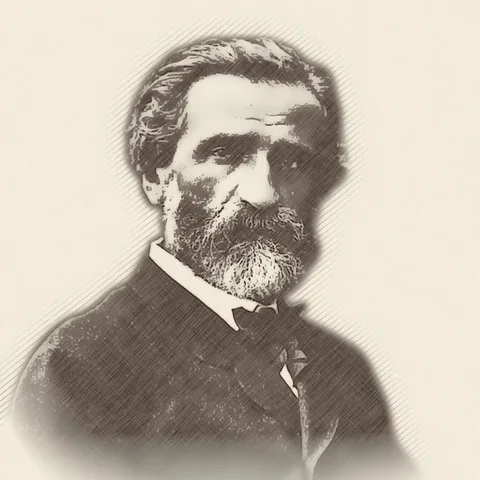 1813 – 1901Romantic
Giuseppe Verdi
His operas give unforgettable voice to human passions and conflicts.
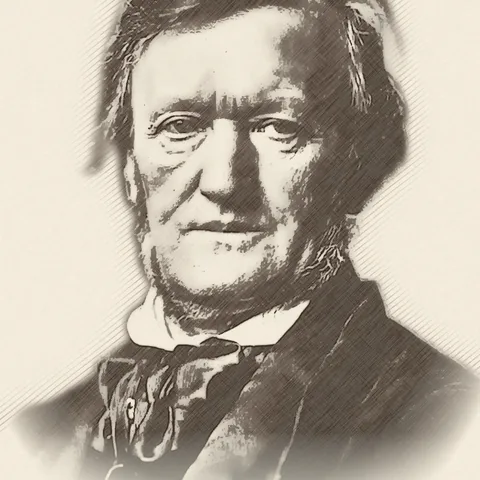 1813 – 1883Romantic
Richard Wagner
He envisioned music drama as a unity of orchestra, poetry and stagecraft.