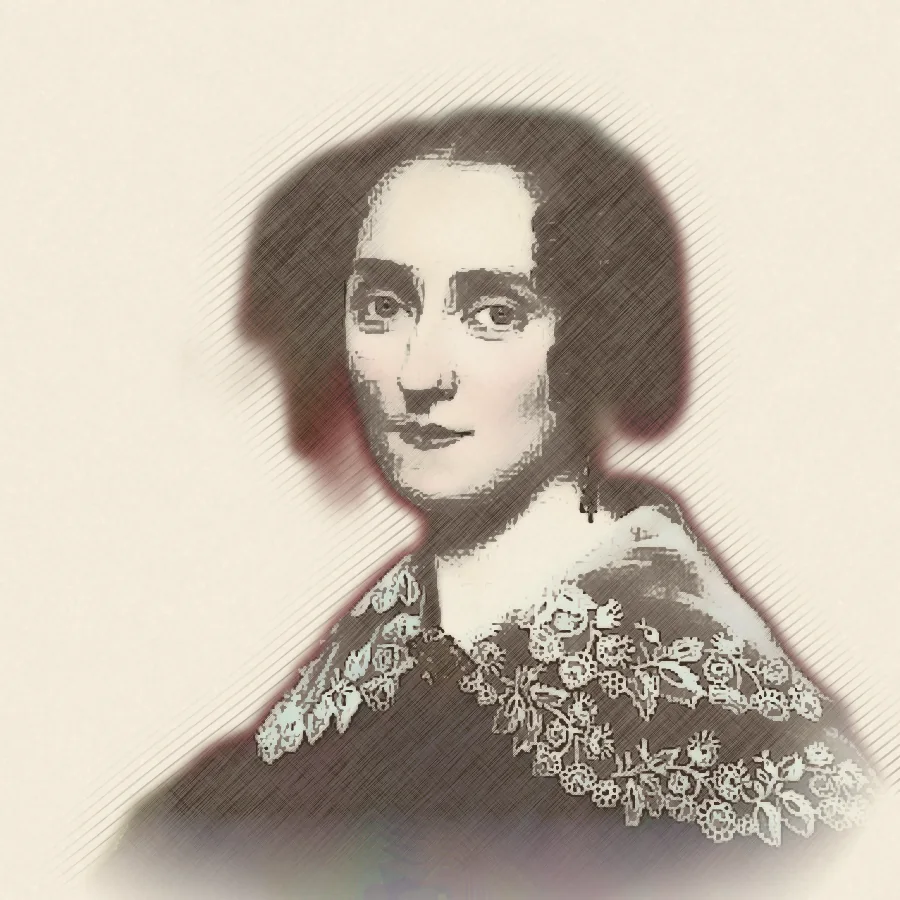
A life and its times
The milestones of the life and work, the contemporaries and the major world events, on a single line of time.
A life at a glance
- 1804Birth
Born in Paris on 31 May into a family of sculptors
- 1810Trainingage 6
Piano lessons, notably with Moscheles and Hummel
- 1815Meanwhile
Battle of Waterloo
- 1816Meanwhile
Maelzel patents the metronome (1815–16)
- 1819Trainingage 15
Studies composition with Anton Reicha
- 1821Private lifeage 17
Marries the flautist Aristide Farrenc; they found a publishing house
- 1825Meanwhile
First public passenger railway (England)
- 1826Private lifeage 22
Birth of her daughter Victorine, a future pianist
- 1839Meanwhile
Photography is invented (daguerreotype)
- 1840Meanwhile
Adolphe Sax invents the saxophone (c. 1840)
- 1842Careerage 38
Professor of piano at the Paris Conservatoire, for 30 years
- 1847Workage 43
Symphony No. 3 in G minor
- 1848Landmarkage 44
Revolutions of 1848 in Europe
- 1849Workage 45
Triumph of the Nonet Op. 38, with violinist Joachim
- 1850Careerage 46
Wins pay equal to her male colleagues
- 1859Meanwhile
Darwin publishes On the Origin of Species
- 1861Workage 57
Launches Le Trésor des pianistes, an anthology of early music
- 1869Careerage 65
Receives the Académie’s Prix Chartier for the second time
- 1869Meanwhile
The Suez Canal opens
- 1875Deathage 71
Dies in Paris on 15 September
- 1875Meanwhile
The Palais Garnier opera house opens in Paris
Listen
Excerpts from freely licensed recordings, with their performers and licences.
Louise Farrenc’s music is in the public domain, but Wikimedia Commons does not yet offer a freely licensed recording of these works. The links below lead to scores and searches on Commons; as soon as a free recording is published, it can be added here.
Listen to complete works on Wikimedia Commons
Wikimedia Commons is a free media library: you will find the complete recordings there, with their reuse conditions.
- Search for the workNonet Op. 38
- Search for the workSymphony No. 3
- Search for the work30 Études Op. 26
- Search for the workPiano Quintet No. 1
- Search for the workOverture No. 1
- Search for the workLe Trésor des pianistes
- ScoresScores by Louise Farrenc on Wikimedia Commons
- Everything on CommonsAll recordings of Louise Farrenc
The life of Louise Farrenc
Jeanne-Louise Dumont was born in Paris on 31 May 1804 into a family of artists. Her father, Jacques-Edme Dumont, and her brother Auguste were renowned sculptors: Auguste would create the Spirit of Liberty that crowns the July Column at the Bastille. The family lived at the Sorbonne, where the government then housed artists. Louise grew up in a cultivated environment where women could have careers: her godmother, a pianist herself, gave her her first piano lessons.
She proved an exceptional pianist and took lessons from Ignaz Moscheles and Johann Nepomuk Hummel, two of the greatest virtuosos of the day. At fifteen, in 1819, she began studying composition with Anton Reicha, a Conservatoire professor whose pupils also included Berlioz, Liszt and Franck. Since women could not attend the Conservatoire’s composition classes, she took private lessons.
In 1821, aged seventeen, she married Aristide Farrenc, a flautist and music student who encouraged her career. The couple founded a music publishing house, “Éditions Farrenc”, which published works by Beethoven, Hummel and Louise herself. Their daughter Victorine was born in 1826; she became a talented pianist before dying of tuberculosis in 1859, aged thirty-two. Louise gave concerts and published piano pieces, notably brilliant variations that caught Schumann’s attention.
In 1842 she was appointed professor of piano at the Paris Conservatoire, a post she held for thirty years. She was the only woman to hold such a permanent instrumental professorship at the Conservatoire in the nineteenth century. Yet for nearly ten years she was paid less than her male colleagues. After the success of her Nonet in 1849 she demanded and obtained equal pay in 1850, a remarkable victory for the time.
Louise Farrenc composed in genres then reserved for men: the symphony and chamber music. She wrote three symphonies, including the Third in G minor (1847), premiered by the orchestra of the Société des concerts du Conservatoire, and two overtures. Her chamber music is particularly rich: two piano quintets, trios, violin and cello sonatas, a Sextet and above all the Nonet Op. 38 for winds and strings, premiered in 1849 with the famous violinist Joseph Joachim.
With her husband she was also passionate about early music, then rarely played. From 1861 they published Le Trésor des pianistes, a huge twenty-three-volume anthology of keyboard music from the seventeenth and eighteenth centuries, from Couperin to Rameau, from Bach to Scarlatti, with historical notes. After Aristide’s death in 1865 Louise continued the project alone until 1872. She also gave historical concerts to introduce this repertoire.
She twice received the Prix Chartier of the Académie des beaux-arts for her chamber music, in 1861 and 1869. She retired from the Conservatoire in 1873 and died in Paris on 15 September 1875. After her death her music was almost completely forgotten. It was rediscovered in the late twentieth century, and her symphonies and chamber music are now regularly performed and recorded, revealing a major composer of French Romanticism.
Works to know
- 1834
Overture No. 1
Her first orchestral work.
Listen on Wikimedia Commons - 1839
30 Études Op. 26
Studies adopted by the Conservatoire.
Listen on Wikimedia Commons - 1844
Piano Quintet No. 1
Passionate chamber music.
Listen on Wikimedia Commons - 1847
Symphony No. 3
Dramatic symphony, among the finest French symphonies of its time.
Listen on Wikimedia Commons - 1849
Nonet Op. 38
Chamber music for nine instruments, her greatest success.
Listen on Wikimedia Commons - 1861
Le Trésor des pianistes
Anthology of three centuries of keyboard music.
Listen on Wikimedia Commons
Anecdotes
She was the only woman instrumental professor at the Paris Conservatoire in the 19th century.
The famous violinist Joachim played in the premiere of her Nonet.
In 1850 she won the same salary as her male colleagues at the Conservatoire.
Her brother sculpted the Spirit of Liberty that crowns the column at the Bastille in Paris.
Same era · Romantic
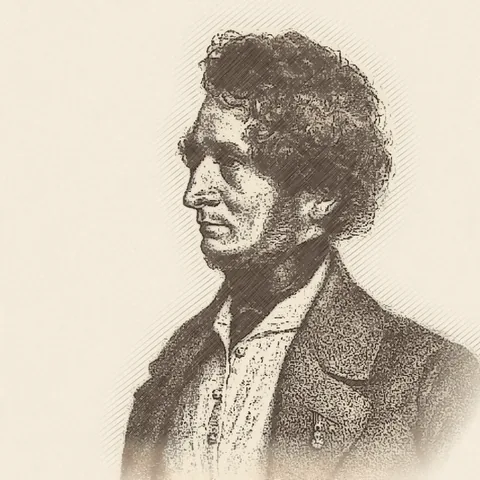 1803 – 1869Romantic
Hector Berlioz
He imagined spectacular orchestras and told stories through instrumental colors.
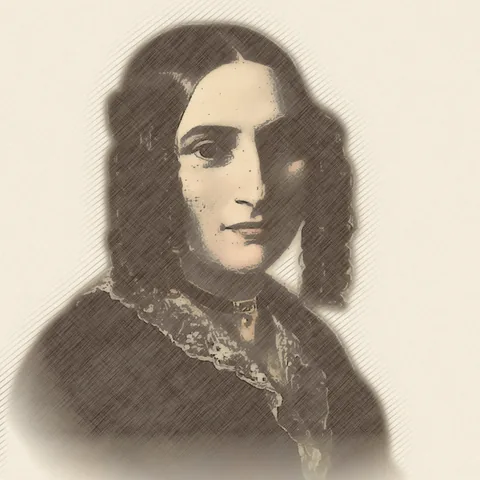 1805 – 1847Romantic
Fanny Mendelssohn
A composer and pianist who wrote hundreds of works despite social constraints.
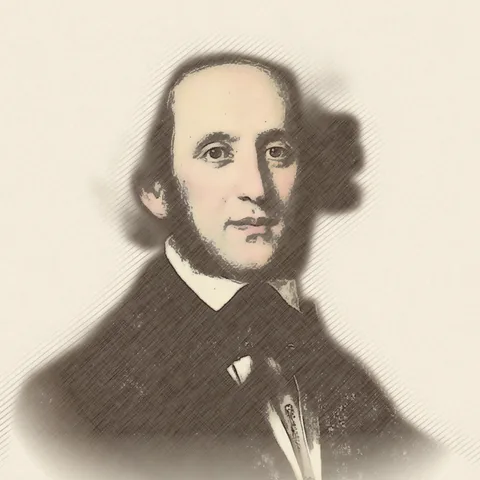 1809 – 1847Romantic
Felix Mendelssohn
A conductor and composer who revived Bach and wrote music of great clarity.
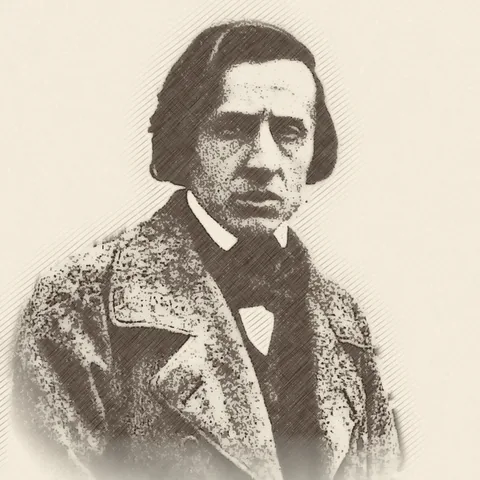 1810 – 1849Romantic
Frédéric Chopin
At the piano, he combined virtuosity, poetry and memories of Polish dance.
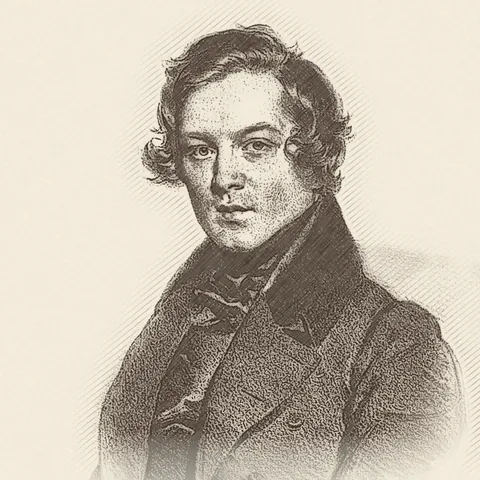 1810 – 1856Romantic
Robert Schumann
A composer and critic, he explored psychological contrasts in piano music.
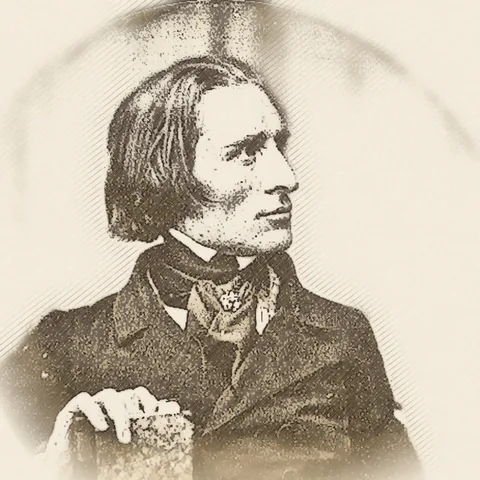 1811 – 1886Romantic
Franz Liszt
A star pianist, he invented new forms and developed the symphonic poem.