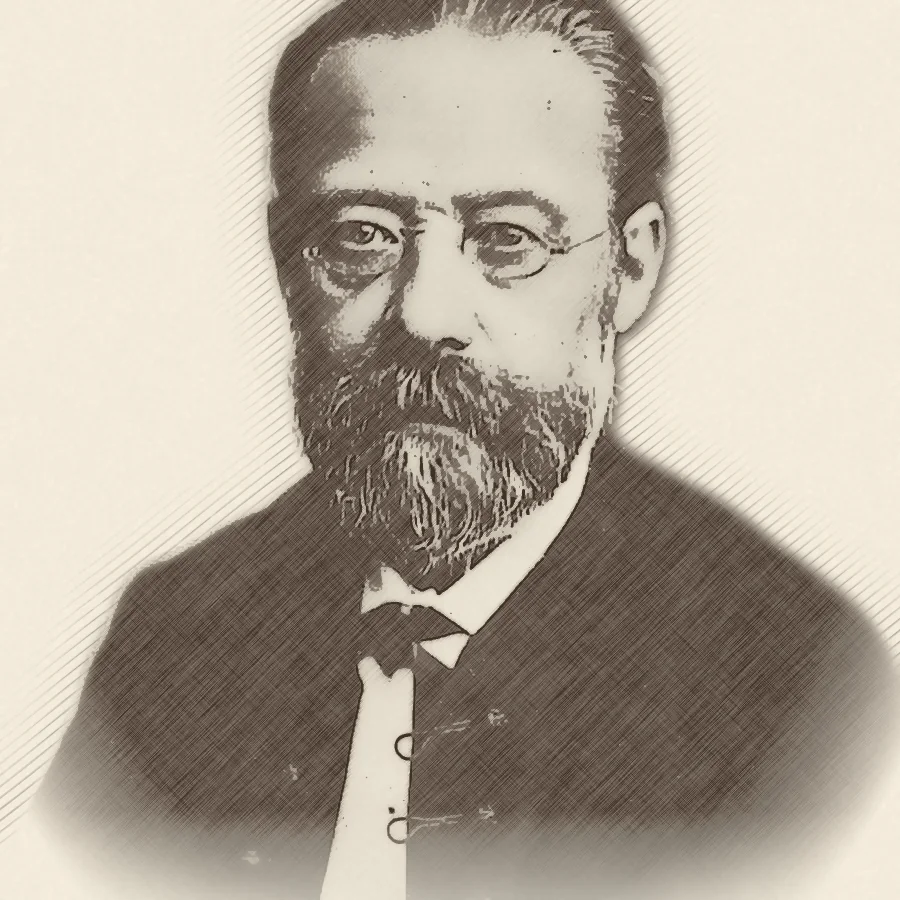
 Romantic
Bedřich Smetana
A leading Czech composer who joined opera, symphonic poetry and national identity.
A life and its times
The milestones of the life and work, the contemporaries and the major world events, on a single line of time.
A life at a glance
- 1824Birth
Born in Litomyšl on 2 March, son of a brewer
- 1825Meanwhile
First public passenger railway (England)
- 1830Careerage 6
First piano concert at 6
- 1839Meanwhile
Photography is invented (daguerreotype)
- 1840Meanwhile
Adolphe Sax invents the saxophone (c. 1840)
- 1843Milestoneage 19
Moves to Prague, penniless, and studies with Josef Proksch
- 1848Careerage 24
Opens a music school in Prague with Liszt’s help
- 1848Meanwhile
Revolutions of 1848; slavery abolished in France
- 1849Private lifeage 25
Marries Kateřina Kolářová
- 1856Journeyage 32
Conductor in Gothenburg, Sweden, for five years
- 1862Milestoneage 38
Returns to Prague as Czech national feeling awakens
- 1865Meanwhile
End of the American Civil War; slavery abolished in the USA
- 1866Workage 42
The Bartered Bride, the Czech national opera
- 1866Careerage 42
Principal conductor of the Provisional Theatre in Prague
- 1869Meanwhile
The Suez Canal opens
- 1874Private lifeage 50
Becomes totally deaf
- 1874Workage 50
Begins Má vlast with Vltava (The Moldau)
- 1875Meanwhile
The Palais Garnier opera house opens in Paris
- 1876Workage 52
Quartet ‘From My Life’, in which a high note depicts his deafness
- 1877Meanwhile
Edison invents the phonograph: sound can be recorded!
- 1881Workage 57
Libuše opens the National Theatre in Prague
- 1884Deathage 60
Dies in Prague on 12 May
Listen
Excerpts from freely licensed recordings, with their performers and licences.
Excerpts last up to 90 seconds. Bedřich Smetana’s compositions are in the public domain; each recording is streamed from Wikimedia Commons under the licence shown, credited to its performers or uploader.
Listen to complete works on Wikimedia Commons
Wikimedia Commons is a free media library: you will find the complete recordings there, with their reuse conditions.
- Complete recordingMá vlast — Vltava (The Moldau)
- Complete recordingThe Bartered Bride — Overture
- Wikimedia Commons fileSmetana, Má vlast - Vltava - The Moldau
- Search for the workVltava (The Moldau)
- Search for the workMá vlast (My Country)
- Search for the workThe Bartered Bride
- Search for the workString Quartet No. 1 ‘From My Life’
- Search for the workLibuše
- Search for the workPiano Trio in G minor
- Everything on CommonsAll recordings of Bedřich Smetana
The life of Bedřich Smetana
Bedřich Smetana was born on 2 March 1824 at Litomyšl in Bohemia, then a province of the Austrian Empire. His father, František, was a wealthy brewer and passionate amateur violinist who taught him music. Bedřich was a child prodigy: at six he gave his first piano concert and began composing. Like most educated Czechs of his time, he grew up speaking German, the official language of the empire, and only learned to write Czech well as an adult.
After turbulent secondary schooling he moved to Prague in 1843, poor and with little family support. He studied composition with the teacher Josef Proksch and earned his living as music teacher in the family of Count Thun. He dreamed of becoming “a Mozart in composition and a Liszt in technique”. In 1848, the year of revolutions in Europe, he took part in the Prague barricades and composed patriotic marches. With the help of Liszt, to whom he had written and dedicated pieces, he opened a music school in Prague.
In 1849 he married Kateřina Kolářová, a pianist and childhood friend. They had four daughters, but three died in infancy. The grief of losing his eldest daughter, Bedřiška, inspired his Piano Trio in G minor in 1855. Disappointed by the lack of recognition in Prague, where musical life was dominated by German culture and political repression, he left in 1856 for Gothenburg in Sweden, where he became a conductor and teacher. He stayed five years and composed his first symphonic poems, inspired by Liszt.
His wife died of tuberculosis in 1859 on the journey home. He remarried the following year, to Bettina Ferdinandiová. In 1862 he returned to Prague, where the atmosphere had changed: Austria was loosening its grip and the Czechs were asserting their national identity. A Provisional Theatre opened to stage plays and operas in Czech. Smetana wanted to create a Czech national music. His first opera, The Brandenburgers in Bohemia (1866), was a great success.
That same year he premiered The Bartered Bride, a comic opera full of folk dances — polka, furiant — and village humour, which became the emblematic work of Czech music. Smetana was appointed principal conductor of the Provisional Theatre. He went on to compose Dalibor (1868), a heroic opera, and Libuše, about the legendary founder of Prague, performed in 1881 for the opening of the National Theatre. But his opponents accused him of being too influenced by Wagner.
In 1874 Smetana suddenly became totally deaf, probably as a result of illness. He had to give up conducting and retired to the country, to his daughter’s home at Jabkenice. Yet it was in silence that he composed his greatest works. Between 1874 and 1879 he wrote Má vlast (My Homeland), a cycle of six symphonic poems celebrating the history, legends and landscapes of Bohemia. The most famous, Vltava (The Moldau), follows the great river from its two sources to Prague.
In 1876 he composed String Quartet No. 1, “From My Life”, a true musical autobiography: in the finale a very high, sustained note on the first violin represents the whistling that heralded his deafness. His last years were marked by severe depression and mental illness. He was admitted to an asylum in Prague, where he died on 12 May 1884, aged sixty. He is regarded as the father of Czech music. Every year the Prague Spring festival opens on the anniversary of his death with Má vlast.
Works to know
- 1855
Piano Trio in G minor
Written after his daughter’s death.
Listen on Wikimedia Commons - 1866
The Bartered Bride
Village comic opera full of dances.
Listen on Wikimedia Commons - 1874
Vltava (The Moldau)
A river’s journey from its source to Prague.
Listen on Wikimedia Commons - 1876
String Quartet No. 1 ‘From My Life’
A musical autobiography.
Listen on Wikimedia Commons - 1879
Má vlast (My Country)
Six symphonic poems about Bohemia.
Listen on Wikimedia Commons - 1881
Libuše
Festive opera on Prague’s founding queen.
Listen on Wikimedia Commons
Anecdotes
In Vltava, two flutes represent the river’s two little springs.
He lived in Sweden for five years as a conductor.
In his quartet “From My Life” a high, held violin note imitates the whistling that announced his deafness.
The Prague Spring festival opens every year, on the anniversary of his death, with Má vlast.
Same era · Romantic
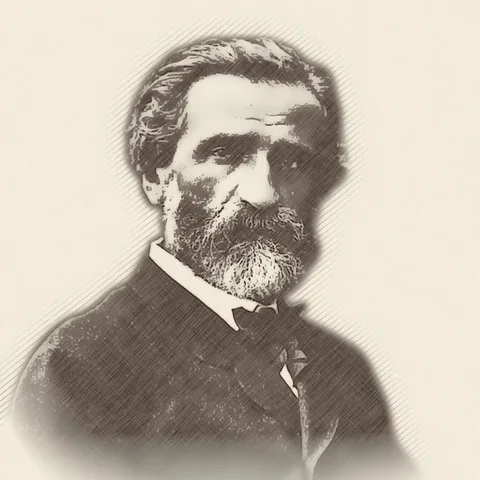 1813 – 1901Romantic
Giuseppe Verdi
His operas give unforgettable voice to human passions and conflicts.
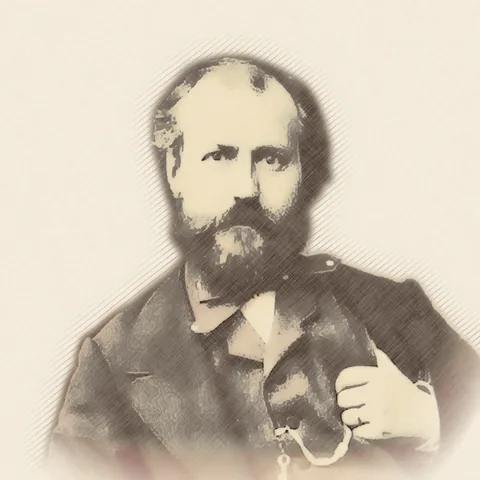 1818 – 1893Romantic
Charles Gounod
A French composer who shaped Romantic opera and sacred music.
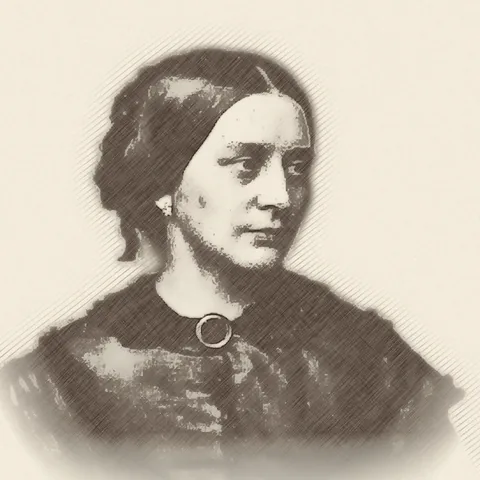 1819 – 1896Romantic
Clara Schumann
An internationally renowned pianist and composer, she also championed contemporary music.
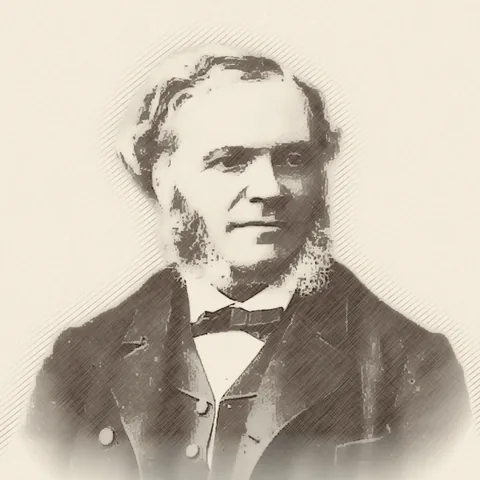 1822 – 1890Romantic
César Franck
An organist and teacher who developed cyclic forms in French music.
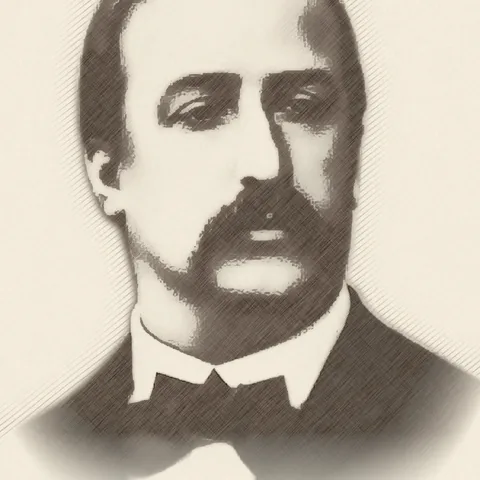 1833 – 1887Romantic
Alexandre Borodine
A chemist and composer who combined scientific research and musical creativity.
 1833 – 1897Romantic
Johannes Brahms
He reinvented classical forms with Romantic intensity and dense thematic craft.