 20th century and today
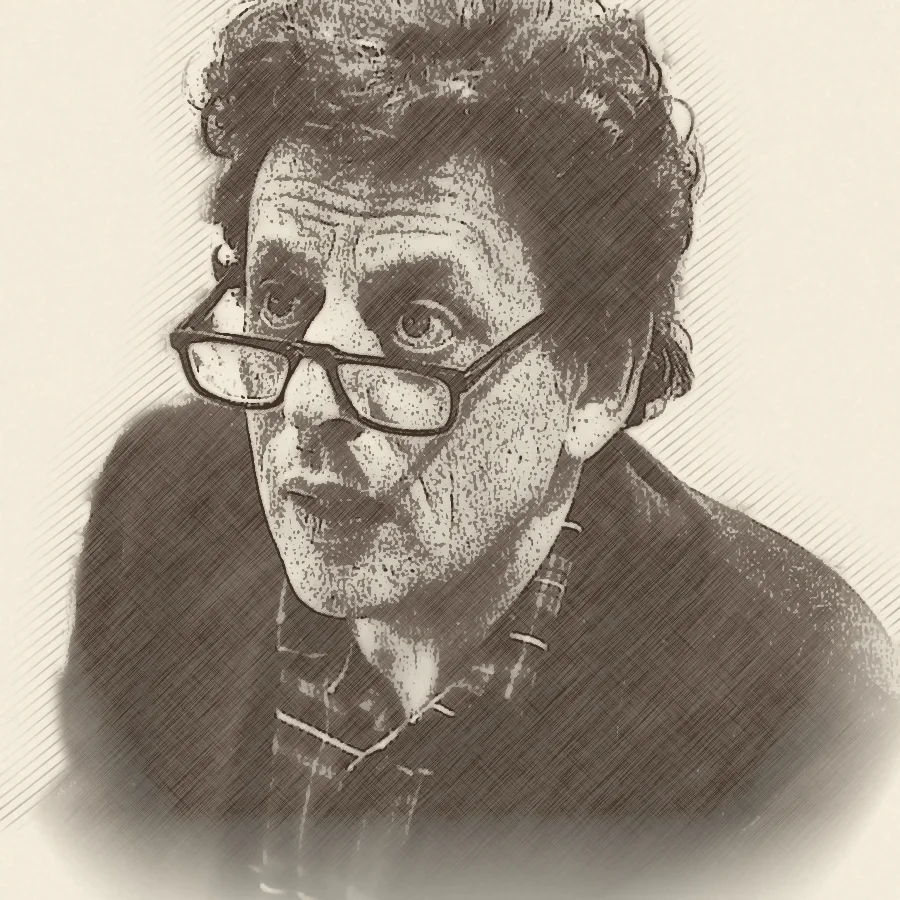
Philip Glass
His repeated and evolving patterns helped popularize minimalist music.
A life and its times
The milestones of the life and work, the contemporaries and the major world events, on a single line of time.
A life at a glance
- 1937Birth
Born in Baltimore on 31 January; his father runs a record shop
- 1945Meanwhile
End of the Second World War; United Nations founded
- 1948Meanwhile
The long-playing record (LP) goes on sale
- 1952Trainingage 15
Enters the University of Chicago at 15 (mathematics, philosophy)
- 1958Trainingage 21
Studies at the Juilliard School in New York
- 1961Meanwhile
Yuri Gagarin, first human in space
- 1964Trainingage 27
Pupil of Nadia Boulanger in Paris
- 1964Meanwhile
Robert Moog presents his synthesizer
- 1965Journeyage 28
Works with Ravi Shankar: discovers Indian rhythms
- 1968Careerage 31
Founds the Philip Glass Ensemble; also works as a plumber and taxi driver
- 1976Workage 39
Einstein on the Beach, a nearly five-hour opera with Robert Wilson
- 1977Meanwhile
Voyager probes launched with their Golden Record
- 1980Workage 43
Satyagraha, opera about Gandhi
- 1982Workage 45
Glassworks; score for the film Koyaanisqatsi
- 1982Meanwhile
The compact disc (CD) is launched
- 1984Workage 47
Akhnaten, opera
- 1991Meanwhile
The World Wide Web is born
- 1998Workage 61
Score for the film The Truman Show
- 2002Workage 65
Score for the film The Hours
- 2007Meanwhile
The touchscreen smartphone arrives
Listen
Excerpts from freely licensed recordings, with their performers and licences.
Philip Glass’s music is still protected by copyright: to respect the rights holders, no excerpt is hosted here. You can hear it on the radio, in concert or on licensed streaming platforms.
Listen to complete works on Wikimedia Commons
Wikimedia Commons is a free media library: you will find the complete recordings there, with their reuse conditions.
The life of Philip Glass
Philip Glass was born on 31 January 1937 in Baltimore, Maryland, in the United States, into a Jewish family of Lithuanian origin. His father, Ben Glass, ran a record and radio-repair shop. When records sold badly, he took them home to find out why: young Philip thus discovered the chamber music of Beethoven, Schubert, Shostakovich and Bartók. He learned violin at six, then flute, which he studied at the Peabody Conservatory in Baltimore.
Very precocious, he entered the University of Chicago at fifteen, studying mathematics and philosophy while discovering Webern, Ives and jazz. In 1958 he entered the Juilliard School in New York to study composition. There he composed in a modern, dissonant style but was dissatisfied. In 1964, on a grant, he went to Paris, where for two years he studied with the famous teacher Nadia Boulanger, who drilled him relentlessly in the harmony and counterpoint of Bach and Mozart.
In Paris he was hired to transcribe the music of the Indian sitar player Ravi Shankar for a film. Working with him and the tabla player Alla Rakha, he discovered the structure of Indian music, based on rhythmic cycles that add up. It was a revelation. He then travelled to North Africa, India and the Himalayas and became passionate about Tibetan culture and Buddhism. Back in New York in 1967, he developed a new style based on short, repeated patterns that change gradually.
In 1968 he founded the Philip Glass Ensemble, a group of amplified instruments — electric keyboards, saxophones, flutes, voice — to play his music, at first in art galleries and lofts. His music was initially rejected by the traditional musical world. To make a living he worked in New York as a removal man, plumber and taxi driver until the age of forty-one. It is said that one day, while installing a dishwasher, he was recognised by an astonished art critic.
In 1976, with the director Robert Wilson, he created Einstein on the Beach, an opera of nearly five hours with no interval and no real plot, during which the audience may come and go as they please. The singers sing numbers and the names of notes. Performed in Avignon and then at the Metropolitan Opera in New York, it caused a sensation. It forms the first part of a trilogy of “portraits” of men who changed the world, with Satyagraha (1980), about Gandhi, sung in Sanskrit, and Akhnaten (1984), about the Egyptian pharaoh.
In the 1980s his music reached a very wide audience. His album Glassworks (1982) was designed to be listened to on a Walkman. He composed the score for Godfrey Reggio’s documentary Koyaanisqatsi (1982), which shows without words the relationship between humanity, nature and technology. He went on to write more than thirty film scores, including Kundun (1997), The Truman Show (1998) and The Hours (2002), which earned him several Oscar nominations. He has also collaborated with pop musicians such as David Bowie, Paul Simon and Brian Eno.
Glass is one of the most prolific composers of our time: some thirty operas, around fifteen symphonies, many concertos, string quartets and Études for piano (1991–2012), which he performs himself in concert. He dislikes the word “minimalist” and prefers to speak of “music with repetitive structures”. In 2015 he published a memoir, Words Without Music. His influence is immense, from film music to pop and electronic music.
Works to know
- 1976
Einstein on the Beach
Opera without a story, made of repeated patterns and sung numbers.
- 1980
Satyagraha
Opera about Gandhi sung in Sanskrit.
- 1982
Glassworks
Accessible pieces that made his style famous.
- 1982
Koyaanisqatsi
A wordless film about the modern world.
- 1991
Piano Études
Twenty études written over two decades.
- 2002
The Hours
Oscar-nominated film score.
Anecdotes
His opera Einstein on the Beach lasts almost five hours, and the audience can come and go as they please!
He was a pupil of Nadia Boulanger, like Aaron Copland.
In Einstein on the Beach the singers sing numbers and the names of notes.
He worked as a plumber and taxi driver until he was forty-one.
Same era · 20th century and today
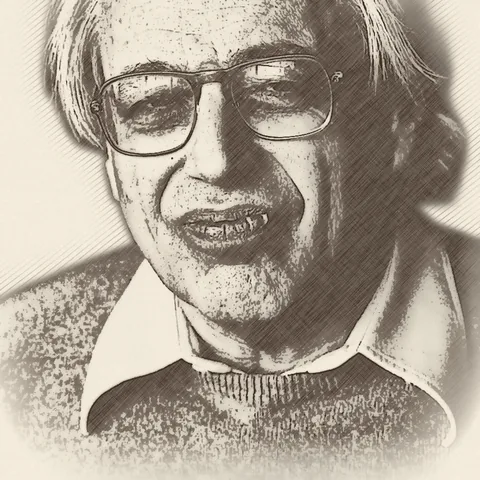 1923 – 200620th century and today
György Ligeti
He created shifting sonic textures that blur the boundary between melody and sound mass.
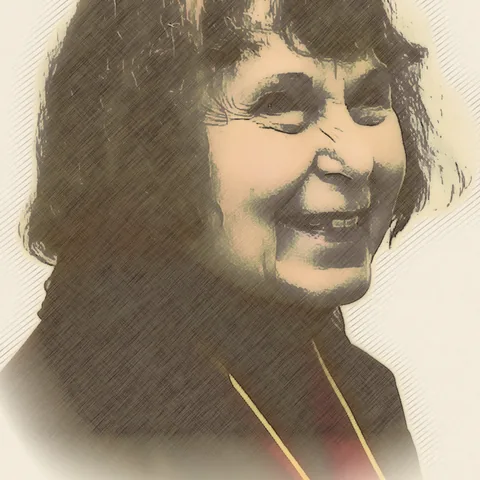 1931 – 202520th century and today
Sofia Goubaïdoulina
A Tatarstan-born composer who explored spirituality, timbre and unusual instruments.
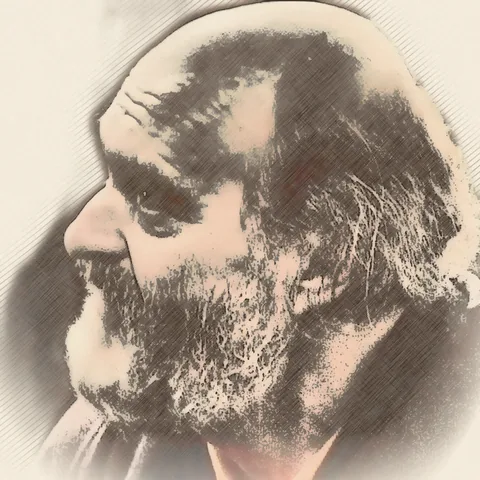 1935 –20th century and today
Arvo Pärt
His tintinnabuli style seeks simplicity and spiritual resonance.
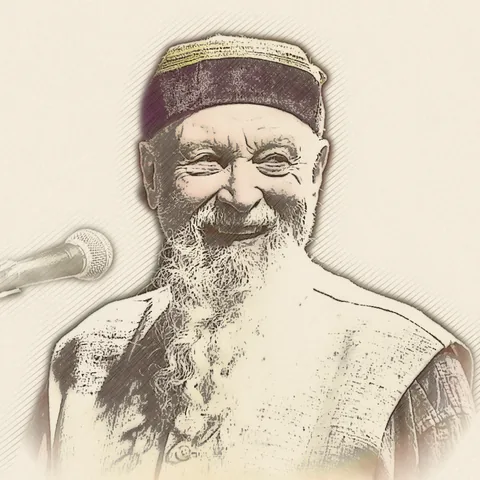 1935 –20th century and today
Terry Riley
An American minimalist composer who explored repetition and improvisation.
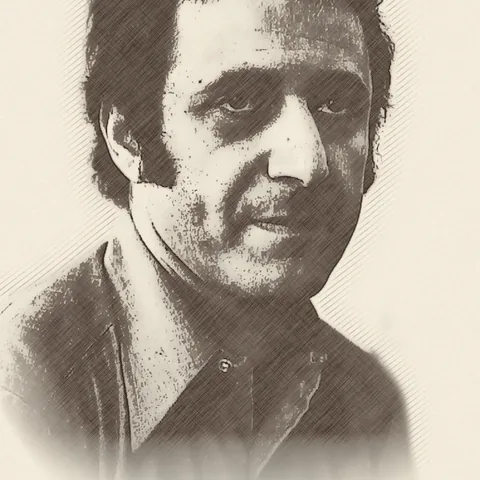 1936 –20th century and today
Steve Reich
He explores rhythmic phasing, repetition and connections between speech and music.
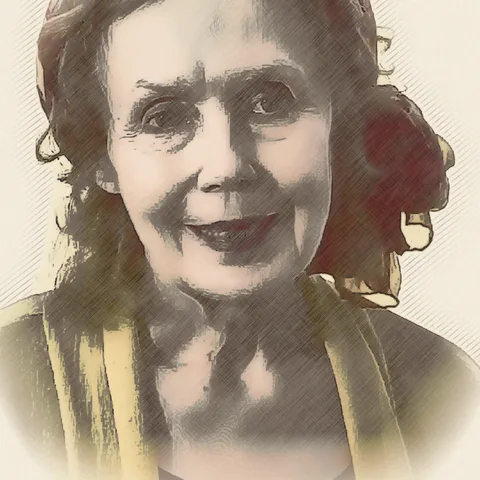 1952 – 202320th century and today
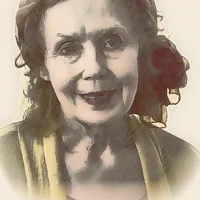
Kaija Saariaho
A Finnish composer who sculpted timbre and texture with exceptional subtlety.