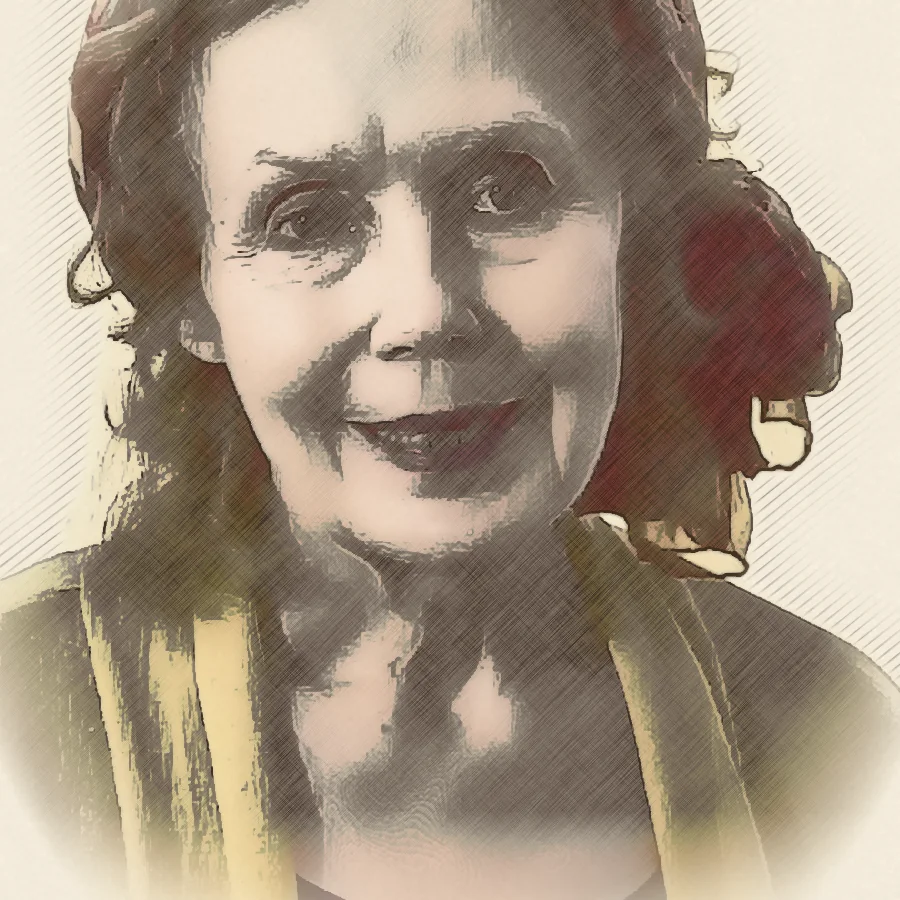
A life and its times
The milestones of the life and work, the contemporaries and the major world events, on a single line of time.
A life at a glance
- 1952Birth
Born in Helsinki on 14 October
- 1957Meanwhile
Sputnik, the first artificial satellite
- 1963Meanwhile
Martin Luther King’s “I have a dream” speech
- 1964Meanwhile
Robert Moog presents his synthesizer
- 1972Trainingage 20
Studies visual arts, then composition at the Sibelius Academy
- 1977Careerage 25
Co-founds the ‘Open Ears’ group (Korvat auki)
- 1977Meanwhile
Voyager probes launched with their Golden Record
- 1981Trainingage 29
Studies in Freiburg
- 1982Milestoneage 30
Moves to Paris and works at IRCAM on computer music
- 1982Meanwhile
The compact disc (CD) is launched
- 1986Workage 34
Lichtbogen, inspired by the northern lights
- 1989Meanwhile
Fall of the Berlin Wall
- 1994Workage 42
Graal théâtre, violin concerto for Gidon Kremer
- 2000Workage 48
L’Amour de loin, premiered at the Salzburg Festival
- 2001Meanwhile
September 11 attacks in the United States
- 2003Careerage 51
Grawemeyer Award for composition
- 2006Workage 54
Adriana Mater
- 2016Landmarkage 64
L’Amour de loin at the Metropolitan Opera in New York
- 2020Meanwhile
Covid-19 pandemic
- 2021Workage 69
Innocence, premiered at the Aix-en-Provence Festival
- 2023Deathage 71
Dies in Paris on 2 June
Listen
Excerpts from freely licensed recordings, with their performers and licences.
Kaija Saariaho’s music is still protected by copyright: to respect the rights holders, no excerpt is hosted here. You can hear it on the radio, in concert or on licensed streaming platforms.
Listen to complete works on Wikimedia Commons
Wikimedia Commons is a free media library: you will find the complete recordings there, with their reuse conditions.
The life of Kaija Saariaho
Kaija Saariaho was born in Helsinki, Finland, on 14 October 1952, as Kaija Laakkonen. Her parents, who ran a metalworking business, were not musicians. As a child she had a very intense perception of sounds, colours and scents; she recalled hearing music coming from her pillow at night and asking her mother to “turn it off”. She learned violin, piano and guitar and began composing, but long hesitated between music and the visual arts.
She first studied painting and drawing at the University of Industrial Arts in Helsinki. Then in 1976 she entered the Sibelius Academy, studying composition with Paavo Heininen, a demanding teacher who encouraged her. In 1977 she co-founded with other young Finnish composers, including Esa-Pekka Salonen and Magnus Lindberg, the group Korvat auki (“Ears Open”), which aimed to open Finnish music to the most modern research.
In 1981 she continued her studies in Freiburg, Germany, with Brian Ferneyhough and Klaus Huber. But she felt at odds with the very complex serial music taught there. In 1982 she discovered at Darmstadt French spectral music, notably that of Tristan Murail and Gérard Grisey, which builds music from the scientific analysis of sound. That same year she settled in Paris and began working at IRCAM, the music research institute founded by Pierre Boulez, exploring computer music and electronic sounds. She lived in Paris for the rest of her life.
Her music is characterised by luminous, shifting sound textures that often blend instruments and electronics. She liked to move gradually from a pure sound to a noisy one, from one colour to another. She was often inspired by nature, light and natural phenomena. Lichtbogen (“Arc of Light”, 1986), for ensemble and electronics, was inspired by an aurora borealis she saw in the Arctic sky. Nymphéa (1987), for string quartet and electronics, evokes Monet’s water lilies.
In 1994 she composed the concerto Graal théâtre for the violinist Gidon Kremer, then works for the soprano Dawn Upshaw, who became her favourite performer. In 2000 her first opera, L’Amour de loin, to a libretto by the writer Amin Maalouf, was premiered at the Salzburg Festival in a production by Peter Sellars. It tells of the troubadour Jaufré Rudel’s love for a countess of Tripoli he has never seen. Its success was international, and in 2003 the opera won the prestigious Grawemeyer Award.
She then composed other operas: Adriana Mater (2006), on war and motherhood; Émilie (2010), about the scientist Émilie du Châtelet; and Only the Sound Remains (2016), after Japanese Noh theatre. In 2016 L’Amour de loin was staged at the Metropolitan Opera in New York: the first opera by a woman presented at the Met since 1903. Saariaho also campaigned for the place of women in composition, long overlooked in concert programmes.
In 2021 her last opera, Innocence, premiered at the Aix-en-Provence Festival, tells in nine languages of the aftermath of a school shooting in Finland. It was hailed as one of the great operas of our time. Suffering from brain cancer, she kept composing, notably a trumpet concerto, HUSH. She died in Paris on 2 June 2023, aged seventy. She is regarded as one of the most important composers of her generation.
Works to know
- 1986
Lichtbogen
Luminous music inspired by the northern lights.
- 1987
Nymphéa
String quartet with electronics.
- 1994
Graal théâtre
Violin concerto of shifting colours.
- 2000
L’Amour de loin
Opera about a troubadour in love with a distant countess.
- 2006
Adriana Mater
Opera about a mother in wartime.
- 2021
Innocence
Choral opera about a tragedy at a school.
Anecdotes
Her opera was the first by a woman staged at the Met since 1903.
She studied painting before music.
As a child she asked her mother to “turn off” the music she heard coming from her pillow.
Her work Lichtbogen was inspired by an aurora borealis.
Same era · 20th century and today
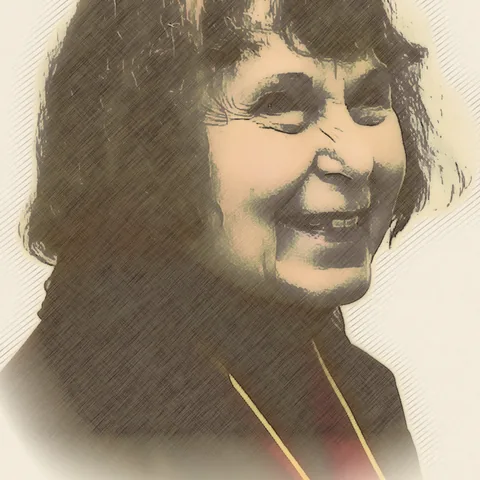 1931 – 202520th century and today
Sofia Goubaïdoulina
A Tatarstan-born composer who explored spirituality, timbre and unusual instruments.
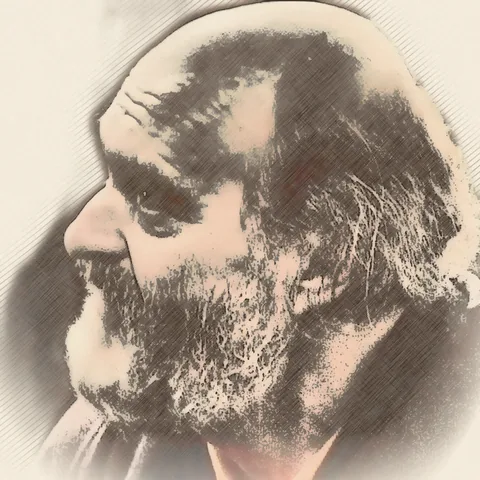 1935 –20th century and today
Arvo Pärt
His tintinnabuli style seeks simplicity and spiritual resonance.
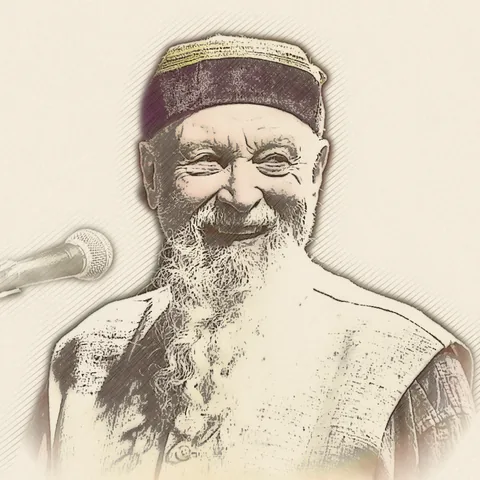 1935 –20th century and today
Terry Riley
An American minimalist composer who explored repetition and improvisation.
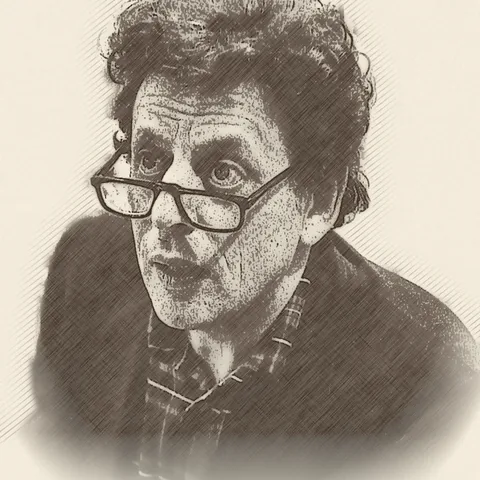
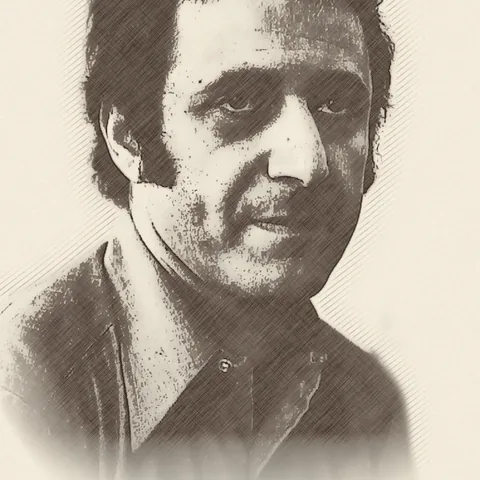 1936 –20th century and today
Steve Reich
He explores rhythmic phasing, repetition and connections between speech and music.
 1937 –20th century and today
Philip Glass
His repeated and evolving patterns helped popularize minimalist music.
 1961 –20th century and today
Unsuk Chin
A South Korean composer known for virtuosic and imaginative writing.