A life and its times
The milestones of the life and work, the contemporaries and the major world events, on a single line of time.
A life at a glance
- 1936Birth
Born in New York on 3 October
- 1939Private lifeage 3
As a child, often travels by train between his separated parents in New York and Los Angeles
- 1945Meanwhile
End of the Second World War; United Nations founded
- 1948Meanwhile
The long-playing record (LP) goes on sale
- 1957Trainingage 21
Philosophy degree from Cornell University
- 1961Trainingage 25
Studies composition with Luciano Berio and Darius Milhaud
- 1961Meanwhile
Yuri Gagarin, first human in space
- 1964Meanwhile
Robert Moog presents his synthesizer
- 1965Workage 29
It’s Gonna Rain: discovers ‘phasing’ with two tape recorders
- 1966Careerage 30
Founds his ensemble, Steve Reich and Musicians
- 1967Workage 31
Piano Phase
- 1970Journeyage 34
Studies African drumming in Ghana
- 1971Workage 35
Drumming
- 1972Workage 36
Clapping Music, for two pairs of hands
- 1976Workage 40
Music for 18 Musicians
- 1977Meanwhile
Voyager probes launched with their Golden Record
- 1982Meanwhile
The compact disc (CD) is launched
- 1988Workage 52
Different Trains, about the trains of his childhood and those of the Holocaust
- 1991Meanwhile
The World Wide Web is born
- 2007Meanwhile
The touchscreen smartphone arrives
- 2009Careerage 73
Pulitzer Prize for Double Sextet
Listen
Excerpts from freely licensed recordings, with their performers and licences.
Steve Reich’s music is still protected by copyright: to respect the rights holders, no excerpt is hosted here. You can hear it on the radio, in concert or on licensed streaming platforms.
Listen to complete works on Wikimedia Commons
Wikimedia Commons is a free media library: you will find the complete recordings there, with their reuse conditions.
The life of Steve Reich
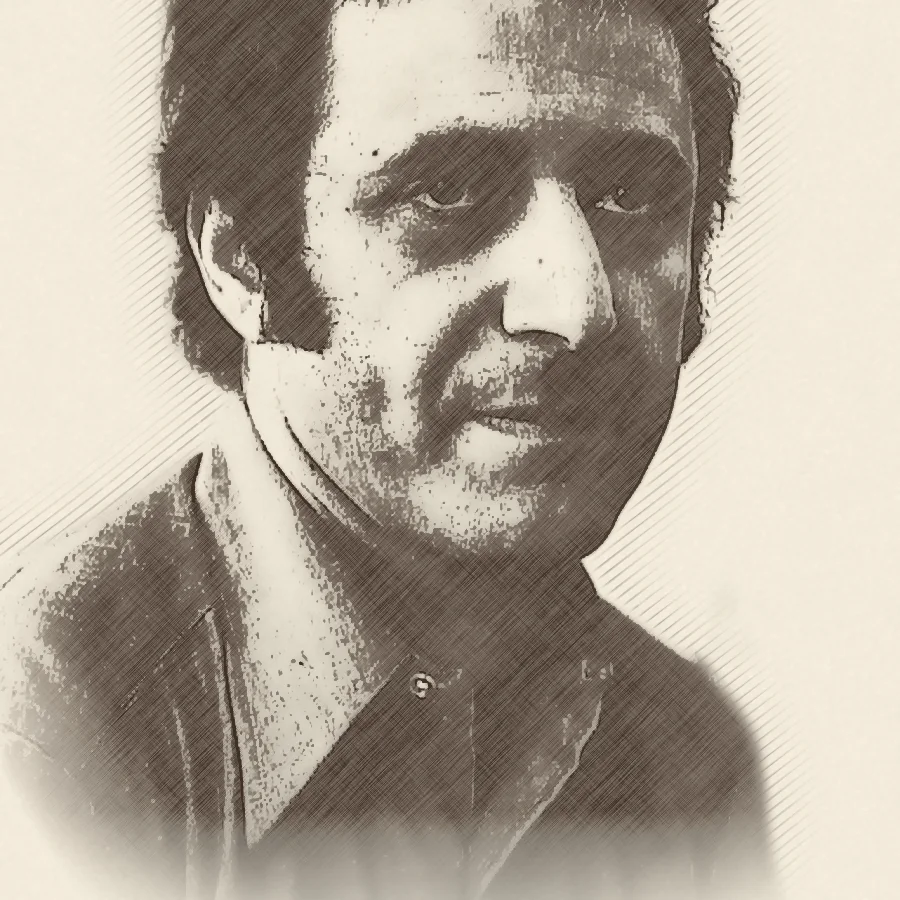
Steve Reich was born in New York on 3 October 1936. His father, Leonard Reich, was a lawyer; his mother, June Sillman, was a singer and Broadway lyricist. His parents divorced when he was one. Between 1939 and 1942 he made many train journeys between New York, where his father lived, and Los Angeles, where his mother lived, accompanied by his governess. He did not yet know it, but as a Jewish child, had he lived in Europe at the same time, he would have travelled on very different trains: this thought would later inspire one of his major works.
He took piano lessons as a child, but at fourteen he discovered three kinds of music that overwhelmed him: Bach’s Fifth Brandenburg Concerto, Stravinsky’s Rite of Spring and the bebop of Charlie Parker and Miles Davis. He then took up the drums. He studied philosophy at Cornell University, graduating in 1957, then composition at the Juilliard School in New York and at Mills College in California with Luciano Berio and Darius Milhaud.
In California he worked as a taxi driver and took part in the 1964 premiere of Terry Riley’s In C, suggesting that Riley add a steady pulse. In 1965 in San Francisco he recorded a street preacher repeating “It’s gonna rain”. Playing the same recording on two tape recorders, he noticed that the two tapes slowly drifted apart, creating surprising echo and rhythmic effects. He thus discovered “phasing”, the principle of his first important work, It’s Gonna Rain.
Back in New York he founded his own ensemble in 1966, Steve Reich and Musicians, to perform his music. He applied phasing to live instruments: in Piano Phase (1967) two pianists play the same pattern, one speeding up very slightly until they are one note apart, then two, and so on. In 1970 he went to Ghana to study African drumming at the University of Accra. On his return he composed Drumming (1971), a work of about an hour for percussion, voices and piccolo.
In 1972 he composed Clapping Music for two performers clapping their hands: one always repeats the same rhythm while the other shifts it by one beat every twelve repetitions, until the two rhythms coincide again. He also studied Balinese gamelan and Hebrew cantillation, the traditional way of chanting biblical texts. In 1976 he composed Music for 18 Musicians, a work of about an hour based on eleven chords, which achieved considerable success beyond the contemporary-music audience.
In 1988 he composed Different Trains for string quartet and tape, premiered by the Kronos Quartet. In it he sets side by side the American trains of his childhood and the trains that, at the same time, were taking Europe’s Jews to the death camps. The string melodies reproduce the intonation of recorded voices: his governess, a railway porter and Holocaust survivors. The work won him a Grammy Award. That same year he composed Electric Counterpoint for the jazz guitarist Pat Metheny.
Reich has also composed video operas with his wife, the artist Beryl Korot, such as The Cave (1993), on the common roots of Judaism and Islam, and Three Tales (2002). In 2009 he won the Pulitzer Prize for Double Sextet. His music, based on pulse, repetition and gradual change, has deeply influenced electronic music, rock and pop: artists such as Brian Eno, Radiohead and Aphex Twin have cited him as an influence. His ninetieth birthday in 2026 is being celebrated around the world.
Works to know
- 1967
Piano Phase
Two pianos play the same pattern at slightly different speeds.
- 1971
Drumming
Inspired by African drumming.
- 1972
Clapping Music
Two people clap; one gradually shifts out of step.
- 1976
Music for 18 Musicians
An hour of hypnotic, luminous pulses.
- 1987
Electric Counterpoint
For guitar and tape, premiered by Pat Metheny.
- 1988
Different Trains
Quartet and recorded voices — a masterpiece of memory.
Anecdotes
Clapping Music is played only by clapping — no instrument needed!
He went to Ghana to learn African drumming.
He discovered phasing by chance, playing the same recording on two tape recorders.
He worked as a taxi driver before he could live from his music.
Same era · 20th century and today
 1923 – 200620th century and today
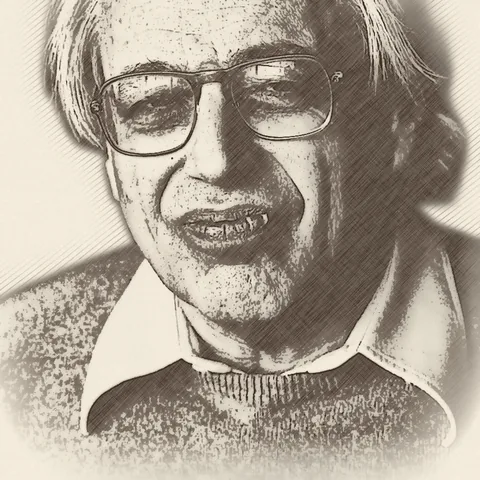
György Ligeti
He created shifting sonic textures that blur the boundary between melody and sound mass.
 1931 – 202520th century and today
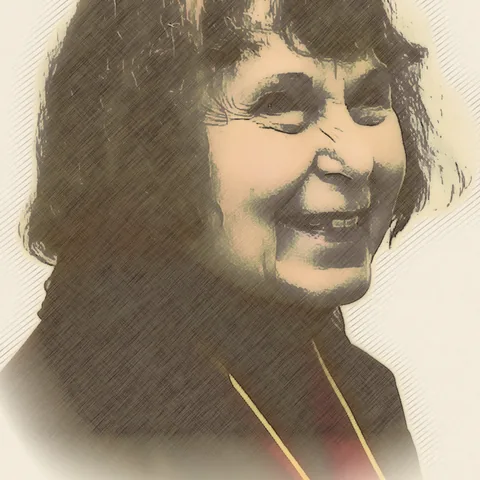
Sofia Goubaïdoulina
A Tatarstan-born composer who explored spirituality, timbre and unusual instruments.
 1935 –20th century and today
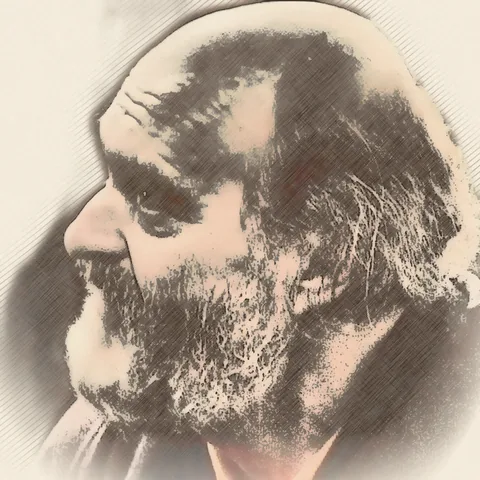
Arvo Pärt
His tintinnabuli style seeks simplicity and spiritual resonance.
 1935 –20th century and today
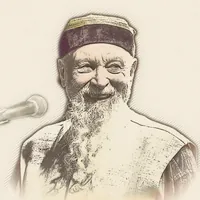
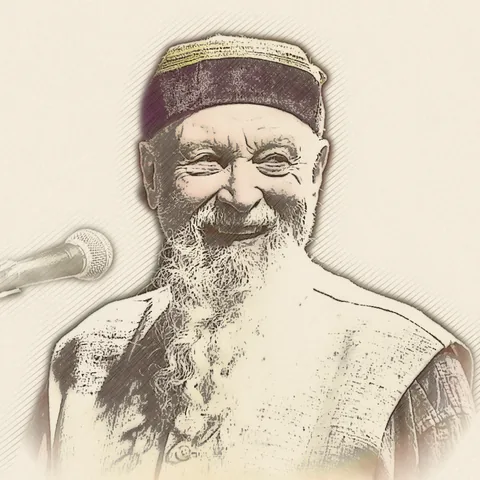
Terry Riley
An American minimalist composer who explored repetition and improvisation.
 1937 –20th century and today
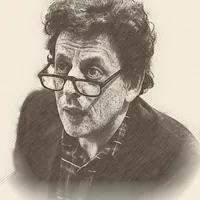
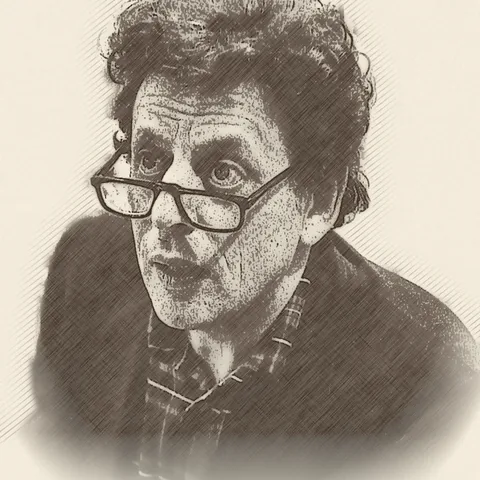
Philip Glass
His repeated and evolving patterns helped popularize minimalist music.
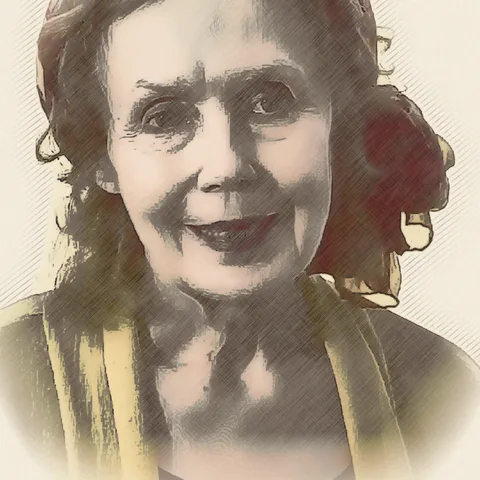 1952 – 202320th century and today
Kaija Saariaho
A Finnish composer who sculpted timbre and texture with exceptional subtlety.