 20th century and today
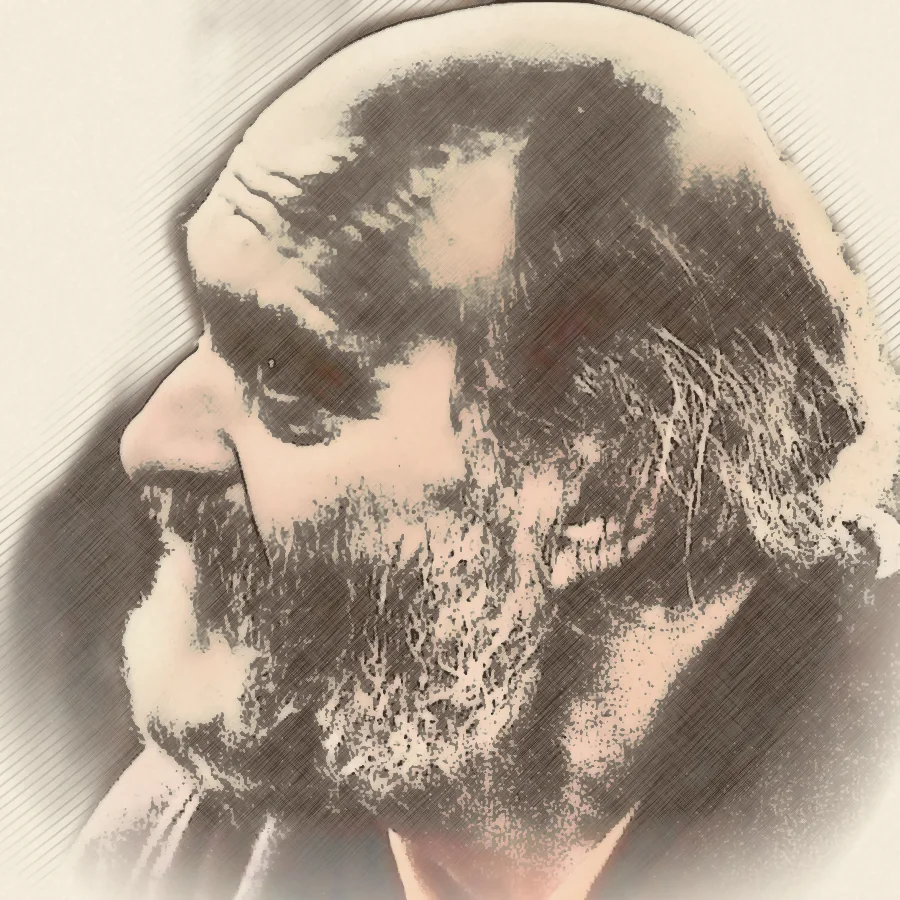
Arvo Pärt
His tintinnabuli style seeks simplicity and spiritual resonance.
A life and its times
The milestones of the life and work, the contemporaries and the major world events, on a single line of time.
A life at a glance
- 1935Birth
Born in Paide, Estonia, on 11 September
- 1945Meanwhile
End of the Second World War; United Nations founded
- 1948Meanwhile
The long-playing record (LP) goes on sale
- 1957Careerage 22
Sound engineer at Estonian Radio
- 1960Workage 25
Nekrolog, the first Estonian twelve-tone work, criticised by the Soviet authorities
- 1961Meanwhile
Yuri Gagarin, first human in space
- 1963Trainingage 28
Graduates from the Tallinn Conservatory
- 1964Meanwhile
Robert Moog presents his synthesizer
- 1968Workage 33
Credo, banned for its religious text
- 1968Private lifeage 33
Long period of silence: studies Gregorian chant and medieval music
- 1976Workage 41
Für Alina: birth of the ‘tintinnabuli’ style
- 1977Workage 42
Fratres, Tabula rasa, Cantus in Memory of Benjamin Britten
- 1977Meanwhile
Voyager probes launched with their Golden Record
- 1978Workage 43
Spiegel im Spiegel
- 1980Journeyage 45
Emigrates with his family to Vienna, then Berlin
- 1982Workage 47
Passio
- 1982Meanwhile
The compact disc (CD) is launched
- 1991Landmarkage 56
Estonia regains its independence
- 1991Meanwhile
The World Wide Web is born
- 2007Meanwhile
The touchscreen smartphone arrives
- 2018Careerage 83
Opening of the Arvo Pärt Centre in Laulasmaa
Listen
Excerpts from freely licensed recordings, with their performers and licences.
Arvo Pärt’s music is still protected by copyright: to respect the rights holders, no excerpt is hosted here. You can hear it on the radio, in concert or on licensed streaming platforms.
Listen to complete works on Wikimedia Commons
Wikimedia Commons is a free media library: you will find the complete recordings there, with their reuse conditions.
The life of Arvo Pärt
Arvo Pärt was born on 11 September 1935 in Paide, a small town in Estonia, then an independent Baltic country, which was annexed by the Soviet Union in 1940. His parents separated when he was three, and he went to live with his mother in Rakvere. As a child he played on an old piano some of whose keys no longer worked, which forced him to imagine other sounds. He began composing very young and listened passionately to concerts broadcast on the radio.
After military service he entered the Tallinn Conservatory in 1957, studying composition with Heino Eller. He graduated in 1963. Meanwhile, from 1957 to 1967, he worked as a sound engineer at Estonian radio, which let him hear a great deal of music and develop a very fine ear. He also composed more than fifty film scores, notably for Estonian animated films. He was one of the most promising Soviet composers of his generation.
Pärt was interested in modern Western music, hard to access in the USSR. In 1960 he composed Nekrolog, the first Estonian work to use Schoenberg’s twelve-tone technique, which drew sharp criticism from the Soviet authorities, who considered the style decadent. In the 1960s he composed works combining quotations from Bach with avant-garde music, such as Collage on B-A-C-H (1964) and his first two symphonies.
In 1968 he composed Credo for piano, chorus and orchestra, which opens with the words “Credo in Jesum Christum” (“I believe in Jesus Christ”). In the officially atheist Soviet Union this religious statement caused a scandal: the work was banned and Pärt was sidelined. He then went through a long creative crisis. For nearly eight years he composed very little. He studied Gregorian chant and medieval and Renaissance polyphony, notably the Notre-Dame school, Machaut and Josquin. Around 1972 he converted to the Orthodox Christian faith.
In 1976 he composed Für Alina, a short piano piece marking the birth of his new style, which he called “tintinnabuli”, from the Latin tintinnabulum, “little bell”. This very spare style combines a melodic voice moving in small steps with a voice that plays only the notes of a triad, like ringing bells. Pärt explains that a single note, beautifully played, can be enough. In 1977 he composed several masterpieces in this style: Fratres, Tabula rasa and Cantus in Memory of Benjamin Britten.
In 1978 he composed Spiegel im Spiegel (“Mirror in the Mirror”) for violin and piano, a work of great simplicity that became one of the most performed pieces of contemporary music in the world. But his relations with the Soviet authorities remained difficult. In 1980 he emigrated with his wife Nora and their children to Vienna, then settled in West Berlin. The producer Manfred Eicher, founder of the ECM label, discovered his music and in 1984 released the album Tabula rasa, which made it known all over the world.
Pärt composes mainly sacred music, on Latin, Slavonic, German or English texts: Passio (1982), Te Deum (1985), Miserere, Magnificat (1989), Berliner Messe, Kanon Pokajanen. After Estonia regained independence in 1991, he returned to live in his country in the early 2000s. In 2018 the Arvo Pärt Centre, which houses his archives, opened at Laulasmaa, in a forest by the sea. For many years he has been one of the most performed living composers in the world, and his ninetieth birthday was celebrated in 2025 with many concerts.
Works to know
- 1976
Für Alina
Short piano piece, the starting point of tintinnabuli.
- 1977
Fratres
Hypnotic, solemn work in many versions.
- 1977
Cantus in Memory of Benjamin Britten
Cascading strings and a tolling bell.
- 1977
Tabula rasa
Double concerto for two violins.
- 1978
Spiegel im Spiegel
Piano and violin — a mirror of absolute calm.
- 1990
Magnificat
Luminous, pared-down choral work.
Anecdotes
He first worked as a radio sound engineer.
He is often ranked among the most performed living composers in the world.
The name of his style, “tintinnabuli”, comes from the Latin word for “little bell”.
As a child he played on a piano some of whose keys no longer worked.
Same era · 20th century and today
 1923 – 200620th century and today
György Ligeti
He created shifting sonic textures that blur the boundary between melody and sound mass.
 1931 – 202520th century and today
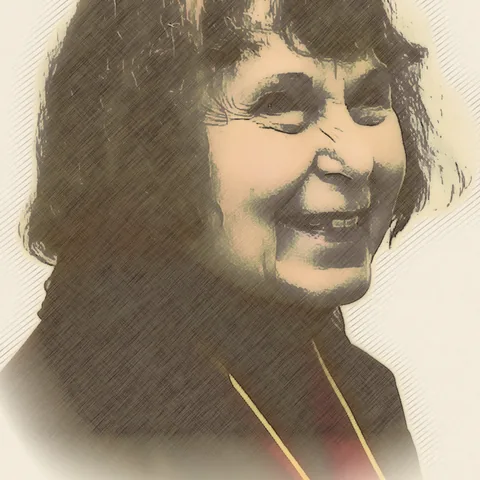
Sofia Goubaïdoulina
A Tatarstan-born composer who explored spirituality, timbre and unusual instruments.
 1935 –20th century and today
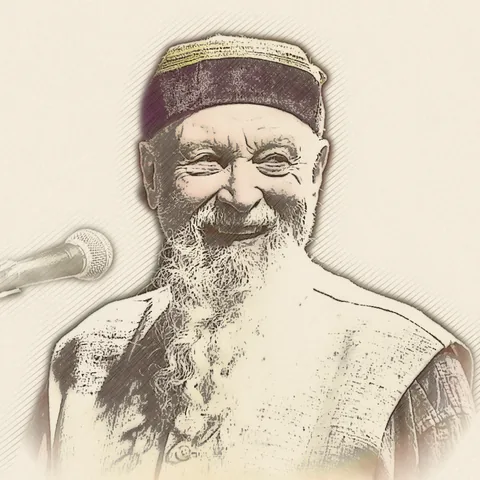
Terry Riley
An American minimalist composer who explored repetition and improvisation.
 1936 –20th century and today
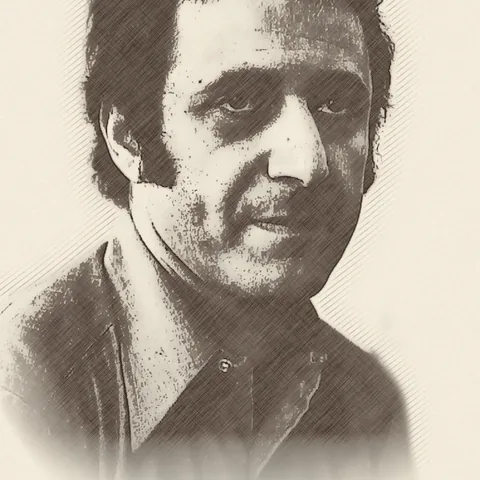
Steve Reich
He explores rhythmic phasing, repetition and connections between speech and music.
 1937 –20th century and today
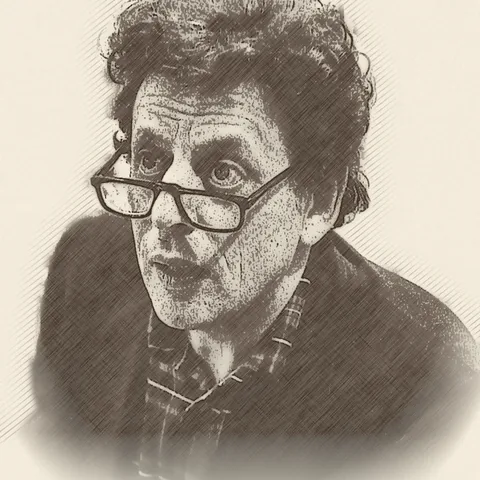
Philip Glass
His repeated and evolving patterns helped popularize minimalist music.
 1952 – 202320th century and today
Kaija Saariaho
A Finnish composer who sculpted timbre and texture with exceptional subtlety.