A life and its times
The milestones of the life and work, the contemporaries and the major world events, on a single line of time.
A life at a glance
- 1961Birth
Born in Seoul on 14 July; her father is a pastor
- 1961Meanwhile
Yuri Gagarin, first human in space
- 1964Meanwhile
Robert Moog presents his synthesizer
- 1969Meanwhile
First steps on the Moon
- 1970Trainingage 9
Teaches herself piano and music theory almost unaided
- 1977Meanwhile
Voyager probes launched with their Golden Record
- 1981Trainingage 20
Studies composition at Seoul National University
- 1982Meanwhile
The compact disc (CD) is launched
- 1985Journeyage 24
Moves to Germany to study with György Ligeti in Hamburg
- 1988Milestoneage 27
Settles in Berlin; works at the Technical University’s electronic studio
- 1991Workage 30
Acrostic Wordplay, for soprano and ensemble
- 1991Meanwhile
The World Wide Web is born
- 2001Workage 40
Violin Concerto
- 2001Meanwhile
September 11 attacks in the United States
- 2004Careerage 43
Grawemeyer Award for her Violin Concerto
- 2006Careerage 45
Composer in residence with the Seoul Philharmonic
- 2007Workage 46
Alice in Wonderland, opera premiered in Munich
- 2009Workage 48
Cello Concerto; Šu, concerto for sheng
- 2020Workage 59
Subito con forza, for Beethoven’s 250th anniversary
- 2020Meanwhile
Covid-19 pandemic
Listen
Excerpts from freely licensed recordings, with their performers and licences.
Unsuk Chin’s music is still protected by copyright: to respect the rights holders, no excerpt is hosted here. You can hear it on the radio, in concert or on licensed streaming platforms.
Listen to complete works on Wikimedia Commons
Wikimedia Commons is a free media library: you will find the complete recordings there, with their reuse conditions.
The life of Unsuk Chin
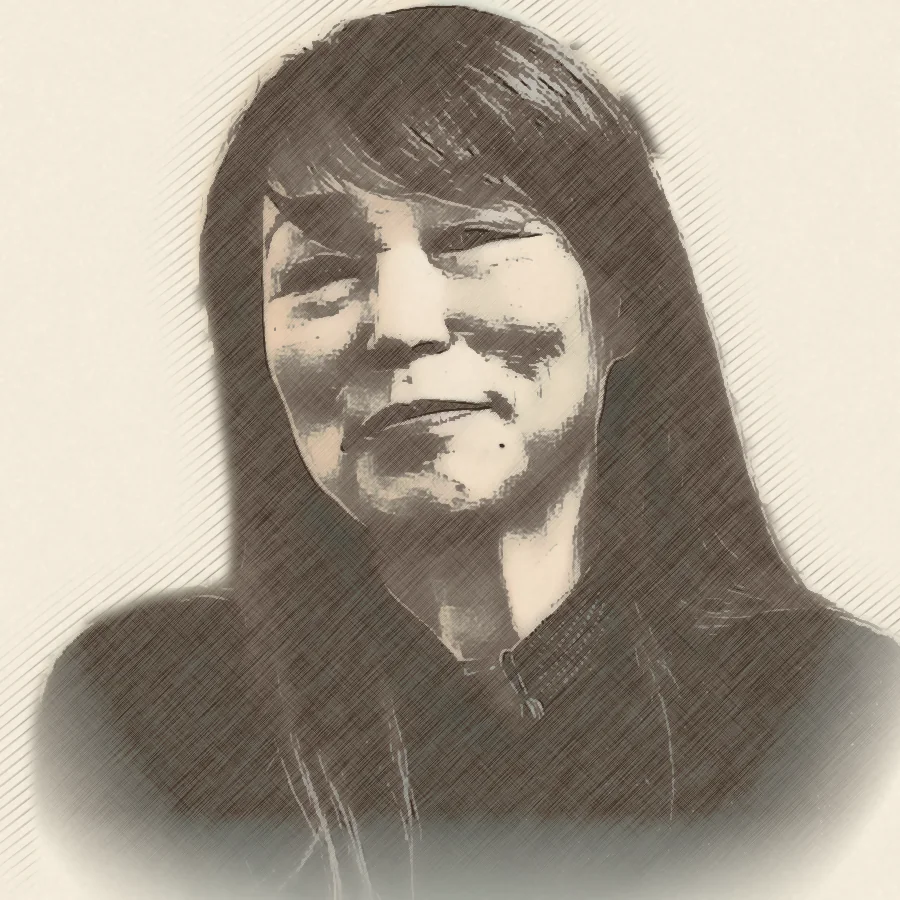
Unsuk Chin was born in Seoul, South Korea, on 14 July 1961. Her father was a Presbyterian minister, and her family lived modestly in a country rebuilding after the Korean War. As a child she accompanied the hymns in her father’s church on the piano and taught herself piano and music theory almost entirely, reading borrowed books and copying scores by hand. Her parents could not afford lessons, but she first dreamed of becoming a pianist.
She failed the university entrance exam several times but was finally admitted in 1981 to Seoul National University, where she studied composition with Sukhi Kang, a composer who had himself studied in Germany and introduced her to the European avant-garde. In 1985 one of her works was performed at the World Music Days of the International Society for Contemporary Music, and she won a grant to study in Germany.
From 1985 to 1988 she studied in Hamburg with the great composer György Ligeti. The beginning was hard: Ligeti, very demanding, harshly criticised her first works, which he thought too close to the fashionable avant-garde. She went through a crisis and stopped composing for nearly three years. Above all Ligeti taught her to find her own path and to open herself to the music of the world. She remained ever grateful to this demanding master.
In 1988 she settled in Berlin, where she still lives. For several years she worked at the electronic music studio of the Technical University of Berlin, composing electronic works. In 1991 she composed Acrostic Wordplay for soprano and ensemble, on texts inspired by Alice in Wonderland and The Neverending Story, a work full of humour and fantasy that made her known internationally and has been performed in more than twenty countries.
Her music is renowned for its virtuosity, imagination, dazzling instrumental colours and humour. She draws on very varied sources: traditional music of Asia and Africa, Balinese gamelan, literature, mathematics and science. She composed a Piano Concerto (1997) and in 2001 a Violin Concerto, premiered by Viviane Hagner, which won her the prestigious Grawemeyer Award in 2004, one of the highest distinctions for a composer.
From 2006 to 2017 she was composer in residence of the Seoul Philharmonic Orchestra, where she created and directed a series of contemporary music concerts that introduced Korean audiences to many composers. In 2007 her opera Alice in Wonderland, after Lewis Carroll, was premiered at the Munich Opera, opening the festival. She also composed a Cello Concerto (2009), premiered by Alban Gerhardt, and Šu (2009), a concerto for the sheng, a Chinese mouth organ more than three thousand years old, for the virtuoso Wu Wei.
In 2020, for the 250th anniversary of Beethoven’s birth, she composed Subito con forza, a short, energetic orchestral piece quoting Beethoven motifs. She has received many awards, including the Ernst von Siemens Music Prize in 2024. Her works are played by the greatest orchestras in the world, and she is regarded as one of the most important and original composers of our time.
Works to know
- 1991
Acrostic Wordplay
Sung wordplay after Alice and The Neverending Story.
- 1997
Piano Concerto
Energy and brilliant colours.
- 2001
Violin Concerto
Sparkling virtuosity, crowned with the Grawemeyer Award.
- 2007
Alice in Wonderland
Zany opera after Lewis Carroll.
- 2009
Šu
Concerto for sheng, the Chinese mouth organ.
- 2020
Subito con forza
Explosive homage to Beethoven.
Anecdotes
She wrote a concerto for the sheng, a Chinese mouth organ over 3,000 years old.
Her teacher was György Ligeti.
As a child she copied scores by hand because she could not afford to buy them.
In 2024 she received the Ernst von Siemens Music Prize, one of music’s highest honours.
Same era · 20th century and today
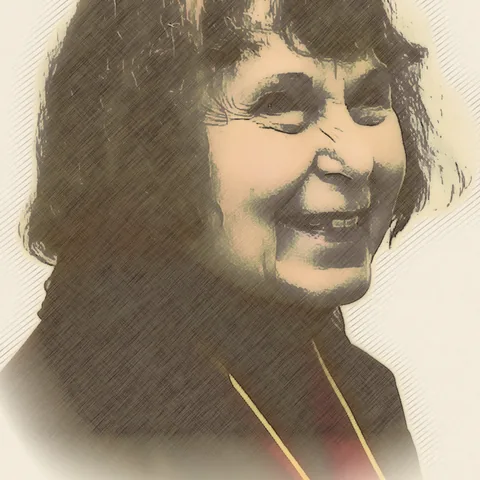 1931 – 202520th century and today
Sofia Goubaïdoulina
A Tatarstan-born composer who explored spirituality, timbre and unusual instruments.
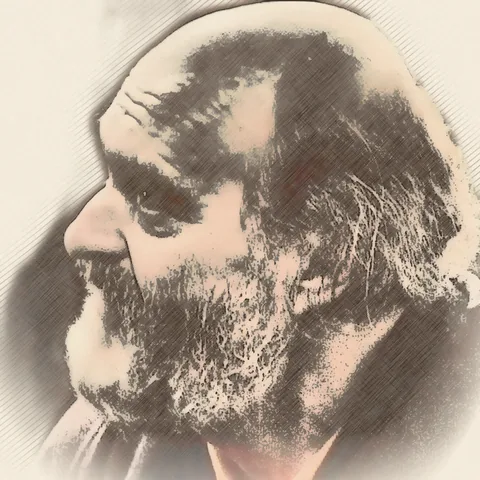 1935 –20th century and today
Arvo Pärt
His tintinnabuli style seeks simplicity and spiritual resonance.
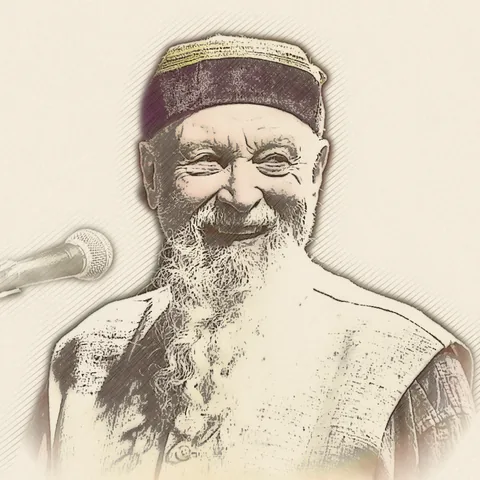 1935 –20th century and today
Terry Riley
An American minimalist composer who explored repetition and improvisation.
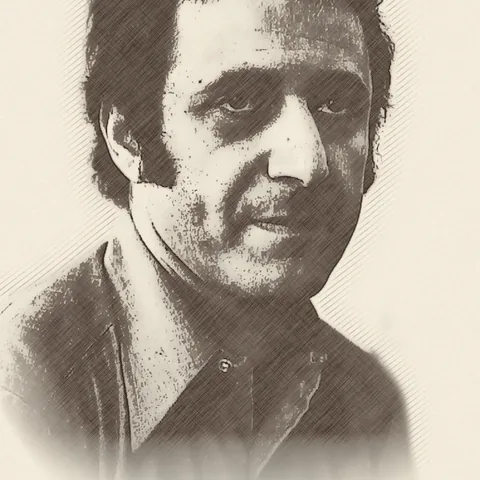 1936 –20th century and today
Steve Reich
He explores rhythmic phasing, repetition and connections between speech and music.
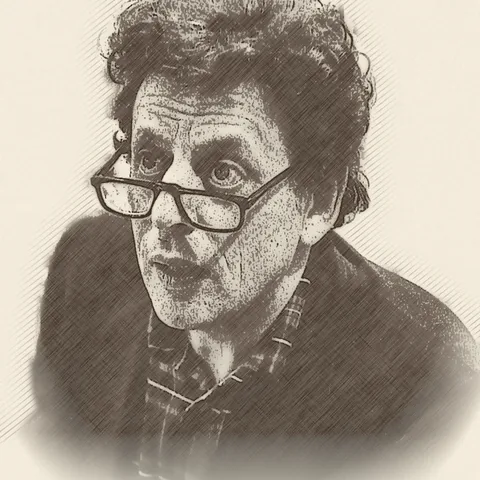 1937 –20th century and today
Philip Glass
His repeated and evolving patterns helped popularize minimalist music.
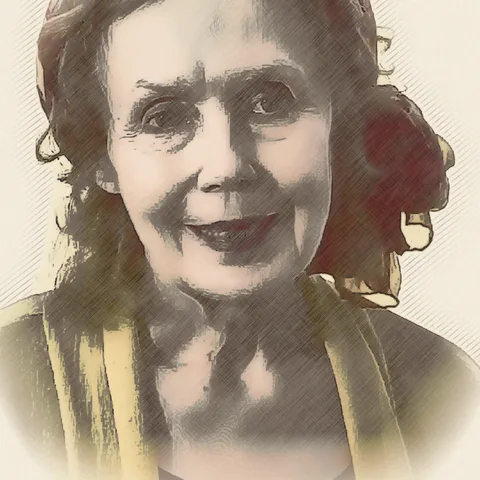 1952 – 202320th century and today
Kaija Saariaho
A Finnish composer who sculpted timbre and texture with exceptional subtlety.