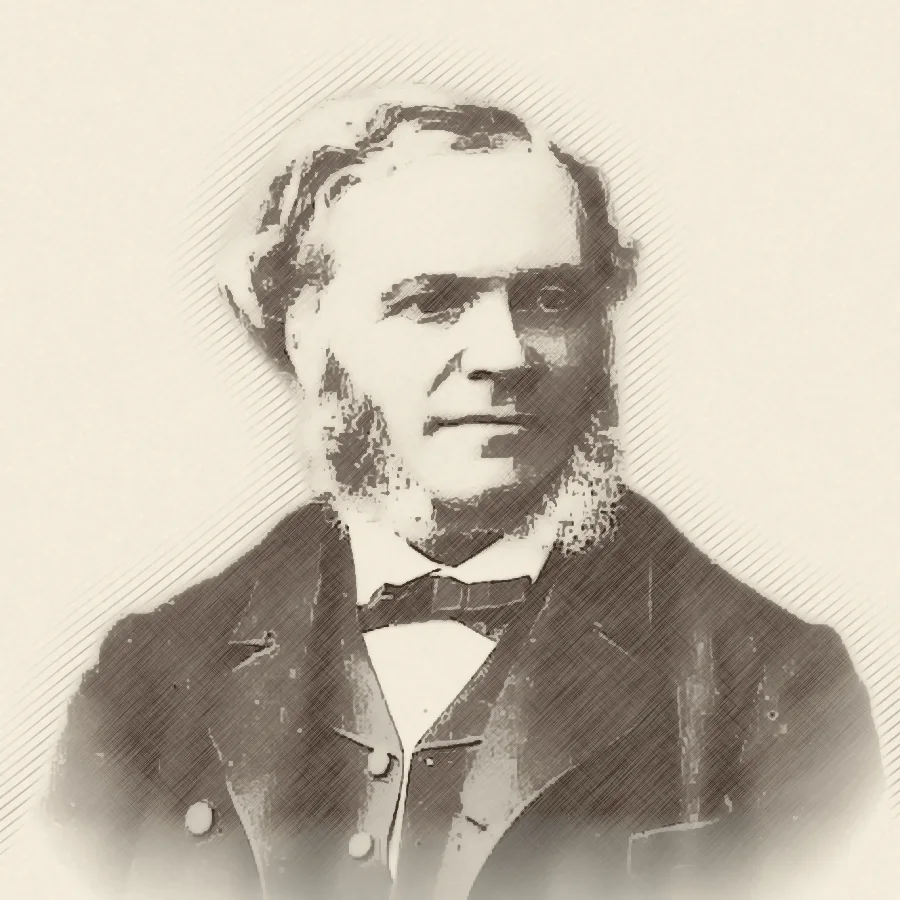
 Romantic
César Franck
An organist and teacher who developed cyclic forms in French music.
A life and its times
The milestones of the life and work, the contemporaries and the major world events, on a single line of time.
A life at a glance
- 1822Birth
Born in Liège on 10 December
- 1822Meanwhile
Champollion deciphers hieroglyphs
- 1830Meanwhile
July Revolution in France
- 1835Milestoneage 13
His family moves to Paris to make him a prodigy pianist
- 1837Trainingage 15
Enters the Paris Conservatoire
- 1840Meanwhile
Adolphe Sax invents the saxophone (c. 1840)
- 1848Private lifeage 26
Marries Félicité Saillot-Desmousseaux during the revolution
- 1848Meanwhile
Revolutions of 1848; slavery abolished in France
- 1858Careerage 36
Organist of the basilica of Sainte-Clotilde in Paris
- 1862Workage 40
Six Pieces for organ
- 1865Meanwhile
End of the American Civil War; slavery abolished in the USA
- 1871Careerage 49
Founding member of the Société nationale de musique
- 1872Careerage 50
Organ professor at the Conservatoire; his pupils call him ‘Pater seraphicus’
- 1874Meanwhile
First exhibition of the Impressionist painters
- 1875Meanwhile
The Palais Garnier opera house opens in Paris
- 1879Workage 57
Piano Quintet
- 1885Workage 63
Symphonic Variations
- 1886Workage 64
Violin Sonata, a wedding gift for Eugène Ysaÿe
- 1888Workage 66
Symphony in D minor
- 1889Meanwhile
The Eiffel Tower opens for the World’s Fair
- 1890Deathage 68
Dies in Paris on 8 November after an accident with an omnibus
Listen
Excerpts from freely licensed recordings, with their performers and licences.
Excerpts last up to 90 seconds. César Franck’s compositions are in the public domain; each recording is streamed from Wikimedia Commons under the licence shown, credited to its performers or uploader.
Listen to complete works on Wikimedia Commons
Wikimedia Commons is a free media library: you will find the complete recordings there, with their reuse conditions.
- Complete recordingViolin Sonata — Finale
- Complete recordingSymphonic Variations (opening)
- Complete recordingHarmonium piece in C
- Wikimedia Commons fileCesar Franck - Sonata in A, 3rd movement
- Search for the workViolin Sonata
- Search for the workSymphony in D minor
- Search for the workSymphonic Variations
- Search for the workPanis angelicus
- Search for the workThree Chorales for organ
- Search for the workPrelude, Chorale and Fugue
- Everything on CommonsAll recordings of César Franck
The life of César Franck
César Franck was born in Liège, then part of the Netherlands and now in Belgium, on 10 December 1822. His father, a bank clerk of German origin, ambitious and authoritarian, wanted to make him a child prodigy pianist like Liszt. César studied at the Liège Conservatory and gave his first concerts at eleven, touring with his brother Joseph, a violinist. In 1835 the family moved to Paris to launch his virtuoso career. He took lessons from Anton Reicha and, after becoming a French citizen, entered the Paris Conservatoire in 1837.
At the Conservatoire he won a first prize for piano in astonishing circumstances: in the sight-reading test he transposed the set piece down a third, amazing the jury, which awarded him a special prize. He also won an organ prize. But his father withdrew him from the Conservatoire in 1842 to tour as a virtuoso in Belgium. César then composed his first chamber works, four Piano Trios, noticed by Liszt. He later returned to Paris, earning his living by teaching and playing the organ.
In 1846 he broke with his father, who opposed his marriage to Félicité Saillot-Desmousseaux, daughter of a family of actors. The wedding took place in February 1848, in the middle of the revolution: the couple had to climb over barricades to reach the church. Franck then lived modestly, teaching piano in boarding schools and families and becoming organist of several Paris churches. He composed little in these years but deepened his knowledge of the organ.
In 1858 he was appointed organist of the new basilica of Sainte-Clotilde in Paris, which had just received a magnificent organ built by Aristide Cavaillé-Coll. He stayed there until his death. His improvisations drew musicians from all over Europe, including Liszt, who compared him to Bach after hearing him in 1866. In 1862 he published his Six Pieces for grand organ, which renewed French organ music and launched the symphonic organ school.
In 1871, after the Franco-Prussian War, he was one of the founding members, with Camille Saint-Saëns, of the Société nationale de musique, which aimed to promote French instrumental music. In 1872 he became professor of organ at the Paris Conservatoire. His class was in fact a true school of composition, training Vincent d’Indy, Ernest Chausson, Henri Duparc, Guillaume Lekeu and many others. His pupils, who adored him for his kindness and fervour, nicknamed him “Pater seraphicus”, the seraphic father.
The last fifteen years of his life were the most productive. Already elderly, Franck composed most of his masterpieces: the feverishly passionate Piano Quintet (1879), the Symphonic Variations for piano and orchestra (1885), the Prelude, Chorale and Fugue for piano (1884), and in 1886 the Violin Sonata, given as a wedding present to the great Belgian violinist Eugène Ysaÿe. In these works he used “cyclic form”, in which the same themes return and are transformed from one movement to the next.
His Symphony in D minor (1888), his only symphony, was at first coldly received but became one of the most performed works in the French repertoire. He also composed the String Quartet (1889), which finally won real public success, and the famous Panis angelicus. In May 1890 he was struck by a horse-drawn omnibus. He kept working and composed his Three Chorales for organ, his musical testament. But his health declined, and he died in Paris on 8 November 1890, aged sixty-seven.
Works to know
- 1872
Panis angelicus
Sacred song that became hugely popular.
Listen on Wikimedia Commons - 1884
Prelude, Chorale and Fugue
Major piano work.
Listen on Wikimedia Commons - 1885
Symphonic Variations
For piano and orchestra, poetic and flowing.
Listen on Wikimedia Commons - 1886
Violin Sonata
One of the finest sonatas in the repertoire.
Listen on Wikimedia Commons - 1888
Symphony in D minor
Cyclic symphony in which themes return.
Listen on Wikimedia Commons - 1890
Three Chorales for organ
The organist’s musical testament.
Listen on Wikimedia Commons
Anecdotes
His famous Violin Sonata was a wedding present.
His pupils nicknamed him ‘Pater seraphicus’, the seraphic father.
On his wedding day in 1848 he had to cross barricades to reach the church.
In an exam he transposed a piece a third lower at sight, astonishing the jury.
Same era · Romantic
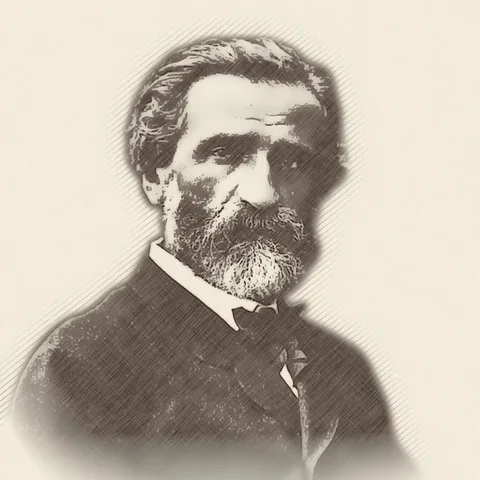 1813 – 1901Romantic
Giuseppe Verdi
His operas give unforgettable voice to human passions and conflicts.
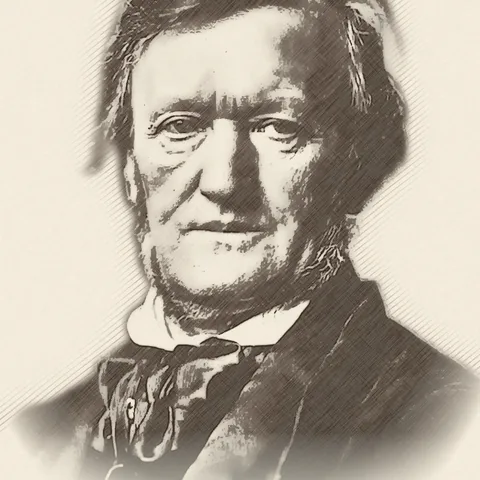 1813 – 1883Romantic
Richard Wagner
He envisioned music drama as a unity of orchestra, poetry and stagecraft.
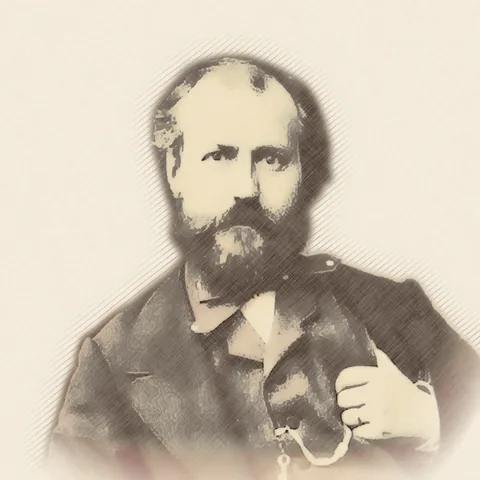 1818 – 1893Romantic
Charles Gounod
A French composer who shaped Romantic opera and sacred music.
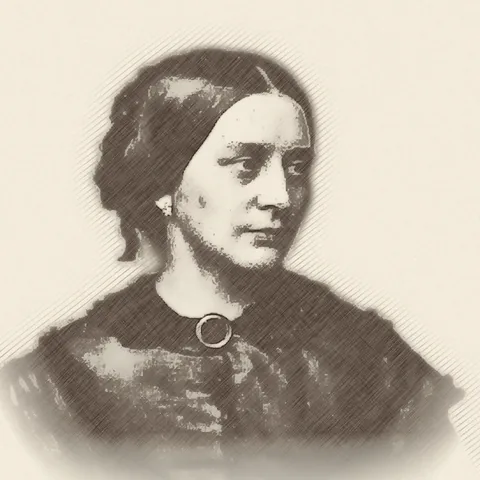 1819 – 1896Romantic
Clara Schumann
An internationally renowned pianist and composer, she also championed contemporary music.
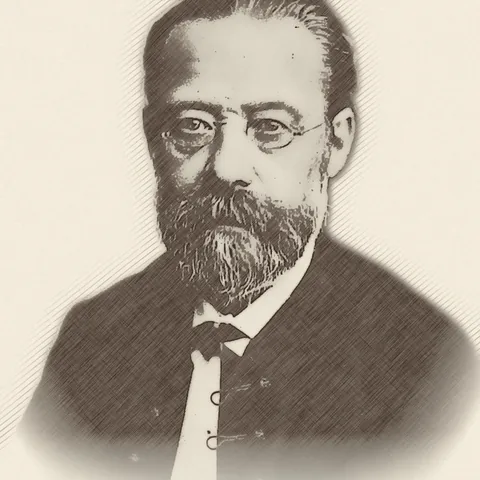 1824 – 1884Romantic
Bedřich Smetana
A leading Czech composer who joined opera, symphonic poetry and national identity.
 1833 – 1887Romantic
Alexandre Borodine
A chemist and composer who combined scientific research and musical creativity.