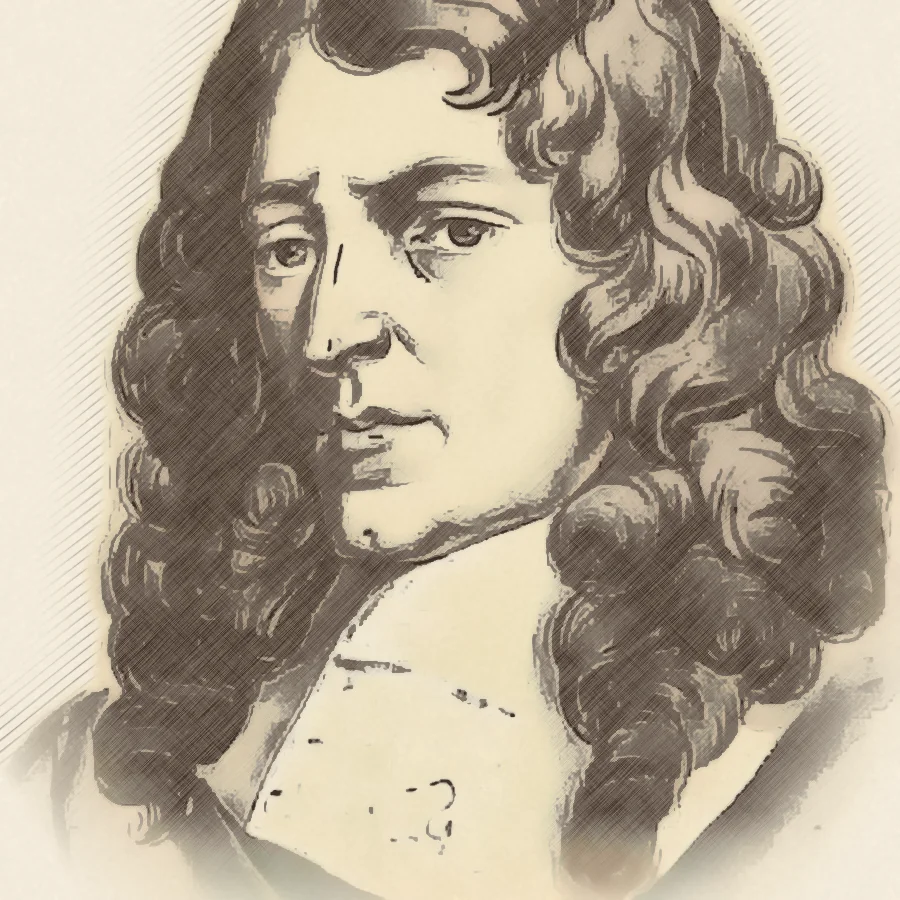
 Baroque
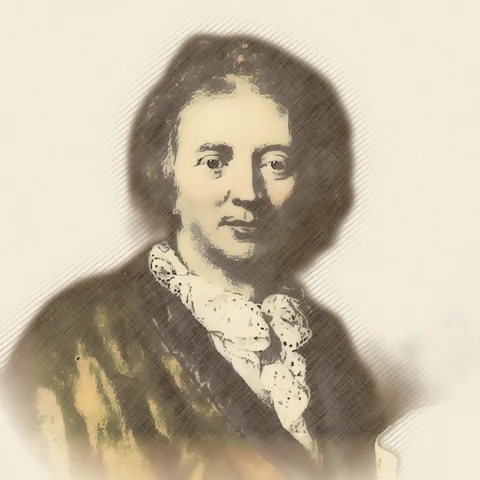
Marc-Antoine Charpentier
A French composer of sacred and theatre music, he mastered Italian style.
A life and its times
The milestones of the life and work, the contemporaries and the major world events, on a single line of time.
A life at a glance
- 1643Birth
Born in or near Paris
- 1643Landmark
Louis XIV becomes king aged 4
- 1643Meanwhile
Louis XIV becomes King of France aged four
- 1648Meanwhile
Peace of Westphalia ends the Thirty Years’ War
- 1666Meanwhile
Great Fire of London
- 1667Trainingage 24
Studies in Rome with Giacomo Carissimi
- 1669Meanwhile
The Royal Academy of Music (Paris Opera) is founded
- 1670Careerage 27
Composer to Mademoiselle de Guise at the Hôtel de Guise
- 1673Workage 30
Music for Molière’s Le Malade imaginaire
- 1680Careerage 37
Composes for the Dauphin’s chapel
- 1682Meanwhile
The French court moves to Versailles
- 1687Meanwhile
Newton publishes the laws of gravitation
- 1688Careerage 45
Music master of the Jesuit church of Saint-Louis in Paris
- 1690Workage 47
Te Deum H. 146 (c. 1690)
- 1693Workage 50
Médée, tragédie en musique at the Opéra
- 1698Careerage 55
Music master of the Sainte-Chapelle
- 1700Meanwhile
Bartolomeo Cristofori invents the piano in Florence (c. 1700)
- 1704Deathage 61
Dies in Paris on 24 February
Listen
Excerpts from freely licensed recordings, with their performers and licences.
Excerpts last up to 90 seconds. Marc-Antoine Charpentier’s compositions are in the public domain; each recording is streamed from Wikimedia Commons under the licence shown, credited to its performers or uploader.
Listen to complete works on Wikimedia Commons
Wikimedia Commons is a free media library: you will find the complete recordings there, with their reuse conditions.
- Complete recordingTe Deum H. 146 — Prelude
- Complete recordingSuper flumina Babylonis
- Search for the workTe Deum H. 146
- Search for the workMédée
- Search for the workLe Malade imaginaire
- Search for the workMidnight Mass for Christmas
- Search for the workLeçons de ténèbres
- Search for the workDavid et Jonathas
- Everything on CommonsAll recordings of Marc-Antoine Charpentier
The life of Marc-Antoine Charpentier
Marc-Antoine Charpentier was born in 1643 in or near Paris, the very year the four-year-old Louis XIV became king. His father was a master writer, a calligrapher and drafter of documents, a profession that may explain the remarkable beauty of the manuscripts Charpentier copied in his own hand all his life. Very little is known of his youth; he probably received a good education, perhaps from the Jesuits, with whom he kept close ties.
Around 1667 he went to Rome, where, by his own account, he studied music with Giacomo Carissimi, the great master of the Latin oratorio. The stay was decisive: Charpentier brought back to France the Italian taste for dramatic expression, bold harmonies and expressive dissonance. For a long time he was one of the few French composers openly cultivating this style, at a time when Lully was imposing a purely French taste at court.
Back in Paris around 1670, he entered the service of Marie de Lorraine, Duchess of Guise, known as Mademoiselle de Guise, a very devout princess and great patron who maintained a renowned ensemble of musicians in her mansion in the Marais. Charpentier sang there as a haute-contre and for nearly seventeen years composed a great many works for her: motets, oratorios (which he called “histoires sacrées”) and small chamber operas such as Les Arts florissants and La Descente d’Orphée aux Enfers.
Alongside this he worked for the theatre. When Molière fell out with Lully in 1672, he turned to Charpentier, who in 1673 composed the music for Le Malade imaginaire, Molière’s last play — the playwright died shortly after a performance. Charpentier then continued to work for the Comédie-Française. Lully’s monopoly on the Opéra, however, prevented him from making a career on the great stage, and he never obtained an official post in the Chapel Royal, despite the favour of the Dauphin, for whom he composed in the 1680s.
In 1688 he became music master of the Jesuit church of Saint-Louis on the rue Saint-Antoine, one of the most frequented churches in Paris for its music. There he composed the sacred opera David et Jonathas (1688), performed at the Collège Louis-le-Grand. After Lully’s death he was finally able to stage his tragedy Médée at the Académie royale de musique in 1693, to a libretto by Thomas Corneille: a powerful work, admired by connoisseurs but not a public success, partly because of Lully’s partisans.
His sacred output is immense: more than four hundred pieces, including masses such as the Messe de minuit pour Noël, built on popular Christmas carols, Leçons de ténèbres and four Te Deums. The most famous, the Te Deum in D major H. 146, composed around 1690, opens with a brilliant prelude with trumpets and timpani. Charpentier considered D major a “joyful and very warlike” key, as he wrote in his Rules of Composition.
In 1698 he was appointed music master of the Sainte-Chapelle du Palais, one of the most prestigious posts in Paris after those at court. He died there on 24 February 1704. He left twenty-eight volumes of autograph manuscripts, the “Mélanges”, which his nephew sold to the King’s Library and which are now held at the Bibliothèque nationale de France. Largely forgotten for two centuries, he was rediscovered in the twentieth. The prelude to his Te Deum was chosen in 1954 as the Eurovision theme, making it famous throughout Europe.
Works to know
- 1673
Le Malade imaginaire
Incidental music for Molière’s last play.
Listen on Wikimedia Commons - 1684
Leçons de ténèbres
Vocal meditations for Holy Week.
Listen on Wikimedia Commons - 1686
David et Jonathas
Biblical tragedy for the Jesuit college.
Listen on Wikimedia Commons - 1690
Te Deum H. 146
Its prelude became the Eurovision theme.
Listen on Wikimedia Commons - 1693
Médée
Dark, passionate tragédie en musique.
Listen on Wikimedia Commons - 1694
Midnight Mass for Christmas
Mass built on popular French carols.
Listen on Wikimedia Commons
Anecdotes
His Te Deum prelude has been the Eurovision theme since 1954.
He copied his own works into 28 large notebooks.
He wrote the music for The Imaginary Invalid, Molière’s last play.
For him each key had a character: D major was “joyful and very warlike”.
Same era · Baroque
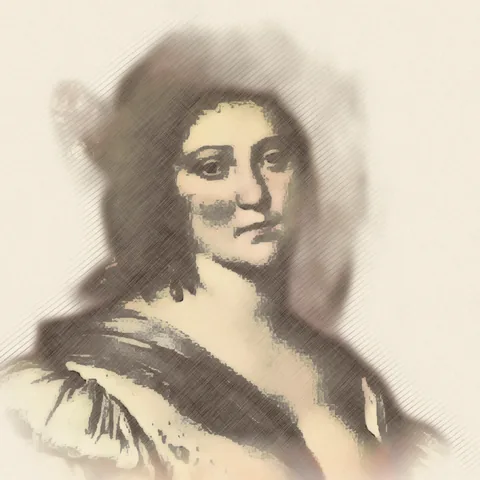 1619 – 1677Baroque
Barbara Strozzi
A Venetian singer and composer who published extensive vocal collections under her own name.
 1632 – 1687Baroque
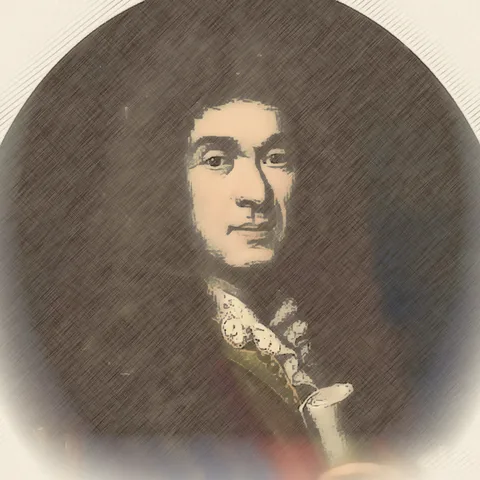
Jean-Baptiste Lully
At Louis XIV's court, he shaped French opera and ballet music.
 1653 – 1706Baroque
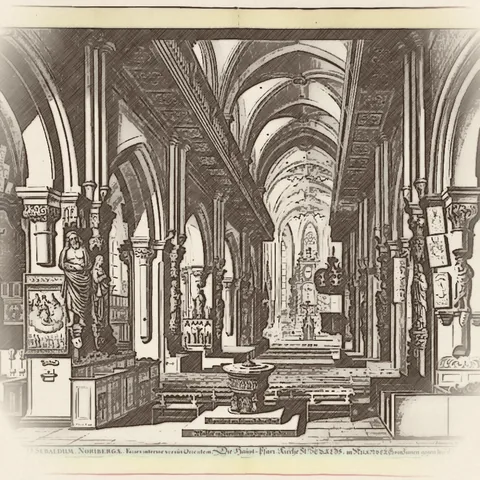
Johann Pachelbel
A German organist who influenced the south German keyboard tradition.
 1656 – 1728Baroque
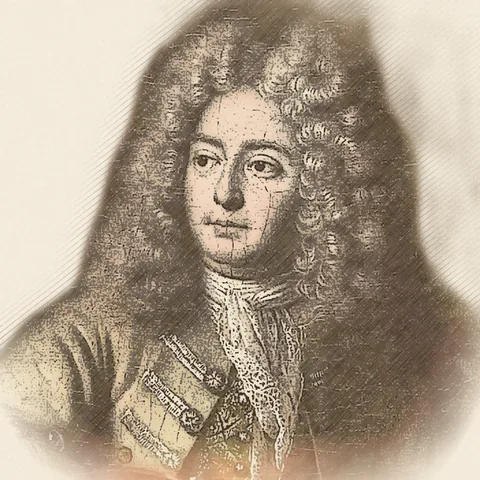
Marin Marais
A court musician under Louis XIV, he elevated the viola da gamba as a solo instrument.
 1659 – 1695Baroque
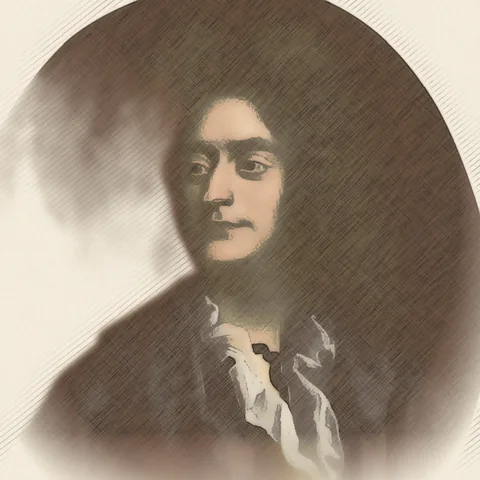
Henry Purcell
His stage music blends melodic subtlety and emotional force.
 1668 – 1733Baroque
François Couperin
A French court harpsichordist, he blended French elegance and Italian influences.