 Baroque
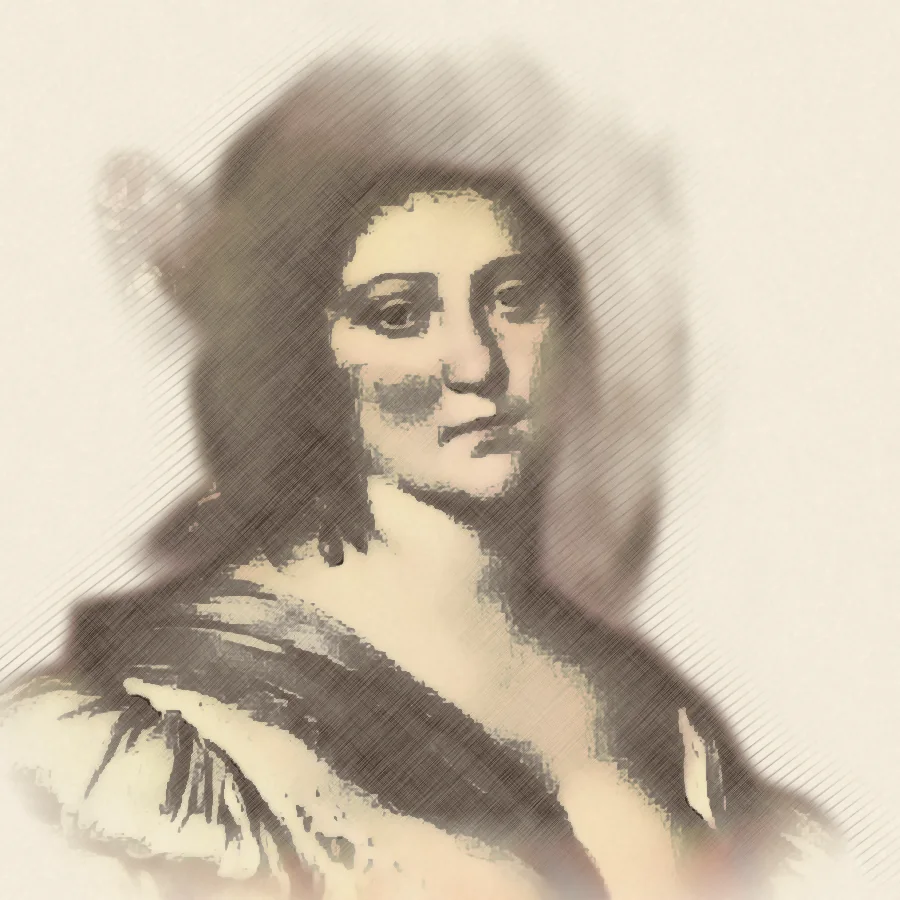
Barbara Strozzi
A Venetian singer and composer who published extensive vocal collections under her own name.
A life and its times
The milestones of the life and work, the contemporaries and the major world events, on a single line of time.
A life at a glance
- 1619Birth
Baptised in Venice on 6 August
- 1620Meanwhile
The Mayflower reaches America
- 1630Trainingage 11
Pupil of Francesco Cavalli, the future opera composer
- 1637Careerage 18
Sings at the Accademia degli Unisoni founded by her adoptive father Giulio Strozzi
- 1637Landmarkage 18
Venice opens the first public opera house
- 1637Meanwhile
The first public opera house opens in Venice
- 1643Meanwhile
Louis XIV becomes King of France aged four
- 1644Workage 25
Op. 1: first book of madrigals
- 1648Meanwhile
Peace of Westphalia ends the Thirty Years’ War
- 1651Workage 32
Op. 2: Cantate, ariette e duetti
- 1652Private lifeage 33
Death of Giulio Strozzi
- 1659Workage 40
Op. 7 Diporti di Euterpe, including ‘Lagrime mie’
- 1664Workage 45
Op. 8, her last published collection
- 1666Meanwhile
Great Fire of London
- 1669Meanwhile
The Royal Academy of Music (Paris Opera) is founded
- 1677Deathage 58
Dies in Padua on 11 November
Listen
Excerpts from freely licensed recordings, with their performers and licences.
Excerpts last up to 90 seconds. Barbara Strozzi’s compositions are in the public domain; each recording is streamed from Wikimedia Commons under the licence shown, credited to its performers or uploader.
Listen to complete works on Wikimedia Commons
Wikimedia Commons is a free media library: you will find the complete recordings there, with their reuse conditions.
The life of Barbara Strozzi
Barbara Strozzi was baptised in Venice on 6 August 1619. She was the daughter of Isabella Garzoni, a servant in the household of the poet and librettist Giulio Strozzi, who later acknowledged her as his adopted and probably natural daughter. Giulio Strozzi was an important figure in Venetian intellectual life: he wrote opera libretti, including for Monteverdi, and moved in the city’s most brilliant literary circles. He gave Barbara an education exceptional for a girl of her time.
Highly gifted as a singer, Barbara studied composition with Francesco Cavalli, Monteverdi’s pupil and future great composer of Venetian opera. Venice was then in a musical ferment: in 1637 it opened the world’s first public, paying opera house. That same year Giulio Strozzi founded the Accademia degli Unisoni, a circle of scholars and poets that met at his house. Barbara, aged eighteen, sang there and proposed the topics for debate, which aroused both admiration and gossip.
She never married. She had four children, at least three of them with the Venetian nobleman Giovanni Paolo Vidman, a friend of her father’s. Two of her daughters entered convents and one of her sons became a monk. This independence, rare for a woman of the time, and her presence in male academies earned her satirical pamphlets. She nonetheless pursued a unique career as an independent composer publishing her works under her own name.
In 1644 she published her opus 1, a book of madrigals on poems by her father. Seven more collections followed up to 1664, over a hundred pieces in all: more printed secular vocal music than any other composer of her day, man or woman. Unlike many musicians, she worked for no court or church: she dedicated her collections to princes and patrons such as the Duchess of Mantua, the Archduke of Innsbruck and Emperor Ferdinand III, hoping for their support.
Barbara Strozzi is one of the great exponents of the chamber cantata, a new genre in which a solo voice accompanied by basso continuo tells a small dramatic scene, alternating recitative and aria. Her cantatas are full of passion: heartbreak, jealousy, despair, irony. She herself was probably the performer of her works, written mainly for soprano.
Among her most famous pieces are Lagrime mie (1659), in which the singer weeps for her lost love with heart-rending dissonances and striking silences, L’Eraclito amoroso (1651), on the philosopher who weeps for the world, and Che si può fare (1664), a lament over a descending ground bass. Her music shows a perfect command of the new Baroque style and a keen sense of word expression.
After Giulio Strozzi’s death in 1652 she had to manage her affairs alone and invested her money shrewdly. Her last collection appeared in 1664. She died in Padua on 11 November 1677 without a will; her son Giulio Pietro inherited her estate. Long forgotten, Barbara Strozzi was rediscovered in the late twentieth century and is now among the most performed and recorded Baroque women composers.
Works to know
- 1644
First Book of Madrigals
Madrigals on poems by Giulio Strozzi.
Listen on Wikimedia Commons - 1651
L’Eraclito amoroso
Aria on heartbreak, often performed today.
Listen on Wikimedia Commons - 1651
Dialogo in partenza
Sung dialogue of two parting lovers.
Listen on Wikimedia Commons - 1659
Lagrime mie
Heart-rending lament, a masterpiece of the Venetian cantata.
Listen on Wikimedia Commons - 1664
Che si può fare
Melancholy aria over a descending ground bass.
Listen on Wikimedia Commons
Anecdotes
She published more secular vocal music than any other composer of her time.
She worked for no court — a truly independent musician.
At eighteen she sang in an academy of scholars and proposed the topics for debate.
Her teacher, Francesco Cavalli, was a pupil of Monteverdi.
Same era · Baroque
 1583 – 1643Baroque
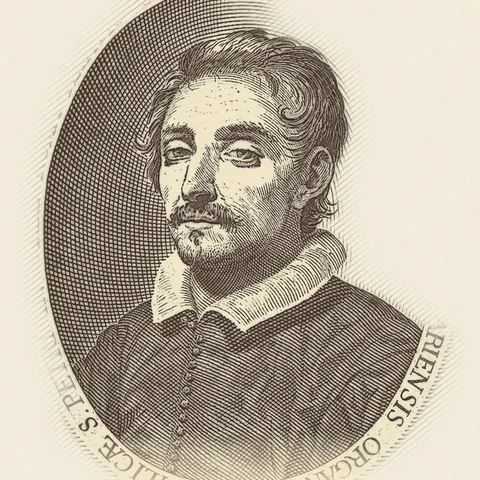
Girolamo Frescobaldi
A Roman organist who transformed keyboard writing and the art of variation.
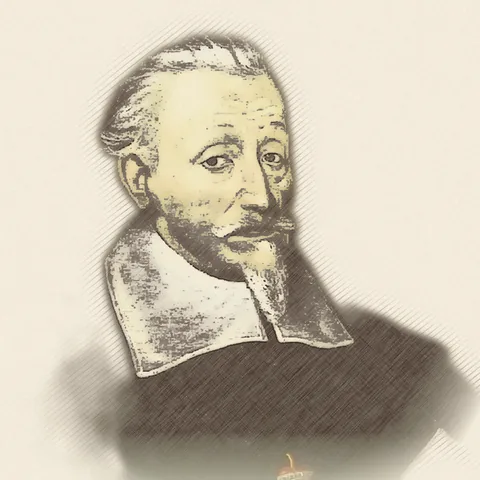 1585 – 1672Baroque
Heinrich Schütz
He brought Italian expressive innovations to German sacred music.
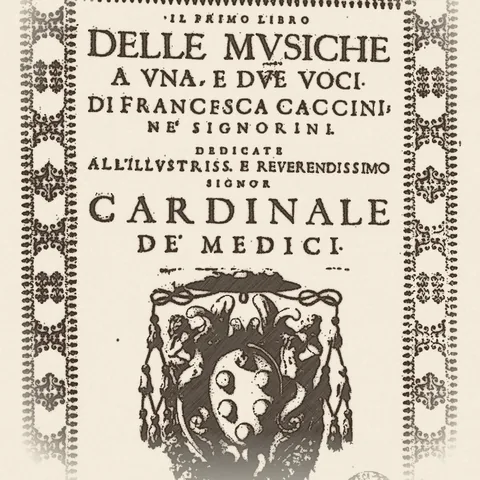 1587 – c. 1641Baroque
Francesca Caccini
A Medici court musician, she was a pioneer of early Italian musical theatre.
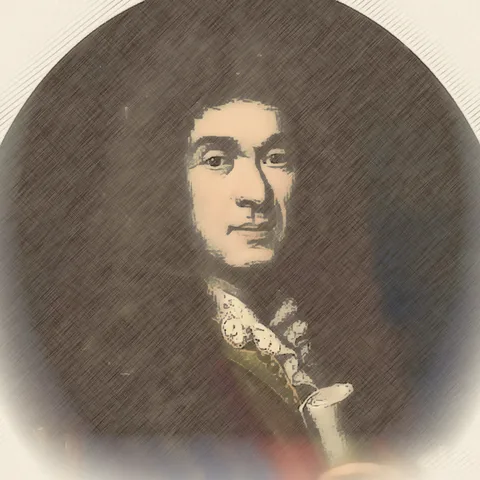 1632 – 1687Baroque
Jean-Baptiste Lully
At Louis XIV's court, he shaped French opera and ballet music.
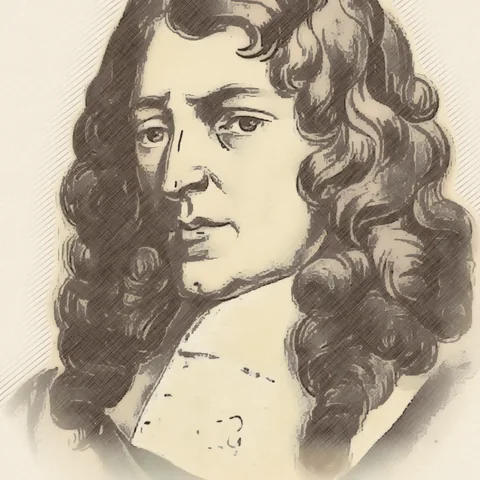 1643 – 1704Baroque
Marc-Antoine Charpentier
A French composer of sacred and theatre music, he mastered Italian style.
 1653 – 1706Baroque
Johann Pachelbel
A German organist who influenced the south German keyboard tradition.