 Baroque
Francesca Caccini
A Medici court musician, she was a pioneer of early Italian musical theatre.
A life and its times
The milestones of the life and work, the contemporaries and the major world events, on a single line of time.
A life at a glance
- 1587Birth
Born in Florence on 18 September, daughter of the composer Giulio Caccini
- 1588Meanwhile
Defeat of the Spanish Armada
- 1598Meanwhile
Edict of Nantes
- 1600Landmarkage 13
First operas in Florence; wedding of Maria de’ Medici and Henri IV
- 1600Careerage 13
Sings, still a child, at the royal wedding festivities
- 1600Meanwhile
Shakespeare writes Hamlet (c. 1600)
- 1604Journeyage 17
Travels to France: Henri IV wants to keep her at court
- 1607Careerage 20
Enters the service of the Medici court
- 1607Private lifeage 20
Marries the musician Giovanni Battista Signorini
- 1609Meanwhile
Galileo observes the sky with his telescope
- 1618Workage 31
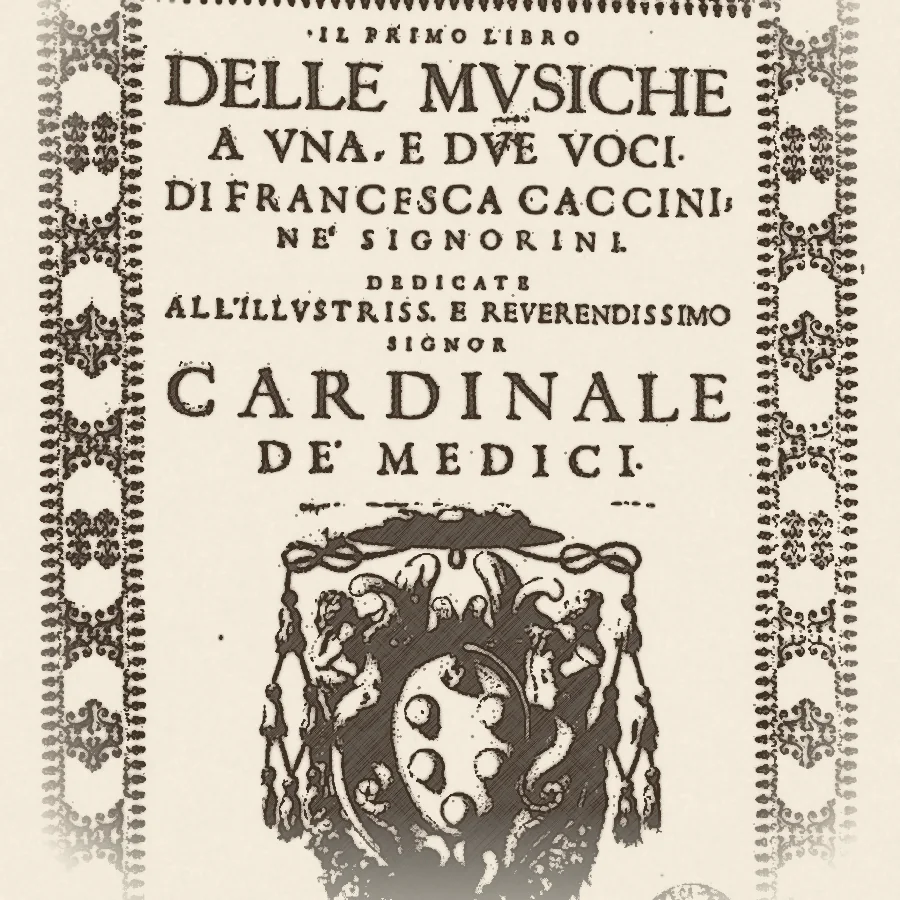
Il primo libro delle musiche, 36 songs for voice and continuo
- 1618Meanwhile
The Thirty Years’ War begins
- 1620Meanwhile
The Mayflower reaches America
- 1625Workage 38
La liberazione di Ruggiero, the first known opera by a woman
- 1627Milestoneage 40
Remarried, moves to Lucca
- 1634Milestoneage 47
Returns to Florence in the service of the Medici
- 1637Meanwhile
The first public opera house opens in Venice
- 1641Deathage 54
Last documented trace; date of death unknown
Listen
Excerpts from freely licensed recordings, with their performers and licences.
Francesca Caccini’s music is in the public domain, but Wikimedia Commons does not yet offer a freely licensed recording of these works. The links below lead to scores and searches on Commons; as soon as a free recording is published, it can be added here.
Listen to complete works on Wikimedia Commons
Wikimedia Commons is a free media library: you will find the complete recordings there, with their reuse conditions.
The life of Francesca Caccini
Francesca Caccini was born in Florence on 18 September 1587. She was the daughter of Giulio Caccini, singer and composer in the service of the Medici, one of the inventors of the new style of accompanied song that would give birth to opera. Her mother, Lucia, was also a singer. Francesca grew up in a household devoted entirely to music: she learned singing, lute, harpsichord, harp and guitar, but also Latin, poetry and composition. Her contemporaries nicknamed her “la Cecchina”, “the little magpie”.
Florence was then the laboratory of opera. In 1600, for the wedding of Marie de’ Medici to King Henry IV of France, Euridice, one of the first operas, was performed there with contributions by her father. Still a child, Francesca sang with her family during the festivities. In 1604–05 the Caccini family travelled to France at Queen Marie’s invitation. King Henry IV was so charmed by Francesca’s voice that he declared her the best singer in France and wished to keep her at his court, but the Medici refused to let her go.
In 1607 she officially entered the service of the Medici court in Florence and that same year married the musician Giovanni Battista Signorini, with whom she had a daughter. She became one of the best-paid musicians at court — singer, instrumentalist, composer and teacher. She composed music for court festivities, ballets and entertainments, often in collaboration with the poet Michelangelo Buonarroti the Younger, great-nephew of the great Michelangelo.
In 1618 she published Il primo libro delle musiche, a collection of thirty-six songs for solo voice and basso continuo, sacred and secular, in Italian and Latin. It is one of the most important monody collections of its time. It includes highly expressive pieces such as Lasciatemi qui solo and Maria, dolce Maria, in which the voice is richly ornamented with runs demanding great virtuosity.
In 1625 she composed La liberazione di Ruggiero dall’isola d’Alcina for the visit to Florence of Prince Władysław of Poland. Based on Ariosto’s epic, the work tells how the knight Ruggiero is freed from the spells of the sorceress Alcina. It is the first known opera composed by a woman and one of the first Italian operas staged outside Italy: Władysław had it performed in Warsaw in 1628. The printed score has survived complete.
Widowed in 1626, she married in 1627 a wealthy nobleman of Lucca, Tommaso Raffaelli, and settled in that city, where she continued to compose and teach. When her second husband died in 1630 she gradually returned to the service of the Medici in Florence, teaching the princesses and young singers of the court. Her last documented trace dates from 1641; the exact date and place of her death are unknown.
Much of her output — several ballets, intermedi and court entertainments — is lost. Yet what remains reveals a first-rank composer, a master of the new dramatic style. Francesca Caccini was largely rediscovered in the late twentieth century thanks to the scholars and performers who brought women composers back to light. She is now recognised as a pioneer of opera.
Works to know
- 1615
Il ballo delle zigane
Court ballet (music lost).
Listen on Wikimedia Commons - 1618
Il primo libro delle musiche
Collection of 36 sacred and secular songs.
Listen on Wikimedia Commons - 1618
Lasciatemi qui solo
Poignant lament for solo voice.
Listen on Wikimedia Commons - 1618
Maria, dolce Maria
Spiritual air with delicate ornaments.
Listen on Wikimedia Commons - 1625
La liberazione di Ruggiero dall’isola d’Alcina
Opera about a sorceress and an enchanted knight — the first known opera by a woman.
Listen on Wikimedia Commons
Anecdotes
She was the best-paid musician at the Medici court.
Her opera was performed in Poland — one of the first operas staged outside Italy.
Her nickname at court was “la Cecchina”, “the little magpie”.
King Henry IV wanted to keep her at his court, but the Medici refused.
Same era · Baroque
 1567 – 1643Baroque
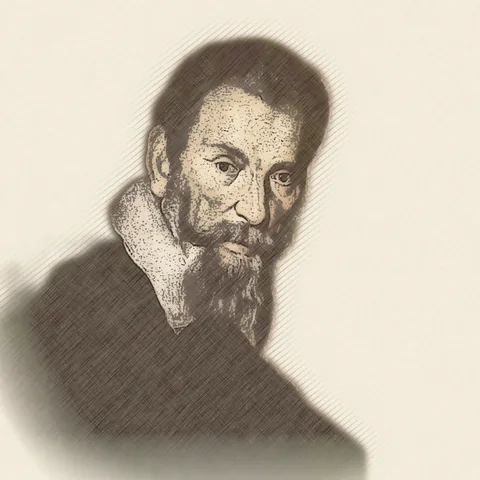
Claudio Monteverdi
Bridging Renaissance and Baroque, he made dramatic emotion central to music.
 1583 – 1643Baroque
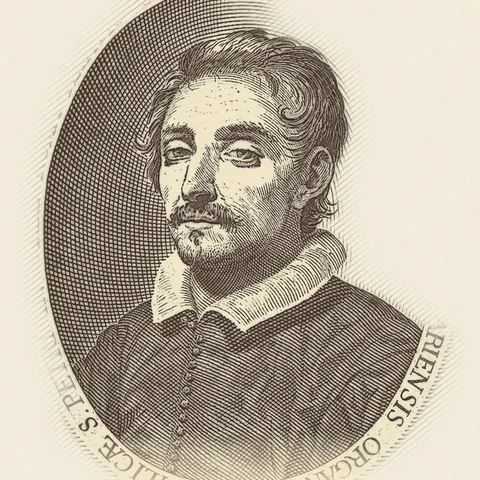
Girolamo Frescobaldi
A Roman organist who transformed keyboard writing and the art of variation.
 1585 – 1672Baroque
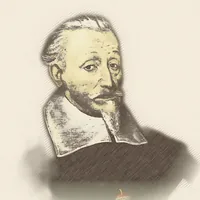
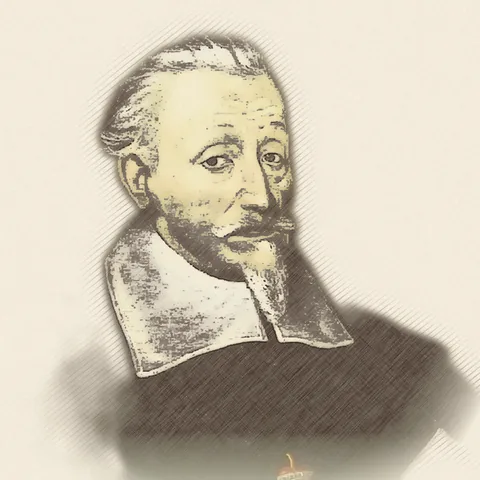
Heinrich Schütz
He brought Italian expressive innovations to German sacred music.
 1619 – 1677Baroque
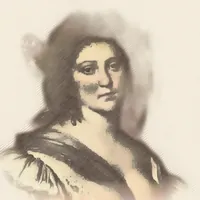
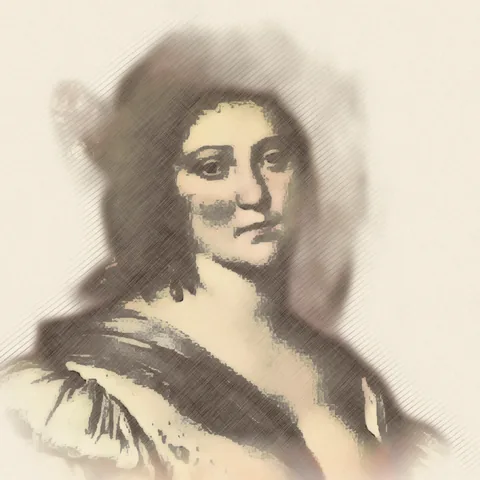
Barbara Strozzi
A Venetian singer and composer who published extensive vocal collections under her own name.
 1632 – 1687Baroque
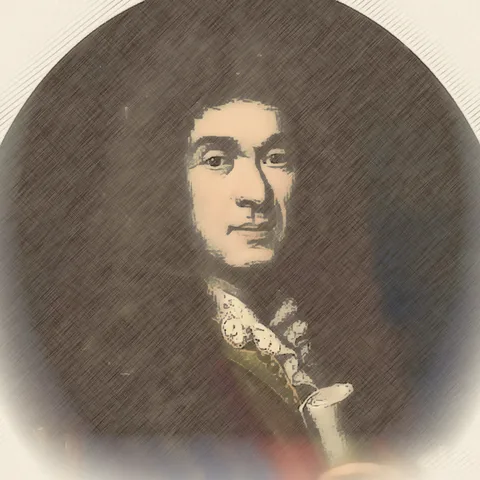
Jean-Baptiste Lully
At Louis XIV's court, he shaped French opera and ballet music.
 1643 – 1704Baroque
Marc-Antoine Charpentier
A French composer of sacred and theatre music, he mastered Italian style.