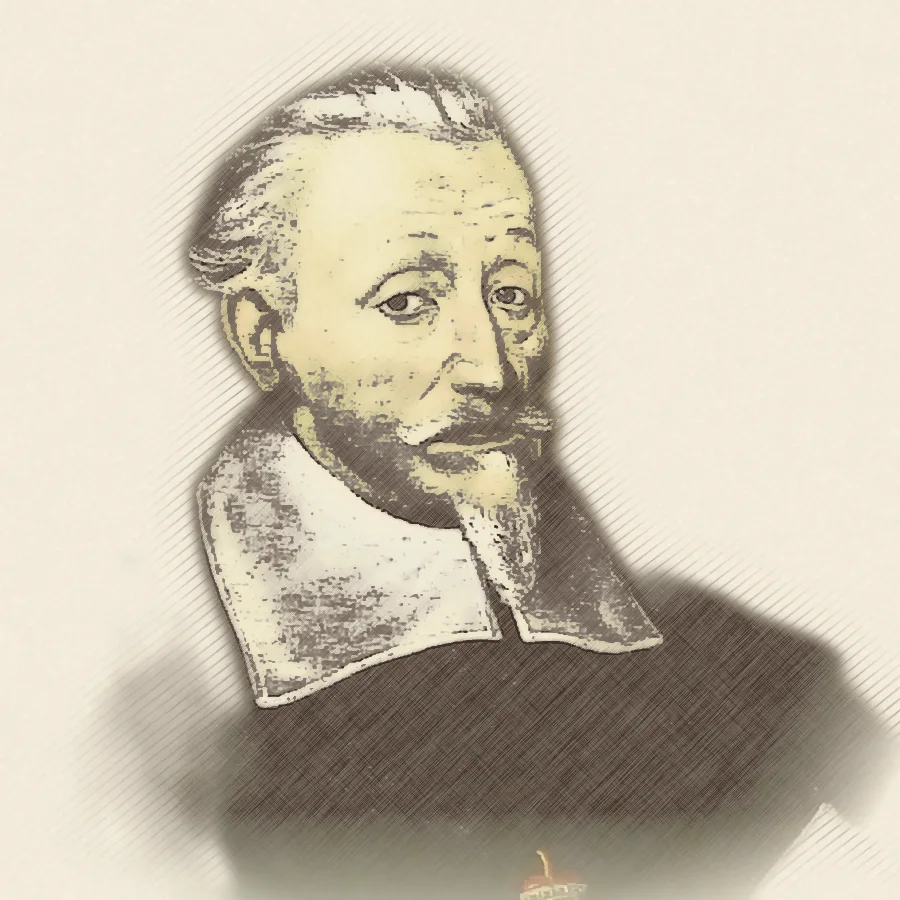
 Baroque
Heinrich Schütz
He brought Italian expressive innovations to German sacred music.
A life and its times
The milestones of the life and work, the contemporaries and the major world events, on a single line of time.
A life at a glance
- 1585Birth
Born in Köstritz on 8 October
- 1588Meanwhile
Defeat of the Spanish Armada
- 1599Trainingage 14
Choirboy at the court of Landgrave Moritz of Hesse-Kassel
- 1600Meanwhile
Shakespeare writes Hamlet (c. 1600)
- 1608Trainingage 23
Studies law at the University of Marburg
- 1609Journeyage 24
Studies in Venice with Giovanni Gabrieli
- 1609Meanwhile
Galileo observes the sky with his telescope
- 1611Workage 26
Publishes a book of Italian madrigals
- 1617Careerage 32
Kapellmeister to the Elector of Saxony in Dresden
- 1619Workage 34
Psalmen Davids; marries Magdalena Wildeck
- 1620Meanwhile
The Mayflower reaches America
- 1627Workage 42
Dafne, the first opera in German (music lost)
- 1628Journeyage 43
Second journey to Venice; meets Monteverdi
- 1636Workage 51
Musikalische Exequien, a German requiem
- 1637Meanwhile
The first public opera house opens in Venice
- 1643Meanwhile
Louis XIV becomes King of France aged four
- 1648Landmarkage 63
End of the Thirty Years’ War
- 1650Workage 65
Symphoniae sacrae III, including ‘Saul, Saul’
- 1664Workage 79
The Christmas Story
- 1666Meanwhile
Great Fire of London
- 1669Meanwhile
The Royal Academy of Music (Paris Opera) is founded
- 1671Workage 86
Schwanengesang (Swan Song)
- 1672Deathage 87
Dies in Dresden on 6 November, aged 87
Listen
Excerpts from freely licensed recordings, with their performers and licences.
Excerpts last up to 90 seconds. Heinrich Schütz’s compositions are in the public domain; each recording is streamed from Wikimedia Commons under the licence shown, credited to its performers or uploader.
Listen to complete works on Wikimedia Commons
Wikimedia Commons is a free media library: you will find the complete recordings there, with their reuse conditions.
- Complete recordingSaul, Saul, was verfolgst du mich (1928 recording)
- Complete recordingMusikalische Exequien — part 2
- Search for the workMusikalische Exequien
- Search for the workSaul, Saul, was verfolgst du mich
- Search for the workPsalms of David
- Search for the workChristmas Story
- Search for the workGeistliche Chor-Music
- Search for the workSwan Song
- Everything on CommonsAll recordings of Heinrich Schütz
The life of Heinrich Schütz
Heinrich Schütz was born on 8 October 1585 at Köstritz in Thuringia, into a family of innkeepers and local notables. In 1590 the family moved to Weissenfels, where his father ran the Golden Arch inn. One day in 1598 Landgrave Moritz of Hesse-Kassel, a cultivated prince and composer himself, stopped at the inn and heard young Heinrich sing. Charmed, he offered to take him to his court. The parents eventually agreed, and in 1599 the boy joined the chapel choir in Kassel, where he received an excellent general education.
His parents nevertheless wanted him to pursue a legal career: in 1608 he enrolled at the University of Marburg. But in 1609 Landgrave Moritz offered him a grant to study in Venice with Giovanni Gabrieli, organist of St Mark’s and master of grand multi-choir effects. Schütz stayed until 1612 and in 1611 published a book of five-voice Italian madrigals of great mastery. When Gabrieli died he left Schütz one of his rings as a token of esteem.
Back in Germany he became organist in Kassel, but the Elector of Saxony, Johann Georg I, wanted him for his court in Dresden, one of the most powerful in Germany. After long negotiations Moritz had to give way, and around 1617 Schütz became Kapellmeister in Dresden, a post he kept for nearly fifty-five years. In 1619 he published the Psalmen Davids, multi-choir psalms in the Venetian style, and married Magdalena Wildeck, who died in 1625 after only six years of marriage, leaving him two daughters.
In 1627 he composed Dafne, the first opera in German, for a princely wedding; sadly the music is lost. In 1628 he returned to Venice, where he met Monteverdi and discovered the novelties of the Baroque style. But Germany was then ravaged by the Thirty Years’ War (1618–48): the court’s finances collapsed, musicians went unpaid and the chapel shrank to a few singers. Schütz spent several years at the Danish court in Copenhagen and adapted his music to reduced forces.
It was in these difficult conditions that he composed some of his finest works. The Musikalische Exequien (1636), written for the funeral of Prince Heinrich Posthumus Reuss, is the first requiem in German. The Kleine geistliche Konzerte (1636 and 1639) are small sacred concertos for one to five voices. The three books of Symphoniae sacrae (1629, 1647, 1650) contain striking pieces such as Saul, Saul, was verfolgst du mich, in which the voice of Christ calls out to St Paul in a dramatic echo.
With peace restored, Schütz published in 1648 the Geistliche Chor-Music, a collection of motets in a severe polyphonic style, meant to show young composers the importance of counterpoint. Growing old, he asked several times to retire. He went on to write the Christmas Story (1664), of luminous tenderness, three Passions according to St Matthew, St Luke and St John, spare and austere, and finally, in 1671, his Schwanengesang (“Swan Song”), a vast setting of Psalm 119.
He died in Dresden on 6 November 1672, aged eighty-seven, an exceptional age for the time. He is regarded as the greatest German composer before Johann Sebastian Bach, born thirteen years after his death. Schütz united the German Lutheran polyphonic tradition with Italian innovations, always putting the German language and the meaning of biblical texts first. He has been called “the father of German music”.
Works to know
- 1619
Psalms of David
Polychoral psalms in Venetian style.
Listen on Wikimedia Commons - 1636
Musikalische Exequien
German requiem for a prince, deeply serene.
Listen on Wikimedia Commons - 1648
Geistliche Chor-Music
29 choral motets, a summit of German counterpoint.
Listen on Wikimedia Commons - 1650
Saul, Saul, was verfolgst du mich
Spectacular sacred concerto in which God’s voice echoes.
Listen on Wikimedia Commons - 1664
Christmas Story
Christmas narrative with angels, shepherds and Magi.
Listen on Wikimedia Commons - 1671
Swan Song
His last great work: Psalm 119 set to music.
Listen on Wikimedia Commons
Anecdotes
He wrote the first opera in German, Dafne — but the music has been lost.
He lived to 87, an exceptional age in the 17th century.
A prince discovered him by hearing him sing in his parents’ inn.
His teacher Gabrieli left him a ring as a token of friendship.
Same era · Baroque
 1567 – 1643Baroque
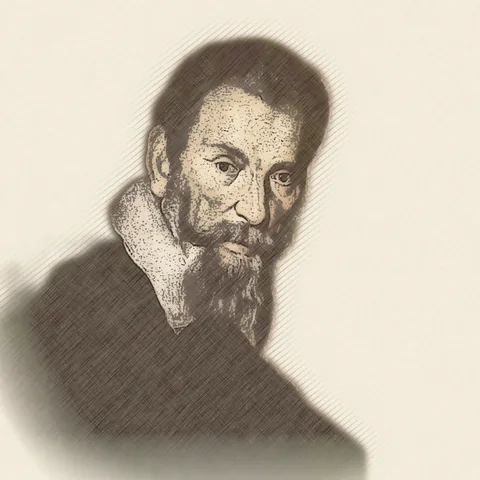
Claudio Monteverdi
Bridging Renaissance and Baroque, he made dramatic emotion central to music.
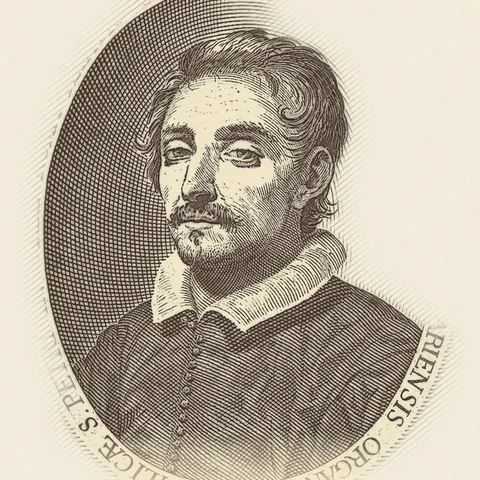 1583 – 1643Baroque
Girolamo Frescobaldi
A Roman organist who transformed keyboard writing and the art of variation.
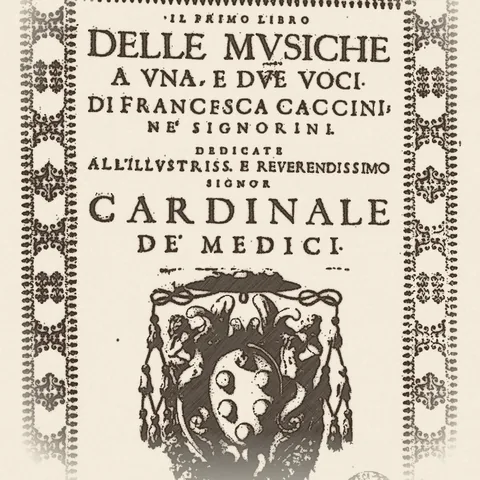 1587 – c. 1641Baroque
Francesca Caccini
A Medici court musician, she was a pioneer of early Italian musical theatre.
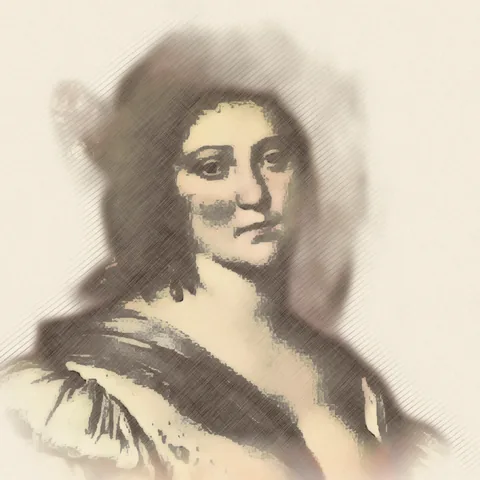 1619 – 1677Baroque
Barbara Strozzi
A Venetian singer and composer who published extensive vocal collections under her own name.
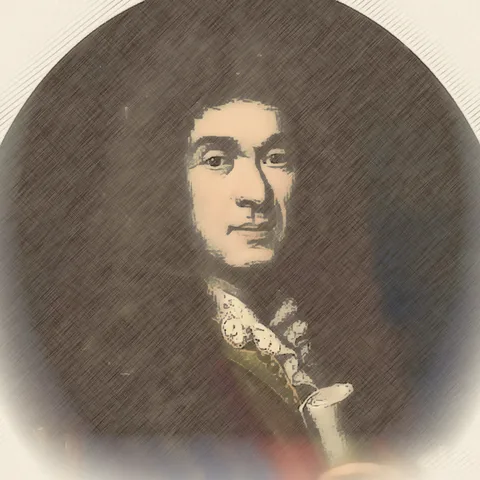 1632 – 1687Baroque
Jean-Baptiste Lully
At Louis XIV's court, he shaped French opera and ballet music.
 1643 – 1704Baroque
Marc-Antoine Charpentier
A French composer of sacred and theatre music, he mastered Italian style.