 Renaissance
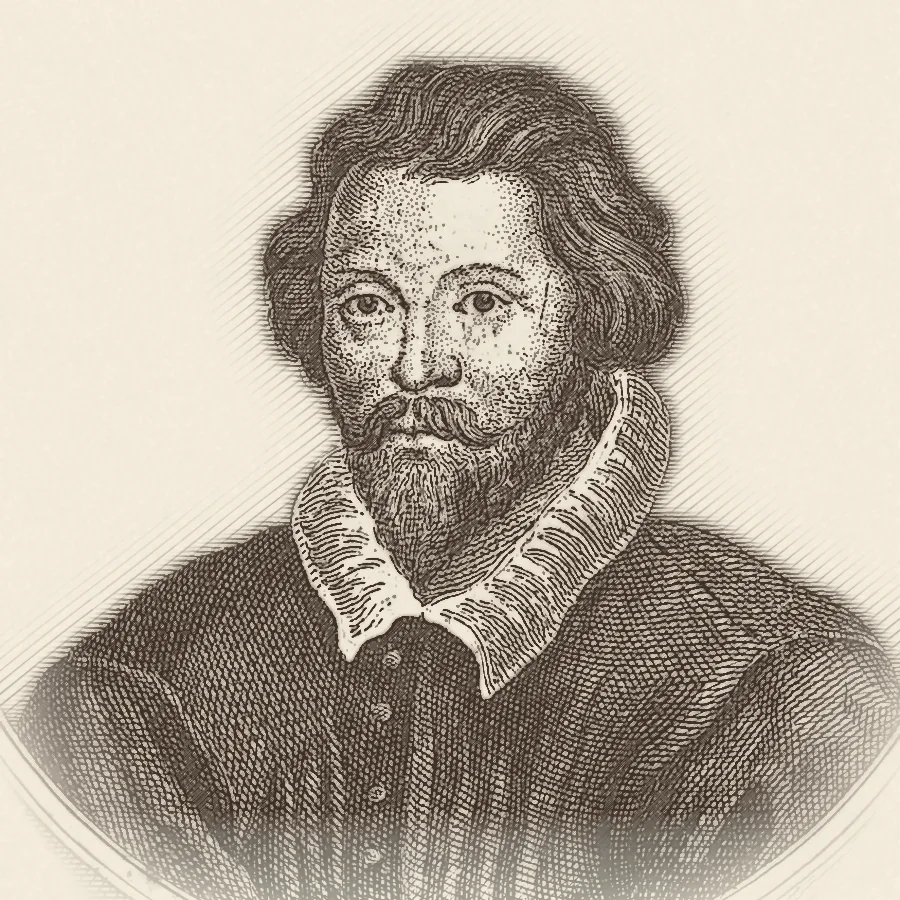
William Byrd
An English Catholic composer, he wrote deeply expressive music amid religious tensions.
A life and its times
The milestones of the life and work, the contemporaries and the major world events, on a single line of time.
A life at a glance
- 1540Birth
Born around 1540 in London
- 1543Meanwhile
Copernicus: the Earth goes round the Sun
- 1545Meanwhile
The Council of Trent opens
- 1555Meanwhile
Andrea Amati makes the earliest known violins in Cremona (c. 1555)
- 1558Landmarkabout age 18
Elizabeth I becomes Queen of England
- 1563Careerabout age 23
Organist and choirmaster of Lincoln Cathedral
- 1568Private lifeabout age 28
Marries Juliana Birley
- 1572Careerabout age 32
Gentleman of the Chapel Royal in London, alongside Thomas Tallis
- 1575Workabout age 35
With Tallis, receives a monopoly on printing music; Cantiones sacrae
- 1588Workabout age 48
Psalmes, Sonets & Songs, his first English song collection
- 1588Meanwhile
Defeat of the Spanish Armada
- 1591Workabout age 51
My Ladye Nevells Booke, pieces for virginal
- 1593Milestoneabout age 53
Moves to Stondon Massey, Essex
- 1593Workabout age 53
Masses for 3, 4 and 5 voices, printed discreetly
- 1598Meanwhile
Edict of Nantes
- 1600Meanwhile
Shakespeare writes Hamlet (c. 1600)
- 1605Workabout age 65
Gradualia, music for the Catholic liturgy
- 1612Workabout age 72
Contributes to Parthenia, the first printed virginal book
- 1618Meanwhile
The Thirty Years’ War begins
- 1620Meanwhile
The Mayflower reaches America
- 1623Deathabout age 83
Dies on 4 July at Stondon Massey
Listen
Excerpts from freely licensed recordings, with their performers and licences.
Excerpts last up to 90 seconds. William Byrd’s compositions are in the public domain; each recording is streamed from Wikimedia Commons under the licence shown, credited to its performers or uploader.
Listen to complete works on Wikimedia Commons
Wikimedia Commons is a free media library: you will find the complete recordings there, with their reuse conditions.
- Complete recordingMass for Four Voices — Gloria
- Complete recordingBrowning a 5 (viol consort)
- Complete recordingFantasia a 4 (1611)
- Search for the workMass for Four Voices
- Search for the workAve verum corpus
- Search for the workNe irascaris Domine
- Search for the workThe Battell
- Search for the workMy Ladye Nevells Booke
- Search for the workBrowning a 5
- Everything on CommonsAll recordings of William Byrd
The life of William Byrd
William Byrd was born around 1540 in London into a comfortable family: two of his brothers sang in the choir of St Paul’s Cathedral, and he himself was probably a chorister of the Chapel Royal. There he is thought to have studied with Thomas Tallis, the great composer of the previous generation, who became his friend and partner. He grew up in an England shaken by religious change: Henry VIII’s break with Rome, the Protestantism of Edward VI, the return to Catholicism under Mary Tudor and then, in 1558, the accession of Elizabeth I and the final establishment of the Church of England.
In 1563 Byrd became organist and master of the choristers at Lincoln Cathedral. There he married Juliana Birley in 1568. In 1572 he was appointed a Gentleman of the Chapel Royal in London, sharing the post of organist with Tallis. In 1575 the two men obtained from the queen a twenty-one-year monopoly on printing music and ruled music paper. That same year they published a joint collection, the Cantiones sacrae, containing seventeen motets by each, dedicated to the queen. The venture was at first a commercial failure, but it marked a milestone in English music publishing.
Byrd was a Catholic in an England that had become Protestant, which put him in a delicate position. He and his wife were regularly prosecuted for not attending Anglican services and had to pay fines. He frequented persecuted Catholic families and composed for them. Yet he kept the protection of Queen Elizabeth, who valued his music, and retained his place in the Chapel Royal. He also wrote many works for the Anglican liturgy, such as the Great Service, of exceptional scale.
In 1593 he settled at Stondon Massey in Essex, near the home of his Catholic patron Sir John Petre. There he composed his three masses, for three, four and five voices, published discreetly without title page or date, to be sung in secret in the private chapels of Catholic families. Between 1605 and 1607 he published the two books of Gradualia, a vast body of music for the Catholic liturgical year, which contains the famous Ave verum corpus. Owning these books could be dangerous at the time.
Byrd also excelled in secular and instrumental music. In 1588 he published Psalmes, Sonets & Songs, one of the first printed collections of English songs, whose preface humorously lists “reasons to persuade every one to learne to sing”. His fantasias and pieces for viol consort are among the first great works of chamber music. For the virginal, a kind of small harpsichord, he wrote more than a hundred pieces — dances, variations, descriptive pieces such as The Battell — gathered notably in My Ladye Nevells Booke (1591) and the Fitzwilliam Virginal Book.
In 1612 he contributed to Parthenia, the first collection of keyboard music printed in England, alongside John Bull and Orlando Gibbons. His pupils, such as Thomas Morley, Thomas Tomkins and Peter Philips, helped make Elizabethan England one of the most brilliant centres of European music. In the Chapel Royal records Byrd was then called “a Father of Musick”.
He died at Stondon Massey on 4 July 1623, more than eighty years after his birth. He had lived through four reigns and set models in every genre for later generations. His work unites the intimate fervour of a persecuted Catholic faith with the brilliance of the Elizabethan court, with a mastery of counterpoint that places him alongside Palestrina and Lassus.
Works to know
- 1589
Ne irascaris Domine
Motet on desolate Jerusalem — and England’s Catholics.
Listen on Wikimedia Commons - 1590
Browning a 5
Variations for viol consort on a popular tune.
Listen on Wikimedia Commons - 1591
The Battell
Virginal piece imitating a battle, with trumpets and drums.
Listen on Wikimedia Commons - 1591
My Ladye Nevells Booke
Collection of 42 keyboard pieces.
Listen on Wikimedia Commons - 1593
Mass for Four Voices
Catholic Mass written for clandestine services.
Listen on Wikimedia Commons - 1605
Ave verum corpus
Brief, moving motet from the Gradualia.
Listen on Wikimedia Commons
Anecdotes
With Tallis, he had the exclusive right to print music in England!
His Masses were printed without a title page to stay discreet.
He lived past eighty and saw four successive monarchs.
His virginal piece The Battell imitates a battle, with trumpets, drums and marching soldiers.
Same era · Renaissance
 c. 1410 – 1497Renaissance
Johannes Ockeghem
A Franco-Flemish singer and composer, he developed remarkably sophisticated vocal counterpoint.
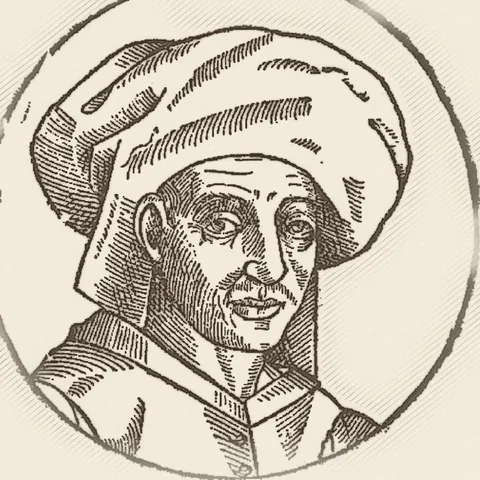 c. 1450 – 1521Renaissance
Josquin des Prez
His music lets voices converse with striking expressive clarity.
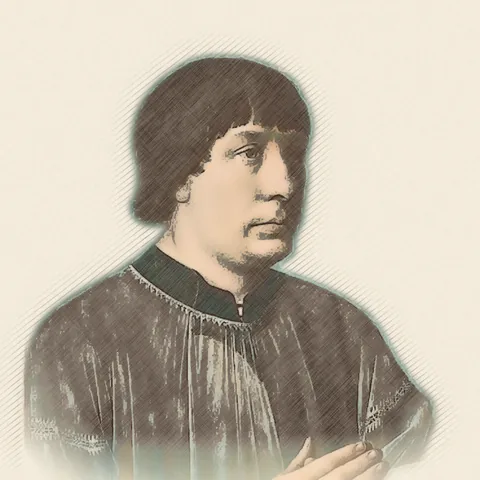 c. 1457 – 1505Renaissance
Jacob Obrecht
A Franco-Flemish composer celebrated for inventive polyphonic masses.
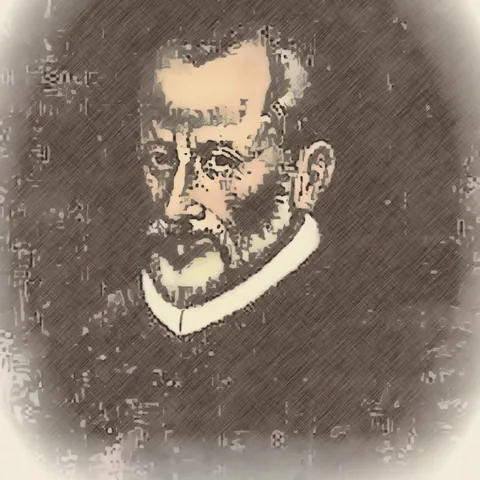 c. 1525 – 1594Renaissance
Giovanni Pierluigi da Palestrina
He epitomized balanced vocal polyphony in Renaissance sacred music.
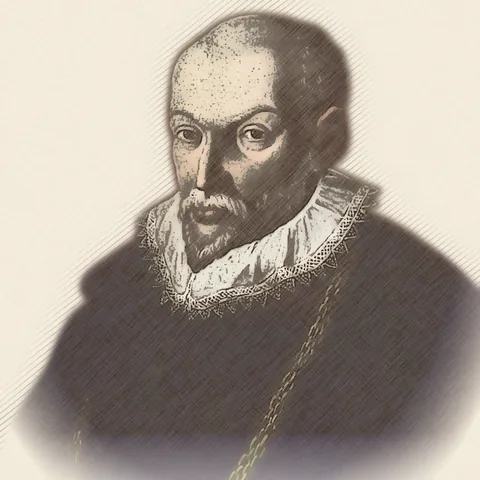 1532 – 1594Renaissance
Orlando di Lasso
A cosmopolitan musician based in Munich, he wrote in many languages and genres.
 c. 1548 – 1611Renaissance
Tomás Luis de Victoria
A Spanish priest and composer, he brought remarkable expressive intensity to sacred polyphony.