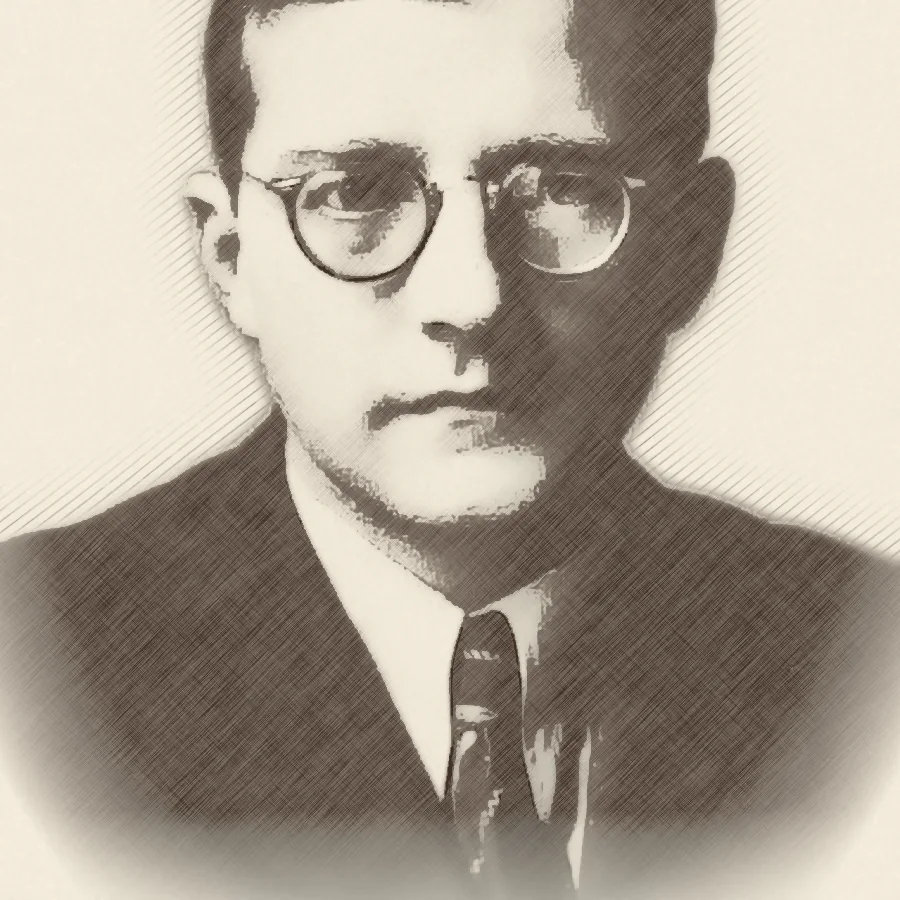
A life and its times
The milestones of the life and work, the contemporaries and the major world events, on a single line of time.
A life at a glance
- 1906Birth
Born in St Petersburg on 25 September
- 1914Meanwhile
The First World War begins
- 1915Trainingage 9
Starts piano at 9 with his mother
- 1917Landmarkage 11
Russian Revolutions
- 1918Meanwhile
End of the First World War
- 1919Trainingage 13
Enters the Petrograd Conservatory at 13
- 1923Careerage 17
Cinema pianist accompanying silent films
- 1926Workage 20
Symphony No. 1, an international success at 19
- 1927Meanwhile
First talking picture (The Jazz Singer)
- 1934Workage 28
Lady Macbeth of Mtsensk triumphs
- 1936Landmarkage 30
Pravda condemns his opera after Stalin’s visit
- 1937Workage 31
Symphony No. 5: an ovation of over half an hour
- 1939Meanwhile
The Second World War begins
- 1941Workage 35
Volunteer firefighter during the siege of Leningrad; Symphony No. 7
- 1948Landmarkage 42
Condemned again by the Soviet authorities
- 1948Meanwhile
The long-playing record (LP) goes on sale
- 1953Workage 47
Symphony No. 10, after Stalin’s death
- 1957Meanwhile
Sputnik, the first artificial satellite
- 1960Workage 54
String Quartet No. 8
- 1963Meanwhile
Martin Luther King’s “I have a dream” speech
- 1964Meanwhile
Robert Moog presents his synthesizer
- 1975Deathage 69
Dies in Moscow on 9 August
Listen
Excerpts from freely licensed recordings, with their performers and licences.
Dmitri Chostakovitch’s music is still protected by copyright: to respect the rights holders, no excerpt is hosted here. You can hear it on the radio, in concert or on licensed streaming platforms.
Listen to complete works on Wikimedia Commons
Wikimedia Commons is a free media library: you will find the complete recordings there, with their reuse conditions.
The life of Dmitri Chostakovitch
Dmitri Shostakovich was born in St Petersburg on 25 September 1906. His father, a chemical engineer, worked at the Bureau of Weights and Measures founded by the scientist Mendeleev; his mother, Sofia, was a Conservatory-trained pianist. Dmitri did not begin piano until he was nine, with his mother, but his progress was dazzling. He started composing at once, including pieces inspired by the events of the 1917 revolution, which he witnessed in the streets of Petrograd.
In 1919, aged thirteen, he entered the Petrograd Conservatory, studying piano and composition with Maximilian Steinberg, Rimsky-Korsakov’s son-in-law. The director, Alexander Glazunov, supported him and helped him obtain food rations during the famine years after the revolution. His father died in 1922 and the family fell into poverty. To help, Dmitri, ill with tuberculosis, worked as a pianist in cinemas accompanying silent films, an exhausting job he hated but which fed his sense of humour and satire.
For his diploma he composed his Symphony No. 1, premiered in 1926 when he was only nineteen. Its success was immediate and international: Bruno Walter and Arturo Toscanini soon conducted it in Europe and America. Shostakovich became the most promising composer in the young Soviet Union. He wrote film, theatre and ballet music and the satirical opera The Nose (1930), after Gogol. A football fanatic, he even became a qualified referee.
In 1934 his opera Lady Macbeth of the Mtsensk District, the violent story of a woman who kills to escape a stifling life, triumphed in Leningrad and Moscow. But in January 1936 Stalin attended a performance and left before the end. A few days later the official newspaper Pravda published an article entitled “Muddle Instead of Music”, violently condemning the work. This was the time of the Great Purges: many of his friends were arrested. Shostakovich lived in fear and, it is said, kept a suitcase packed by the door in case of arrest.
He withdrew his Symphony No. 4, deemed too daring, and in 1937 composed the Symphony No. 5, presented as “a Soviet artist’s creative response to just criticism”. At the premiere the audience, moved to tears, gave it an ovation lasting more than half an hour. Many heard hidden irony and suffering behind its triumphant finale. During the Second World War he stayed in Leningrad, besieged by the German army, and volunteered as a firefighter. There he began his Symphony No. 7, “Leningrad”, performed in 1942 in the starving city and broadcast by loudspeaker towards the enemy lines, which became a symbol of resistance worldwide.
In 1948 he was again condemned by the authorities, along with Prokofiev and others, for “formalism”. He lost his teaching post and had to write propaganda works and film scores, while secretly composing more personal works such as the cycle From Jewish Folk Poetry. After Stalin’s death in 1953 he premiered his Symphony No. 10, in which he signed his music with four notes, D-S-C-H (D, E flat, C, B), his initials in German notation. He also composed the famous Waltz No. 2 and the 24 Preludes and Fugues for piano (1951), inspired by Bach.
In 1960 he composed in three days the String Quartet No. 8, dedicated “to the victims of fascism and war”, which he regarded as his musical autobiography. He wrote fifteen symphonies and fifteen string quartets. Suffering from neurological and heart disease, he kept composing to the end, including a Viola Sonata. He died in Moscow on 9 August 1975. His often tragic and ironic work bears witness to an artist’s life under dictatorship and is among the most performed of the twentieth century.
Works to know
- 1926
Symphony No. 1
Graduation piece by a brilliant teenager.
- 1934
Lady Macbeth of Mtsensk
The opera that displeased Stalin.
- 1937
Symphony No. 5
An ambiguous triumph: forced joy or true victory?
- 1938
Waltz No. 2 (Suite for Variety Orchestra)
Catchy waltz made famous in films.
- 1941
Symphony No. 7 ‘Leningrad’
Performed in the besieged city in 1942.
- 1951
24 Preludes and Fugues
Homage to Bach.
- 1960
String Quartet No. 8
Signed with his initials in notes: D–E-flat–C–B.
Anecdotes
He was a qualified football referee and a fan of Zenit Leningrad.
He signed his music with 4 notes: D-S-C-H (D, E-flat, C, B).
His “Leningrad” Symphony was broadcast by loudspeaker towards the enemy lines during the siege.
He composed his String Quartet No. 8 in just three days.
Same era · Modernism
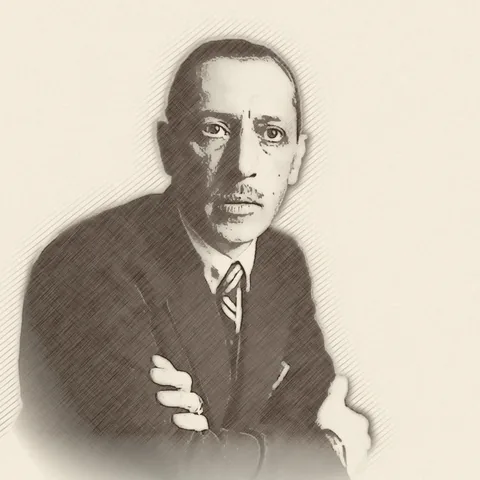 1882 – 1971Modernism
Igor Stravinsky
His rhythmic disruptions and stylistic reinventions shaped twentieth-century music.
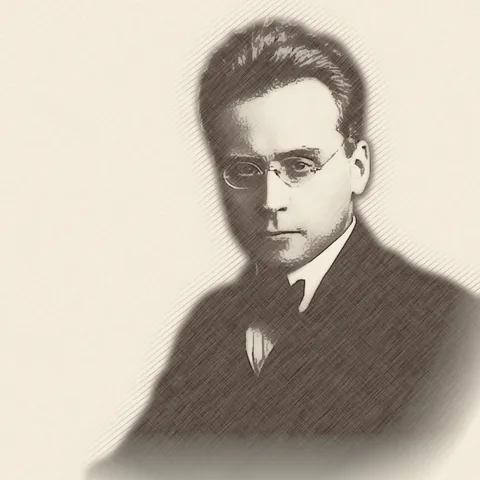 1883 – 1945Modernism
Anton Webern
An Austrian composer who distilled ideas into brief, precise forms.
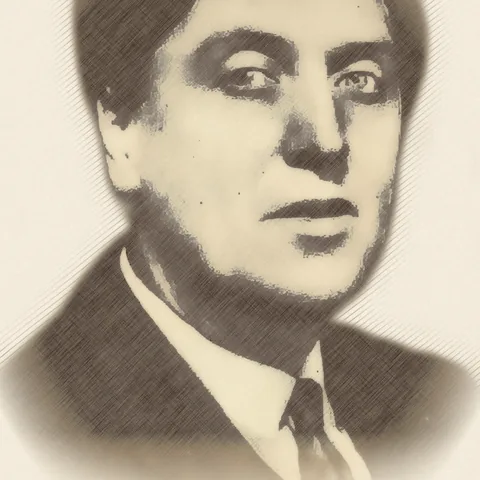 1885 – 1935Modernism
Alban Berg
A pupil of Schoenberg, he combined modern techniques with dramatic intensity.
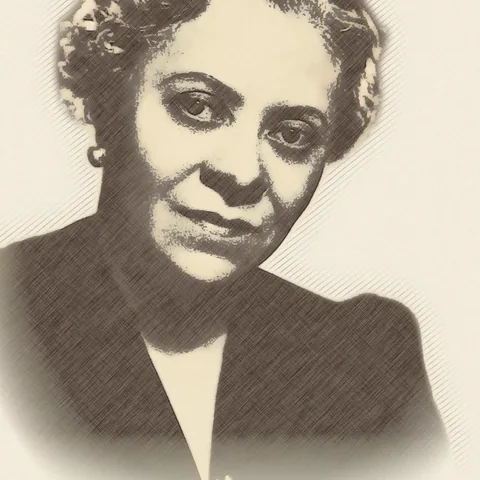 1887 – 1953Modernism
Florence Price
The first Black woman to have a symphony performed by a major US orchestra, she blended classical and African American traditions.
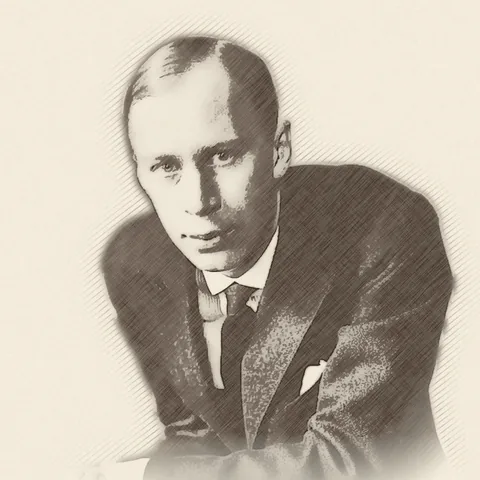 1891 – 1953Modernism
Serge Prokofiev
His angular melodies, sharp rhythms and theatrical flair appeal to all ages.
 1893 – 1918Modernism
Lili Boulanger
The first woman to win the premier Grand Prix de Rome in composition, she left an intense body of work.