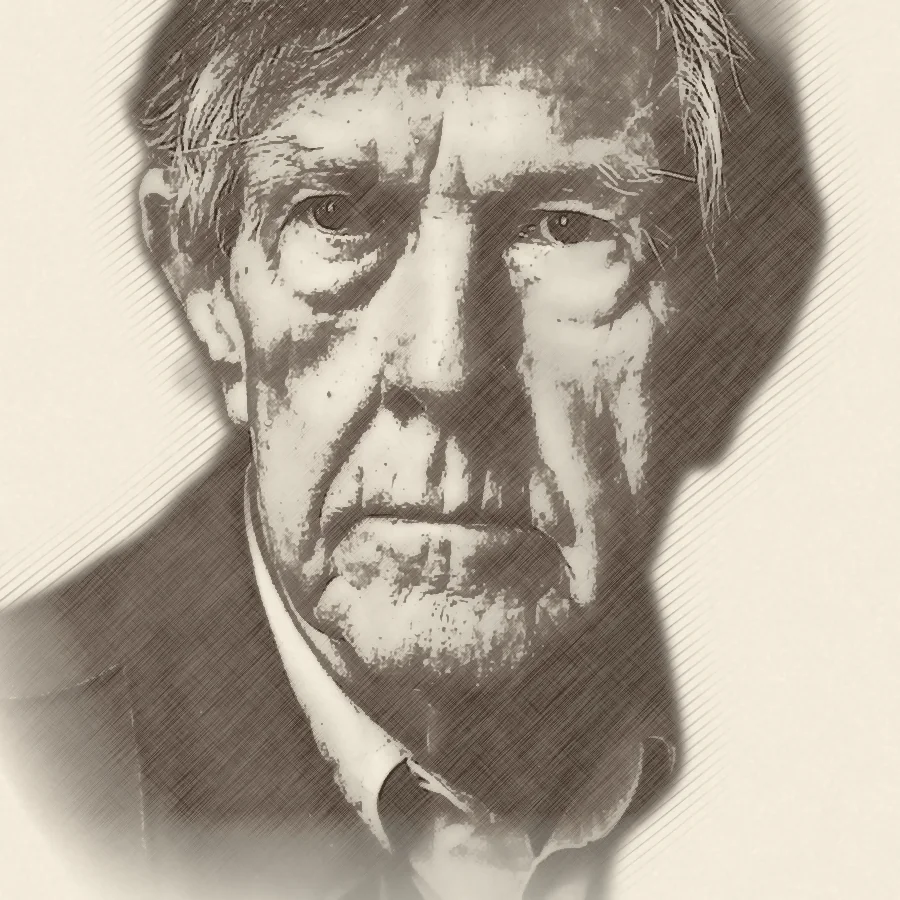
A life and its times
The milestones of the life and work, the contemporaries and the major world events, on a single line of time.
A life at a glance
And after his or her death: 1 landmark in the detailed timeline (2001).
- 1912Birth
Born in Los Angeles on 5 September; his father is an inventor
- 1914Meanwhile
The First World War begins
- 1922Meanwhile
Public radio broadcasting begins (BBC, Radio Tour Eiffel)
- 1930Journeyage 18
Leaves university to travel in Europe
- 1935Trainingage 23
Pupil of Arnold Schoenberg in California
- 1940Workage 28
Invents the ‘prepared piano’: screws and erasers between the strings
- 1942Private lifeage 30
Begins collaborating with the choreographer Merce Cunningham
- 1945Meanwhile
End of the Second World War; United Nations founded
- 1948Workage 36
Sonatas and Interludes for prepared piano
- 1948Meanwhile
The long-playing record (LP) goes on sale
- 1951Workage 39
Uses chance (the I Ching) to compose
- 1951Private lifeage 39
In a soundproof room, discovers that absolute silence doesn’t exist
- 1952Workage 40
4′33″: a pianist plays no notes for 4 minutes 33 seconds
- 1959Private lifeage 47
Wins an Italian TV quiz thanks to his passion for mushrooms
- 1963Meanwhile
Martin Luther King’s “I have a dream” speech
- 1964Meanwhile
Robert Moog presents his synthesizer
- 1982Meanwhile
The compact disc (CD) is launched
- 1985Workage 73
ASLSP (‘as slow as possible’)
- 1989Meanwhile
Fall of the Berlin Wall
- 1992Deathage 80
Dies in New York on 12 August
- 2001Landmark9 years after death
An organ performance of ASLSP planned to last 639 years begins in Germany
Listen
Excerpts from freely licensed recordings, with their performers and licences.
John Cage’s music is still protected by copyright: to respect the rights holders, no excerpt is hosted here. You can hear it on the radio, in concert or on licensed streaming platforms.
Listen to complete works on Wikimedia Commons
Wikimedia Commons is a free media library: you will find the complete recordings there, with their reuse conditions.
The life of John Cage
John Cage was born in Los Angeles on 5 September 1912. His father, John Milton Cage, was an eccentric inventor who designed, among other things, a petrol-powered submarine and radio equipment; his mother, Lucretia, worked as a journalist. Young John learned piano as a child and discovered the music of Grieg, which he adored. An excellent student, he graduated from high school at the top of his class and entered Pomona College in California in 1928.
But he was bored at university, which he left in 1930 to travel in Europe. In Paris he discovered Gothic architecture, modern painting and the music of Bach. He tried painting, poetry and architecture before choosing music. Back in California he studied composition with Henry Cowell, a pioneer of experimental music, and from 1935 with Arnold Schoenberg, who told him he had no feeling for harmony. Cage promised to devote his life to music and decided to focus above all on rhythm and sound.
In the 1930s he formed a percussion ensemble that played all kinds of objects: tin cans, car brake drums, gongs lowered into water. He composed Imaginary Landscape No. 1 (1939), one of the first works to use record players and electronic sounds. In 1940, for a dance performance in Seattle, there was no room on stage for a percussion ensemble: so he invented the “prepared piano”, slipping screws, bolts and pieces of rubber and wood between the piano strings. The instrument turned into a small percussion orchestra with strange, delicate sounds.
In 1942 he moved to New York. There began a fifty-year artistic collaboration and life partnership with the choreographer and dancer Merce Cunningham, for whose company he composed and directed the music. Between 1946 and 1948 he composed the Sonatas and Interludes for prepared piano, his masterpiece for the instrument. At this time he became interested in Indian philosophy and Zen Buddhism, which transformed his idea of music: he wanted to let sounds “be themselves”, free from the composer’s tastes and intentions.
From 1951 he composed using chance. He consulted the I Ching, an ancient Chinese book of divination, tossing coins to decide pitches, durations and dynamics. Thus was born Music of Changes (1951) for piano. That same year he entered an anechoic chamber, a completely soundproofed room at Harvard University. He expected absolute silence but heard two sounds, one high, one low: those of his nervous system and his blood circulating. He concluded that absolute silence does not exist.
This discovery inspired his most famous piece: 4′33″ (1952). The pianist sits at the piano, opens and closes the lid to mark the three movements, but plays not a single note for four minutes and thirty-three seconds. The “music” is made of the sounds in the hall: coughs, whispers, the sound of rain or wind. The work caused a huge scandal but raised a question that would change twentieth-century art: what is music? Cage also composed works for radios, magnetic tape and all kinds of objects.
A passionate expert on mushrooms, in 1959 he won an Italian television quiz show, Lascia o raddoppia?, by answering questions on the subject. He was also a poet, writer and painter and taught at many universities. In 1985 he composed ASLSP (“As slow as possible”). He died in New York on 12 August 1992. In 2001 a church in Halberstadt, Germany, began a performance of his organ version of this piece, planned to last 639 years and end in 2640.
Works to know
- 1939
Imaginary Landscape No. 1
With turntables at variable speeds.
- 1940
Bacchanale
The first piece for prepared piano.
- 1948
Sonatas and Interludes
The prepared piano sounds like a gamelan.
- 1951
Music of Changes
Composed by casting the I Ching.
- 1952
4′33″
Three movements of silence — you listen to the room.
- 1985
ASLSP / Organ²
To be played ‘as slow as possible’.
Anecdotes
In Germany one of his organ pieces is being played so slowly it will last until 2640!
He won thousands in an Italian TV quiz about mushrooms.
He invented the prepared piano because there was no room for percussion on a stage.
In a completely soundproof room he heard the sounds of his own body.
Same era · 20th century and today
 1899 – 196320th century and today
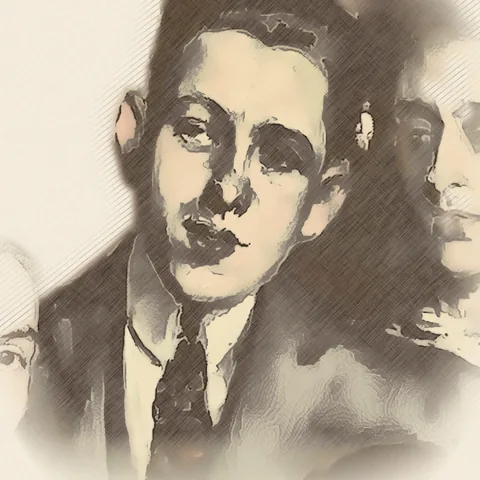
Francis Poulenc
A member of Les Six, he combined wit with profound spiritual expression.
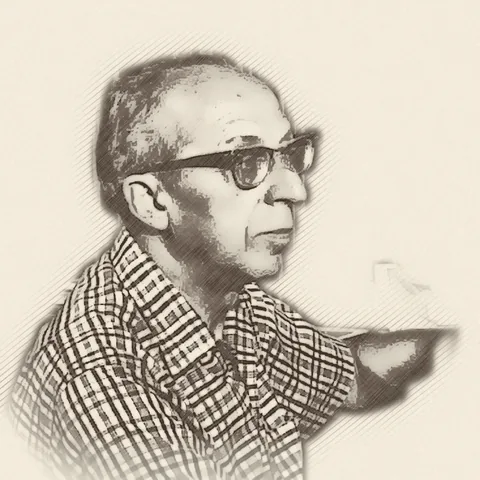 1900 – 199020th century and today
Aaron Copland
He developed an open American sound drawing on dance and folk traditions.
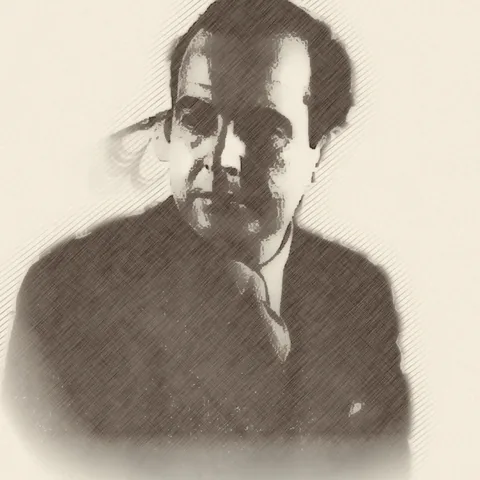 1910 – 198120th century and today
Samuel Barber
A lyrical American composer who wrote for voice, strings and orchestra.
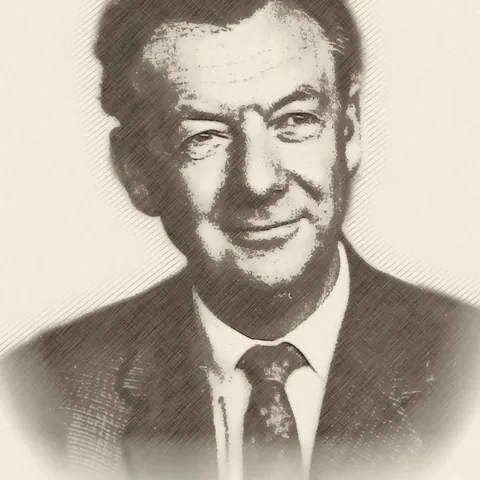 1913 – 197620th century and today
Benjamin Britten
He revitalized English opera and wrote accessible yet sophisticated music.
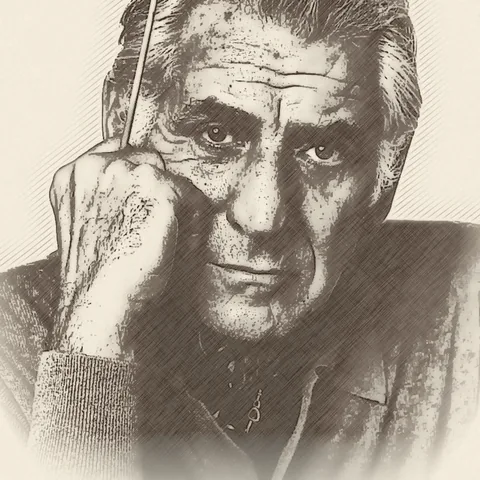 1918 – 199020th century and today
Leonard Bernstein
Conductor, educator and composer, he connected classical music, jazz and musical theatre.
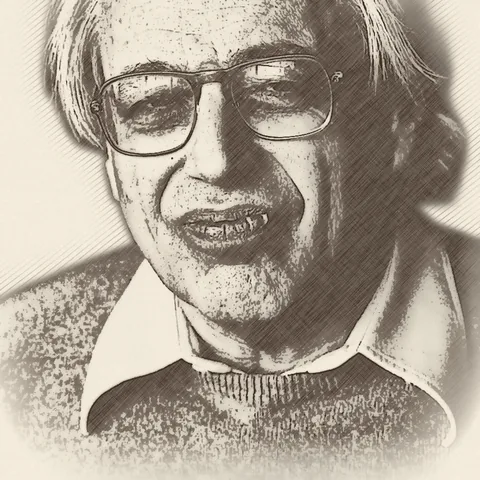 1923 – 200620th century and today
György Ligeti
He created shifting sonic textures that blur the boundary between melody and sound mass.