 20th century and today
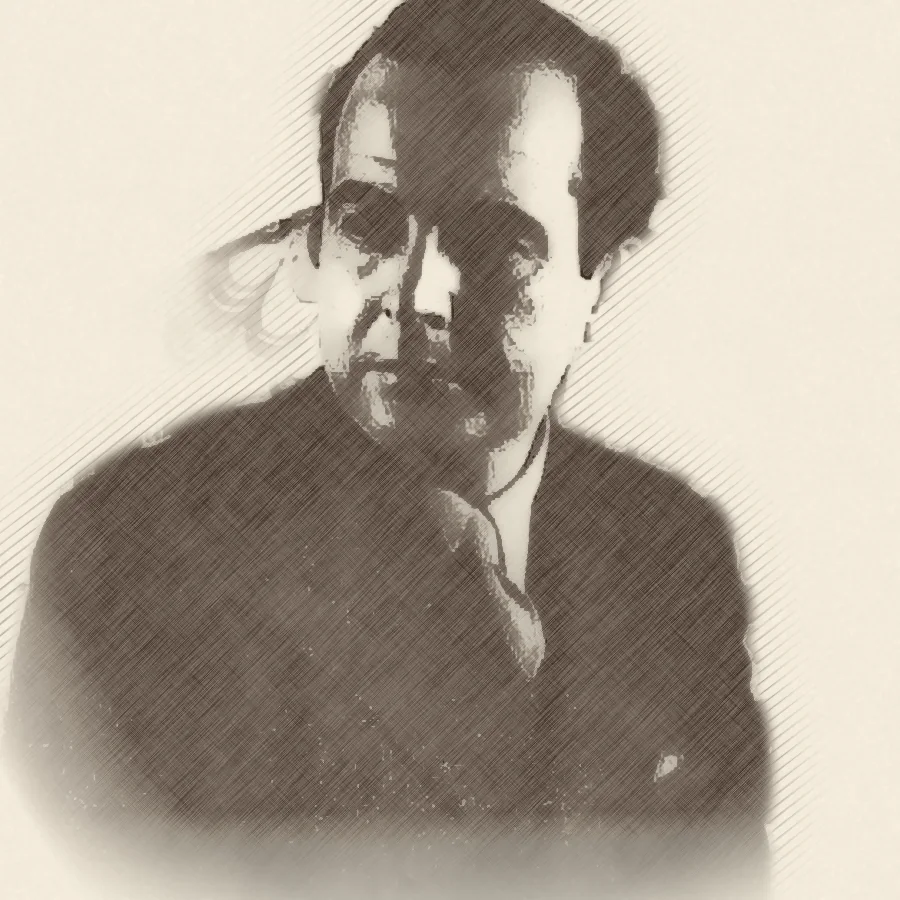
Samuel Barber
A lyrical American composer who wrote for voice, strings and orchestra.
A life and its times
The milestones of the life and work, the contemporaries and the major world events, on a single line of time.
A life at a glance
- 1910Birth
Born in West Chester on 9 March
- 1914Meanwhile
The First World War begins
- 1918Meanwhile
End of the First World War
- 1919Private lifeage 9
At 9, writes to his mother: ‘I was meant to be a composer’
- 1924Trainingage 14
Enters the brand-new Curtis Institute at 14; meets Gian Carlo Menotti there
- 1927Meanwhile
First talking picture (The Jazz Singer)
- 1931Workage 21
The School for Scandal overture
- 1935Careerage 25
American Prix de Rome
- 1936Workage 26
String Quartet Op. 11, source of the Adagio
- 1938Workage 28
Toscanini premieres the Adagio for Strings on the radio
- 1939Workage 29
Violin Concerto
- 1945Meanwhile
End of the Second World War; United Nations founded
- 1947Workage 37
Knoxville: Summer of 1915
- 1948Meanwhile
The long-playing record (LP) goes on sale
- 1958Careerage 48
Pulitzer Prize for his opera Vanessa
- 1961Meanwhile
Yuri Gagarin, first human in space
- 1963Careerage 53
Second Pulitzer Prize for his Piano Concerto
- 1964Meanwhile
Robert Moog presents his synthesizer
- 1966Workage 56
Antony and Cleopatra opens the new Metropolitan Opera
- 1969Meanwhile
First steps on the Moon
- 1981Deathage 71
Dies in New York on 23 January
Listen
Excerpts from freely licensed recordings, with their performers and licences.
Samuel Barber’s music is still protected by copyright: to respect the rights holders, no excerpt is hosted here. You can hear it on the radio, in concert or on licensed streaming platforms.
Listen to complete works on Wikimedia Commons
Wikimedia Commons is a free media library: you will find the complete recordings there, with their reuse conditions.
The life of Samuel Barber
Samuel Barber was born on 9 March 1910 in West Chester, a small town in Pennsylvania, into a comfortable, cultured family. His father was a doctor, and his aunt, Louise Homer, was a famous contralto at the Metropolitan Opera in New York, married to the song composer Sidney Homer, who became a valued adviser to young Samuel. He began piano at six and composed his first piece at seven. At nine he wrote his mother a now-famous letter: “I was not meant to be an athlete. I was meant to be a composer, and will be I’m sure.”
At ten he was already trying to write an opera. At twelve he became organist of a church in his town. In 1924, aged fourteen, he entered the brand-new Curtis Institute of Music in Philadelphia, studying composition, piano and singing at once; he had a fine baritone voice. There he met the young Italian composer Gian Carlo Menotti, who became his partner for more than forty years and the librettist of his operas. Together they often travelled to Europe, especially Italy and Austria.
Barber made his mark early. In 1931, still a student, he composed the overture The School for Scandal, after an eighteenth-century English comedy, full of wit and verve. He sang himself and in 1935 recorded Dover Beach for voice and string quartet. That same year he won the American Prix de Rome, which allowed him to stay at the American Academy in Rome. There he composed his Symphony No. 1 and his String Quartet Op. 11.
In 1936 he composed the Quartet Op. 11, whose intensely melancholy slow movement was to have an extraordinary destiny. At the request of the famous conductor Arturo Toscanini he made a version for string orchestra: the Adagio for Strings. Toscanini premiered it on 5 November 1938 on an NBC radio broadcast heard by millions. The work became one of the most famous in American music. It was broadcast on the radio when the deaths of Franklin Roosevelt and later John F. Kennedy were announced, and has been used in many films. Barber also made a choral version, the Agnus Dei (1967).
In 1939 he composed his Violin Concerto, originally commissioned for a young violinist who found the finale too difficult. During the Second World War he served in the Army Air Forces, which commissioned a symphony from him. In 1947 he composed Knoxville: Summer of 1915, on a text by James Agee, for soprano and orchestra: a tender, nostalgic memory of a summer evening with family, seen through a child’s eyes. He also wrote a Piano Sonata (1949), premiered by Vladimir Horowitz.
With Menotti he lived at Capricorn, a house in Mount Kisco near New York, where they entertained many artists. Menotti wrote the libretto for his opera Vanessa, premiered at the Metropolitan Opera in 1958, which won him his first Pulitzer Prize. In 1963 his Piano Concerto, premiered by John Browning, won him a second Pulitzer. Barber wrote in a lyrical, Romantic style devoted to melody, at a time when many composers preferred the avant-garde.
In 1966 his opera Antony and Cleopatra, after Shakespeare, was chosen to open the new Metropolitan Opera at Lincoln Center in New York. But the staging, too heavy and complicated, was a resounding failure. Deeply hurt by the critics, Barber went through a period of depression and composed less. He separated from Menotti in the early 1970s. Suffering from cancer, he died in New York on 23 January 1981. His Adagio remains one of the most moving and most performed pieces of the twentieth century.
Works to know
- 1938
Adagio for Strings
One of the most moving pieces of the 20th century.
- 1939
Violin Concerto
Lyrical, then virtuosic.
- 1947
Knoxville: Summer of 1915
Memories of a childhood summer evening.
- 1958
Vanessa
Romantic opera about waiting for love.
- 1962
Piano Concerto
Awarded the Pulitzer Prize.
- 1967
Agnus Dei
Choral version of the Adagio.
Anecdotes
He won the Pulitzer Prize for Music twice.
He first wrote his famous Adagio for string quartet.
At nine he wrote to his mother: “I was meant to be a composer, and will be.”
His Adagio for Strings was broadcast on the radio when the deaths of Presidents Roosevelt and Kennedy were announced.
Same era · 20th century and today
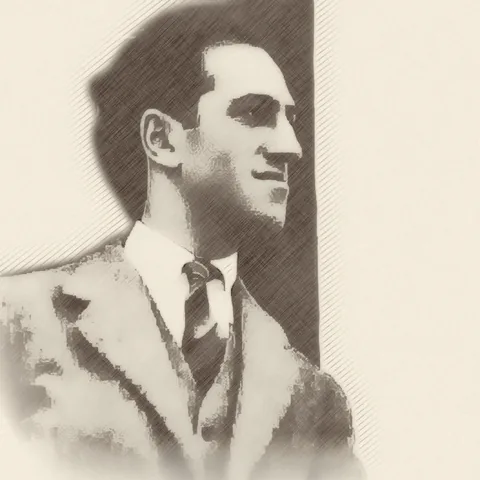 1898 – 193720th century and today
George Gershwin
An American composer who bridged jazz, Broadway and concert music.
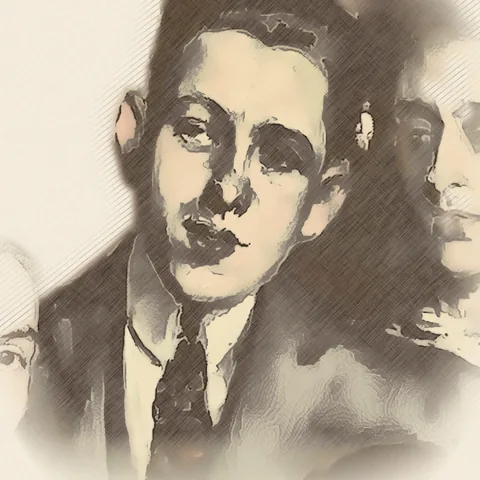 1899 – 196320th century and today
Francis Poulenc
A member of Les Six, he combined wit with profound spiritual expression.
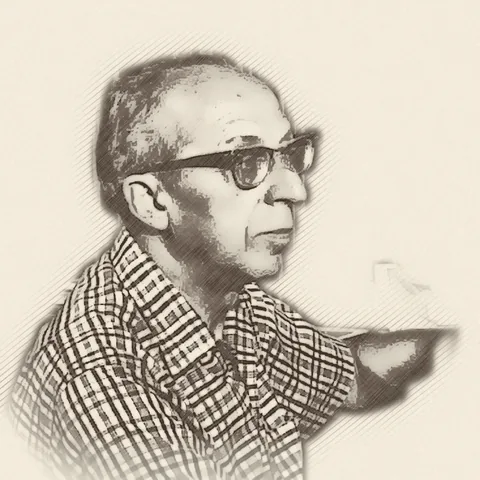 1900 – 199020th century and today
Aaron Copland
He developed an open American sound drawing on dance and folk traditions.
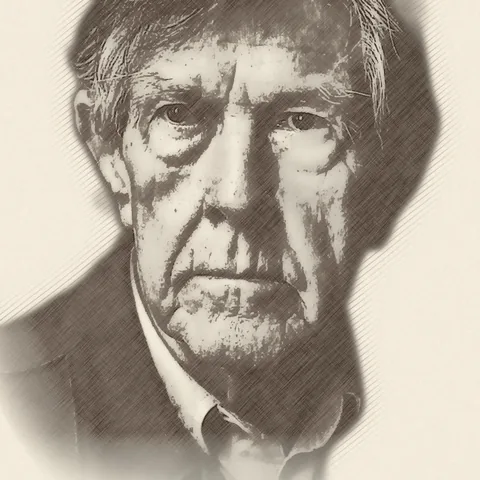 1912 – 199220th century and today
John Cage
A radical experimenter who questioned chance, silence and the act of listening.
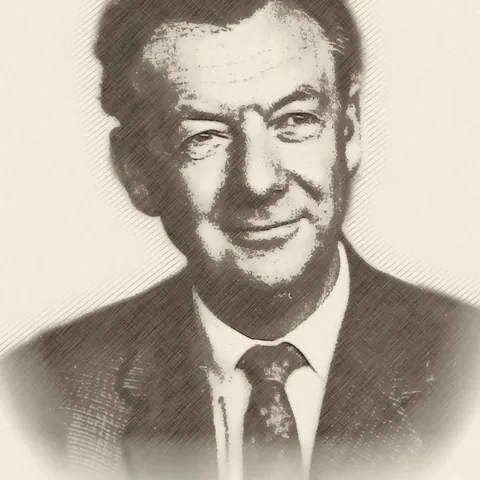 1913 – 197620th century and today
Benjamin Britten
He revitalized English opera and wrote accessible yet sophisticated music.
 1918 – 199020th century and today
Leonard Bernstein
Conductor, educator and composer, he connected classical music, jazz and musical theatre.