 20th century and today
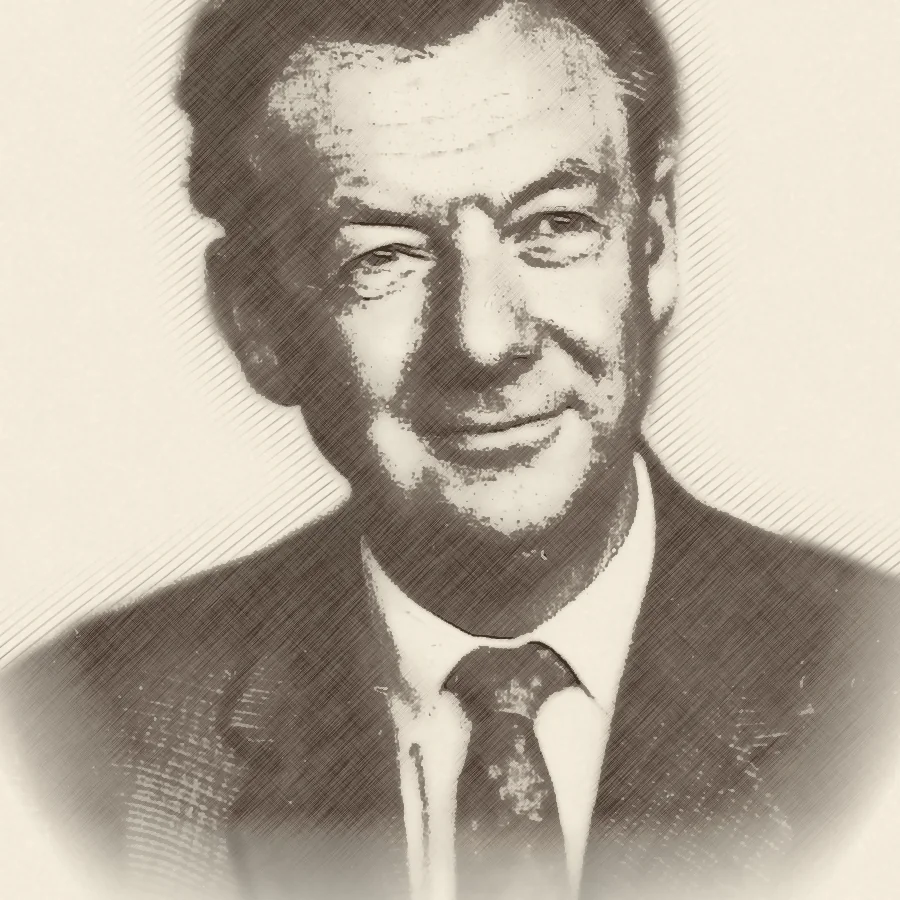
Benjamin Britten
He revitalized English opera and wrote accessible yet sophisticated music.
A life and its times
The milestones of the life and work, the contemporaries and the major world events, on a single line of time.
A life at a glance
- 1913Birth
Born in Lowestoft on 22 November, St Cecilia’s Day, patron saint of musicians
- 1917Meanwhile
Russian Revolution
- 1918Workage 5
Composing from age 5
- 1922Meanwhile
Public radio broadcasting begins (BBC, Radio Tour Eiffel)
- 1927Trainingage 14
Lessons with the composer Frank Bridge
- 1929Meanwhile
Wall Street Crash
- 1934Workage 21
Simple Symphony, on tunes written in childhood
- 1936Workage 23
Score for the documentary Night Mail, with the poet Auden
- 1937Private lifeage 24
Meets the tenor Peter Pears, his lifelong partner
- 1939Journeyage 26
Stays in the United States at the start of the war
- 1945Workage 32
Peter Grimes: rebirth of English opera
- 1945Meanwhile
End of the Second World War; United Nations founded
- 1946Workage 33
The Young Person’s Guide to the Orchestra
- 1948Careerage 35
Founds the Aldeburgh Festival
- 1948Meanwhile
The long-playing record (LP) goes on sale
- 1958Workage 45
Noye’s Fludde, an opera for children
- 1961Meanwhile
Yuri Gagarin, first human in space
- 1962Workage 49
War Requiem for the new Coventry Cathedral
- 1964Meanwhile
Robert Moog presents his synthesizer
- 1969Meanwhile
First steps on the Moon
- 1976Careerage 63
First composer to be made a life peer
- 1976Deathage 63
Dies in Aldeburgh on 4 December
Listen
Excerpts from freely licensed recordings, with their performers and licences.
Benjamin Britten’s music is still protected by copyright: to respect the rights holders, no excerpt is hosted here. You can hear it on the radio, in concert or on licensed streaming platforms.
Listen to complete works on Wikimedia Commons
Wikimedia Commons is a free media library: you will find the complete recordings there, with their reuse conditions.
The life of Benjamin Britten
Benjamin Britten was born on 22 November 1913 in Lowestoft, a fishing port on the Suffolk coast in eastern England, on St Cecilia’s Day, the feast of the patron saint of musicians. His father was a dentist; his mother, Edith, an amateur singer, held concerts at home and dreamed of her son becoming a great composer. Benjamin composed from the age of five, and by fourteen had already written hundreds of pieces: sonatas, songs, quartets. He learned piano and viola. All his life he remained attached to the North Sea and the landscapes of his childhood.
In 1927, aged thirteen, he began studying composition with Frank Bridge, a demanding composer who taught him rigour and openness to modern European music, from Ravel to Berg. In 1930 he entered the Royal College of Music in London, where he was somewhat bored. In 1934 he composed the Simple Symphony for string orchestra, based on tunes he had written as a child. That same year he wanted to study with Alban Berg in Vienna, but his teachers dissuaded him.
To earn his living he composed in 1935–36 for the GPO Film Unit, the film unit of the British Post Office. There he worked with the poet W. H. Auden on the documentary Night Mail (1936), which follows the night mail train from London to Scotland, its rhythm imitating the train’s wheels. In 1937 he composed the Variations on a Theme of Frank Bridge, which made him known internationally. That same year he met the tenor Peter Pears, who became his lifelong partner and the performer of almost all his vocal works.
A committed pacifist, Britten left with Pears for North America in 1939, at the start of the Second World War. There he composed his Violin Concerto and Les Illuminations, on poems by Rimbaud. But he was homesick: reading in California a poem by George Crabbe about a Suffolk fisherman, he decided to return. In 1942, crossing the Atlantic, he composed A Ceremony of Carols for children’s choir and harp. Back in England he obtained conscientious-objector status and gave concerts to support the population.
On 7 June 1945 his opera Peter Grimes, inspired by Crabbe’s poem, was premiered in London: the story of a solitary fisherman rejected by the people of his village. It was a triumph, marking the rebirth of English opera, absent since Purcell. Its “Sea Interludes” evoke the North Sea in all its moods. In 1946 he composed for an educational film The Young Person’s Guide to the Orchestra, variations on a theme by Purcell that introduce each instrument of the orchestra in turn before a great final fugue.
In 1948, with Pears and the librettist Eric Crozier, he founded the Aldeburgh Festival in the small Suffolk coastal town where he had settled. There he presented his own works and those of other composers. He wrote many operas, such as Albert Herring, Billy Budd, The Turn of the Screw and A Midsummer Night’s Dream, as well as works for children, whom he loved to involve in music: Let’s Make an Opera (1949) and Noye’s Fludde (1958), an opera about Noah’s Ark for children and amateurs in which dozens of children play the animals.
In 1962 he composed the War Requiem for the consecration of the new Coventry Cathedral, rebuilt after its destruction by German bombing. The work combines the Latin Mass for the Dead with poems by Wilfred Owen, a young soldier killed in 1918. For the premiere Britten wanted three soloists from formerly enemy countries: an Englishman, a German and a Russian woman. In 1976 he became the first composer to be made a life peer, as Lord Britten of Aldeburgh. Suffering from heart disease, he died at Aldeburgh on 4 December 1976. He is regarded as the greatest English composer of the twentieth century.
Works to know
- 1934
Simple Symphony
Fresh symphony for strings.
- 1942
A Ceremony of Carols
Christmas carols for choir and harp.
- 1945
Peter Grimes
Opera about a fisherman shunned by his village.
- 1946
The Young Person’s Guide to the Orchestra
Variations on a Purcell theme to discover every instrument.
- 1958
Noye’s Fludde
Noah’s Ark sung by children.
- 1962
War Requiem
Pacifist requiem on poems by Wilfred Owen.
Anecdotes
He was born on St Cecilia’s Day, the patron saint of musicians.
His Guide to the Orchestra uses a theme by Purcell, a 17th-century English composer.
For his War Requiem he wanted an English singer, a German and a Russian woman, from formerly enemy countries.
In Noye’s Fludde dozens of children play the animals boarding the Ark.
Same era · 20th century and today
 1899 – 196320th century and today
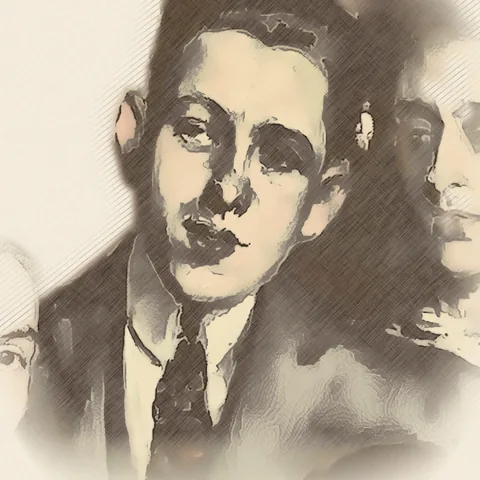
Francis Poulenc
A member of Les Six, he combined wit with profound spiritual expression.
 1900 – 199020th century and today
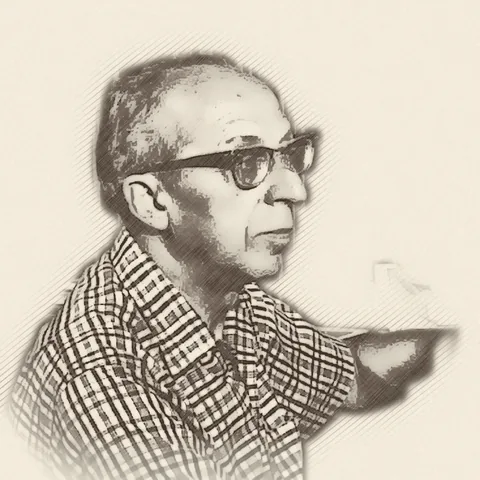
Aaron Copland
He developed an open American sound drawing on dance and folk traditions.
 1910 – 198120th century and today
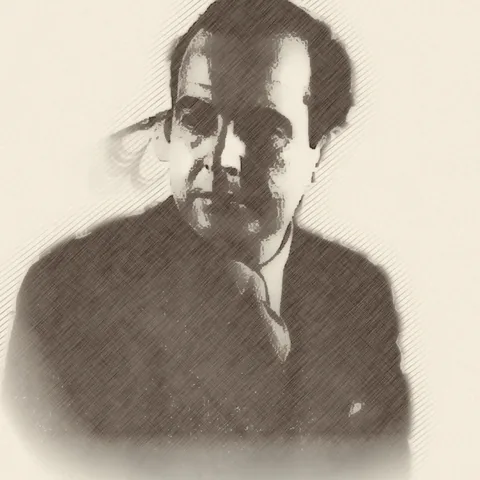
Samuel Barber
A lyrical American composer who wrote for voice, strings and orchestra.
 1912 – 199220th century and today
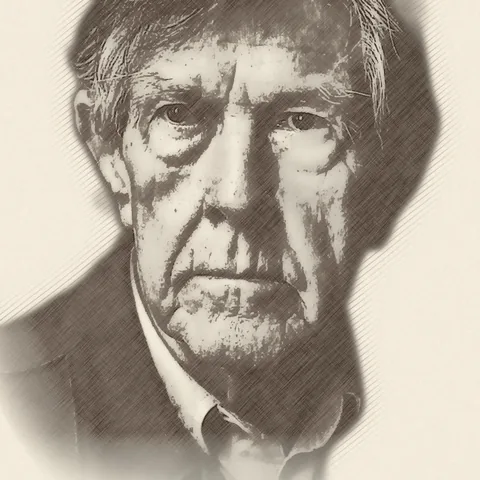
John Cage
A radical experimenter who questioned chance, silence and the act of listening.
 1918 – 199020th century and today
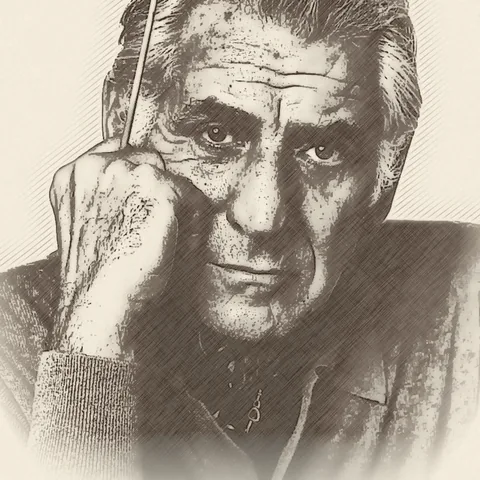
Leonard Bernstein
Conductor, educator and composer, he connected classical music, jazz and musical theatre.
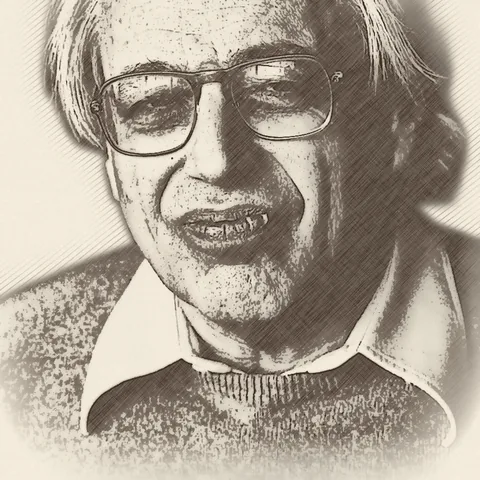 1923 – 200620th century and today
György Ligeti
He created shifting sonic textures that blur the boundary between melody and sound mass.