 20th century and today
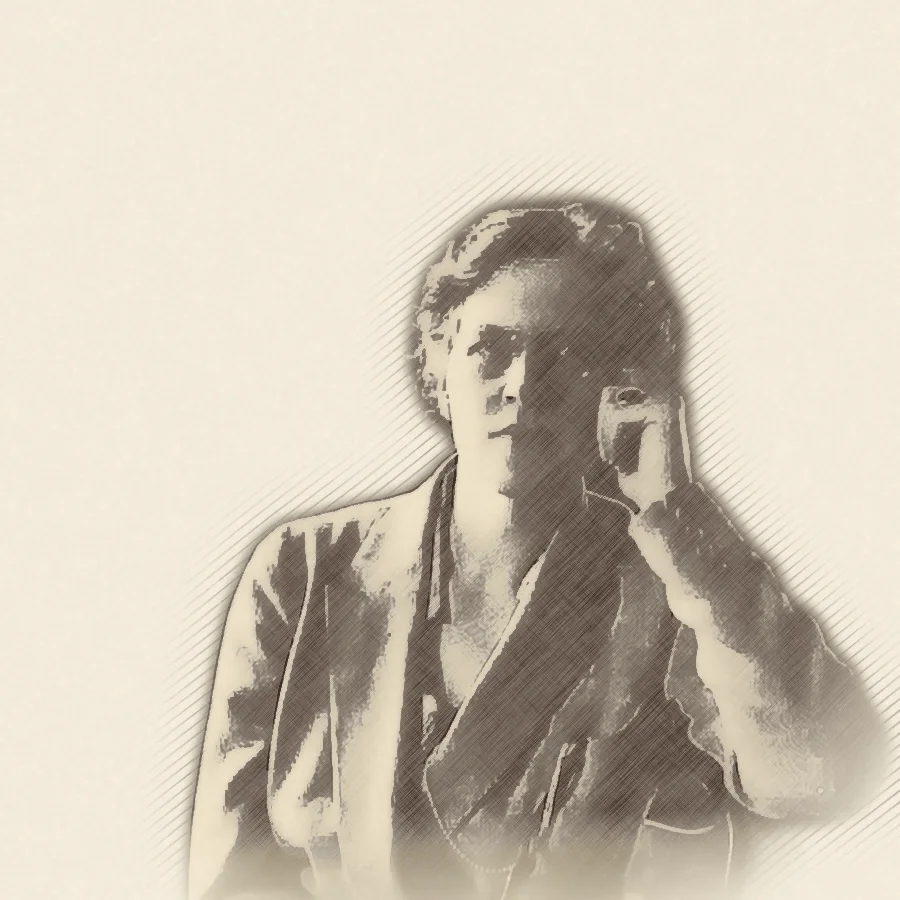
Nadia Boulanger
A teacher and conductor who influenced generations of musicians.
A life and its times
The milestones of the life and work, the contemporaries and the major world events, on a single line of time.
A life at a glance
- 1887Birth
Born in Paris on 16 September; her father, a composer, is 72
- 1895Meanwhile
The Lumière brothers’ first cinema show
- 1897Trainingage 10
Enters the Paris Conservatoire aged 10
- 1904Trainingage 17
First prizes in organ, accompaniment and fugue
- 1908Careerage 21
Second Grand Prix de Rome
- 1912Workage 25
Fantaisie variée for piano and orchestra
- 1912Meanwhile
The Titanic sinks
- 1914Workage 27
Three Pieces for cello and piano
- 1918Private lifeage 31
Death of her sister Lili; she gradually stops composing
- 1918Meanwhile
End of the First World War
- 1921Careerage 34
Teaches at the American Conservatory in Fontainebleau
- 1929Meanwhile
Wall Street Crash
- 1937Careerage 50
First woman to conduct a full concert of the Royal Philharmonic Society
- 1938Careerage 51
First woman to conduct the Boston Symphony Orchestra
- 1940Journeyage 53
Spends the war in the United States
- 1948Meanwhile
The long-playing record (LP) goes on sale
- 1949Careerage 62
Director of the American Conservatory in Fontainebleau
- 1957Meanwhile
Sputnik, the first artificial satellite
- 1964Meanwhile
Robert Moog presents his synthesizer
- 1969Meanwhile
First steps on the Moon
- 1979Deathage 92
Dies in Paris on 22 October, aged 92
Listen
Excerpts from freely licensed recordings, with their performers and licences.
Nadia Boulanger’s music is still protected by copyright: to respect the rights holders, no excerpt is hosted here. You can hear it on the radio, in concert or on licensed streaming platforms.
Listen to complete works on Wikimedia Commons
Wikimedia Commons is a free media library: you will find the complete recordings there, with their reuse conditions.
The life of Nadia Boulanger
Nadia Boulanger was born in Paris on 16 September 1887. Her father, Ernest Boulanger, a composer, singing professor at the Conservatoire and former Prix de Rome winner, was seventy-two; her mother, Raissa Myshetskaya, of Russian origin, was forty-four years younger than him. As a child Nadia at first hated music and hid when she heard the piano, then, around five, suddenly became passionate about it. Her father died in 1900. In 1893 her little sister Lili was born; Nadia was her godmother and took care of her all her life.
In 1897, aged ten, she entered the Paris Conservatoire, where she studied harmony, organ with Alexandre Guilmant and Louis Vierne, and composition with Charles-Marie Widor and Gabriel Fauré. In 1904 she won first prizes in organ, accompaniment and fugue. From the age of sixteen she gave lessons to help her family. She also became deputy organist at the Madeleine church, where Fauré was titular organist.
Nadia Boulanger competed several times for the Prix de Rome. In 1908 she caused controversy by submitting an instrumental fugue instead of the vocal fugue required by the rules; she nonetheless won the Second Grand Prix with her cantata La Sirène. She composed songs, a Fantaisie variée for piano and orchestra (1912) and, with the pianist Raoul Pugno, an opera, La Ville morte, after Gabriele D’Annunzio, whose premiere was prevented by the war and Pugno’s death in 1914. She also wrote the Three Pieces for cello and piano (1914).
In 1913 her sister Lili became the first woman to win the Premier Grand Prix de Rome. Nadia, who considered her far more gifted, gradually decided to give up composing, judging her own music “useless”. Lili’s death in 1918, at twenty-four, devastated her. From then on she devoted herself to promoting her sister’s work and to teaching, which became the great work of her life.
From 1921 she taught at the newly founded American Conservatory at Fontainebleau and in her flat on the rue Ballu in Paris, where her Wednesday group classes became legendary. Demanding, immensely cultured and with a prodigious memory, she trained hundreds of composers from all over the world, especially from America: Aaron Copland, Elliott Carter, Philip Glass, Astor Piazzolla — whom she advised to stay true to tango — and the producer Quincy Jones. She was known as “Mademoiselle”.
Nadia Boulanger was also a pioneering conductor. She helped revive Renaissance and Baroque music, notably Monteverdi’s madrigals, which she recorded in 1937. That same year she became the first woman to conduct a complete concert of the Royal Philharmonic Society in London, and in 1938 the first woman to conduct the Boston Symphony Orchestra, followed by the New York Philharmonic. In 1938 she premiered the “Dumbarton Oaks” Concerto by her friend Stravinsky.
During the Second World War she took refuge in the United States, teaching at several universities. Back in France in 1946, she taught at the Paris Conservatoire and from 1949 directed the American Conservatory at Fontainebleau. She continued teaching to the end of her life, despite having almost lost her sight. She died in Paris on 22 October 1979, aged ninety-two. She is regarded as the greatest music teacher of the twentieth century.
Works to know
- 1908
La Sirène
Prix de Rome cantata.
- 1909
Songs
Some thirty songs for voice and piano.
- 1912
Fantaisie variée for piano and orchestra
Ambitious work premiered with Raoul Pugno.
- 1912
La Ville morte
Opera written with Pugno, long unperformed.
- 1914
Three Pieces for cello and piano
Often-played, deeply poetic pieces.
Anecdotes
She had hundreds of pupils, including Quincy Jones, Michael Jackson’s producer!
She taught until the age of 92.
She advised the young Astor Piazzolla to stay true to tango, which changed his career.
In 1938 she became the first woman to conduct the Boston Symphony Orchestra.

Same era · 20th century and today
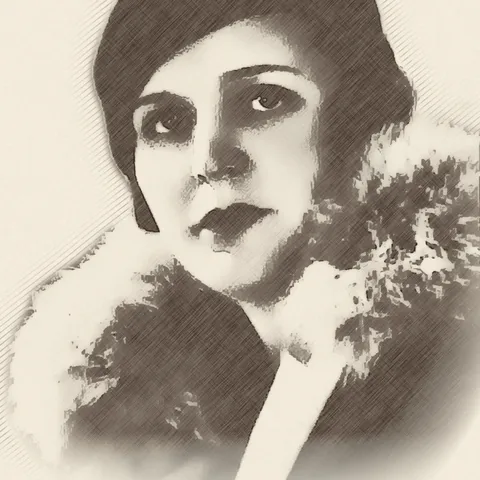 1892 – 198320th century and today
Germaine Tailleferre
The only woman in Les Six, she wrote inventive, clear music for stage and concert.
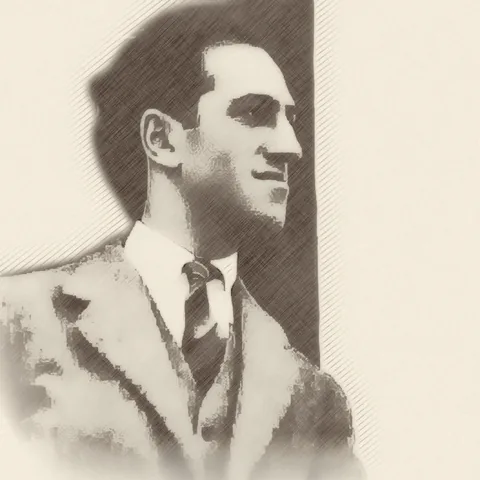 1898 – 193720th century and today
George Gershwin
An American composer who bridged jazz, Broadway and concert music.
 1899 – 196320th century and today
Francis Poulenc
A member of Les Six, he combined wit with profound spiritual expression.
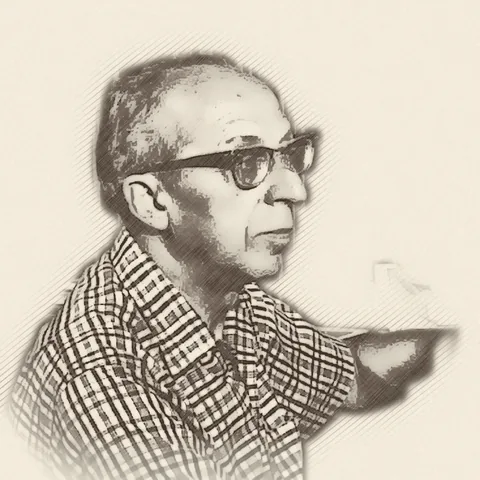 1900 – 199020th century and today
Aaron Copland
He developed an open American sound drawing on dance and folk traditions.
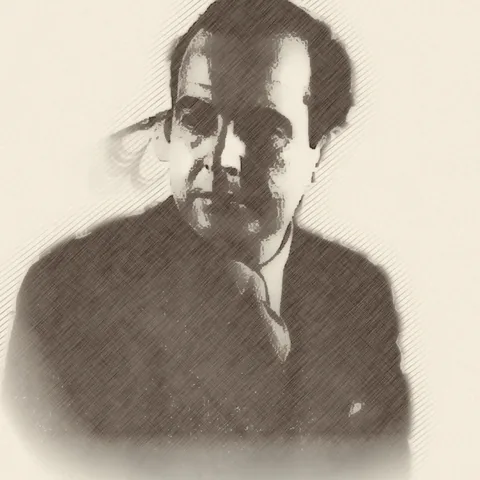 1910 – 198120th century and today
Samuel Barber
A lyrical American composer who wrote for voice, strings and orchestra.
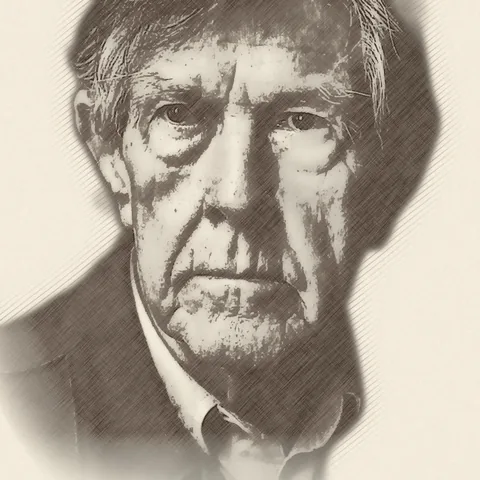 1912 – 199220th century and today
John Cage
A radical experimenter who questioned chance, silence and the act of listening.