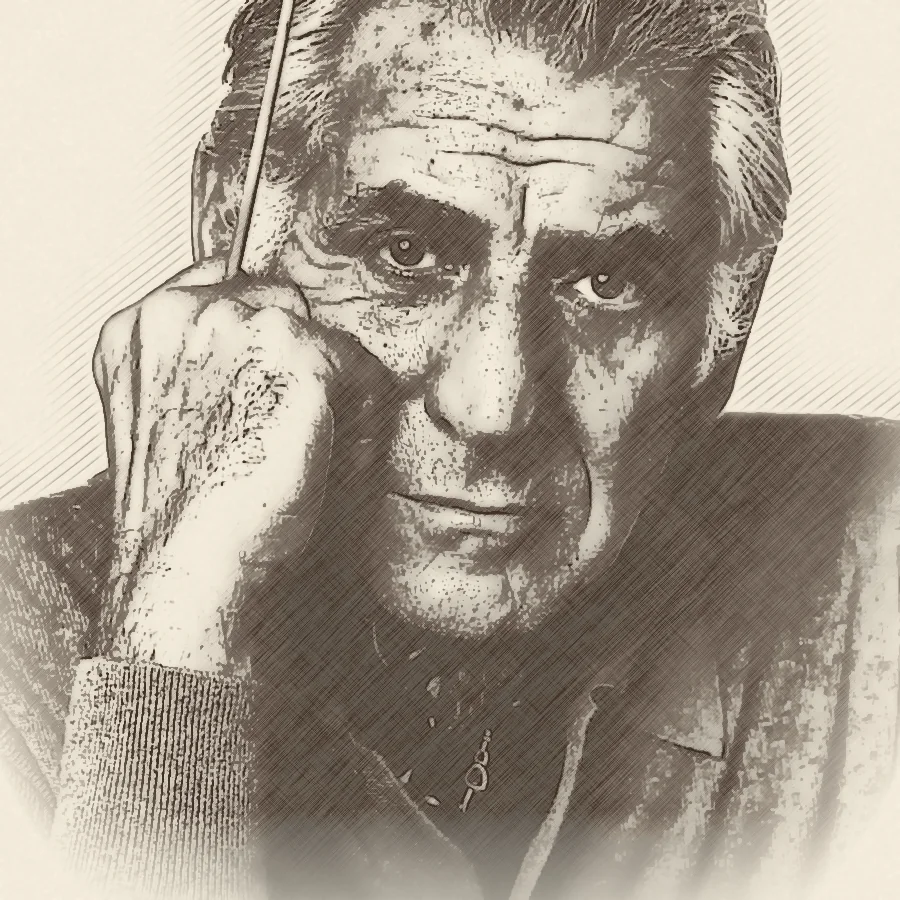
 20th century and today
Leonard Bernstein
Conductor, educator and composer, he connected classical music, jazz and musical theatre.
A life and its times
The milestones of the life and work, the contemporaries and the major world events, on a single line of time.
A life at a glance
- 1918Birth
Born in Lawrence on 25 August, son of Jewish immigrants from Ukraine
- 1922Meanwhile
Public radio broadcasting begins (BBC, Radio Tour Eiffel)
- 1928Trainingage 10
Discovers the piano at 10
- 1929Meanwhile
Wall Street Crash
- 1935Trainingage 17
Studies at Harvard; meets Aaron Copland
- 1940Trainingage 22
Pupil of the conductor Serge Koussevitzky at Tanglewood
- 1943Careerage 25
Stands in at short notice for Bruno Walter at the New York Philharmonic — famous overnight
- 1944Workage 26
On the Town, a musical
- 1948Meanwhile
The long-playing record (LP) goes on sale
- 1956Workage 38
Candide
- 1957Workage 39
West Side Story on Broadway
- 1957Meanwhile
Sputnik, the first artificial satellite
- 1958Careerage 40
First American-born music director of the New York Philharmonic; televised Young People’s Concerts
- 1963Meanwhile
Martin Luther King’s “I have a dream” speech
- 1964Meanwhile
Robert Moog presents his synthesizer
- 1965Workage 47
Chichester Psalms
- 1971Workage 53
Mass, for the opening of the Kennedy Center
- 1977Meanwhile
Voyager probes launched with their Golden Record
- 1982Meanwhile
The compact disc (CD) is launched
- 1989Careerage 71
Conducts Beethoven’s Ninth in Berlin after the fall of the Wall, as an ‘Ode to Freedom’
- 1990Deathage 72
Dies in New York on 14 October
Listen
Excerpts from freely licensed recordings, with their performers and licences.
Leonard Bernstein’s music is still protected by copyright: to respect the rights holders, no excerpt is hosted here. You can hear it on the radio, in concert or on licensed streaming platforms.
Listen to complete works on Wikimedia Commons
Wikimedia Commons is a free media library: you will find the complete recordings there, with their reuse conditions.
The life of Leonard Bernstein
Leonard Bernstein was born on 25 August 1918 in Lawrence, Massachusetts, in the United States. His parents, Samuel and Jennie, were Jewish immigrants from Ukraine; his father ran a beauty-supply business. As a child Leonard was often ill and shy. At ten an aunt left an old piano at their home: it was a revelation. He threw himself into it passionately, took lessons despite his father’s opposition — he wanted him to take over the family business — and quickly became a remarkable pianist.
In 1935 he entered Harvard University, studying music and philosophy. There he met the conductor Dimitri Mitropoulos and the composer Aaron Copland, who became his friend and mentor. After Harvard he studied conducting at the Curtis Institute in Philadelphia with Fritz Reiner, then from 1940 at the Tanglewood music centre with the famous conductor Serge Koussevitzky, who regarded him as his spiritual son. In 1943 he became assistant conductor of the New York Philharmonic.
On 14 November 1943 the conductor Bruno Walter fell ill and could not conduct the Sunday concert, broadcast live on radio across the country. Bernstein, aged twenty-five, was called that very morning to replace him, without any rehearsal. The concert was a triumph, and the New York Times reported it on its front page the next day: he became famous overnight. He went on to conduct the world’s greatest orchestras and became one of the first American conductors of international renown.
Bernstein was also a prolific composer who moved easily between classical music and Broadway. In 1944 he composed the ballet Fancy Free, about three sailors on shore leave in New York, which became the musical On the Town. He also wrote symphonies, such as Symphony No. 1, “Jeremiah” (1942), and Symphony No. 2, “The Age of Anxiety” (1949), and the operetta Candide (1956), after Voltaire, whose sparkling overture is very often played in concert.
In 1957 he premiered West Side Story on Broadway, with the choreographer Jerome Robbins and the lyricist Stephen Sondheim. It is a modern adaptation of Romeo and Juliet set in the poor districts of New York, where two rival gangs, the Jets and the Sharks, clash. Its music, blending jazz, Latin American rhythms and symphonic writing, with songs such as Maria, Tonight and America, was a worldwide success, reinforced by the 1961 film, which won ten Oscars.
In 1958 he became the first American-born and American-trained music director of the New York Philharmonic, a post he held until 1969. A passionate teacher, from 1958 to 1972 he presented the televised Young People’s Concerts, explaining music to children with humour and enthusiasm. Millions of families watched them. He also composed the Chichester Psalms (1965), in Hebrew, and Mass (1971), a theatrical work for the opening of the Kennedy Center in Washington.
Committed to peace, civil rights and opposition to the Vietnam War, Bernstein often used his fame for humanitarian causes. On 25 December 1989, a few weeks after the fall of the Berlin Wall, he conducted Beethoven’s Ninth Symphony in Berlin with musicians from both Germanys and the Allied countries, replacing the word “Freude” (joy) with “Freiheit” (freedom). Exhausted and ill, he gave his last concert at Tanglewood in August 1990 and died in New York on 14 October 1990.
Works to know
- 1944
On the Town
Three sailors on shore leave in New York.
- 1956
Candide
Operetta after Voltaire, with a sparkling overture.
- 1957
West Side Story
Romeo and Juliet on the streets of New York: ‘Tonight’, ‘America’…
- 1961
Symphonic Dances from West Side Story
Concert version of the musical.
- 1965
Chichester Psalms
Psalms sung in Hebrew.
- 1971
Mass
Theatrical fresco blending rock, blues and classical.
Anecdotes
His Young People’s Concerts were broadcast on TV for nearly 15 years.
In Berlin in 1989 he changed ‘joy’ to ‘freedom’ in the Ode to Joy.
In 1943 he stepped in for Bruno Walter at a moment’s notice, with no rehearsal, and the New York Times put it on its front page.
The 1961 film of West Side Story won ten Oscars.
Same era · 20th century and today
 1910 – 198120th century and today
Samuel Barber
A lyrical American composer who wrote for voice, strings and orchestra.
 1912 – 199220th century and today
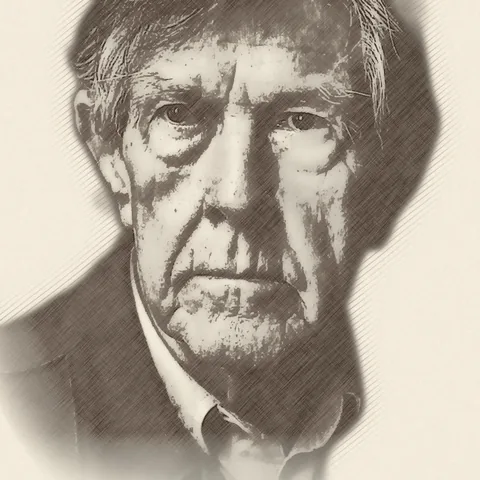
John Cage
A radical experimenter who questioned chance, silence and the act of listening.
 1913 – 197620th century and today
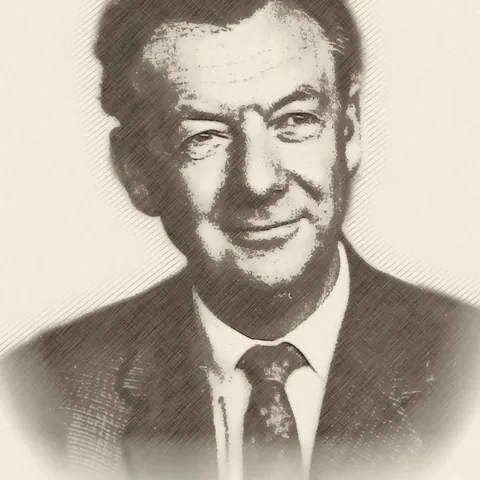
Benjamin Britten
He revitalized English opera and wrote accessible yet sophisticated music.
 1923 – 200620th century and today
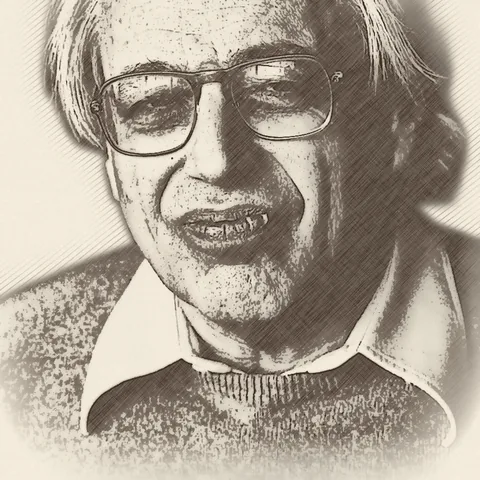
György Ligeti
He created shifting sonic textures that blur the boundary between melody and sound mass.
 1931 – 202520th century and today
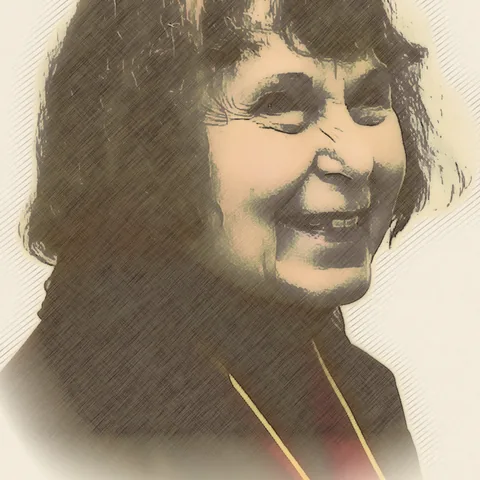
Sofia Goubaïdoulina
A Tatarstan-born composer who explored spirituality, timbre and unusual instruments.
 1935 –20th century and today
Arvo Pärt
His tintinnabuli style seeks simplicity and spiritual resonance.