 Modernism
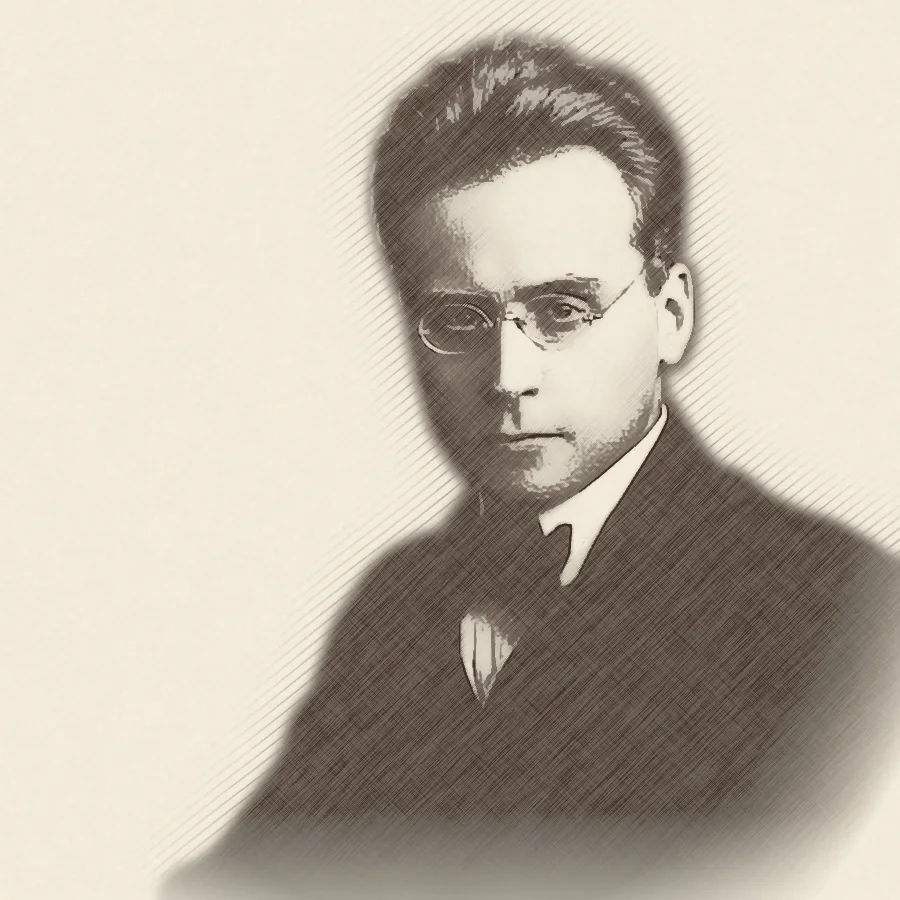
Anton Webern
An Austrian composer who distilled ideas into brief, precise forms.
A life and its times
The milestones of the life and work, the contemporaries and the major world events, on a single line of time.
A life at a glance
- 1883Birth
Born in Vienna on 3 December
- 1889Meanwhile
The Eiffel Tower opens for the World’s Fair
- 1902Trainingage 19
Studies musicology at the University of Vienna
- 1903Meanwhile
First powered aeroplane flight (Wright brothers)
- 1904Trainingage 21
Becomes Schoenberg’s pupil, with Alban Berg
- 1906Trainingage 23
Doctorate on the Renaissance composer Heinrich Isaac
- 1908Workage 25
Passacaglia Op. 1
- 1911Private lifeage 28
Marries his cousin Wilhelmine Mörtl
- 1912Meanwhile
The Titanic sinks
- 1913Workage 30
Bagatelles and orchestral pieces of extreme brevity
- 1914Meanwhile
The First World War begins
- 1918Meanwhile
End of the First World War
- 1922Careerage 39
Conducts the Vienna Workers’ Symphony Concerts
- 1922Meanwhile
Public radio broadcasting begins (BBC, Radio Tour Eiffel)
- 1928Workage 45
Symphony Op. 21
- 1929Meanwhile
Wall Street Crash
- 1936Workage 53
Variations for piano Op. 27
- 1938Landmarkage 55
Annexation of Austria: his music is declared ‘degenerate’
- 1945Deathage 62
Accidentally shot by an American soldier in Mittersill on 15 September
- 1945Meanwhile
End of the Second World War; United Nations founded
Listen
Excerpts from freely licensed recordings, with their performers and licences.
Anton Webern’s music is in the public domain, but Wikimedia Commons does not yet offer a freely licensed recording of these works. The links below lead to scores and searches on Commons; as soon as a free recording is published, it can be added here.
Listen to complete works on Wikimedia Commons
Wikimedia Commons is a free media library: you will find the complete recordings there, with their reuse conditions.
The life of Anton Webern
Anton Webern was born in Vienna on 3 December 1883 into a family of minor Austrian nobility; he bore the name Anton von Webern until titles of nobility were abolished in 1918. His father, a mining engineer, became a senior civil servant. The family moved successively to Graz and Klagenfurt in Carinthia, where Anton learned piano and cello and played in the local orchestra. He spent his holidays on the family estate, the Preglhof, in the mountains, and all his life kept a deep love of Alpine nature.
In 1902 he entered the University of Vienna to study musicology with Guido Adler, one of the founders of the discipline. In 1906 he obtained a doctorate with a thesis on the Choralis Constantinus, a large work by the Renaissance composer Heinrich Isaac, whose score he edited. This knowledge of early polyphony and its canonic games deeply influenced his own music. In 1904 he and Alban Berg became private pupils of Arnold Schoenberg.
For four years Schoenberg taught him composition, and the two remained bound by deep friendship and admiration. In 1908 Webern composed his Passacaglia Op. 1 for orchestra, still Romantic, to mark the end of his studies. With his teacher and Berg he formed the “Second Viennese School”. Like Schoenberg he soon abandoned tonality. In 1911 he married his cousin Wilhelmine Mörtl; they had four children.
Webern took the concentration of music to an extreme. His works are astonishingly brief: the Six Bagatelles for string quartet (1913) last less than four minutes in all, and some pieces are only a few bars long. Schoenberg wrote that they express “a novel in a single gesture, a joy in a single breath”. Every note is carefully weighed, surrounded by silence, often played very softly, like a painting made of a few dots of colour.
To earn his living Webern became a conductor in provincial theatres and then in Vienna. From 1922 to 1934 he conducted the Vienna Workers’ Symphony Concerts, organised by the Social Democratic Party to introduce great music to working people, as well as a workers’ choir. He programmed Mahler, Bruckner, Schubert and modern music. He also taught privately and lectured on composition.
From 1924 he adopted Schoenberg’s twelve-tone method, applying it with remarkable rigour and clarity. His Symphony Op. 21 (1928), Quartet Op. 22, Concerto Op. 24 and Piano Variations Op. 27 (1936) are built like crystals, with note rows arranged in mirrors and canons. In 1935 he orchestrated the six-part Ricercar from Bach’s Musical Offering, passing each small fragment of the melody from one instrument to another like flashes of colour.
After Nazi Germany annexed Austria in 1938, his music was declared “degenerate” and banned. He lived in poverty, working as a proofreader for a publisher. At the end of the war he took refuge with his daughter at Mittersill near Salzburg. On 15 September 1945, as he stepped outside one evening to smoke a cigar in front of the house despite the curfew, he was shot by mistake by an American soldier. After his death his music became a model for a whole generation of avant-garde composers, such as Pierre Boulez and Karlheinz Stockhausen.
Works to know
- 1908
Passacaglia Op. 1
Still-Romantic orchestral work.
Listen on Wikimedia Commons - 1913
Six Bagatelles for string quartet
Pieces lasting a few seconds each.
Listen on Wikimedia Commons - 1928
Symphony Op. 21
A 10-minute symphony built like a crystal.
Listen on Wikimedia Commons - 1935
Orchestration of Bach’s Ricercar
Each note changes instrumental colour.
Listen on Wikimedia Commons - 1936
Variations for piano Op. 27
Points of sound scattered in space.
Listen on Wikimedia Commons
Anecdotes
Some of his Bagatelles last about 20 seconds.
His entire published output fits on a few CDs.
He orchestrated a Bach fugue by passing each small fragment of the melody from one instrument to another.
For twelve years he conducted concerts for the workers of Vienna.
Same era · Modernism
 1874 – 1951Modernism
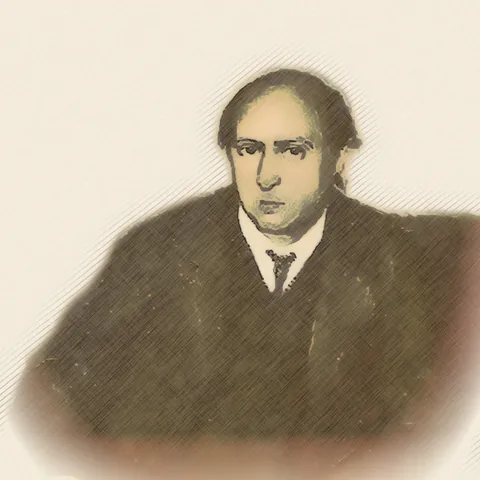
Arnold Schönberg
A pioneer of atonality and twelve-tone composition who redefined musical structure.
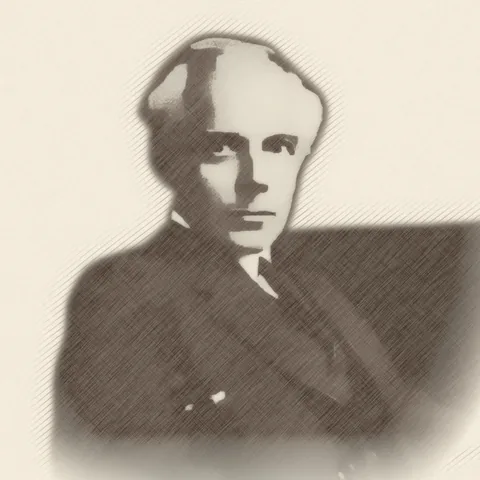 1881 – 1945Modernism
Béla Bartók
A researcher of folk music, he transformed rhythms and modes into a modern language.
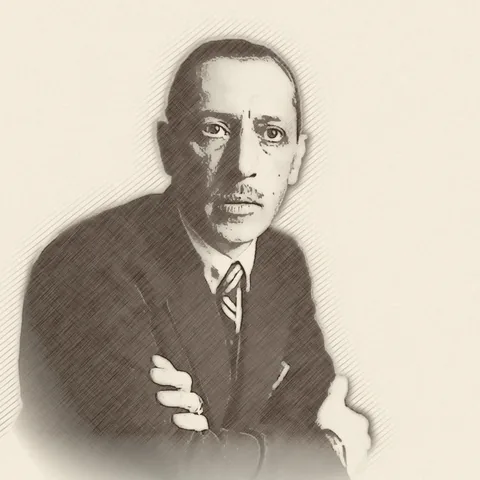 1882 – 1971Modernism
Igor Stravinsky
His rhythmic disruptions and stylistic reinventions shaped twentieth-century music.
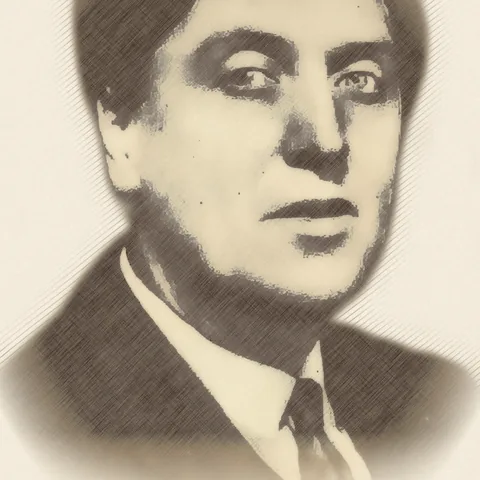 1885 – 1935Modernism
Alban Berg
A pupil of Schoenberg, he combined modern techniques with dramatic intensity.
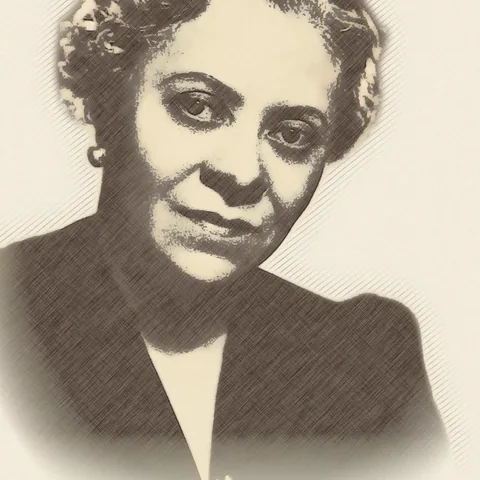 1887 – 1953Modernism
Florence Price
The first Black woman to have a symphony performed by a major US orchestra, she blended classical and African American traditions.
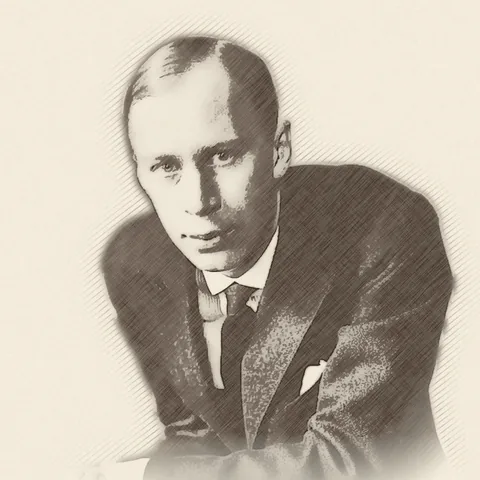 1891 – 1953Modernism
Serge Prokofiev
His angular melodies, sharp rhythms and theatrical flair appeal to all ages.