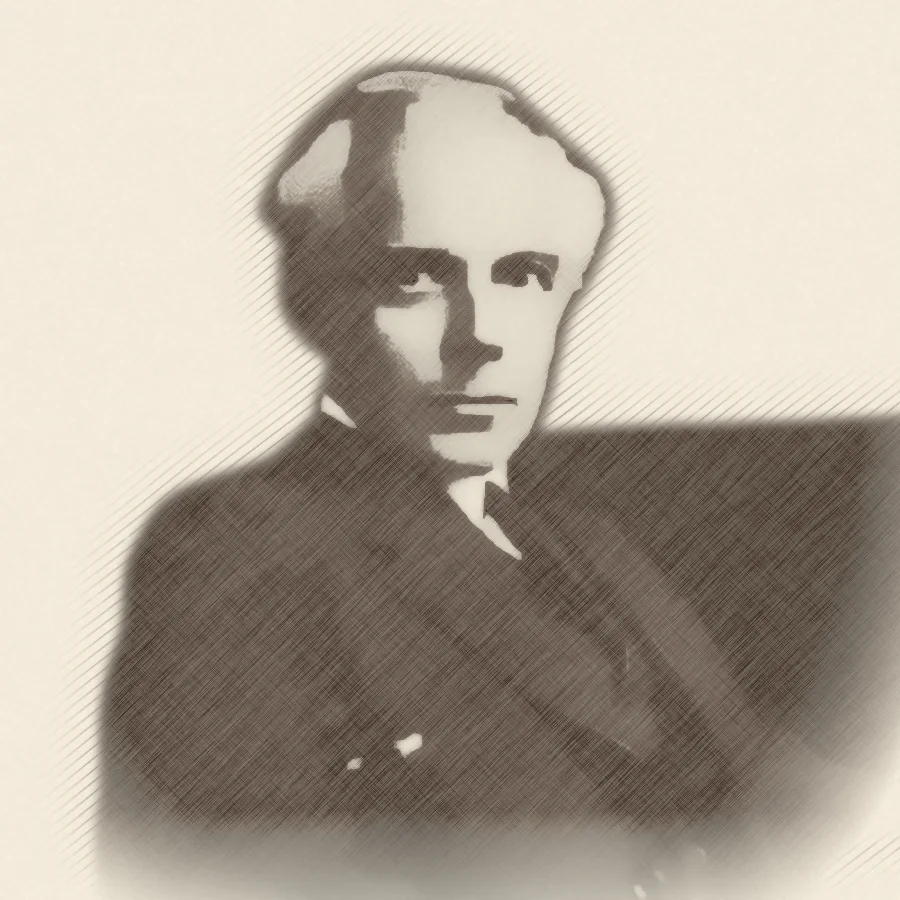
A life and its times
The milestones of the life and work, the contemporaries and the major world events, on a single line of time.
A life at a glance
- 1881Birth
Born on 25 March in Nagyszentmiklós, Hungary (now Romania)
- 1888Private lifeage 7
Death of his father; his mother, a piano teacher, raises him
- 1889Meanwhile
The Eiffel Tower opens for the World’s Fair
- 1899Trainingage 18
Budapest Academy of Music
- 1903Meanwhile
First powered aeroplane flight (Wright brothers)
- 1904Private lifeage 23
Hears a young Transylvanian woman sing — falls in love with folk music
- 1906Workage 25
With Kodály, sets out to record peasant songs on phonograph
- 1907Careerage 26
Piano professor at the Budapest Academy
- 1911Workage 30
Bluebeard’s Castle
- 1912Meanwhile
The Titanic sinks
- 1913Journeyage 32
Collects songs in Algeria
- 1914Meanwhile
The First World War begins
- 1915Workage 34
Romanian Folk Dances
- 1918Meanwhile
End of the First World War
- 1922Meanwhile
Public radio broadcasting begins (BBC, Radio Tour Eiffel)
- 1926Workage 45
Begins Mikrokosmos, 153 pieces for learning the piano
- 1929Meanwhile
Wall Street Crash
- 1936Workage 55
Music for Strings, Percussion and Celesta
- 1940Journeyage 59
Flees Nazism into exile in the United States
- 1943Workage 62
Concerto for Orchestra
- 1945Deathage 64
Dies in New York on 26 September
- 1945Meanwhile
End of the Second World War; United Nations founded
Listen
Excerpts from freely licensed recordings, with their performers and licences.
Excerpts last up to 90 seconds. Béla Bartók’s compositions are in the public domain; each recording is streamed from Wikimedia Commons under the licence shown, credited to its performers or uploader.
Listen to complete works on Wikimedia Commons
Wikimedia Commons is a free media library: you will find the complete recordings there, with their reuse conditions.
- Complete recordingRomanian Folk Dances
- Complete recordingSonatina
- Complete recordingMusic for Strings, Percussion and Celesta (excerpt)
- Search for the workConcerto for Orchestra
- Search for the workMikrokosmos
- Search for the workRomanian Folk Dances
- Search for the workMusic for Strings, Percussion and Celesta
- Search for the workBluebeard’s Castle
- Search for the workFor Children
- Everything on CommonsAll recordings of Béla Bartók
The life of Béla Bartók
Béla Bartók was born on 25 March 1881 at Nagyszentmiklós, a small town in the Kingdom of Hungary, now Sânnicolau Mare in Romania. His father ran an agricultural school and played the cello; his mother, Paula, was a schoolteacher and pianist. A frail child, often ill, Béla showed an exceptional ear early on: at four he could play some forty songs on the piano. His father died in 1888, and his mother, who had to teach to support the family, moved several times before settling in Pozsony (Bratislava), where Béla went to school.
In 1899 he entered the Budapest Academy of Music, studying piano with István Thomán, a former pupil of Liszt, and composition. He became a brilliant pianist. Like many young Hungarians of the time, he was driven by strong national feeling against Austrian cultural dominance. In 1903 he composed a large tone poem, Kossuth, in homage to the hero of the Hungarian revolution of 1848. He also discovered with enthusiasm the music of Richard Strauss and then Debussy.
In 1904, on holiday, he heard a young Transylvanian maid, Lidi Dósa, sing songs from her village. He then realised that genuine Hungarian folk music was very different from the Gypsy tunes believed to be Hungarian, such as those in Liszt’s Rhapsodies. From 1906, with his friend the composer Zoltán Kodály, he travelled through the villages of Hungary, Transylvania, Slovakia and Romania, recording peasant songs on wax cylinders with a phonograph. He collected thousands, travelling as far as Algeria (1913) and Turkey (1936).
This discovery transformed his own music: he adopted its ancient modes, irregular, asymmetrical rhythms and raw energy. In 1907 he became professor of piano at the Budapest Academy, a post he held for nearly thirty years. In 1909 he married one of his pupils, Márta Ziegler, and in 1923 another pupil, the pianist Ditta Pásztory, with whom he played in duo. He composed For Children (1909), piano pieces based on folk songs, and his only opera, Bluebeard’s Castle (1911), not staged until 1918.
His often dissonant, percussive music baffled audiences, but he had success with the ballet The Wooden Prince (1917). He composed the Romanian Folk Dances (1915); a pantomime, The Miraculous Mandarin (1926), deemed so violent that it was banned after its premiere in Cologne; and six string quartets regarded as the most important of the twentieth century. He also made many tours as a pianist in Europe and the United States.
Bartók attached great importance to teaching. Between 1926 and 1939 he composed Mikrokosmos, a collection of 153 piano pieces graded by difficulty from the simplest to the most virtuosic, designed partly for his son Péter. In 1936 he composed the Music for Strings, Percussion and Celesta, whose mysterious Adagio Stanley Kubrick later used in the film The Shining, and in 1937 the Sonata for Two Pianos and Percussion. Opposed to Nazism, he refused to let his music be broadcast on German and Italian radio.
In 1940, after his mother’s death, he went into exile in the United States with his wife. The early days were hard: his health declined, he found little work and lived modestly in New York, where he studied a collection of Serbo-Croatian songs at Columbia University. In 1943 the conductor Serge Koussevitzky commissioned the Concerto for Orchestra, which was an immense success. Suffering from leukaemia, he worked on his Piano Concerto No. 3, intended for his wife, until his last days. He died in New York on 26 September 1945. In 1988 his remains were brought back to Budapest.
Works to know
- 1909
For Children
85 little pieces on folk songs.
Listen on Wikimedia Commons - 1911
Bluebeard’s Castle
Opera: seven doors to open, seven secrets.
Listen on Wikimedia Commons - 1915
Romanian Folk Dances
Six energetic village dances.
Listen on Wikimedia Commons - 1936
Music for Strings, Percussion and Celesta
Mysterious sounds and wild rhythms.
Listen on Wikimedia Commons - 1939
Mikrokosmos
153 progressive pieces for young pianists.
Listen on Wikimedia Commons - 1943
Concerto for Orchestra
Each section of the orchestra shines in turn.
Listen on Wikimedia Commons
Anecdotes
He recorded thousands of folk songs on wax cylinders.
He wrote Mikrokosmos partly to teach piano to his son Péter.
The Adagio from his Music for Strings, Percussion and Celesta was used in the film The Shining.
He travelled as far as Algeria and Turkey to record folk songs.
Same era · Modernism
 1874 – 1951Modernism
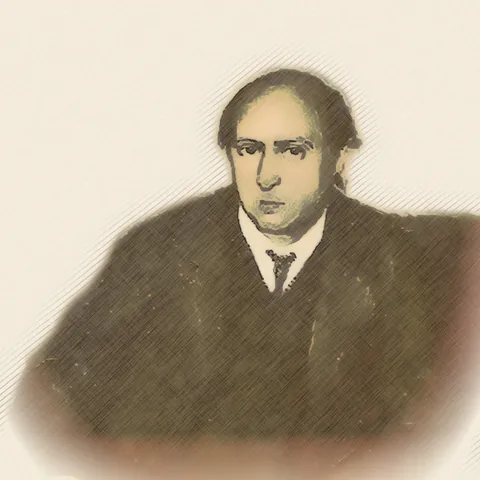
Arnold Schönberg
A pioneer of atonality and twelve-tone composition who redefined musical structure.
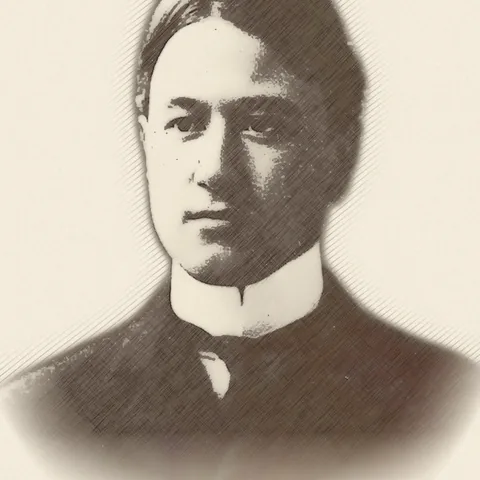 1874 – 1954Modernism
Charles Ives
An experimental American composer who layered hymns, marches and tonalities.
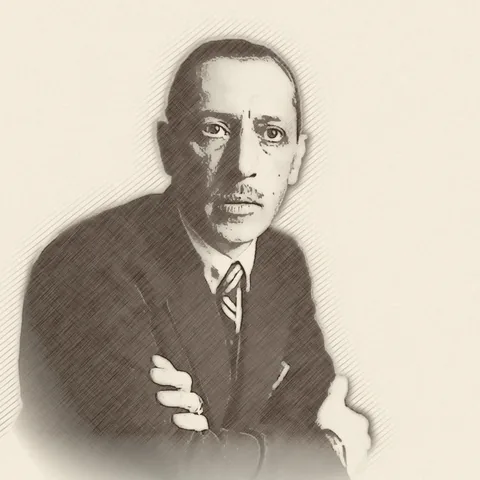 1882 – 1971Modernism
Igor Stravinsky
His rhythmic disruptions and stylistic reinventions shaped twentieth-century music.
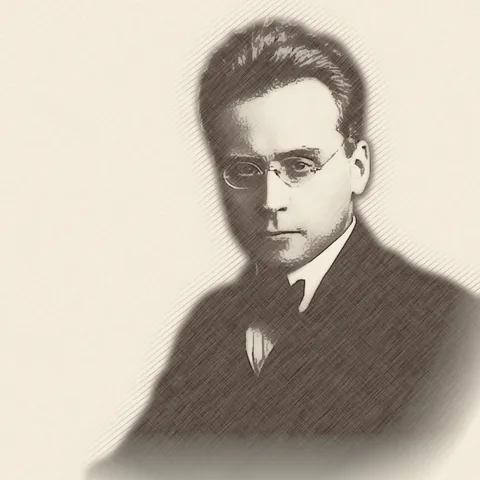 1883 – 1945Modernism
Anton Webern
An Austrian composer who distilled ideas into brief, precise forms.
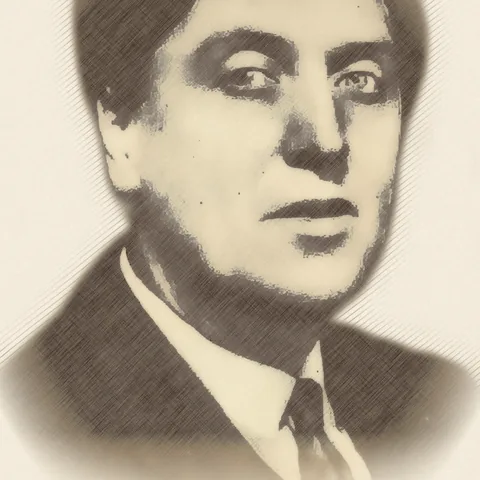 1885 – 1935Modernism
Alban Berg
A pupil of Schoenberg, he combined modern techniques with dramatic intensity.
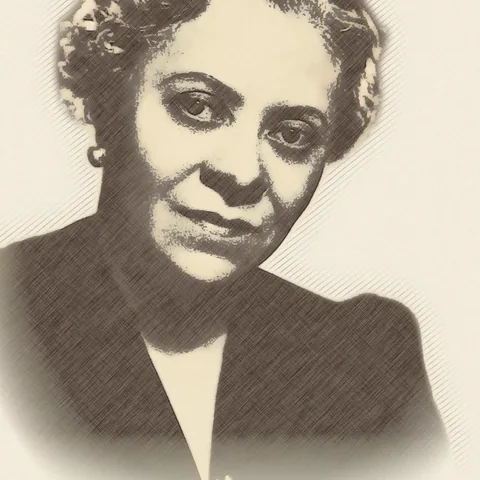 1887 – 1953Modernism
Florence Price
The first Black woman to have a symphony performed by a major US orchestra, she blended classical and African American traditions.