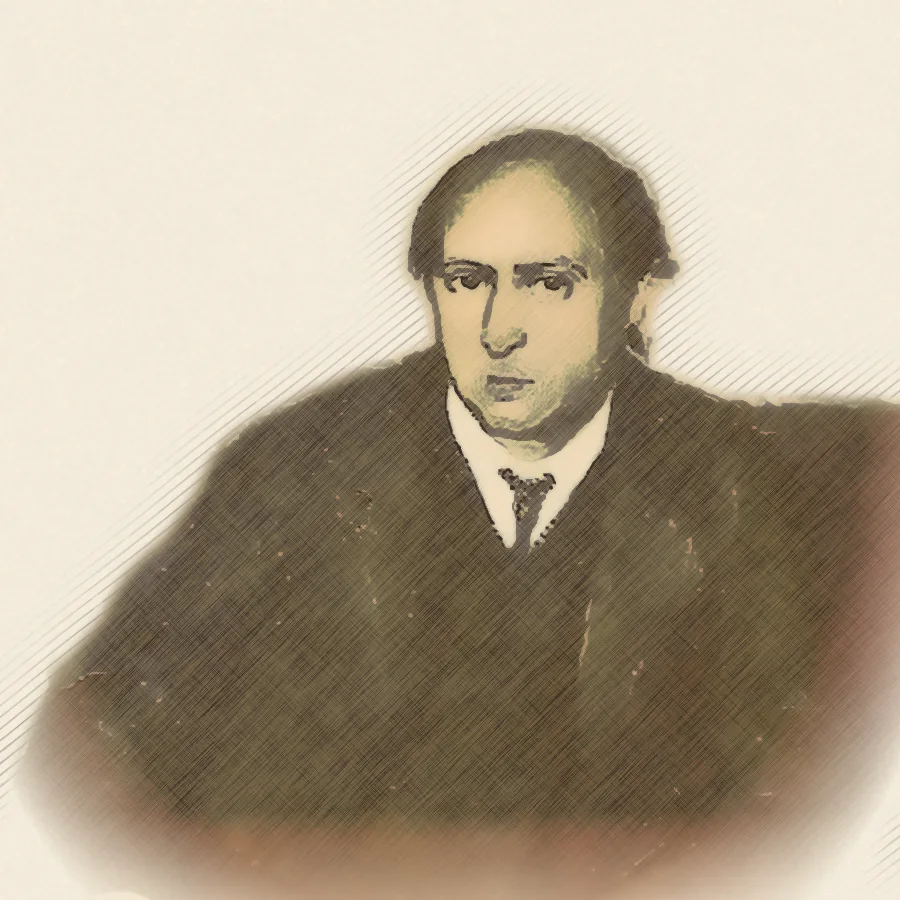
 Modernism
Arnold Schönberg
A pioneer of atonality and twelve-tone composition who redefined musical structure.
A life and its times
The milestones of the life and work, the contemporaries and the major world events, on a single line of time.
A life at a glance
- 1874Birth
Born in Vienna on 13 September
- 1875Meanwhile
The Palais Garnier opera house opens in Paris
- 1877Meanwhile
Edison invents the phonograph: sound can be recorded!
- 1891Careerage 17
Bank clerk; teaches himself composition
- 1895Meanwhile
The Lumière brothers’ first cinema show
- 1899Workage 25
Verklärte Nacht (Transfigured Night), for string sextet
- 1901Private lifeage 27
Marries Mathilde Zemlinsky; conducts at a Berlin cabaret
- 1904Careerage 30
Begins teaching Berg and Webern
- 1908Workage 34
String Quartet No. 2: first steps beyond tonality
- 1910Workage 36
Paints many pictures, exhibited with the Blue Rider
- 1912Workage 38
Pierrot lunaire, with ‘speech-song’
- 1912Meanwhile
The Titanic sinks
- 1913Landmarkage 39
The ‘Scandal Concert’ in Vienna turns into a riot
- 1917Meanwhile
Russian Revolution
- 1923Workage 49
Presents his twelve-tone method of composition
- 1925Careerage 51
Professor at the Berlin Academy of Arts
- 1927Meanwhile
First talking picture (The Jazz Singer)
- 1933Journeyage 59
Driven out by the Nazis, he emigrates to the United States
- 1936Careerage 62
Professor at the University of California (UCLA)
- 1939Meanwhile
The Second World War begins
- 1947Workage 73
A Survivor from Warsaw
- 1948Meanwhile
The long-playing record (LP) goes on sale
- 1951Deathage 77
Dies in Los Angeles on Friday 13 July
Listen
Excerpts from freely licensed recordings, with their performers and licences.
Excerpts last up to 90 seconds. Arnold Schönberg’s compositions are in the public domain; each recording is streamed from Wikimedia Commons under the licence shown, credited to its performers or uploader.
Listen to complete works on Wikimedia Commons
Wikimedia Commons is a free media library: you will find the complete recordings there, with their reuse conditions.
- Complete recordingString Quartet No. 2 — Entrückung
- Search for the workPierrot lunaire
- Search for the workVerklärte Nacht
- Search for the workSuite for Piano Op. 25
- Search for the workFive Orchestral Pieces
- Search for the workA Survivor from Warsaw
- Search for the workMoses und Aron
- Everything on CommonsAll recordings of Arnold Schönberg
The life of Arnold Schönberg
Arnold Schoenberg was born in Vienna on 13 September 1874 into a modest Jewish family in the Leopoldstadt district. His father, a shoe merchant, died when he was fifteen, and Arnold had to leave school to work as a bank clerk. He learned violin at eight, then cello, and composed little duos and trios with friends. He had almost no formal musical training: he learned composition by reading an encyclopaedia, playing chamber music and studying the scores of Brahms and Wagner.
Around 1894 he met the composer Alexander von Zemlinsky, who became his only real teacher, giving him counterpoint lessons, and his friend. In 1899 Schoenberg composed Verklärte Nacht (Transfigured Night) for string sextet, after a poem by Richard Dehmel: a passionately Romantic work in the line of Wagner, rejected by a concert society because of a chord deemed “non-existent”. In 1901 he married Mathilde von Zemlinsky, his teacher’s sister.
To earn a living he orchestrated operettas and conducted the orchestra of a literary cabaret in Berlin, the Überbrettl. Back in Vienna in 1903, he began teaching composition. His pupils included Alban Berg and Anton Webern, who became great composers in their own right. Together they formed what came to be called the “Second Viennese School”. Mahler, then director of the Opera, supported Schoenberg, though he admitted he did not always understand his music.
Around 1908, in his String Quartet No. 2, Schoenberg took a decisive step: he abandoned tonality, the system of organising notes around a main note that had governed Western music for centuries. In his Five Pieces for Orchestra (1909) and the monodrama Erwartung (1909), all notes are of equal importance. This music is called “atonal”, a word he disliked. In 1912 he composed Pierrot lunaire, a cycle of twenty-one melodramas in which the voice uses Sprechgesang, a “speech-song” between speaking and singing.
His music caused scandals. On 31 March 1913 in Vienna a concert of his works and those of his pupils turned into a riot: the audience hissed, laughed and fought, and the police had to intervene; it became known as the “Skandalkonzert”. Schoenberg was also a painter: he produced many pictures, especially self-portraits and “visions”, exhibited with Kandinsky’s Blue Rider group. During the First World War he was called up for a few months in the Austrian army.
After several years of silence, in 1923 he presented his “method of composing with twelve tones”: the twelve notes of the chromatic scale are arranged in a “row”, which serves as the basis for the whole work and can be inverted or played backwards. The Suite for Piano Op. 25 is one of the first fully serial works. This method, twelve-tone composition, profoundly influenced twentieth-century music. In 1925 he became professor of composition at the Berlin Academy of Arts. He also began the opera Moses und Aron, which he never finished.
In 1933, when the Nazis came to power, he was dismissed from his post because he was Jewish. He emigrated to France, where he formally returned to Judaism, then to the United States. He taught in Boston and then in Los Angeles, at the University of California (UCLA) from 1936, where his pupils included John Cage. In 1947 he composed A Survivor from Warsaw, a harrowing testimony to the Holocaust. Superstitious and terrified of the number 13, he died in Los Angeles on Friday 13 July 1951, aged seventy-six (7 + 6 = 13), as he had feared.
Works to know
- 1899
Verklärte Nacht
Beautiful Romantic sextet.
Listen on Wikimedia Commons - 1909
Five Orchestral Pieces
Including ‘Colours’, pure tone-colour music.
Listen on Wikimedia Commons - 1912
Pierrot lunaire
21 strange, fascinating songs in ‘speech-song’.
Listen on Wikimedia Commons - 1923
Suite for Piano Op. 25
His first fully twelve-tone work.
Listen on Wikimedia Commons - 1932
Moses und Aron
Great unfinished opera.
Listen on Wikimedia Commons - 1947
A Survivor from Warsaw
A searing testimony on the Holocaust.
Listen on Wikimedia Commons
Anecdotes
He feared the number 13 so much that he spelled ‘Aron’ with one ‘a’ in his opera’s title (otherwise it would have 13 letters)!
He painted more than 300 pictures.
A concert of his works in Vienna in 1913 turned into a brawl: it is known as the “slap concert”.
He was John Cage’s teacher in California.
Same era · Modernism
 1874 – 1954Modernism
Charles Ives
An experimental American composer who layered hymns, marches and tonalities.
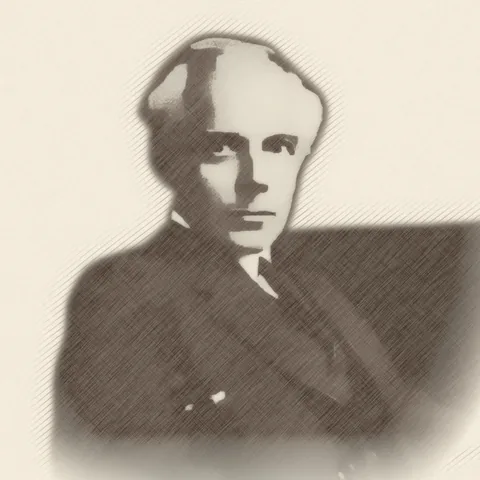 1881 – 1945Modernism
Béla Bartók
A researcher of folk music, he transformed rhythms and modes into a modern language.
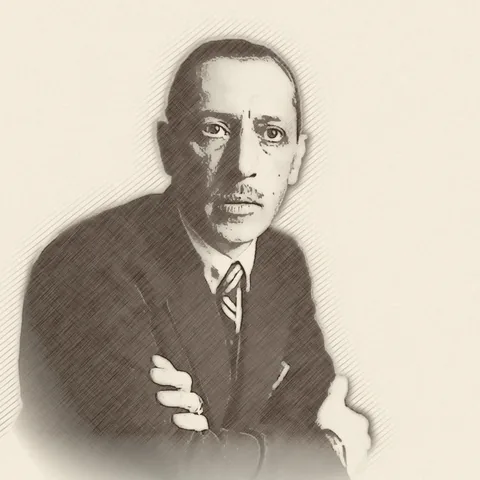 1882 – 1971Modernism
Igor Stravinsky
His rhythmic disruptions and stylistic reinventions shaped twentieth-century music.
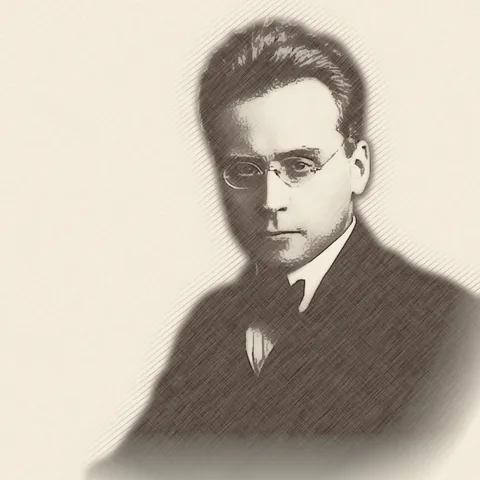 1883 – 1945Modernism
Anton Webern
An Austrian composer who distilled ideas into brief, precise forms.
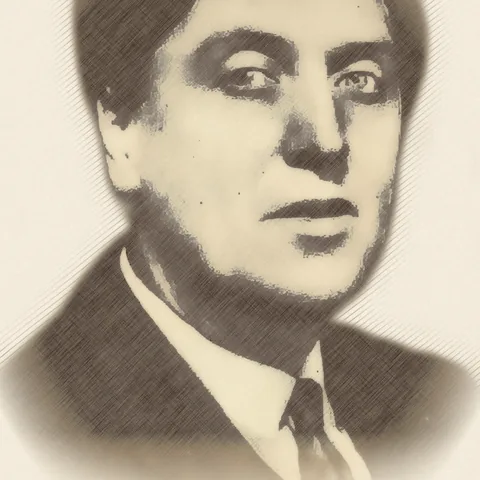 1885 – 1935Modernism
Alban Berg
A pupil of Schoenberg, he combined modern techniques with dramatic intensity.
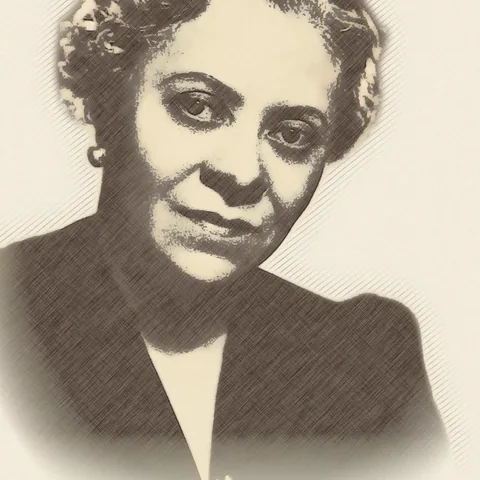 1887 – 1953Modernism
Florence Price
The first Black woman to have a symphony performed by a major US orchestra, she blended classical and African American traditions.