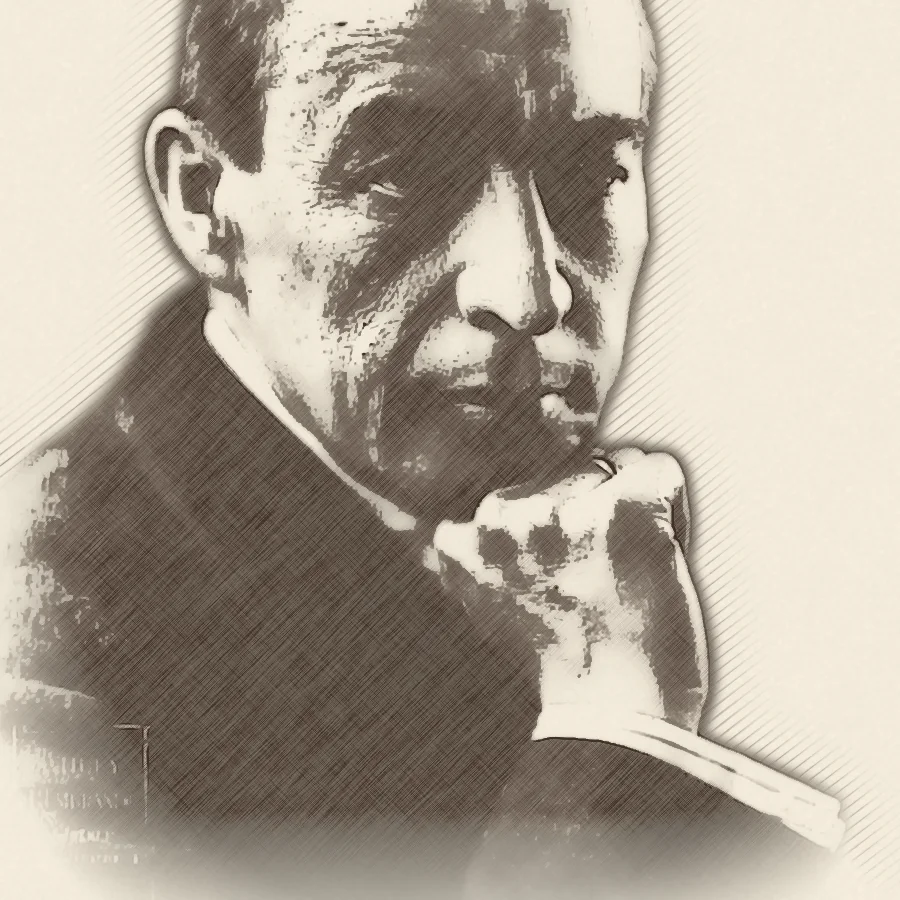
 Late Romantic
Sergueï Rachmaninov
A virtuoso pianist, he carried Russian lyric Romanticism into the twentieth century.
A life and its times
The milestones of the life and work, the contemporaries and the major world events, on a single line of time.
A life at a glance
- 1873Birth
Born on 1 April on an estate near Novgorod
- 1875Meanwhile
The Palais Garnier opera house opens in Paris
- 1877Meanwhile
Edison invents the phonograph: sound can be recorded!
- 1882Trainingage 9
St Petersburg Conservatory
- 1885Trainingage 12
Boards with the very strict teacher Zverev in Moscow
- 1892Workage 19
Gold medal at the Conservatory; Prelude in C-sharp minor
- 1895Meanwhile
The Lumière brothers’ first cinema show
- 1897Private lifeage 24
The failure of his Symphony No. 1 plunges him into depression
- 1900Private lifeage 27
Treated by Dr Nikolai Dahl, he regains the will to compose
- 1901Workage 28
Piano Concerto No. 2, dedicated to Dr Dahl — a triumph
- 1902Private lifeage 29
Marries his cousin Natalia Satina
- 1905Meanwhile
Einstein publishes special relativity
- 1909Workage 36
Concerto No. 3 for his first American tour
- 1914Meanwhile
The First World War begins
- 1915Workage 42
All-Night Vigil (Vespers)
- 1917Journeyage 44
Russian Revolution: leaves Russia for ever
- 1918Milestoneage 45
Settles in the United States and becomes a star pianist
- 1918Meanwhile
End of the First World War
- 1927Meanwhile
First talking picture (The Jazz Singer)
- 1934Workage 61
Rhapsody on a Theme of Paganini
- 1939Meanwhile
The Second World War begins
- 1940Workage 67
Symphonic Dances, his last work
- 1943Deathage 70
Dies in Beverly Hills on 28 March
Listen
Excerpts from freely licensed recordings, with their performers and licences.
Excerpts last up to 90 seconds. Sergueï Rachmaninov’s compositions are in the public domain; each recording is streamed from Wikimedia Commons under the licence shown, credited to its performers or uploader.
Listen to complete works on Wikimedia Commons
Wikimedia Commons is a free media library: you will find the complete recordings there, with their reuse conditions.
- Complete recordingPrelude in C-sharp minor — played by Rachmaninoff
- Complete recordingPiano Concerto No. 2 — Moderato
- Complete recordingVocalise (violin and piano)
- Wikimedia Commons fileRomance - Rachmaninoff
- Search for the workPiano Concerto No. 2
- Search for the workRhapsody on a Theme of Paganini
- Search for the workPrelude in C-sharp minor
- Search for the workPiano Concerto No. 3
- Search for the workVocalise
- Search for the workAll-Night Vigil
- Search for the workSymphonic Dances
- Everything on CommonsAll recordings of Sergueï Rachmaninov
The life of Sergueï Rachmaninov
Sergei Rachmaninoff was born on 1 April 1873 (20 March by the old Russian calendar) on the family estate of Semyonovo near Novgorod, into a family of landed gentry. His father, a spendthrift officer, squandered the family fortune and the estates had to be sold. In 1882 the ruined family moved to St Petersburg and the parents separated. Sergei, who had started piano with his mother, entered the St Petersburg Conservatory but, working little, failed his exams.
In 1885, on the advice of his cousin, the pianist Alexander Siloti, a pupil of Liszt, he was sent to Moscow to board with Nikolai Zverev, a very strict teacher who housed several boys and imposed iron discipline on them: up at six, three hours of piano a day, concerts and cultural outings. Rachmaninoff made astonishing progress there. He entered the Moscow Conservatory, where his teachers were Anton Arensky and Sergei Taneyev and his classmate Alexander Scriabin. He deeply admired Tchaikovsky, who encouraged him.
In 1892 he won the Conservatory’s Great Gold Medal for his opera Aleko, written in seventeen days. That same year he composed the Prelude in C sharp minor, which became so famous at once that audiences demanded it at every concert, until he came to call it, wearily, “the Prelude”. But in 1897 the premiere of his Symphony No. 1 in St Petersburg was a disaster: the conductor, Alexander Glazunov, perhaps drunk, conducted it very badly, and the critics were cruel. Rachmaninoff sank into deep depression and composed almost nothing for three years.
In 1900 he consulted Dr Nikolai Dahl, a physician who practised hypnosis and was also an amateur musician. Over several months Dahl helped him regain his self-confidence. Rachmaninoff then composed his Piano Concerto No. 2, premiered in 1901, which he dedicated to his doctor. It was a triumph: the concerto, with its great passionate melodies, became one of the best-loved in the repertoire. In 1902 he married his cousin Natalia Satina, with whom he had two daughters.
Rachmaninoff now pursued a triple career as composer, pianist and conductor. He conducted at the Bolshoi from 1904 to 1906, then settled for a time in Dresden to compose in peace. In 1909 he composed the Concerto No. 3 for his first tour of the United States, a work of fearsome difficulty that pianists nickname the “Rach 3”. He also wrote the Symphony No. 2, The Isle of the Dead, the famous Vocalise (1915), a song without words, and the Vespers (1915), a masterpiece of Orthodox choral music.
The Russian Revolution of 1917 upended his life: his estate at Ivanovka was confiscated. In December 1917 he left Russia with his family on the pretext of a Scandinavian tour. He never returned. To support his family he devoted himself almost entirely to his career as a pianist and settled in the United States in 1918. He became one of the most famous pianists in the world, admired for his prodigious technique, his huge hands — he could span a thirteenth on the keyboard — and the nobility of his playing. He made many recordings.
Far from Russia he composed little, but his last works are masterpieces: the Concerto No. 4 (1926), the Rhapsody on a Theme of Paganini (1934), whose eighteenth variation, a romantic melody drawn from the theme turned upside down, became famous, the Symphony No. 3 (1936) and the Symphonic Dances (1940), his last work. He spent his summers at his villa Senar on Lake Lucerne in Switzerland, then during the Second World War settled in California. Suffering from cancer, he died in Beverly Hills on 28 March 1943, a few days before his seventieth birthday.
Works to know
- 1892
Prelude in C-sharp minor
A worldwide hit that followed him all his life.
Listen on Wikimedia Commons - 1901
Piano Concerto No. 2
Great Romantic melodies and Russian bells.
Listen on Wikimedia Commons - 1909
Piano Concerto No. 3
One of the hardest concertos in the repertoire.
Listen on Wikimedia Commons - 1915
Vocalise
A song without words, often played on violin.
Listen on Wikimedia Commons - 1915
All-Night Vigil
Masterpiece of Orthodox choral music.
Listen on Wikimedia Commons - 1934
Rhapsody on a Theme of Paganini
24 variations, including the famous 18th.
Listen on Wikimedia Commons - 1940
Symphonic Dances
His farewell to the orchestra.
Listen on Wikimedia Commons
Anecdotes
You can still hear him play — he made many recordings.
His Third Concerto is nicknamed the ‘Rach 3’ by pianists, who dread it!
He dedicated his famous Concerto No. 2 to the doctor who had helped him out of depression.
His hands were so large that he could span a thirteenth on the keyboard.
Same era · Late Romantic
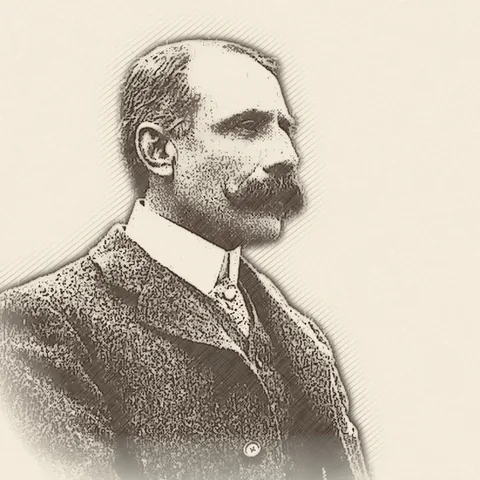 1857 – 1934Late Romantic
Edward Elgar
An English composer combining orchestral grandeur and intimate lyricism.
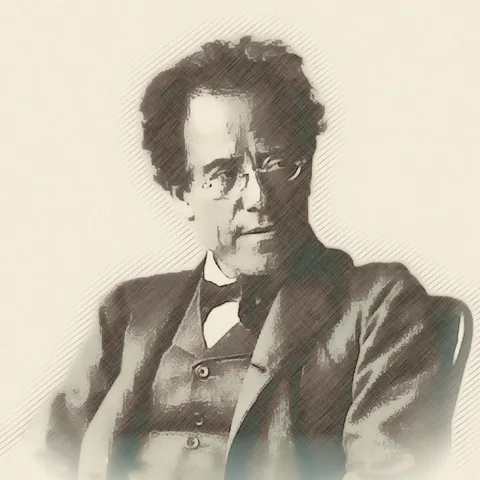 1860 – 1911Late Romantic
Gustav Mahler
His vast symphonies confront nature, irony, love and existential questions.
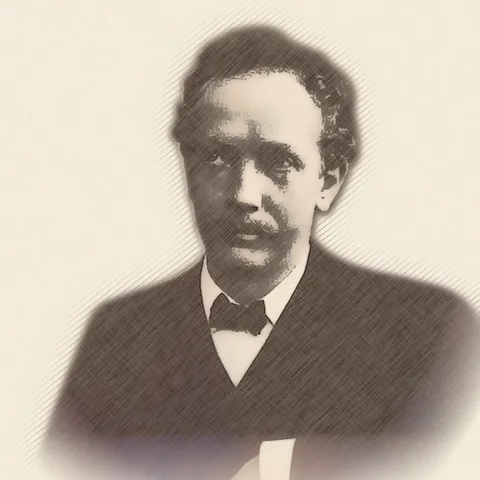 1864 – 1949Late Romantic
Richard Strauss
He pushed Romantic orchestration toward extraordinary richness and contrast.
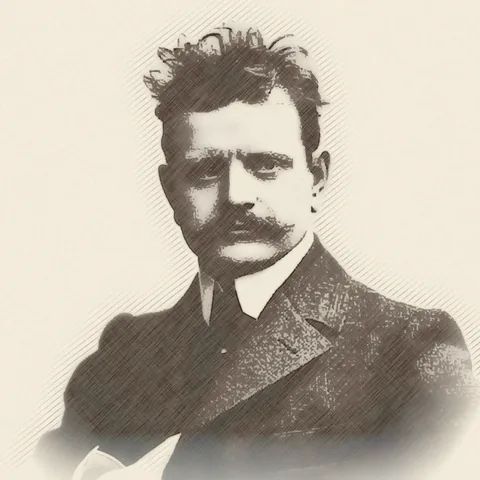 1865 – 1957Late Romantic
Jean Sibelius
He composed organic forms inspired by Finnish landscapes and culture.
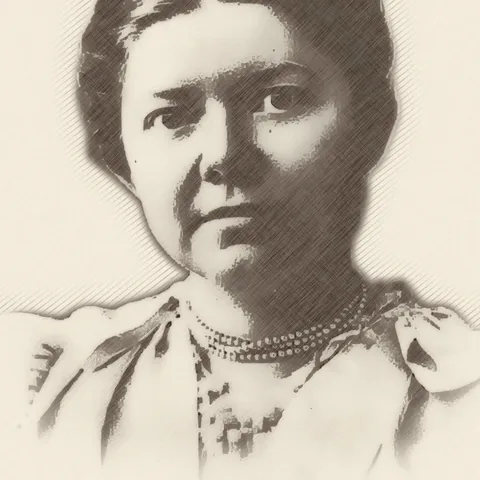 1867 – 1944Late Romantic
Amy Beach
An American pianist and composer who excelled in symphonic and chamber music.
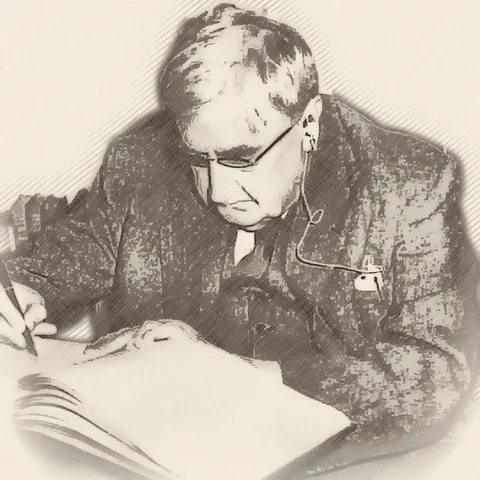 1872 – 1958Late Romantic
Ralph Vaughan Williams
An English composer inspired by folk songs and choral tradition.