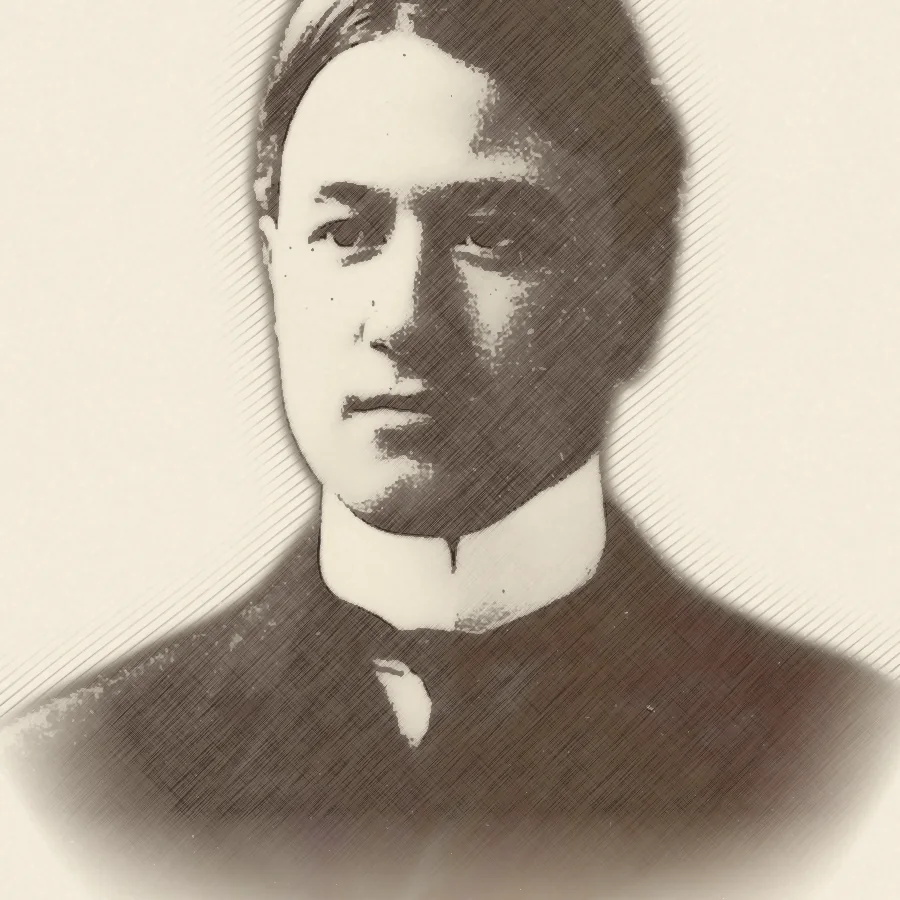
 Modernism
Charles Ives
An experimental American composer who layered hymns, marches and tonalities.
A life and its times
The milestones of the life and work, the contemporaries and the major world events, on a single line of time.
A life at a glance
- 1874Birth
Born in Danbury on 20 October; his father leads the town band
- 1875Meanwhile
The Palais Garnier opera house opens in Paris
- 1877Meanwhile
Edison invents the phonograph: sound can be recorded!
- 1888Careerage 14
Church organist at 14
- 1894Trainingage 20
Studies at Yale University
- 1895Meanwhile
The Lumière brothers’ first cinema show
- 1899Careerage 25
Enters the insurance business in New York
- 1906Workage 32
The Unanswered Question; Central Park in the Dark
- 1907Careerage 33
Founds the Ives & Myrick insurance agency, which becomes very successful
- 1908Private lifeage 34
Marries Harmony Twichell
- 1912Meanwhile
The Titanic sinks
- 1915Workage 41
Completes the ‘Concord’ Sonata
- 1917Meanwhile
Russian Revolution
- 1918Private lifeage 44
Serious heart attack; he composes little afterwards
- 1922Workage 48
Publishes 114 Songs at his own expense
- 1927Meanwhile
First talking picture (The Jazz Singer)
- 1939Careerage 65
First complete performance of the ‘Concord’ Sonata in New York
- 1939Meanwhile
The Second World War begins
- 1947Careerage 73
Pulitzer Prize for his Symphony No. 3, written 40 years earlier
- 1948Meanwhile
The long-playing record (LP) goes on sale
- 1954Deathage 80
Dies in New York on 19 May
Listen
Excerpts from freely licensed recordings, with their performers and licences.
Excerpts last up to 90 seconds. Charles Ives’s compositions are in the public domain; each recording is streamed from Wikimedia Commons under the licence shown, credited to its performers or uploader.
Listen to complete works on Wikimedia Commons
Wikimedia Commons is a free media library: you will find the complete recordings there, with their reuse conditions.
- Complete recording“Concord” Sonata — The Alcotts
- Search for the workThe Unanswered Question
- Search for the workPiano Sonata No. 2 ‘Concord’
- Search for the workThree Places in New England
- Search for the workSymphony No. 4
- Search for the workSymphony No. 3 ‘The Camp Meeting’
- Search for the workCentral Park in the Dark
- Everything on CommonsAll recordings of Charles Ives
The life of Charles Ives
Charles Ives was born on 20 October 1874 in Danbury, a small town in Connecticut in the United States. His father, George Ives, a former army bandmaster in the Civil War, led the town band. He was a curious, experimental musician: he had his family sing in one key while he played the accompaniment in another, had two bands march from opposite directions to hear their music collide, and invented instruments to play notes between the notes. These experiments deeply influenced his son.
Charles learned piano, organ, cornet and drums. At fourteen he became the salaried organist of a Danbury church, the youngest in the state. He was already composing marches for his father’s band and organ pieces such as the Variations on “America” (around 1891), in which he had fun playing the patriotic hymn with unexpected harmonies. He was also an excellent athlete, passionate about baseball and American football.
From 1894 to 1898 he studied at Yale University, attending the classes of the composer Horatio Parker, a very academic teacher who had little time for his daring. His father’s death in 1894 was an immense shock. After his studies, rather than becoming a professional musician, he chose to work in insurance in New York so as to be free to compose as he wished, without depending on public taste. He also remained a church organist until 1902.
In 1907 he founded with Julian Myrick the insurance agency Ives & Myrick, which became one of the largest in the United States. Ives was an innovative businessman: he wrote pamphlets on how to sell life insurance and devised estate-planning methods still in use. In 1908 he married Harmony Twichell, a pastor’s daughter and nurse, who supported his vocation. They adopted a daughter, Edith. Ives composed in the evenings, at weekends and on holiday.
His music was extraordinarily daring for its time. He layered melodies in several keys at once (polytonality), different rhythms, bands, hymns, popular songs and patriotic tunes, as one hears them in real life at a village fair or a parade. In The Unanswered Question (1906) a trumpet asks seven times “the perennial question of existence”, which flutes try in vain to answer, above slow, calm strings. In Central Park in the Dark he depicts the night sounds of the park.
He composed many works inspired by New England: Three Places in New England (1914); the Piano Sonata No. 2, “Concord” (completed in 1915), portraying the writers of the town of Concord — Emerson, Hawthorne, the Alcotts and Thoreau — in which the pianist must sometimes press the keys with a wooden board; and the Symphony No. 4 (1916), of staggering complexity. But almost no one played his music, which was thought incomprehensible or unplayable. In 1918 a serious heart attack forced him to slow down; he composed almost nothing after 1927.
In 1922 he published at his own expense a collection of 114 Songs, which he sent free to anyone who asked. Gradually musicians discovered his work. In 1939 the pianist John Kirkpatrick gave the first complete performance of the “Concord” Sonata in New York, to great acclaim. In 1947 Ives received the Pulitzer Prize for his Symphony No. 3, written forty years earlier; he gave the money away, declaring that “prizes are for boys”. He died in New York on 19 May 1954. He is now regarded as the first great American modernist composer.
Works to know
- 1904
Symphony No. 3 ‘The Camp Meeting’
Awarded the Pulitzer in 1947.
Listen on Wikimedia Commons - 1906
The Unanswered Question
A trumpet asks a question, flutes fuss, strings dream.
Listen on Wikimedia Commons - 1906
Central Park in the Dark
Night sounds of New York.
Listen on Wikimedia Commons - 1914
Three Places in New England
With two marching bands crossing paths.
Listen on Wikimedia Commons - 1915
Piano Sonata No. 2 ‘Concord’
Portraits of New England thinkers.
Listen on Wikimedia Commons - 1916
Symphony No. 4
A collage of hymns and marches.
Listen on Wikimedia Commons
Anecdotes
His insurance agency made him a wealthy man.
He won the Pulitzer Prize and gave the money away.
In his “Concord” Sonata the pianist has to press the keys with a wooden board.
His father had two bands march from opposite directions to hear their music mix.
Same era · Modernism
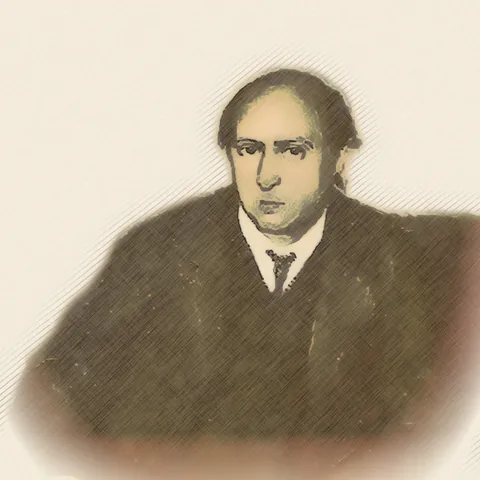 1874 – 1951Modernism
Arnold Schönberg
A pioneer of atonality and twelve-tone composition who redefined musical structure.
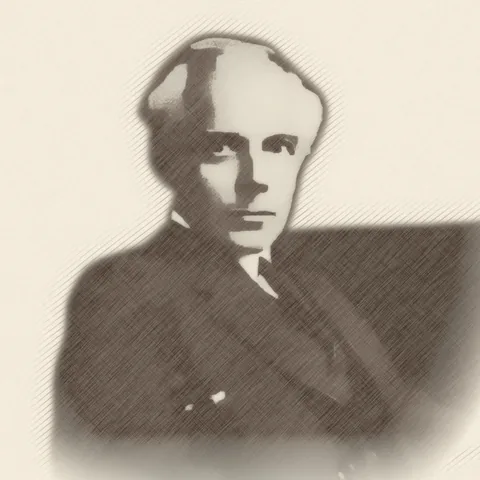 1881 – 1945Modernism
Béla Bartók
A researcher of folk music, he transformed rhythms and modes into a modern language.
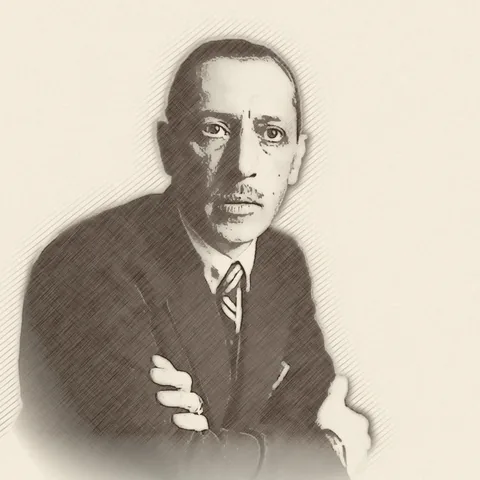 1882 – 1971Modernism
Igor Stravinsky
His rhythmic disruptions and stylistic reinventions shaped twentieth-century music.
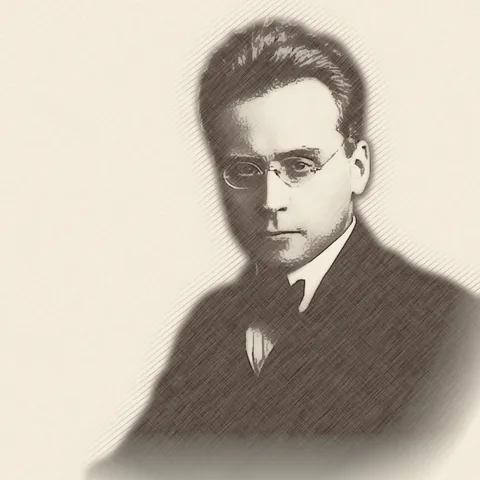 1883 – 1945Modernism
Anton Webern
An Austrian composer who distilled ideas into brief, precise forms.
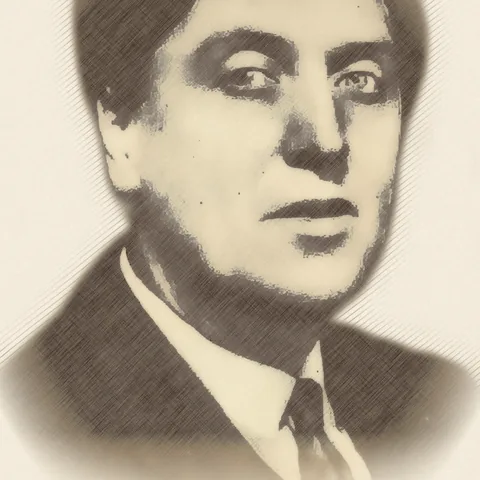 1885 – 1935Modernism
Alban Berg
A pupil of Schoenberg, he combined modern techniques with dramatic intensity.
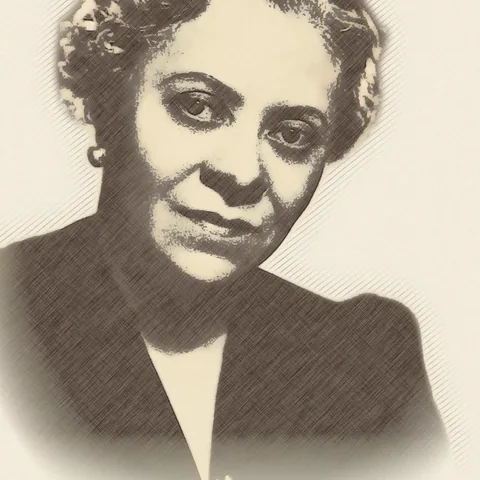 1887 – 1953Modernism
Florence Price
The first Black woman to have a symphony performed by a major US orchestra, she blended classical and African American traditions.