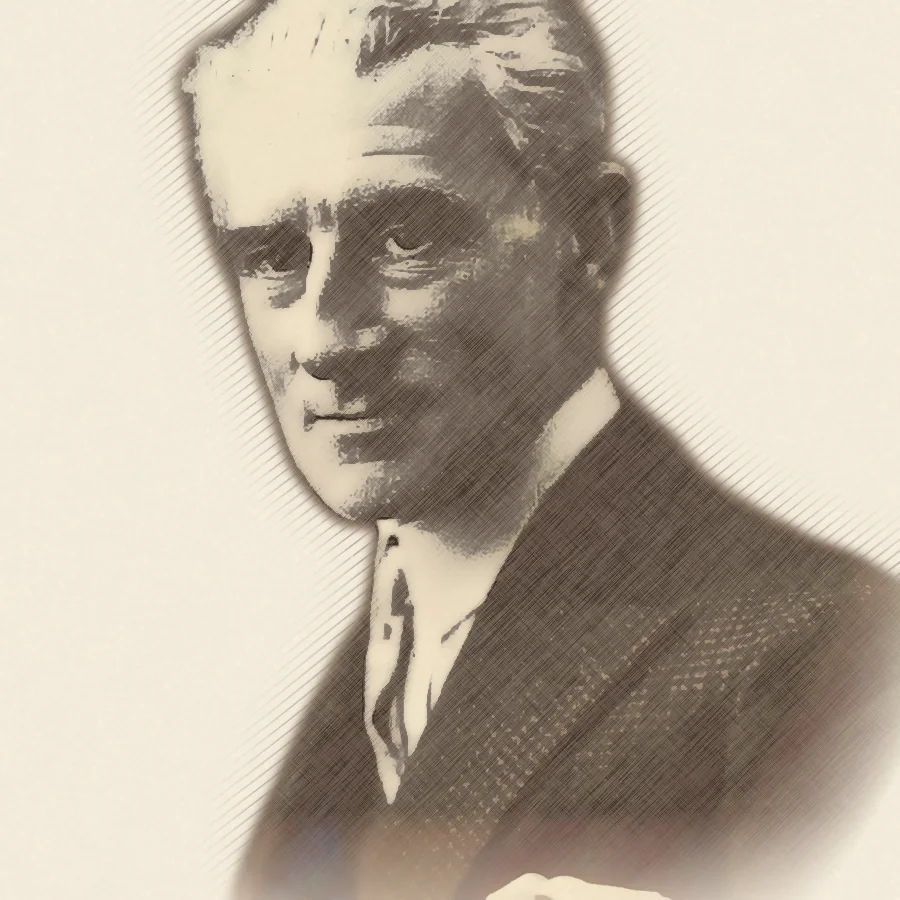
 Impressionism and modernity
Maurice Ravel
A meticulous orchestrator, he combined precision, dance and instrumental color.
A life and its times
The milestones of the life and work, the contemporaries and the major world events, on a single line of time.
A life at a glance
- 1875Birth
Born in Ciboure on 7 March to a Swiss engineer father and a Basque mother
- 1875Meanwhile
The Palais Garnier opera house opens in Paris
- 1877Meanwhile
Edison invents the phonograph: sound can be recorded!
- 1889Trainingage 14
Enters the Paris Conservatoire
- 1895Meanwhile
The Lumière brothers’ first cinema show
- 1899Workage 24
Pavane for a Dead Princess
- 1901Workage 26
Jeux d’eau, for piano
- 1905Careerage 30
Rejected for the Prix de Rome — the scandal forces the Conservatoire director to resign
- 1905Meanwhile
Einstein publishes special relativity
- 1908Workage 33
Gaspard de la nuit; Rapsodie espagnole
- 1910Workage 35
Ma mère l’Oye, for two young children
- 1912Workage 37
Daphnis et Chloé for the Ballets Russes
- 1912Meanwhile
The Titanic sinks
- 1916Journeyage 41
Truck driver during the Great War, near Verdun
- 1917Workage 42
Le Tombeau de Couperin, in memory of friends killed in the war
- 1917Meanwhile
Russian Revolution
- 1921Milestoneage 46
Settles at Le Belvédère in Montfort-l’Amaury
- 1922Workage 47
Orchestrates Mussorgsky’s Pictures at an Exhibition
- 1922Meanwhile
Public radio broadcasting begins (BBC, Radio Tour Eiffel)
- 1925Workage 50
L’Enfant et les Sortilèges
- 1928Workage 53
Tour of the United States; Boléro
- 1929Meanwhile
Wall Street Crash
- 1931Workage 56
Piano Concerto in G; Concerto for the Left Hand
- 1937Deathage 62
Dies in Paris on 28 December
Listen
Excerpts from freely licensed recordings, with their performers and licences.
Excerpts last up to 90 seconds. Maurice Ravel’s compositions are in the public domain; each recording is streamed from Wikimedia Commons under the licence shown, credited to its performers or uploader.
Listen to complete works on Wikimedia Commons
Wikimedia Commons is a free media library: you will find the complete recordings there, with their reuse conditions.
- Complete recordingBoléro (1930 recording)
- Complete recordingPavane for a Dead Princess
- Complete recordingSonatine — Modéré (M. Meyer)
- Wikimedia Commons fileMaurice Ravel 1925.jpg
- Wikimedia Commons fileMaurice Ravel - Pavane pour une infante défunte
- Search for the workBoléro
- Search for the workL’Enfant et les Sortilèges
- Search for the workMa mère l’Oye
- Search for the workPavane for a Dead Princess
- Search for the workDaphnis et Chloé
- Search for the workPiano Concerto in G
- Search for the workLe Tombeau de Couperin
- Everything on CommonsAll recordings of Maurice Ravel
The life of Maurice Ravel
Maurice Ravel was born on 7 March 1875 at Ciboure in the Basque Country, near Saint-Jean-de-Luz. His father, Joseph, was a Swiss engineer and passionate inventor who designed an engine and one of the first steam automobiles; his mother, Marie Delouart, was Basque. A few months after his birth the family moved to Paris. All his life Ravel kept a deep attachment to the Basque Country and to Spain, which his mother evoked for him in songs, and a taste for precision mechanisms inherited from his father.
He began piano at seven, then studied harmony. In 1889 he entered the Paris Conservatoire, where he became friends with the Spanish pianist Ricardo Viñes, who would premiere many of his works. At the 1889 Exposition Universelle he discovered the Javanese gamelan and Russian music. In 1897 he joined Gabriel Fauré’s composition class, where his talent was recognised. He composed the Pavane for a Dead Princess (1899), a great success, then Jeux d’eau (1901), a sparkling piano piece imitating the sound of fountains.
Ravel competed five times for the Prix de Rome without ever winning it. In 1905, already a recognised composer, he was eliminated in the preliminary round. The scandal, known as “the Ravel affair”, was enormous: the press denounced the injustice, and the director of the Conservatoire, Théodore Dubois, had to resign. He was replaced by Fauré. Ravel kept composing: the String Quartet (1903), Miroirs (1905), the Rapsodie espagnole (1908) and Gaspard de la nuit (1908), whose Scarbo is one of the most difficult pieces in the piano repertoire.
Ravel was a perfectionist, compared by Stravinsky to a Swiss watchmaker for the precision of his writing. He was also a genius of the orchestra. In 1910 he composed for two children of friends Ma mère l’Oye (Mother Goose), a suite of pieces for piano four hands inspired by Perrault’s tales: Sleeping Beauty, Tom Thumb, Laideronnette, Beauty and the Beast, the Fairy Garden. In 1912 Daphnis et Chloé, commissioned by Diaghilev for the Ballets Russes, contains a famous sunrise.
During the First World War Ravel, too short and too light to be a soldier, became a military truck driver near Verdun; he nicknamed his truck “Adélaïde”. His mother’s death in 1917 devastated him. He composed Le Tombeau de Couperin (1917), a homage to eighteenth-century French music, each piece dedicated to a friend killed in the war. In 1921 he settled at Le Belvédère, a small house at Montfort-l’Amaury that he decorated whimsically and filled with automata and mechanical toys.
In 1922 he orchestrated Mussorgsky’s Pictures at an Exhibition, a dazzling version that made the work famous worldwide. In 1925 he premiered L’Enfant et les Sortilèges, to a libretto by Colette: a naughty child sees the furniture, objects and animals he has mistreated come to life to take revenge. In 1928 he made a triumphant tour of the United States, where he met George Gershwin and discovered jazz in Harlem. That same year he composed Boléro, a seventeen-minute crescendo in which the same rhythm and melody repeat while changing instruments. It became his most famous work, which he himself called “a piece without music”.
In 1931 he composed two piano concertos: the joyful, jazz-influenced Concerto in G, and the Concerto for the Left Hand, written for the Austrian pianist Paul Wittgenstein, who had lost his right arm in the war. In 1932 a taxi accident worsened a neurological illness that gradually deprived him of the ability to write and speak while his mind remained intact. He said: “I still have so much music in my head.” He died in Paris on 28 December 1937 after brain surgery.
Works to know
- 1899
Pavane for a Dead Princess
Slow, nostalgic dance.
Listen on Wikimedia Commons - 1910
Ma mère l’Oye
Fairy tales: Tom Thumb, Beauty and the Beast, the Fairy Garden.
Listen on Wikimedia Commons - 1912
Daphnis et Chloé
Ballet with a splendid sunrise.
Listen on Wikimedia Commons - 1917
Le Tombeau de Couperin
Homage to the 18th century and lost friends.
Listen on Wikimedia Commons - 1925
L’Enfant et les Sortilèges
A naughty child faces rebelling objects and animals.
Listen on Wikimedia Commons - 1928
Boléro
One theme repeated, louder and louder — a worldwide phenomenon.
Listen on Wikimedia Commons - 1931
Piano Concerto in G
Sparkling concerto with jazz accents.
Listen on Wikimedia Commons
Anecdotes
During the war he drove a military truck he nicknamed ‘Adélaïde’.
In Boléro, the snare drum plays the same rhythm 169 times!
He failed the Prix de Rome five times; the 1905 scandal forced the director of the Conservatoire to resign.
He wrote a concerto for the left hand for a pianist who had lost his right arm in the war.
Same era · Impressionism and modernity
 1862 – 1918Impressionism and modernity
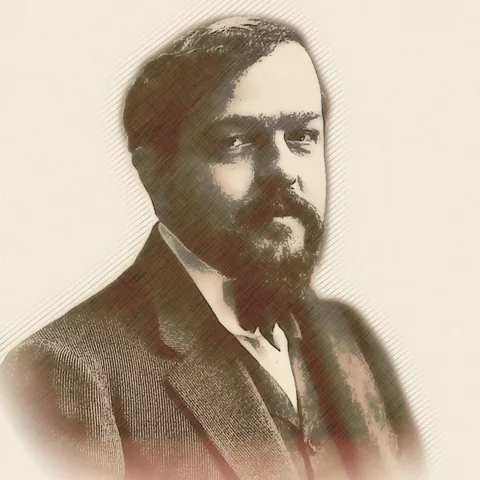
Claude Debussy
He transformed harmony and orchestral color through suggestion rather than direct narrative.
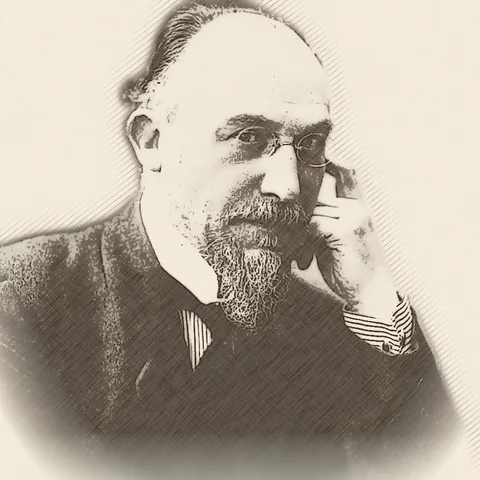 1866 – 1925Impressionism and modernity
Erik Satie
With spare pieces and wit, he challenged Romantic grandiosity.
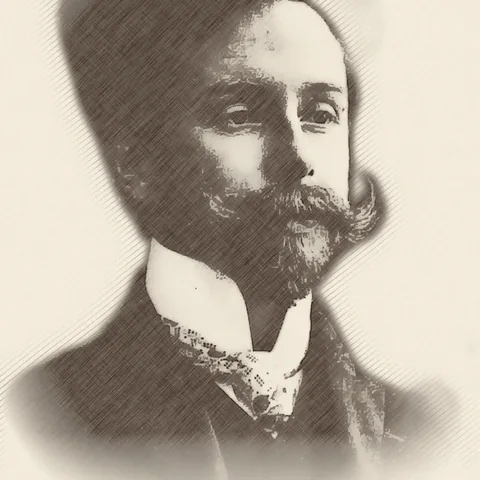 1872 – 1915Impressionism and modernity
Alexandre Scriabine
A pianist and mystic who explored chromatic harmony and multisensory projects.