 Impressionism and modernity
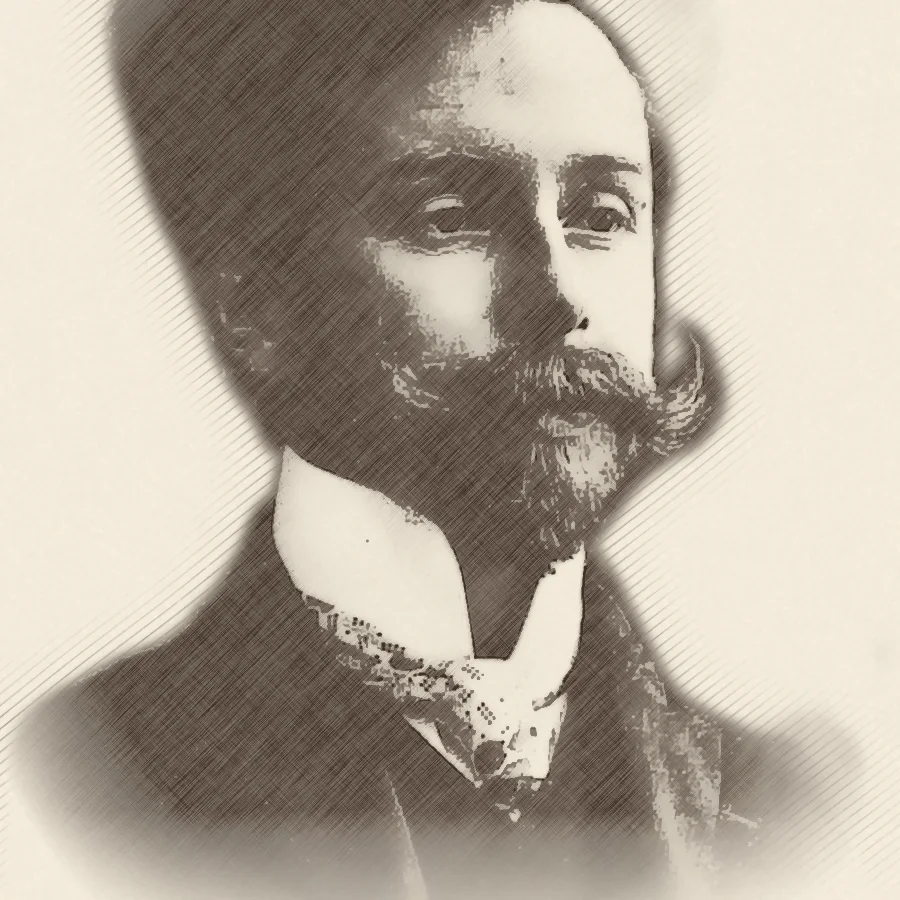
Alexandre Scriabine
A pianist and mystic who explored chromatic harmony and multisensory projects.
A life and its times
The milestones of the life and work, the contemporaries and the major world events, on a single line of time.
A life at a glance
- 1872Birth
Born in Moscow on 6 January
- 1873Private lifeage 1
Death of his mother, a pianist; raised by his aunt
- 1874Meanwhile
First exhibition of the Impressionist painters
- 1875Meanwhile
The Palais Garnier opera house opens in Paris
- 1877Meanwhile
Edison invents the phonograph: sound can be recorded!
- 1882Trainingage 10
Cadet school; already composing small pieces
- 1888Trainingage 16
Moscow Conservatory, classmate of Rachmaninoff
- 1889Meanwhile
The Eiffel Tower opens for the World’s Fair
- 1891Private lifeage 19
Injures his right hand from over-practising
- 1894Workage 22
The publisher Belyayev publishes his works and organises tours
- 1897Workage 25
Piano Concerto
- 1898Careerage 26
Piano professor at the Moscow Conservatory
- 1903Meanwhile
First powered aeroplane flight (Wright brothers)
- 1905Workage 33
The Divine Poem (Symphony No. 3)
- 1905Meanwhile
Einstein publishes special relativity
- 1908Workage 36
The Poem of Ecstasy
- 1910Workage 38
Prometheus, with a ‘keyboard of lights’
- 1912Meanwhile
The Titanic sinks
- 1913Workage 41
Piano Sonatas Nos. 9 and 10
- 1914Meanwhile
The First World War begins
- 1915Deathage 43
Dies in Moscow on 27 April of an infection
Listen
Excerpts from freely licensed recordings, with their performers and licences.
Excerpts last up to 90 seconds. Alexandre Scriabine’s compositions are in the public domain; each recording is streamed from Wikimedia Commons under the licence shown, credited to its performers or uploader.
Listen to complete works on Wikimedia Commons
Wikimedia Commons is a free media library: you will find the complete recordings there, with their reuse conditions.
- Complete recordingPrelude Op. 11 No. 1
- Complete recordingÉtude Op. 8 No. 12
- Complete recordingPrelude Op. 67 No. 1
- Wikimedia Commons fileSkrjabin op 11 1
- Search for the workPrometheus: The Poem of Fire
- Search for the workThe Poem of Ecstasy
- Search for the workÉtude Op. 8 No. 12
- Search for the workSonata No. 9 ‘Black Mass’
- Search for the workPiano Concerto
- Search for the workPreludes Op. 11
- Everything on CommonsAll recordings of Alexandre Scriabine
The life of Alexandre Scriabine
Alexander Scriabin was born in Moscow on 6 January 1872 (25 December 1871 by the Russian calendar of the time). His mother, Lyubov, a talented pianist, died of tuberculosis a year after his birth. His father, a diplomat, went to work in Turkey and left him with his grandmother and aunt, who raised him with great tenderness and gave him his first piano lessons. A frail, dreamy child, he was fascinated by the piano and even built small instruments.
Following family tradition, in 1882 he entered the Moscow Cadet School, but he was excused from military exercises because of his poor health and continued his musical studies. He took lessons with Nikolai Zverev, a renowned teacher, then in 1888 entered the Moscow Conservatory. There he studied piano with Vasily Safonov and composition with Anton Arensky. His fellow student was Sergei Rachmaninoff, with whom he had a friendly rivalry.
A brilliant pianist, Scriabin practised so intensely — especially Liszt’s Reminiscences of Don Juan and Balakirev’s Islamey — that he seriously injured his right hand in 1891. For a time doctors thought he would never play again. He then composed, for the left hand alone, a Prelude and Nocturne (1894). This ordeal plunged him into a deep crisis. He graduated in piano but left the composition class without a diploma after a quarrel with Arensky.
In 1894 the wealthy publisher Mitrofan Belyayev took him under his wing: he published his works and organised his European tours. Scriabin’s early compositions — preludes, études, mazurkas and nocturnes — are influenced by Chopin, whom he admired. The passionate, tormented Étude Op. 8 No. 12 became one of his most played pieces. In 1897 he composed his Piano Concerto and married the pianist Vera Isakovich. From 1898 to 1903 he taught piano at the Moscow Conservatory.
Gradually his style changed radically. Scriabin became interested in philosophy and theosophy, a mystical doctrine. He believed art could transform the world and lead humanity to a kind of spiritual ecstasy. In 1904 he left his wife and children to live with Tatiana Schloezer and settled for some years in Switzerland, Italy and Belgium. He composed The Divine Poem (Symphony No. 3, 1905), then The Poem of Ecstasy (1908), for a huge orchestra, which culminates in an explosion of joy.
He invented a new harmonic language based on a strange, mysterious chord, the “mystic chord”, which took him away from traditional tonality. Scriabin also had a form of synaesthesia, or at least believed he associated each key with a colour: for him F sharp major was violet-blue and D major yellow. In Prometheus, the Poem of Fire (1910), he added to the orchestra a “keyboard of light” (luce), meant to project colours into the hall following the music. His last piano sonatas, such as the Ninth, nicknamed the “Black Mass”, and the Tenth (1913), are extremely daring.
Back in Russia in 1910, he dreamed of a gigantic work, the Mysterium, to be performed over seven days in a temple in India, uniting music, dance, poetry, colours and perfumes to transform humanity. He wrote only sketches, the Prefatory Action. In April 1915 a small sore on his lip became infected and caused blood poisoning. He died in Moscow on 27 April 1915, aged forty-three. His visionary work influenced many twentieth-century Russian composers.
Works to know
- 1894
Étude Op. 8 No. 12
Fiery, heroic étude.
Listen on Wikimedia Commons - 1895
Preludes Op. 11
24 preludes in Chopin’s footsteps.
Listen on Wikimedia Commons - 1897
Piano Concerto
Romantic early concerto.
Listen on Wikimedia Commons - 1908
The Poem of Ecstasy
Incandescent orchestral work.
Listen on Wikimedia Commons - 1910
Prometheus: The Poem of Fire
For orchestra, piano… and coloured lights.
Listen on Wikimedia Commons - 1913
Sonata No. 9 ‘Black Mass’
Mysterious, unsettling sonata.
Listen on Wikimedia Commons
Anecdotes
For Prometheus he wrote a part for a ‘keyboard of lights’ that projects colours.
He was in the same class as Rachmaninoff at the Conservatory.
After injuring his right hand, he composed a Prelude and Nocturne for the left hand alone.
He dreamed of a seven-day work, the Mysterium, with music, dance, colours and perfumes.
Same era · Impressionism and modernity
 1862 – 1918Impressionism and modernity
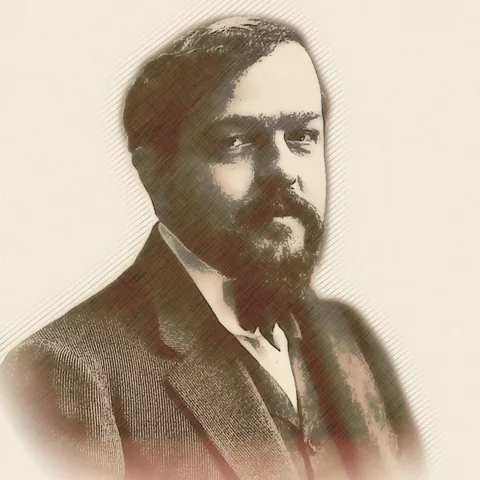
Claude Debussy
He transformed harmony and orchestral color through suggestion rather than direct narrative.
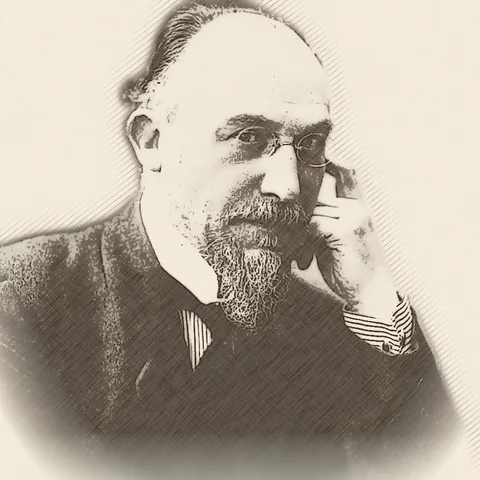 1866 – 1925Impressionism and modernity
Erik Satie
With spare pieces and wit, he challenged Romantic grandiosity.
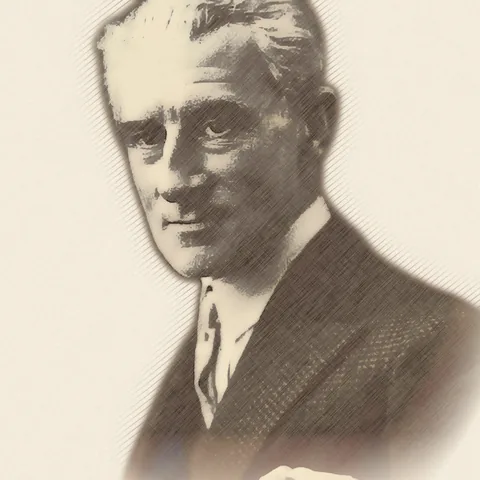 1875 – 1937Impressionism and modernity
Maurice Ravel
A meticulous orchestrator, he combined precision, dance and instrumental color.