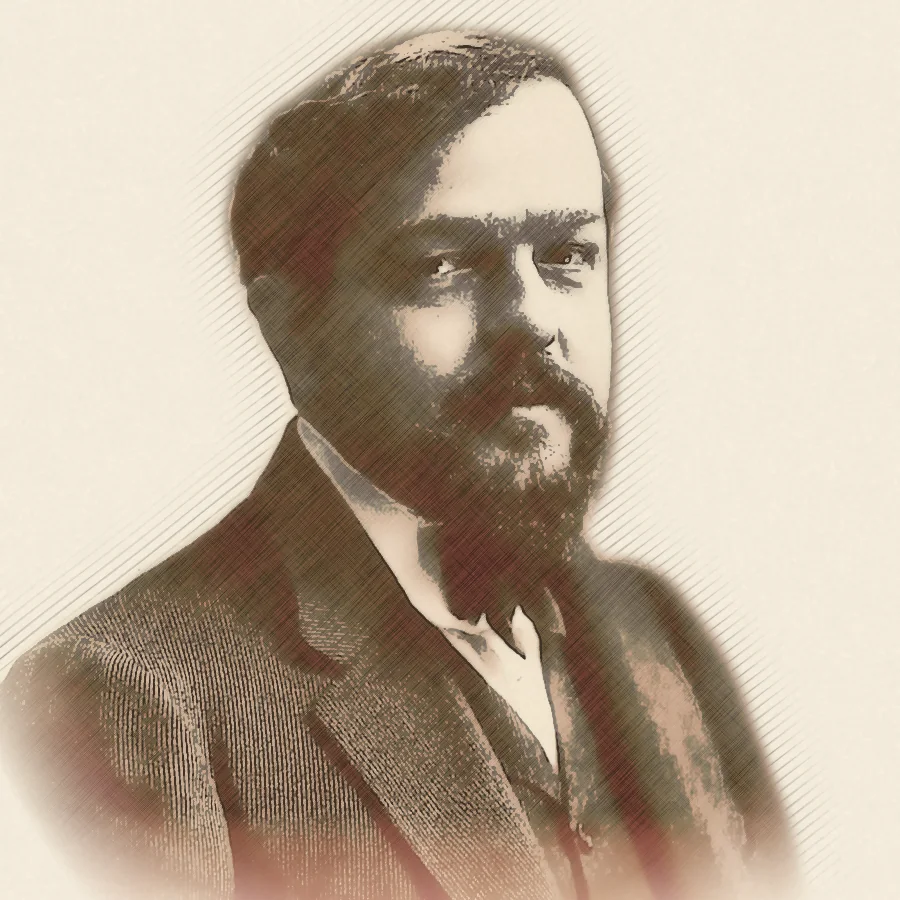
 Impressionism and modernity
Claude Debussy
He transformed harmony and orchestral color through suggestion rather than direct narrative.
A life and its times
The milestones of the life and work, the contemporaries and the major world events, on a single line of time.
A life at a glance
- 1862Birth
Born in Saint-Germain-en-Laye on 22 August
- 1865Meanwhile
End of the American Civil War; slavery abolished in the USA
- 1872Trainingage 10
Enters the Paris Conservatoire aged 10
- 1874Meanwhile
First exhibition of the Impressionist painters
- 1875Meanwhile
The Palais Garnier opera house opens in Paris
- 1880Journeyage 18
Pianist to the family of Nadezhda von Meck, Tchaikovsky’s patron
- 1884Careerage 22
Prix de Rome
- 1889Landmarkage 27
At the World’s Fair, discovers the Javanese gamelan
- 1889Meanwhile
The Eiffel Tower opens for the World’s Fair
- 1890Workage 28
Suite bergamasque, with Clair de lune (published 1905)
- 1894Workage 32
Prélude à l’après-midi d’un faune
- 1895Meanwhile
The Lumière brothers’ first cinema show
- 1902Workage 40
Pelléas et Mélisande, his only opera
- 1905Workage 43
La Mer; birth of his daughter Chouchou
- 1905Meanwhile
Einstein publishes special relativity
- 1908Workage 46
Children’s Corner, for Chouchou
- 1910Workage 48
First book of Préludes for piano
- 1913Workage 51
Jeux, ballet
- 1914Landmarkage 52
First World War
- 1914Meanwhile
The First World War begins
- 1915Workage 53
Twelve Études for piano; sonatas
- 1918Deathage 56
Dies in Paris on 25 March, during the bombardment
- 1918Meanwhile
End of the First World War
Listen
Excerpts from freely licensed recordings, with their performers and licences.
Excerpts last up to 90 seconds. Claude Debussy’s compositions are in the public domain; each recording is streamed from Wikimedia Commons under the licence shown, credited to its performers or uploader.
Listen to complete works on Wikimedia Commons
Wikimedia Commons is a free media library: you will find the complete recordings there, with their reuse conditions.
- Complete recordingSuite bergamasque — Clair de lune
- Complete recordingSecond Arabesque
- Complete recordingChildren’s Corner
- Complete recordingPréludes, Book I — Voiles
- Search for the workClair de lune
- Search for the workPrélude à l’après-midi d’un faune
- Search for the workLa Mer
- Search for the workChildren’s Corner
- Search for the workPelléas et Mélisande
- Search for the workPréludes
- Search for the workTwo Arabesques
- Everything on CommonsAll recordings of Claude Debussy
The life of Claude Debussy
Claude Debussy was born on 22 August 1862 at Saint-Germain-en-Laye near Paris into a modest family: his parents ran a china shop that went bankrupt. He hardly went to school. In 1870, during the war, he stayed in Cannes with an aunt, who arranged his first piano lessons. Back in Paris he was noticed by Antoinette Mauté de Fleurville, mother-in-law of the poet Paul Verlaine, who claimed to have been a pupil of Chopin. She prepared him for the Conservatoire.
In 1872, aged ten, he entered the Paris Conservatoire. He studied there for twelve years: piano, solfège, harmony and composition. He was a brilliant but rebellious pupil who loved unusual chords and did not always follow the rules, to his teachers’ despair. In the summers of 1880 to 1882 he was hired as pianist by Nadezhda von Meck, Tchaikovsky’s patron, and travelled with her family to Switzerland, Italy and Russia, where he discovered Russian music.
In 1884 he won the Prix de Rome with the cantata L’Enfant prodigue. But he was bored at the Villa Medici and returned to Paris before the end of his stay. He mixed with the Symbolist poets, notably Stéphane Mallarmé, whose poems he set to music. In 1889, at the Exposition Universelle — the one for which the Eiffel Tower was built — he discovered the Javanese gamelan, an orchestra of gongs and metallophones, and the music of Annamese theatre: these new sounds fascinated him and deeply influenced his music.
Debussy wanted to free music from the traditional rules of harmony: he used ancient or exotic scales, such as the whole-tone and pentatonic scales, chords that do not resolve and supple rhythms. In 1894 he premiered the Prélude à l’après-midi d’un faune, after a poem by Mallarmé, which opens with a dreamy, sensuous flute solo. Pierre Boulez said that “the flute of the faun” opened modern music. He also composed the Suite bergamasque, with its famous Clair de lune, published in 1905.
He worked for nearly ten years on his only opera, Pelléas et Mélisande, after Maurice Maeterlinck’s play, premiered at the Opéra-Comique in 1902. The work, which avoids grand arias and has the characters sing almost as they speak, in an atmosphere of mystery, caused a scandal and then triumphed. Debussy became famous. His music is often called “impressionist”, by comparison with Monet’s painting, although he disliked the term.
In 1905 he composed La Mer, three “symphonic sketches” evoking the play of light, waves and wind. That same year his daughter Claude-Emma, nicknamed “Chouchou”, was born to the singer Emma Bardac, whom he married in 1908. For Chouchou he composed Children’s Corner (1908), a humorous suite of piano pieces: Jimbo’s Lullaby, Golliwogg’s Cake-Walk and Doctor Gradus ad Parnassum, which pokes fun at Clementi’s tedious exercises. He also wrote two books of Préludes for piano (1910–13), with poetic titles such as La Fille aux cheveux de lin and La Cathédrale engloutie.
From 1909 he suffered from cancer. The First World War filled him with despair, but he still composed his Twelve Études for piano (1915) and three sonatas for various instruments, which he proudly signed “Claude Debussy, musicien français”. He died in Paris on 25 March 1918, while the city was being shelled by German guns. He is regarded as one of the fathers of modern music; his influence extends from Ravel to Messiaen, and even to jazz.
Works to know
- 1890
Clair de lune
Dreamy piano piece, one of the most loved in the world.
Listen on Wikimedia Commons - 1891
Two Arabesques
Flowing, graceful early pieces.
Listen on Wikimedia Commons - 1894
Prélude à l’après-midi d’un faune
A sensuous flute opens modern music.
Listen on Wikimedia Commons - 1902
Pelléas et Mélisande
Mysterious, whispered opera.
Listen on Wikimedia Commons - 1905
La Mer
Three symphonic sketches: waves, wind and light.
Listen on Wikimedia Commons - 1908
Children’s Corner
For his daughter: an elephant, a doll, a little shepherd…
Listen on Wikimedia Commons - 1910
Préludes
24 pictures: The Girl with the Flaxen Hair, The Sunken Cathedral…
Listen on Wikimedia Commons
Anecdotes
He discovered Javanese music at the 1889 World’s Fair, the one with the Eiffel Tower.
In Children’s Corner one piece pokes fun at Clementi’s piano exercises!
His only opera, Pelléas et Mélisande, took him nearly ten years.
He signed his last sonatas “Claude Debussy, French musician”.
Same era · Impressionism and modernity
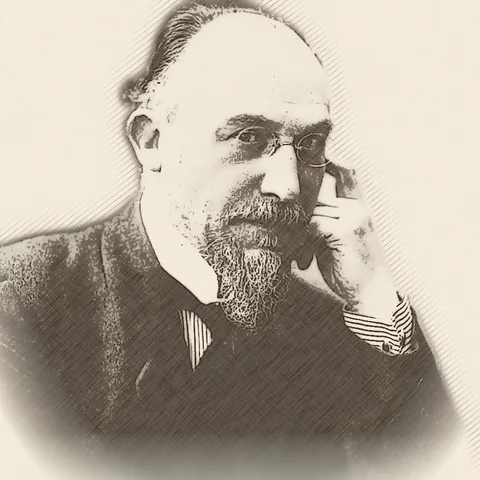 1866 – 1925Impressionism and modernity
Erik Satie
With spare pieces and wit, he challenged Romantic grandiosity.
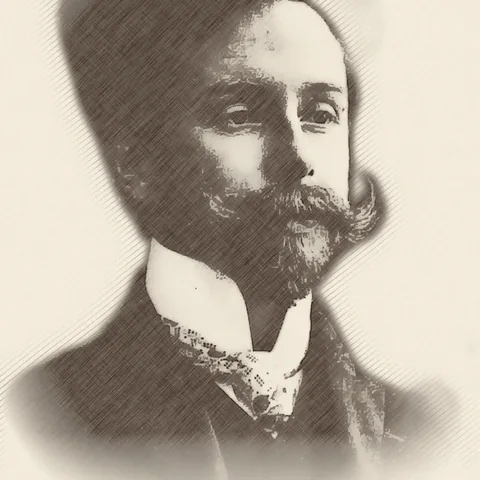 1872 – 1915Impressionism and modernity
Alexandre Scriabine
A pianist and mystic who explored chromatic harmony and multisensory projects.
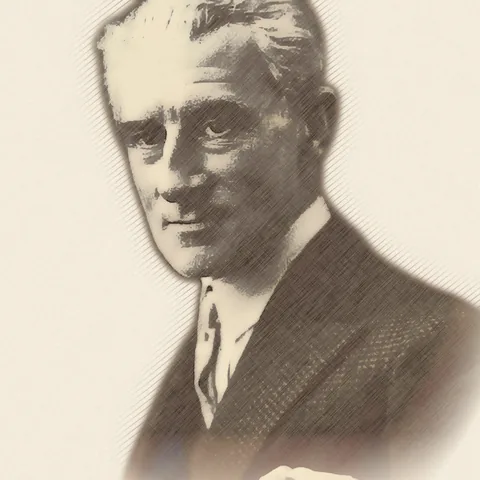 1875 – 1937Impressionism and modernity
Maurice Ravel
A meticulous orchestrator, he combined precision, dance and instrumental color.