 Late Romantic
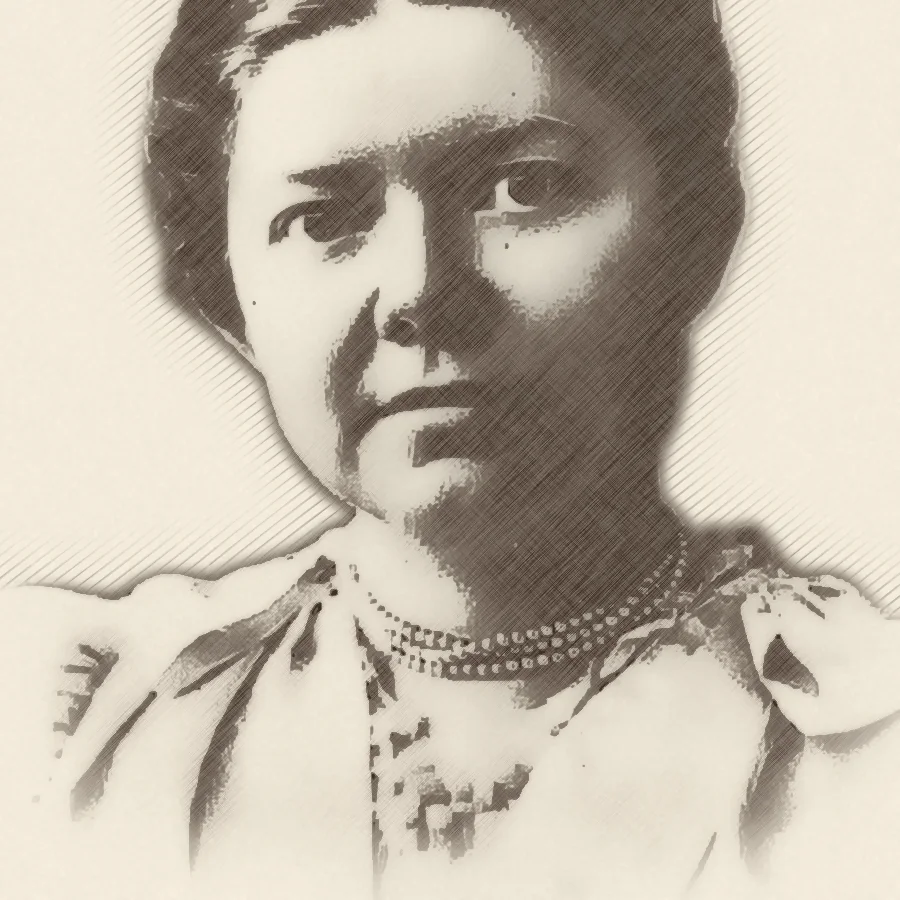
Amy Beach
An American pianist and composer who excelled in symphonic and chamber music.
A life and its times
The milestones of the life and work, the contemporaries and the major world events, on a single line of time.
A life at a glance
- 1867Birth
Born in Henniker on 5 September (Amy Marcy Cheney)
- 1868Private lifeage 1
At one, she already sings about forty tunes in tune
- 1871Workage 4
Composes her first waltzes at 4
- 1874Meanwhile
First exhibition of the Impressionist painters
- 1875Meanwhile
The Palais Garnier opera house opens in Paris
- 1883Careerage 16
Debut as a pianist in Boston at 16
- 1885Private lifeage 18
Marries Dr Henry Beach; plays with the Boston Symphony Orchestra
- 1889Meanwhile
The Eiffel Tower opens for the World’s Fair
- 1892Workage 25
Mass in E-flat, premiered by the Handel and Haydn Society
- 1893Workage 26
Festival Jubilate for the Chicago World’s Fair
- 1896Workage 29
‘Gaelic’ Symphony: the first symphony by an American woman
- 1900Workage 33
Premieres her Piano Concerto with the Boston Symphony
- 1903Meanwhile
First powered aeroplane flight (Wright brothers)
- 1911Journeyage 44
After her husband’s death, triumphant tour of Europe
- 1912Meanwhile
The Titanic sinks
- 1917Meanwhile
Russian Revolution
- 1921Careerage 54
Fellow of the MacDowell Colony, where she composes every summer
- 1922Meanwhile
Public radio broadcasting begins (BBC, Radio Tour Eiffel)
- 1925Careerage 58
Founding president of the Society of American Women Composers
- 1929Meanwhile
Wall Street Crash
- 1944Deathage 77
Dies in New York on 27 December
Listen
Excerpts from freely licensed recordings, with their performers and licences.
Amy Beach’s music is in the public domain, but Wikimedia Commons does not yet offer a freely licensed recording of these works. The links below lead to scores and searches on Commons; as soon as a free recording is published, it can be added here.
Listen to complete works on Wikimedia Commons
Wikimedia Commons is a free media library: you will find the complete recordings there, with their reuse conditions.
The life of Amy Beach
Amy Marcy Cheney was born on 5 September 1867 in Henniker, a small town in New Hampshire in the United States. Her mother, Clara, was an excellent pianist and singer. The child’s gifts were extraordinary: at one she could sing some forty tunes accurately; at two she improvised a second voice above her mother’s songs; at four she composed little waltzes in her head and then played them on the piano. She had perfect pitch and even associated keys with colours.
Her mother, fearing she would become a child prodigy paraded in public, at first restricted her access to the piano, then gave her lessons herself. In 1875 the family moved to Boston, a major musical centre. Amy studied piano with Ernst Perabo and Carl Baermann, a pupil of Liszt, but she took almost no composition lessons: she taught herself harmony, counterpoint and orchestration, translating French treatises and studying the scores of the great masters.
In 1883, aged sixteen, she made her debut as a pianist in Boston with a Moscheles concerto, and success was immediate. In 1885 she played with the Boston Symphony Orchestra. That same year, at eighteen, she married Dr Henry Harris Aubrey Beach, a renowned Boston surgeon twenty-four years her senior. Following the conventions of the time, she now signed herself “Mrs. H. H. A. Beach” and agreed to limit her concerts to one or two a year, with the proceeds going to charity. She then devoted herself to composition.
In 1892 her Mass in E flat, premiered by Boston’s Handel and Haydn Society, was the first such work by an American woman to be performed by that prestigious institution. In 1893 she was commissioned to write the Festival Jubilate for the opening of the Woman’s Building at the Chicago World’s Fair. In 1896 her “Gaelic” Symphony, inspired by Irish folk melodies, was premiered by the Boston Symphony Orchestra: the first symphony by an American woman to be performed and published.
The composer George Whitefield Chadwick then hailed her as “one of the boys”, welcoming her into the Boston group of composers, the “Second New England School”. In 1900 she premiered her own Piano Concerto in C sharp minor with the Boston orchestra. She also composed more than 150 songs, including the very popular The Year’s at the Spring, chamber music such as the Piano Quintet (1907) and many piano pieces.
In 1910 her husband died, followed by her mother a few months later. Freed from convention, Amy Beach left for Europe in 1911, where for three years she gave triumphant concerts in Germany, playing her own works. German critics hailed her as one of the great composers of her time. Back in the United States in 1914, she resumed her career as pianist and composer. From 1921 she spent her summers at the MacDowell Colony, an artists’ residence in New Hampshire, where she composed in peace.
A nature lover, she notated birdsong and incorporated it into pieces such as Hermit Thrush at Eve and Hermit Thrush at Morn (1922). She actively supported young women musicians and in 1925 became founding president of the Society of American Women Composers. She also composed a chamber opera, Cabildo (1932), and sacred works. Suffering from heart disease, she died in New York on 27 December 1944. She is regarded as the first great American woman composer of art music.
Works to know
- 1892
Mass in E-flat
Large Mass for choir and orchestra.
Listen on Wikimedia Commons - 1896
‘Gaelic’ Symphony
Inspired by Irish melodies.
Listen on Wikimedia Commons - 1899
Piano Concerto in C-sharp minor
Romantic, virtuoso concerto.
Listen on Wikimedia Commons - 1900
The Year’s at the Spring
Hugely popular song.
Listen on Wikimedia Commons - 1907
Piano Quintet
Passionate chamber music.
Listen on Wikimedia Commons - 1922
Hermit Thrush at Eve / at Morn
Piano pieces based on a thrush’s song.
Listen on Wikimedia Commons
Anecdotes
At 4 she composed waltzes in her head while away from the piano.
She wrote down birdsong to inspire her music.
Her “Gaelic” Symphony was the first symphony by an American woman composer to be performed and published.
She associated each key with a colour.
Same era · Late Romantic
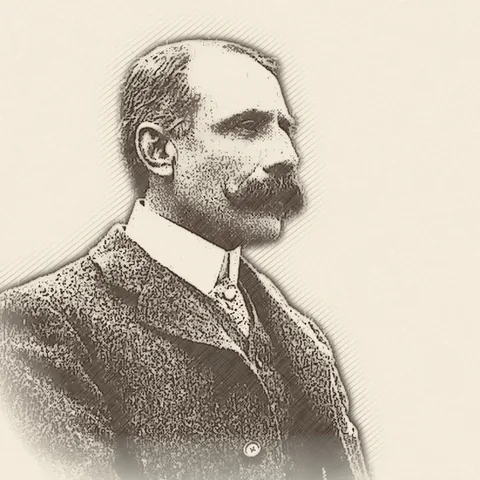 1857 – 1934Late Romantic
Edward Elgar
An English composer combining orchestral grandeur and intimate lyricism.
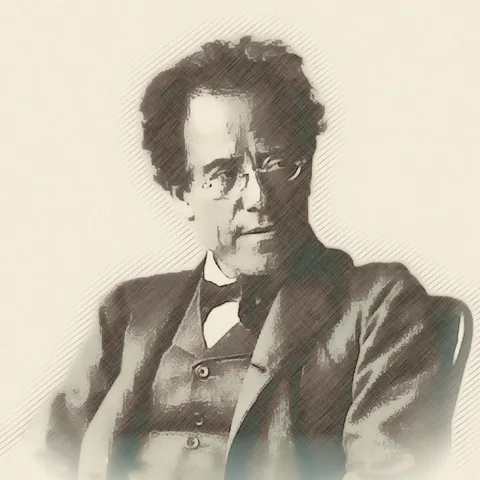 1860 – 1911Late Romantic
Gustav Mahler
His vast symphonies confront nature, irony, love and existential questions.
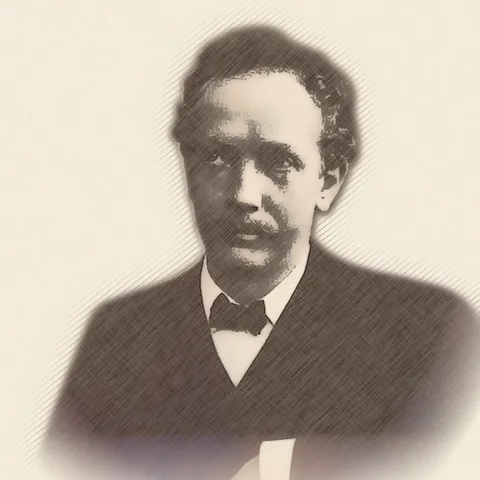 1864 – 1949Late Romantic
Richard Strauss
He pushed Romantic orchestration toward extraordinary richness and contrast.
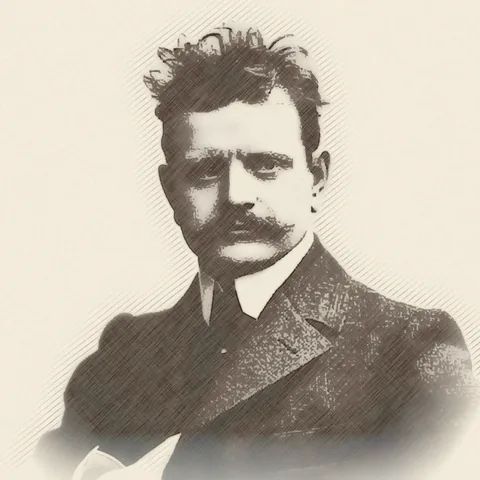 1865 – 1957Late Romantic
Jean Sibelius
He composed organic forms inspired by Finnish landscapes and culture.
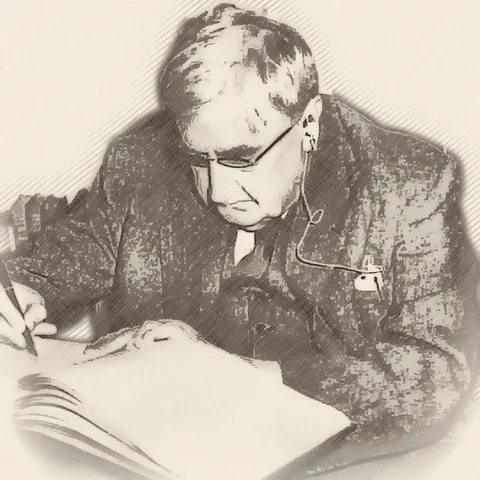 1872 – 1958Late Romantic
Ralph Vaughan Williams
An English composer inspired by folk songs and choral tradition.
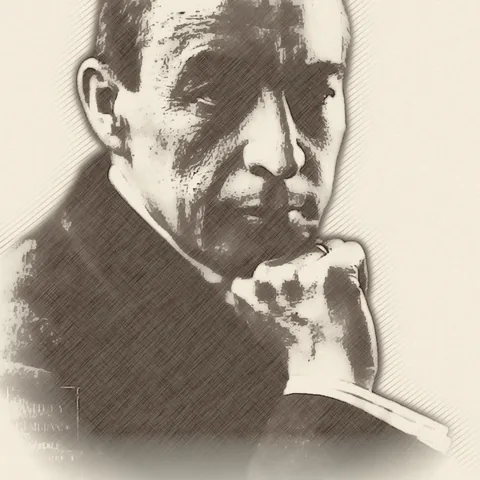 1873 – 1943Late Romantic
Sergueï Rachmaninov
A virtuoso pianist, he carried Russian lyric Romanticism into the twentieth century.