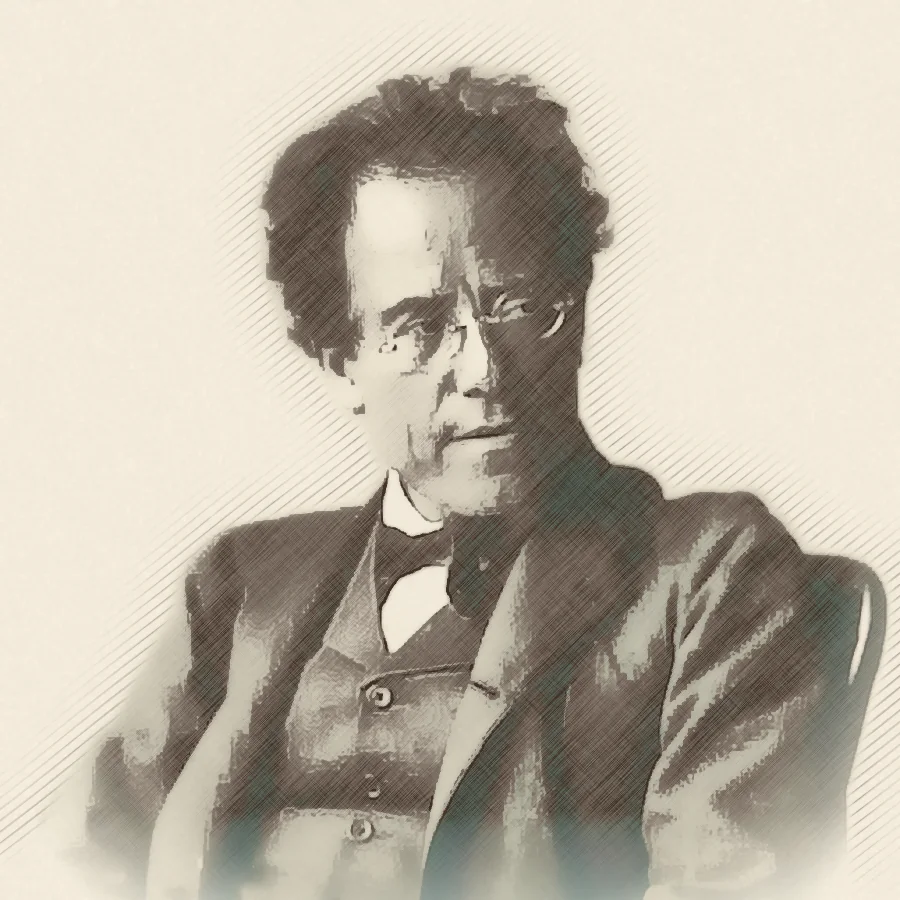
 Late Romantic
Gustav Mahler
His vast symphonies confront nature, irony, love and existential questions.
A life and its times
The milestones of the life and work, the contemporaries and the major world events, on a single line of time.
A life at a glance
- 1860Birth
Born in Kaliště on 7 July; childhood in Jihlava
- 1865Meanwhile
End of the American Civil War; slavery abolished in the USA
- 1869Meanwhile
The Suez Canal opens
- 1874Meanwhile
First exhibition of the Impressionist painters
- 1875Trainingage 15
Enters the Vienna Conservatory
- 1875Meanwhile
The Palais Garnier opera house opens in Paris
- 1880Careerage 20
First conducting post at a small spa
- 1888Careerage 28
Director of the Budapest Opera; completes his Symphony No. 1
- 1889Meanwhile
The Eiffel Tower opens for the World’s Fair
- 1891Careerage 31
Principal conductor at the Hamburg Opera
- 1893Milestoneage 33
Composes in summer in a little hut on Lake Attersee
- 1895Workage 35
Premiere of Symphony No. 2 ‘Resurrection’
- 1895Meanwhile
The Lumière brothers’ first cinema show
- 1897Careerage 37
Director of the Vienna Court Opera
- 1902Private lifeage 42
Marries Alma Schindler; Symphony No. 5 and its Adagietto
- 1903Meanwhile
First powered aeroplane flight (Wright brothers)
- 1905Meanwhile
Einstein publishes special relativity
- 1907Private lifeage 47
Death of his daughter Maria; leaves Vienna
- 1908Careerage 48
Conductor at the Metropolitan Opera then the New York Philharmonic
- 1908Workage 48
Das Lied von der Erde
- 1910Workage 50
Triumph of the Symphony No. 8 ‘of a Thousand’ in Munich
- 1911Deathage 51
Dies in Vienna on 18 May
Listen
Excerpts from freely licensed recordings, with their performers and licences.
Excerpts last up to 90 seconds. Gustav Mahler’s compositions are in the public domain; each recording is streamed from Wikimedia Commons under the licence shown, credited to its performers or uploader.
Listen to complete works on Wikimedia Commons
Wikimedia Commons is a free media library: you will find the complete recordings there, with their reuse conditions.
- Complete recordingSymphony No. 5 — Funeral March
- Complete recordingSymphony No. 9 — I (Bruno Walter, 1938)
- Complete recordingSymphony No. 3 — the great trombone solo
- Search for the workSymphony No. 5
- Search for the workSymphony No. 2 ‘Resurrection’
- Search for the workSymphony No. 1 ‘Titan’
- Search for the workSymphony No. 8 ‘of a Thousand’
- Search for the workDas Lied von der Erde
- Search for the workKindertotenlieder
- Search for the workSymphony No. 9
- Everything on CommonsAll recordings of Gustav Mahler
The life of Gustav Mahler
Gustav Mahler was born on 7 July 1860 at Kaliště, a village in Bohemia, into a German-speaking Jewish family. A few months later the family moved to Jihlava (Iglau) in Moravia, where his father ran a distillery and tavern. Of fourteen children, eight died young, and these losses marked Gustav deeply. He grew up to the sound of military bands from the nearby barracks, folk songs and bells, which later appear in his symphonies. At ten he gave his first piano recital.
In 1875 he entered the Vienna Conservatory, where he studied piano, harmony and composition. He also attended university lectures and befriended the composer Hugo Wolf. He admired Bruckner and attended his lectures. After his studies, unable to live from his compositions, he chose the profession of conductor. In 1880 he obtained his first post in a small spa town in Upper Austria, Bad Hall, conducting operettas.
He then rose rapidly: Ljubljana, Olomouc, Kassel, Prague, Leipzig. In 1888, aged twenty-eight, he became director of the Royal Opera in Budapest and in 1891 principal conductor at the Hamburg Opera. He was a demanding, authoritarian conductor who imposed strict discipline on musicians but achieved extraordinary results. He composed mainly in summer: from 1893 he retreated to the shores of Lake Attersee, to a small isolated hut where no one was to disturb him. He said: “I am a summer composer.”
In 1897 he converted to Catholicism, then a necessary condition for the most prestigious post in Europe: director of the Vienna Court Opera. For ten years he transformed the institution, modernised stagings with the painter Alfred Roller, barred latecomers from entering during performances and had the house lights dimmed. He also conducted the Vienna Philharmonic. But his methods and the antisemitism of some circles earned him many enemies.
His symphonies are immense in length and in forces. Mahler said: “The symphony must be like the world; it must embrace everything.” He mixed folk songs, military marches, waltzes, chorales, birdsong and meditations on life and death. His Symphony No. 1, “Titan” (1888), quotes the nursery round Frère Jacques in a minor key, like a funeral march; the Second, “Resurrection” (1895), ends with a triumphant chorus; the Fifth (1902) contains the famous Adagietto, a declaration of love to his wife.
In 1902 he married Alma Schindler, a brilliant twenty-two-year-old and a composer herself, whom he unfortunately asked to give up composing. They had two daughters. In 1907 Mahler had a terrible year: his elder daughter Maria died of diphtheria, he was diagnosed with a heart condition, and he left the Vienna Opera. He went to New York, where he conducted the Metropolitan Opera and then the New York Philharmonic. He composed Das Lied von der Erde (1908), on Chinese poems, and the Ninth Symphony (1909), a farewell to life.
On 12 September 1910 he conducted in Munich the triumphant premiere of his Symphony No. 8, nicknamed the “Symphony of a Thousand” because of its gigantic forces of more than a thousand musicians and singers. It was the greatest success of his life. Gravely ill, he returned to Vienna in spring 1911 and died there on 18 May, aged fifty, leaving his Tenth Symphony unfinished. He had predicted: “My time will come.” Long neglected and banned by the Nazis, his music has enjoyed worldwide success since the 1960s.
Works to know
- 1888
Symphony No. 1 ‘Titan’
With ‘Frère Jacques’ as a funeral march!
Listen on Wikimedia Commons - 1894
Symphony No. 2 ‘Resurrection’
Final fresco with choir and organ.
Listen on Wikimedia Commons - 1902
Symphony No. 5
From funeral march to the loving Adagietto.
Listen on Wikimedia Commons - 1904
Kindertotenlieder
Five heartbreaking songs.
Listen on Wikimedia Commons - 1906
Symphony No. 8 ‘of a Thousand’
Premiered with over 1,000 performers.
Listen on Wikimedia Commons - 1908
Das Lied von der Erde
Song-symphony on Chinese poems.
Listen on Wikimedia Commons - 1910
Symphony No. 9
A poignant farewell to life.
Listen on Wikimedia Commons
Anecdotes
His Symphony No. 8 was premiered with over 1,000 musicians and singers.
He said: ‘My time will come.’ He was right!
In his Symphony No. 1 he turns the nursery round Frère Jacques into a minor-key funeral march.
He composed in summer in a small isolated hut by a lake and called himself a “summer composer”.
Same era · Late Romantic
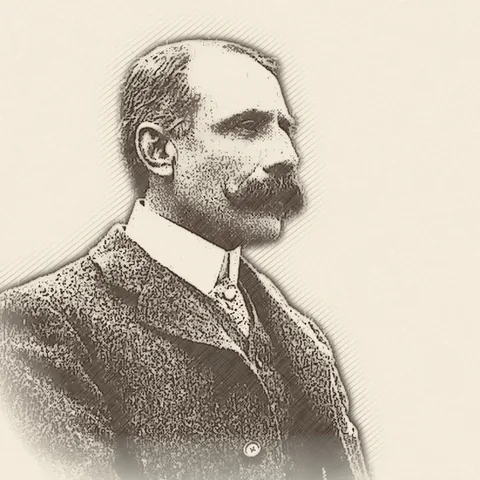 1857 – 1934Late Romantic
Edward Elgar
An English composer combining orchestral grandeur and intimate lyricism.
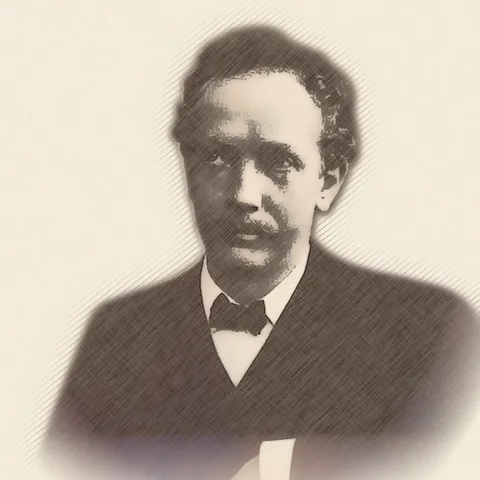 1864 – 1949Late Romantic
Richard Strauss
He pushed Romantic orchestration toward extraordinary richness and contrast.
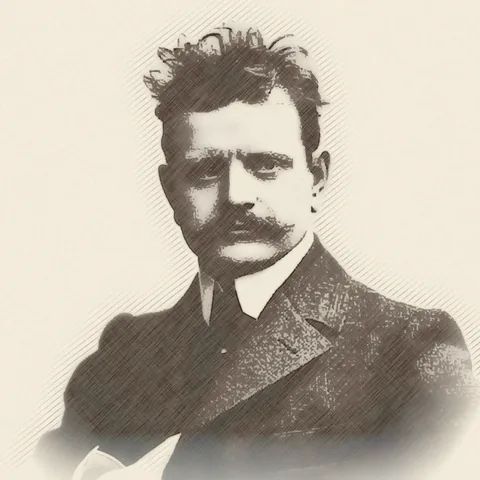 1865 – 1957Late Romantic
Jean Sibelius
He composed organic forms inspired by Finnish landscapes and culture.
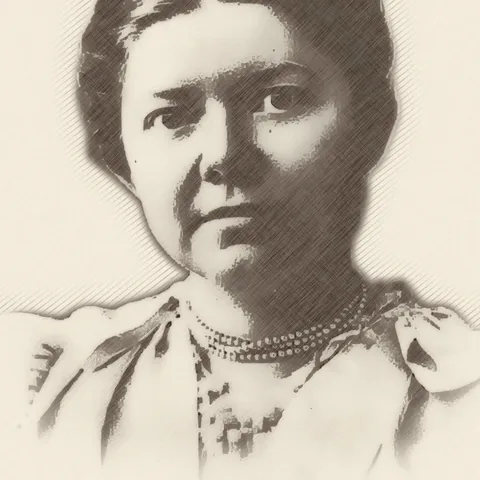 1867 – 1944Late Romantic
Amy Beach
An American pianist and composer who excelled in symphonic and chamber music.
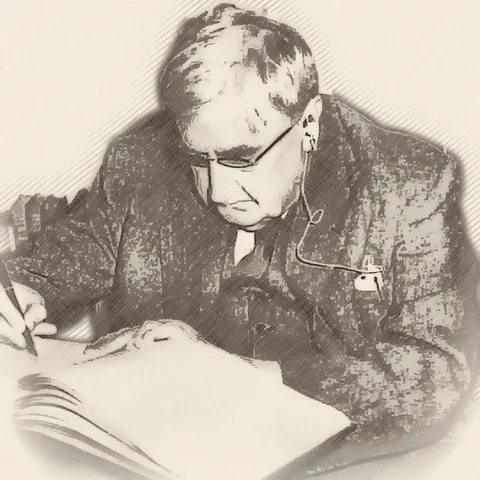 1872 – 1958Late Romantic
Ralph Vaughan Williams
An English composer inspired by folk songs and choral tradition.
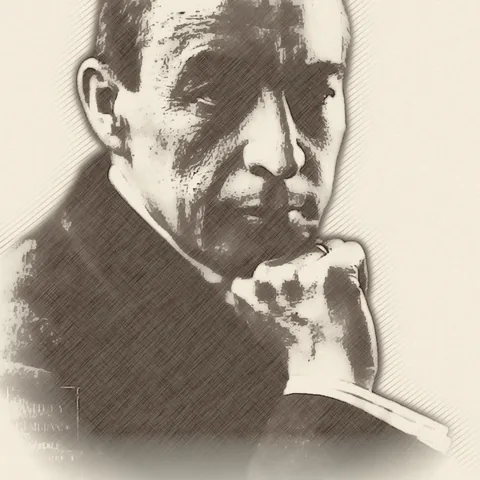 1873 – 1943Late Romantic
Sergueï Rachmaninov
A virtuoso pianist, he carried Russian lyric Romanticism into the twentieth century.