 20th century and today
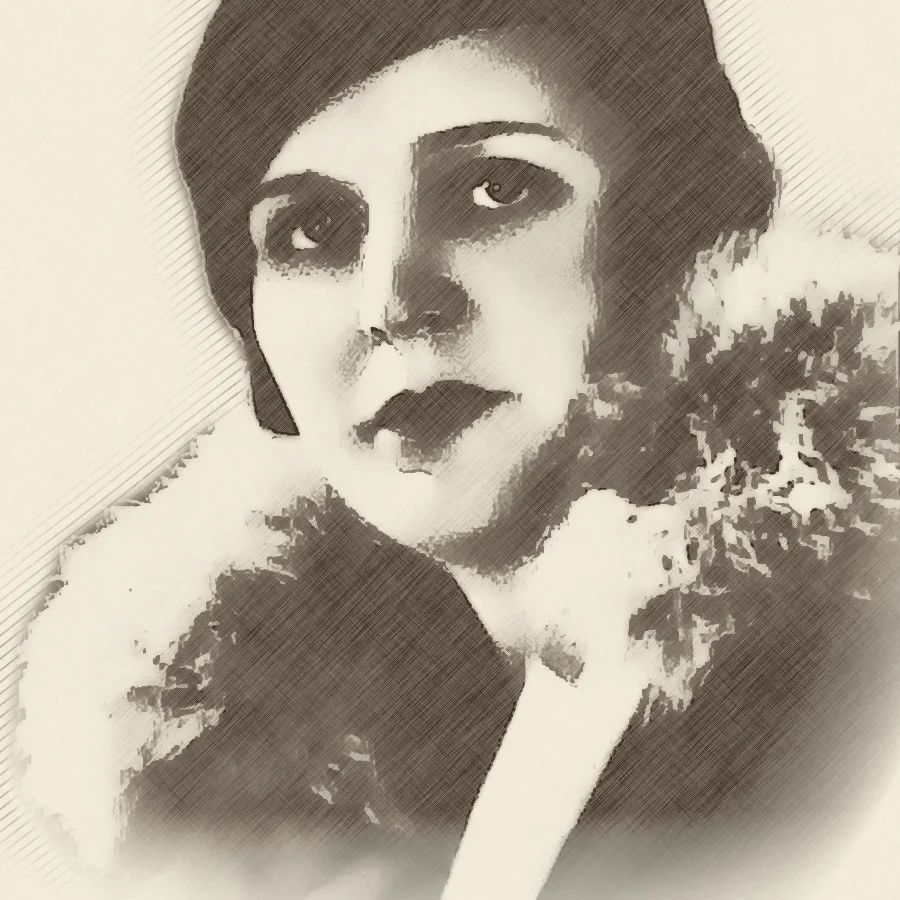
Germaine Tailleferre
The only woman in Les Six, she wrote inventive, clear music for stage and concert.
A life and its times
The milestones of the life and work, the contemporaries and the major world events, on a single line of time.
A life at a glance
- 1892Birth
Born on 19 April in Saint-Maur-des-Fossés (Marcelle Taillefesse)
- 1903Meanwhile
First powered aeroplane flight (Wright brothers)
- 1904Trainingage 12
Enters the Conservatoire despite her father’s opposition
- 1912Private lifeage 20
Changes her name to ‘Tailleferre’ to stand up to her father
- 1913Trainingage 21
Befriends Milhaud, Honegger and Auric at the Conservatoire
- 1917Workage 25
Jeux de plein air: Satie calls her his ‘musical daughter’
- 1917Meanwhile
Russian Revolution
- 1920Careerage 28
The only woman in ‘Les Six’
- 1923Workage 31
Le Marchand d’oiseaux (ballet); Piano Concerto
- 1925Journeyage 33
Stay in the United States; meets Charlie Chaplin
- 1927Workage 35
Harp Concertino, premiered in Boston
- 1927Meanwhile
First talking picture (The Jazz Singer)
- 1942Journeyage 50
Refugee in the United States during the war
- 1945Meanwhile
End of the Second World War; United Nations founded
- 1948Meanwhile
The long-playing record (LP) goes on sale
- 1950Workage 58
Operas for radio
- 1964Meanwhile
Robert Moog presents his synthesizer
- 1969Meanwhile
First steps on the Moon
- 1976Careerage 84
Teaches music to children at the École alsacienne
- 1982Meanwhile
The compact disc (CD) is launched
- 1983Deathage 91
Dies in Paris on 7 November, aged 91
Listen
Excerpts from freely licensed recordings, with their performers and licences.
Germaine Tailleferre’s music is still protected by copyright: to respect the rights holders, no excerpt is hosted here. You can hear it on the radio, in concert or on licensed streaming platforms.
Listen to complete works on Wikimedia Commons
Wikimedia Commons is a free media library: you will find the complete recordings there, with their reuse conditions.
The life of Germaine Tailleferre
Marcelle Germaine Taillefesse was born on 19 April 1892 at Saint-Maur-des-Fossés near Paris. Her mother, an amateur musician, taught her the piano and encouraged her gifts, but her authoritarian father opposed her making music her profession, which he thought unworthy of a young woman. In 1904 she nevertheless entered the Paris Conservatoire thanks to her mother’s support, who paid for her lessons in secret. She won many first prizes there, in solfège, harmony, counterpoint and accompaniment.
In 1912, to assert her independence and break symbolically with her father, she changed her surname to “Tailleferre”. At the Conservatoire she became friends with Darius Milhaud, Arthur Honegger and Georges Auric. Together they frequented the studios of the painters of Montmartre and Montparnasse, such as Picasso, Modigliani and Marie Laurencin, and took an interest in the newest art. Germaine also played the harp, for which she would compose many works.
In 1917 she composed Jeux de plein air for two pianos, a fresh and humorous work. Erik Satie heard it and at once called her his “musical daughter”. He invited her to take part in the concerts of the “Nouveaux Jeunes”. In 1920 a critic, Henri Collet, published an article on six young composers — Milhaud, Honegger, Auric, Poulenc, Durey and Tailleferre — whom he dubbed “Les Six”, echoing the Russian “Five”. Germaine was the only woman. Les Six, gathered around Jean Cocteau, championed simple, clear, joyful music, free from the influence of Wagner and Impressionism.
In 1921 they composed together Les Mariés de la tour Eiffel, a farce by Cocteau for the Ballets Suédois. That same year Tailleferre wrote her Violin Sonata No. 1, dedicated to the violinist Jacques Thibaud. In 1923 she composed Le Marchand d’oiseaux for the Ballets Suédois, a great success, and a Piano Concerto, premiered by Alfred Cortot. Maurice Ravel, whom she admired, gave her advice on orchestration and encouraged her to compete for the Prix de Rome.
In 1925 she went to the United States, where she performed as a pianist and met Charlie Chaplin. There in 1926 she married the American caricaturist Ralph Barton, a very jealous man who resented her success and prevented her from composing; the couple divorced a few years later. In 1927 her Concertino for harp and orchestra was premiered in Boston by the harpist Carlos Salzedo and became one of her most performed works. Back in France she married a lawyer, Jean Lageat, with whom she had a daughter, Françoise, but this second marriage was also difficult.
During the Second World War she took refuge in the United States with her daughter and composed little. She returned to France in 1946. In the 1950s and 1960s she composed a great deal in many genres: radio operas, film and documentary scores, concertos, pieces for harp, such as the Petit Livre de harpe (1955), and for piano. She wrote serious works and light music with equal ease and continued to collaborate with her old friends from Les Six.
Often in financial difficulty, she sometimes had to sell her manuscripts and accept modest commissions. Past eighty she became an accompanist and music teacher for children at the École alsacienne in Paris, where she taught from 1976. She composed until the end of her life and died in Paris on 7 November 1983, aged ninety-one, the last surviving member of Les Six. Her work, long neglected, is now being rediscovered and recorded.
Works to know
- 1917
Jeux de plein air
For two pianos: outdoor children’s games.
- 1921
Violin Sonata No. 1
Elegant chamber music.
- 1923
Le Marchand d’oiseaux
Fresh, colourful ballet.
- 1923
Ballade for piano and orchestra
Poetic early piece.
- 1927
Harp Concertino
Luminous work, among the most played in the harp repertoire.
- 1955
Petit Livre de harpe
Pieces for young harpists.
Anecdotes
She changed her surname so as not to bear her father’s name.
She met Charlie Chaplin in Hollywood.
Erik Satie called her his “musical daughter”.
She was the last surviving member of Les Six.
Same era · 20th century and today
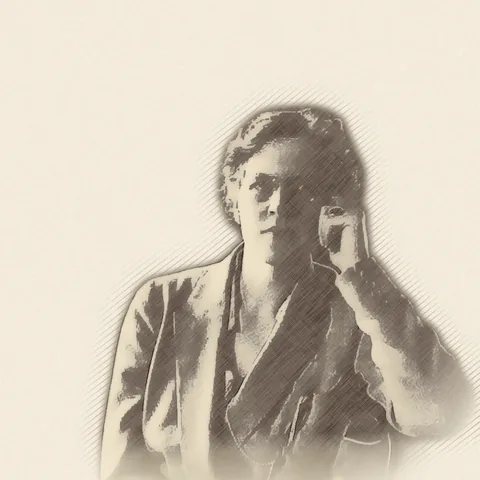 1887 – 197920th century and today
Nadia Boulanger
A teacher and conductor who influenced generations of musicians.
 1898 – 193720th century and today
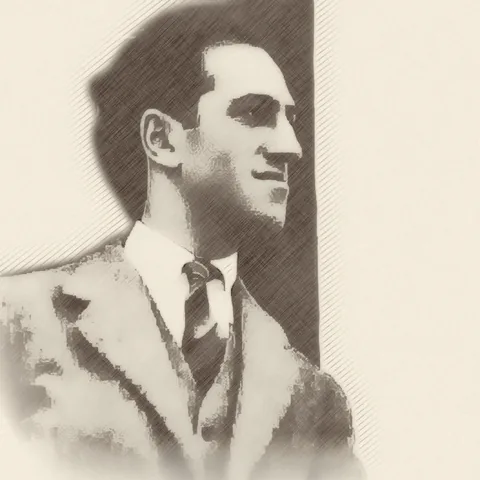
George Gershwin
An American composer who bridged jazz, Broadway and concert music.
 1899 – 196320th century and today
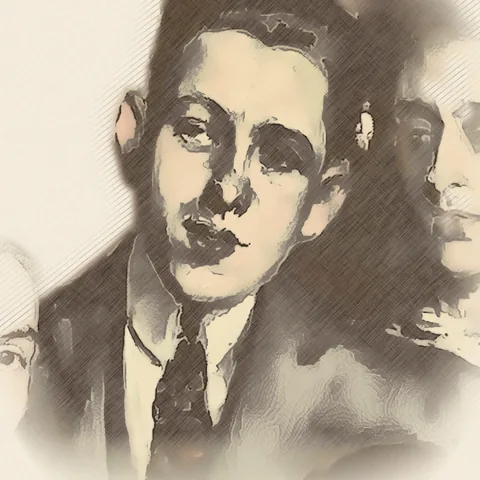
Francis Poulenc
A member of Les Six, he combined wit with profound spiritual expression.
 1900 – 199020th century and today
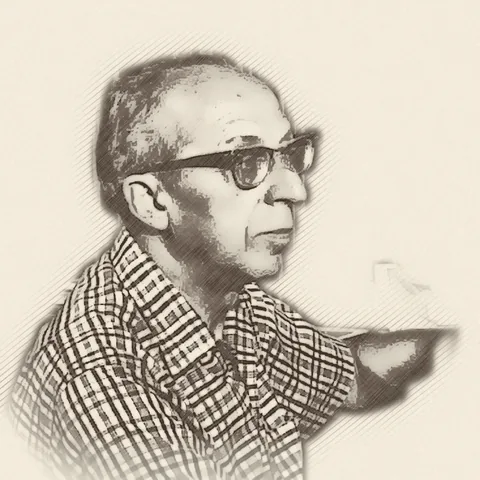
Aaron Copland
He developed an open American sound drawing on dance and folk traditions.
 1910 – 198120th century and today
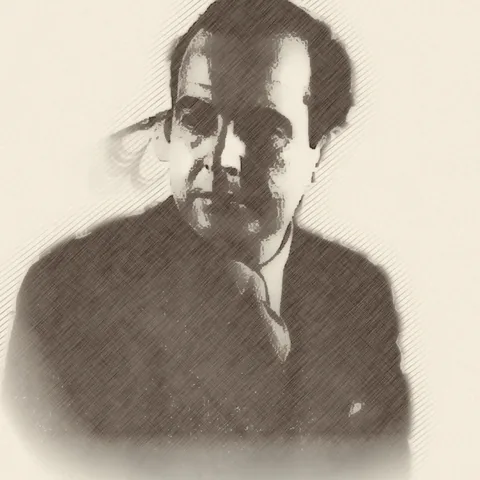
Samuel Barber
A lyrical American composer who wrote for voice, strings and orchestra.
 1912 – 199220th century and today
John Cage
A radical experimenter who questioned chance, silence and the act of listening.