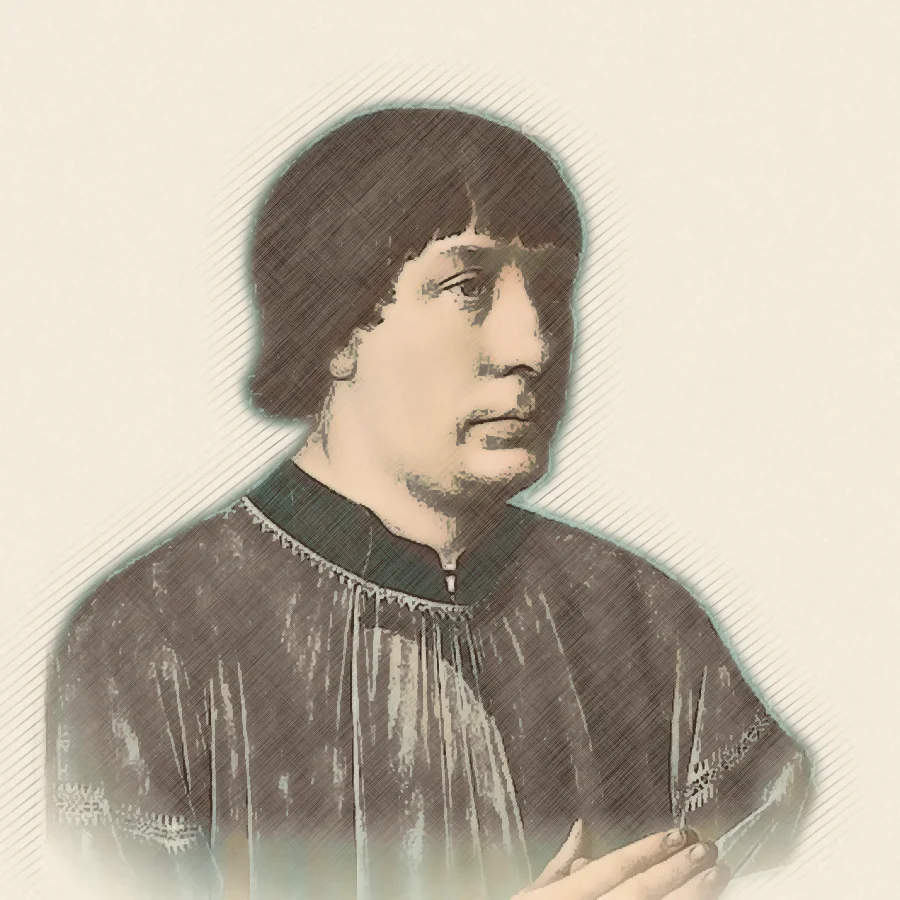
 Renaissance
Jacob Obrecht
A Franco-Flemish composer celebrated for inventive polyphonic masses.
A life and its times
The milestones of the life and work, the contemporaries and the major world events, on a single line of time.
A life at a glance
- 1457Birth
Born in Ghent, son of the city trumpeter Willem Obrecht
- 1480Careerabout age 23
Choirmaster in Bergen op Zoom
- 1484Careerabout age 27
Master of the choirboys in Cambrai
- 1485Careerabout age 28
Succentor at St Donatian’s, Bruges
- 1487Journeyabout age 30
Stay in Ferrara with Duke Ercole d’Este
- 1492Careerabout age 35
Choirmaster at Notre-Dame, Antwerp
- 1492Landmarkabout age 35
Columbus reaches the Americas
- 1492Meanwhile
Christopher Columbus reaches the Americas
- 1501Meanwhile
Petrucci publishes the first printed book of music in Venice
- 1503Workabout age 46
Petrucci prints a book of his Masses in Venice
- 1503Meanwhile
Leonardo da Vinci begins the Mona Lisa
- 1504Careerabout age 47
Returns to Ferrara as chapel master
- 1505Deathabout age 48
Dies of plague in Ferrara
Listen
Excerpts from freely licensed recordings, with their performers and licences.
Jacob Obrecht’s music is in the public domain, but Wikimedia Commons does not yet offer a freely licensed recording of these works. The links below lead to scores and searches on Commons; as soon as a free recording is published, it can be added here.
Listen to complete works on Wikimedia Commons
Wikimedia Commons is a free media library: you will find the complete recordings there, with their reuse conditions.
The life of Jacob Obrecht
Jacob Obrecht was born in Ghent, Flanders, around 1457–58. He was the son of Willem Obrecht, the city trumpeter, who played at festivals, processions and official ceremonies. Young Jacob thus grew up with instrumental and civic music before turning to church music. He may have studied at the University of Leuven, and he became a priest, like most composers of his time.
His career unfolded in the great churches of the Low Countries, where he often changed posts. Around 1480 he was choirmaster at Bergen op Zoom. In 1484 he was hired as master of the choirboys at Cambrai Cathedral, Du Fay’s city, but stayed only briefly: the canons complained that he kept poor accounts and neglected the boys’ upkeep. In 1485 he became succentor, in charge of music, at the church of St Donatian in Bruges, one of the richest in Flanders.
His reputation reached Italy. In 1487 he obtained leave to travel to Ferrara, to Duke Ercole I d’Este, a great music lover who had heard his masses and wished to meet him. He spent several months there and made a strong impression. Back in Flanders he again held posts in Bruges, then in 1492 became choirmaster at Our Lady’s in Antwerp, before returning to Bergen op Zoom and Bruges.
Obrecht was above all a composer of masses: some thirty are attributed to him, a remarkable number. He took the cantus firmus technique — building a mass on a pre-existing sacred or secular melody — very far. In the Missa Caput and the Missa Fortuna desperata he cut the borrowed melody into fragments, passed it from voice to voice, slowed it down or sped it up, and sometimes turned it upside down. Some masses are built on popular Flemish songs, such as Tsat een meskin, “A girl was sitting”.
His masterpiece is the Missa Maria zart, one of the longest polyphonic masses of its time: almost an hour of music, built on a German devotional song. Musicologists have also noticed, in some of his masses, structures based on symbolic numbers that organise the number of bars or notes. Obrecht also loved bright sonorities, energetic rhythms and sequences, motifs repeated at different pitches, which give his music a very recognisable drive.
He also wrote motets, such as Salve crux and Salve Regina, and secular songs in Dutch, French and Italian. Several of his pieces, lacking complete texts in the sources, were probably played on instruments, a reminder of his origins as a trumpeter’s son. In 1503 the Venetian publisher Ottaviano Petrucci printed a collection of his masses, proof of his international fame, just after the one devoted to Josquin.
In 1504 Obrecht returned to Ferrara to become the duke’s choirmaster. But Duke Ercole died in January 1505 and plague struck the city soon after. Obrecht fell victim to it and died in Ferrara in late summer 1505. Less known today than Josquin, he is nonetheless regarded as one of the greatest mass composers of the Renaissance, and the modern edition of his works has revealed music full of brilliance and invention.
Works to know
- 1480
Missa Caput
Mass on an already famous English chant.
Listen on Wikimedia Commons - 1490
Missa Fortuna desperata
Mass on a fashionable Italian song.
Listen on Wikimedia Commons - 1490
Salve crux
Solemn five-voice motet.
Listen on Wikimedia Commons - 1490
Tsat een meskin
Flemish song often played on instruments.
Listen on Wikimedia Commons - 1495
Missa Maria zart
Immense Mass over an hour long on a German devotional song.
Listen on Wikimedia Commons - 1495
Missa Sub tuum presidium
The number of voices grows from movement to movement.
Listen on Wikimedia Commons
Anecdotes
His Missa Maria zart is one of the longest polyphonic Masses of the Renaissance.
His father was the official trumpeter of Ghent.
He died of plague in Ferrara in 1505, a year after returning there.
In Cambrai the canons criticised him for keeping poor accounts, and he had to leave his post.
Same era · Renaissance
 c. 1390 – 1453Renaissance
John Dunstaple
His English music helped spread a new harmonic language across Europe.
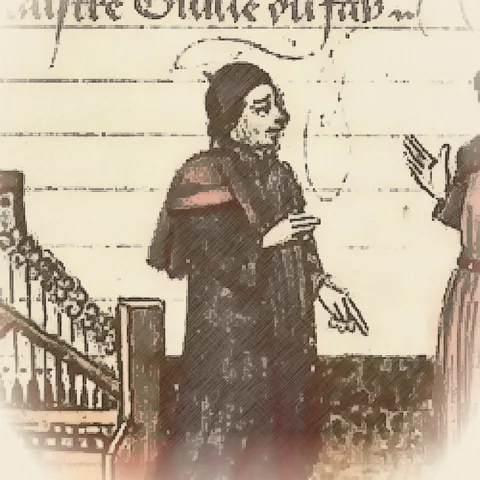 c. 1397 – 1474Renaissance
Guillaume Dufay
Working between France and Italy, he bridged medieval traditions and Renaissance style.
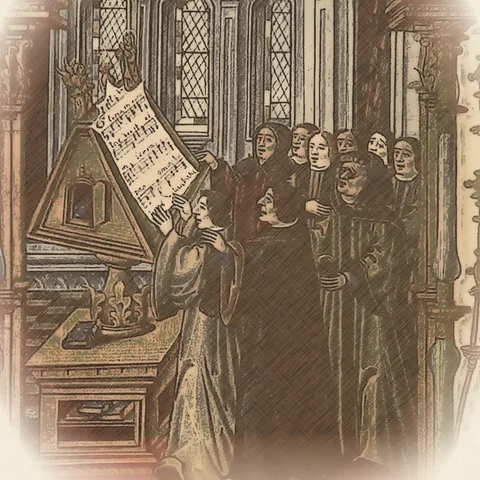 c. 1410 – 1497Renaissance
Johannes Ockeghem
A Franco-Flemish singer and composer, he developed remarkably sophisticated vocal counterpoint.
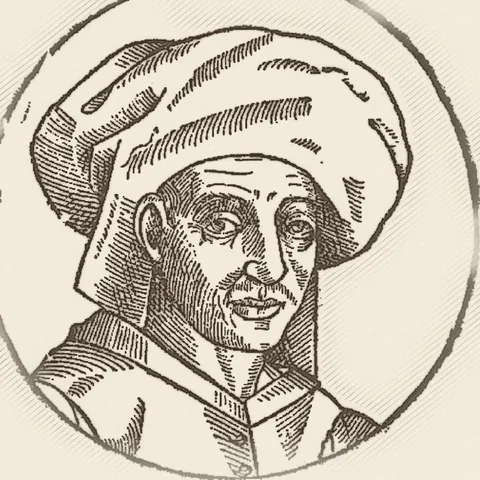 c. 1450 – 1521Renaissance
Josquin des Prez
His music lets voices converse with striking expressive clarity.
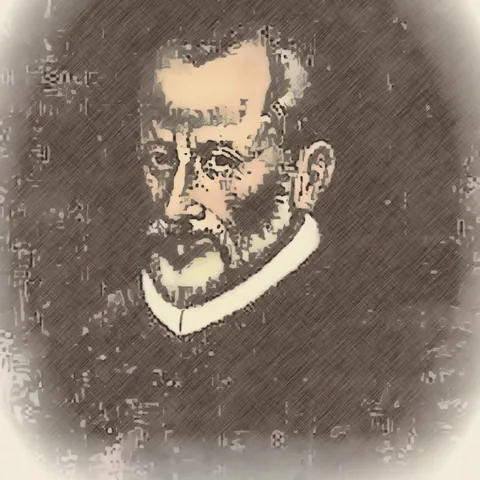 c. 1525 – 1594Renaissance
Giovanni Pierluigi da Palestrina
He epitomized balanced vocal polyphony in Renaissance sacred music.
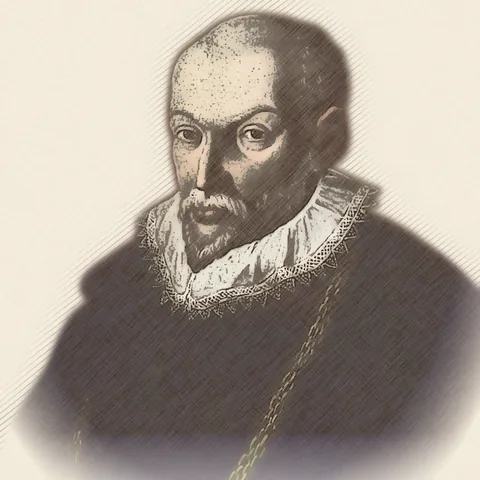 1532 – 1594Renaissance
Orlando di Lasso
A cosmopolitan musician based in Munich, he wrote in many languages and genres.