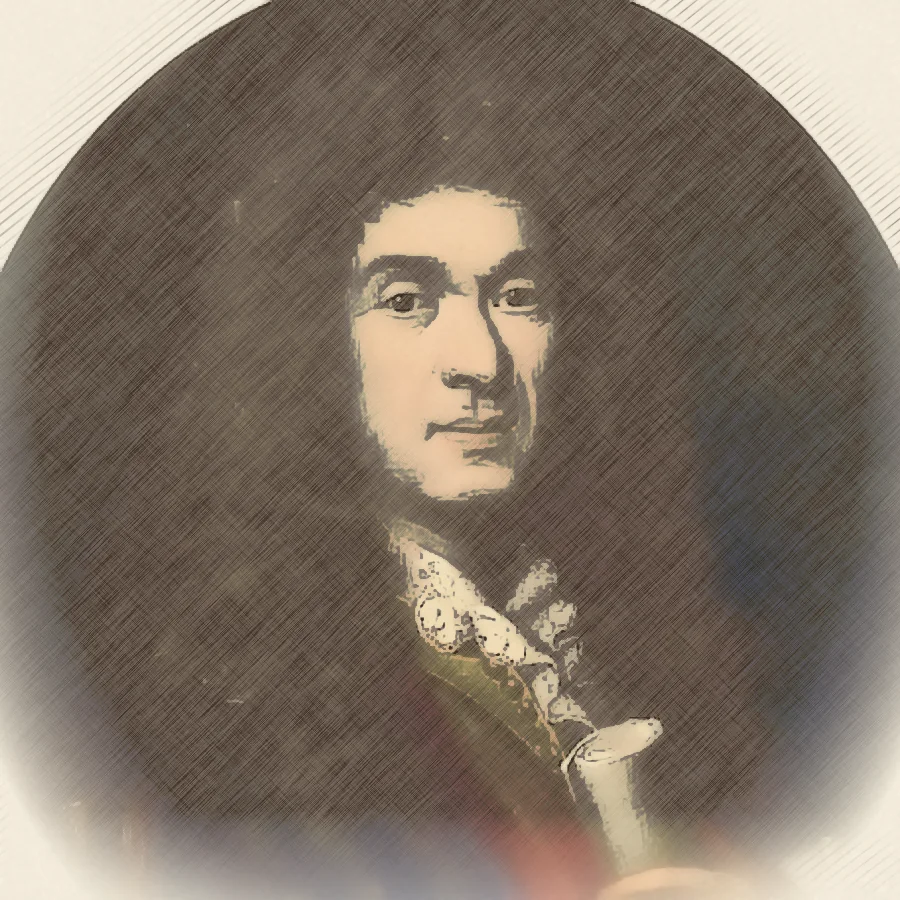
 Baroque
Jean-Baptiste Lully
At Louis XIV's court, he shaped French opera and ballet music.
A life and its times
The milestones of the life and work, the contemporaries and the major world events, on a single line of time.
A life at a glance
- 1632Birth
Born in Florence on 28 November, son of a miller
- 1637Meanwhile
The first public opera house opens in Venice
- 1643Meanwhile
Louis XIV becomes King of France aged four
- 1646Journeyage 14
Arrives in Paris in the service of the Grande Mademoiselle
- 1648Meanwhile
Peace of Westphalia ends the Thirty Years’ War
- 1653Careerage 21
Dances with the young Louis XIV in the Ballet royal de la Nuit
- 1653Careerage 21
Composer of the king’s instrumental music
- 1661Careerage 29
Superintendent of the King’s Chamber Music; becomes French
- 1662Private lifeage 30
Marries Madeleine Lambert, daughter of the musician Michel Lambert
- 1664Workage 32
First comédie-ballet with Molière: Le Mariage forcé
- 1666Meanwhile
Great Fire of London
- 1669Meanwhile
The Royal Academy of Music (Paris Opera) is founded
- 1670Workage 38
Le Bourgeois gentilhomme with Molière
- 1672Careerage 40
Obtains the privilege of the Royal Academy of Music (the Opéra)
- 1673Workage 41
Cadmus et Hermione, the first French tragédie en musique
- 1676Workage 44
Atys, nicknamed ‘the King’s opera’
- 1682Landmarkage 50
The court settles at Versailles
- 1682Meanwhile
The French court moves to Versailles
- 1686Workage 54
Armide, his masterpiece
- 1687Deathage 55
Strikes his foot with his staff while conducting a Te Deum; dies on 22 March
- 1687Meanwhile
Newton publishes the laws of gravitation
Listen
Excerpts from freely licensed recordings, with their performers and licences.
Excerpts last up to 90 seconds. Jean-Baptiste Lully’s compositions are in the public domain; each recording is streamed from Wikimedia Commons under the licence shown, credited to its performers or uploader.
Listen to complete works on Wikimedia Commons
Wikimedia Commons is a free media library: you will find the complete recordings there, with their reuse conditions.
- Complete recordingLe Bourgeois gentilhomme — March for the Turkish Ceremony
- Complete recordingLe Bourgeois gentilhomme — Overture
- Complete recordingLe Bourgeois gentilhomme — Minuets
- Wikimedia Commons fileLe Bourgeois Gentilhomme - Marche pour la Ceremonie des Turcs
- Search for the workArmide
- Search for the workAtys
- Search for the workLe Bourgeois gentilhomme
- Search for the workTe Deum
- Search for the workCadmus et Hermione
- Search for the workBallet royal de la Nuit
- Everything on CommonsAll recordings of Jean-Baptiste Lully
The life of Jean-Baptiste Lully
Giovanni Battista Lulli was born in Florence on 28 November 1632, the son of a miller. A lively, gifted child, he learned guitar and violin from a Franciscan friar. In 1646, aged thirteen, he was spotted by the Chevalier de Guise, who took him to Paris to serve his niece Anne-Marie-Louise d’Orléans, Duchess of Montpensier, known as La Grande Mademoiselle, cousin of the young Louis XIV. Officially employed to converse with her in Italian, he worked in the kitchens but perfected his violin and dancing.
After the Fronde La Grande Mademoiselle was exiled, and Lully, unwilling to leave Paris, obtained his release. In 1653 he danced alongside the fourteen-year-old king in the Ballet royal de la Nuit, in which Louis XIV appeared as the Rising Sun. The king noticed him and appointed him composer of the court’s instrumental music. Lully took charge of the king’s “Petits Violons”, an ensemble he drilled with unprecedented rigour: playing together, precise attacks, uniform ornaments. This orchestral style became a model throughout Europe.
In 1661, the year Louis XIV began his personal rule, Lully was appointed superintendent of the music of the King’s Chamber and became a French citizen. In 1662 he married Madeleine Lambert, daughter of the famous singer and composer Michel Lambert, with whom he had six children. A skilful courtier, ambitious and sometimes ruthless with rivals, he became one of the most powerful and wealthy men at court.
From 1664 to 1671 he worked with Molière to create a new genre, the comédie-ballet, combining theatre, music and dance: Le Mariage forcé, George Dandin, Monsieur de Pourceaugnac and above all Le Bourgeois gentilhomme (1670), with its famous Turkish ceremony. Lully sometimes played comic roles himself. But the two fell out in 1672, when Lully obtained for himself alone the privilege of the Académie royale de musique — the Opéra — giving him a monopoly on sung entertainments in France.
With the poet Philippe Quinault, Lully then invented the tragédie en musique, French-style opera. Cadmus et Hermione (1673) opened a series of a dozen works, almost one a year: Alceste, Thésée, Atys (1676), nicknamed “the king’s opera” because Louis XIV loved it so, Persée, Phaéton, Amadis, Roland and Armide (1686), his masterpiece. These operas begin with a “French overture” — a slow, majestic section followed by a fast one — and give a central place to recitative modelled on the declamation of tragic actors, to choruses and to ballets.
Lully also composed grands motets for the royal chapel, such as the Miserere and the Te Deum (1677). On 8 January 1687 he conducted this Te Deum to celebrate the king’s recovery. At the time, the beat was kept by striking the floor with a long staff. Carried away, Lully struck his own foot violently. The wound became infected and gangrene set in, but he refused amputation, perhaps so that he could still dance. He died in Paris on 22 March 1687.
Lully left a vast fortune and a style that dominated French music for almost a century. His model of opera was taken up by Rameau, and the French overture was imitated by Purcell, Handel and Bach. He turned the orchestra into a precise, disciplined machine and gave the court of Versailles music to match its splendour.
Works to know
- 1653
Ballet royal de la Nuit
Ballet in which Louis XIV appears as the Rising Sun.
Listen on Wikimedia Commons - 1670
Le Bourgeois gentilhomme
Comédie-ballet with Molière and the famous Turkish March.
Listen on Wikimedia Commons - 1673
Cadmus et Hermione
The birth certificate of French opera.
Listen on Wikimedia Commons - 1676
Atys
Refined, tragic opera, much loved by Louis XIV.
Listen on Wikimedia Commons - 1677
Te Deum
Grand ceremonial motet, fatal to its composer.
Listen on Wikimedia Commons - 1686
Armide
Tragédie en musique: the sorceress Armide falls in love with her enemy.
Listen on Wikimedia Commons
Anecdotes
Louis XIV owes his nickname ‘Sun King’ partly to a Lully ballet in which he danced as the sun.
A miller’s son, Lully became the most powerful man in French music.
He arrived in France as a kitchen boy for La Grande Mademoiselle.
He himself played the Mufti in the Turkish ceremony of Le Bourgeois gentilhomme.
Same era · Baroque
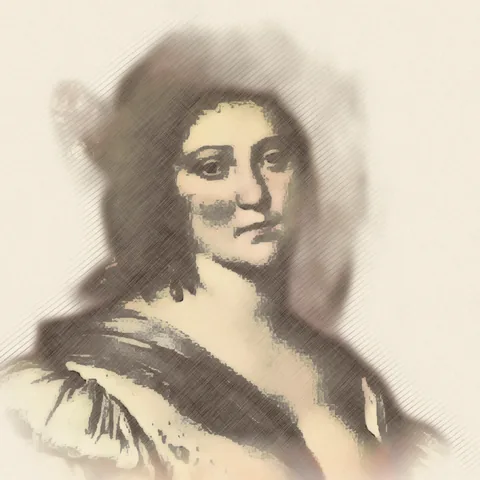 1619 – 1677Baroque
Barbara Strozzi
A Venetian singer and composer who published extensive vocal collections under her own name.
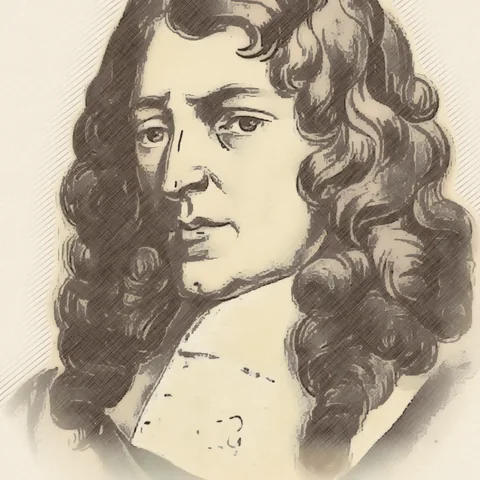 1643 – 1704Baroque
Marc-Antoine Charpentier
A French composer of sacred and theatre music, he mastered Italian style.
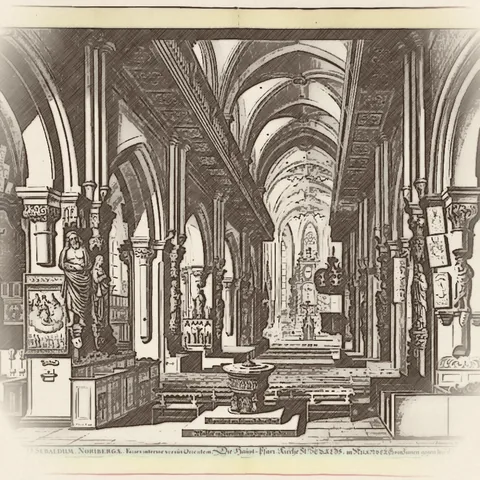 1653 – 1706Baroque
Johann Pachelbel
A German organist who influenced the south German keyboard tradition.
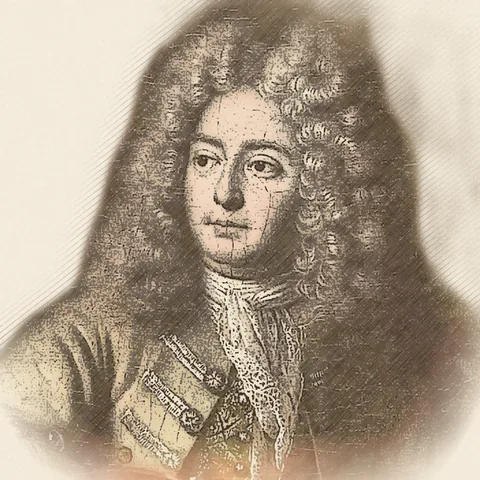 1656 – 1728Baroque
Marin Marais
A court musician under Louis XIV, he elevated the viola da gamba as a solo instrument.
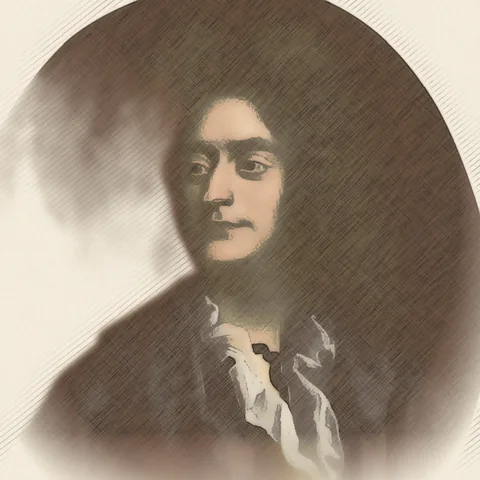 1659 – 1695Baroque
Henry Purcell
His stage music blends melodic subtlety and emotional force.
 1668 – 1733Baroque
François Couperin
A French court harpsichordist, he blended French elegance and Italian influences.