 Baroque
Johann Pachelbel
A German organist who influenced the south German keyboard tradition.
A life and its times
The milestones of the life and work, the contemporaries and the major world events, on a single line of time.
A life at a glance
And after his or her death: 1 landmark in the detailed timeline (1968).
- 1653Birth
Baptised in Nuremberg on 1 September
- 1666Meanwhile
Great Fire of London
- 1669Trainingage 16
Studies at the University of Altdorf, then in Regensburg
- 1669Meanwhile
The Royal Academy of Music (Paris Opera) is founded
- 1673Careerage 20
Deputy organist at St Stephen’s Cathedral, Vienna
- 1677Careerage 24
Court organist in Eisenach, home of the Bach family
- 1678Careerage 25
Organist of the Predigerkirche in Erfurt (12 years)
- 1682Meanwhile
The French court moves to Versailles
- 1683Workage 30
Loses his wife and son to plague; Musikalische Sterbens-Gedancken
- 1684Private lifeage 31
Marries Judith Drommer; teaches J. S. Bach’s elder brother
- 1687Meanwhile
Newton publishes the laws of gravitation
- 1690Careerage 37
Organist in Stuttgart then Gotha
- 1695Milestoneage 42
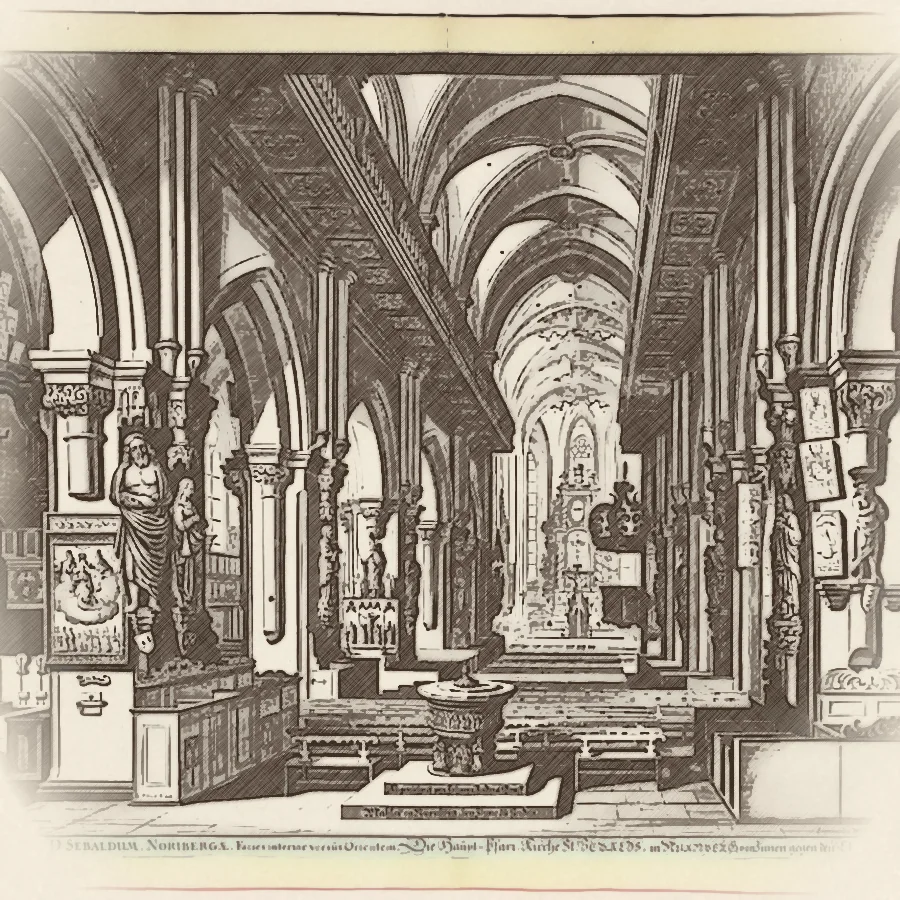
Returns to Nuremberg as organist of St Sebaldus
- 1699Workage 46
Hexachordum Apollinis, six arias with variations
- 1700Meanwhile
Bartolomeo Cristofori invents the piano in Florence (c. 1700)
- 1706Deathage 53
Dies in Nuremberg on 3 March
- 1968Landmark262 years after death
A recording makes the Canon a worldwide hit
Listen
Excerpts from freely licensed recordings, with their performers and licences.
Excerpts last up to 90 seconds. Johann Pachelbel’s compositions are in the public domain; each recording is streamed from Wikimedia Commons under the licence shown, credited to its performers or uploader.
Listen to complete works on Wikimedia Commons
Wikimedia Commons is a free media library: you will find the complete recordings there, with their reuse conditions.
- Complete recordingCanon in D major
- Complete recordingChaconne in F minor (organ)
- Complete recordingToccata in E minor (organ)
- Search for the workCanon and Gigue in D major
- Search for the workHexachordum Apollinis
- Search for the workMusikalische Sterbens-Gedancken
- Search for the workChaconne in F minor
- Search for the workMagnificat fugues
- Everything on CommonsAll recordings of Johann Pachelbel
The life of Johann Pachelbel
Johann Pachelbel was baptised in Nuremberg on 1 September 1653. The son of a wine merchant, he showed an early aptitude for music and study. He attended the city’s schools, took music lessons and in 1669 entered the University of Altdorf near Nuremberg. Lacking money, he had to break off his studies after a year, but won a scholarship to the gymnasium poeticum in Regensburg, where he continued his musical training.
Around 1673 he moved to Vienna and became deputy organist of St Stephen’s Cathedral. There he discovered the music of southern Catholic composers, heirs of Frescobaldi, such as Johann Kaspar Kerll. A Lutheran, he nonetheless held a post in a Catholic church, proof of his talent. In 1677 he went to Eisenach, home town of the Bach family, where he was court organist. There he befriended Johann Ambrosius Bach, Johann Sebastian’s father, and became godfather to one of his daughters.
In 1678 he was appointed organist of the Predigerkirche in Erfurt, one of the most important posts in Thuringia. He stayed twelve years. His contract required him to compose and give each year a grand organ recital showing the full range of his art. Erfurt saw his most fruitful years, but also his most painful: in 1683 plague took his first wife, Barbara Gabler, and their son. The same year he published Musikalische Sterbens-Gedancken, chorale variations on the theme of death.
In 1684 he married Judith Drommer, a coppersmith’s daughter, with whom he had seven children, several of whom became musicians, such as Wilhelm Hieronymus and Charles Theodore, who emigrated to America. In Erfurt he also taught Johann Christoph Bach, Johann Sebastian’s elder brother. When Johann Sebastian, orphaned at ten, was taken in by Johann Christoph, Pachelbel’s art was passed on to him partly through his brother.
After Erfurt, Pachelbel was organist in Stuttgart in 1690 but had to flee the city as French troops invaded. He moved on to Gotha and returned in 1695 to his native Nuremberg as organist of St Sebaldus, one of the city’s most prestigious posts. There in 1699 he published Hexachordum Apollinis, six keyboard arias with variations dedicated to Dietrich Buxtehude and Ferdinand Tobias Richter, two great organists of the day.
Pachelbel left a substantial body of organ music: more than two hundred pieces, including many chorale preludes, Magnificat fugues (nearly a hundred), toccatas and chaconnes, such as the fine Chaconne in F minor. He also wrote sacred vocal music and chamber music. His clear, melodious style combines the Italian Catholic tradition of the south with the Lutheran tradition of the north. He is one of the major figures of the German organ school before Bach.
He died in Nuremberg on 3 March 1706. For a long time only organists knew his name. But in 1968 a recording of his Canon and Gigue in D major by Jean-François Paillard’s chamber orchestra became an unexpected worldwide hit. The Canon, built on an eight-note bass repeated twenty-eight times, became one of the most played pieces of classical music in the world, especially at weddings, and inspired countless pop songs.
Works to know
- 1683
Musikalische Sterbens-Gedancken
Chorale variations written after bereavement.
Listen on Wikimedia Commons - 1690
Canon and Gigue in D major
Three violins in canon over a repeating bass — a global hit.
Listen on Wikimedia Commons - 1693
Chaconne in F minor
Grand, dark organ chaconne.
Listen on Wikimedia Commons - 1693
Magnificat fugues
Some 95 short organ fugues.
Listen on Wikimedia Commons - 1699
Hexachordum Apollinis
Six arias with variations for keyboard.
Listen on Wikimedia Commons
Anecdotes
In the Canon the bass repeats the same 8 notes… 28 times!
His Canon remained almost unknown until 1919.
He taught music to Johann Sebastian Bach’s elder brother.
He was godfather to one of Johann Sebastian Bach’s sisters.
Same era · Baroque
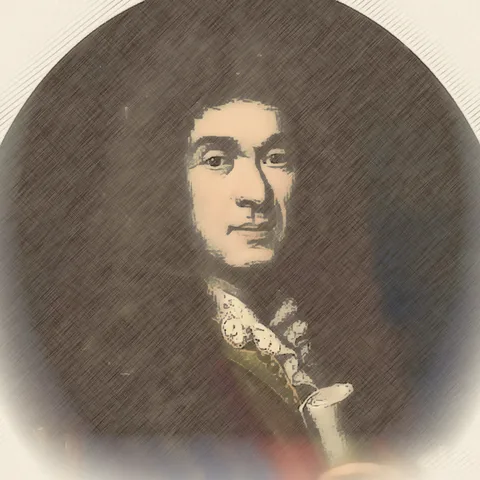 1632 – 1687Baroque
Jean-Baptiste Lully
At Louis XIV's court, he shaped French opera and ballet music.
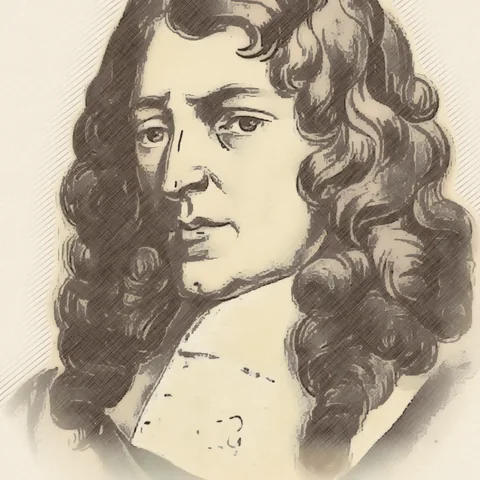 1643 – 1704Baroque
Marc-Antoine Charpentier
A French composer of sacred and theatre music, he mastered Italian style.
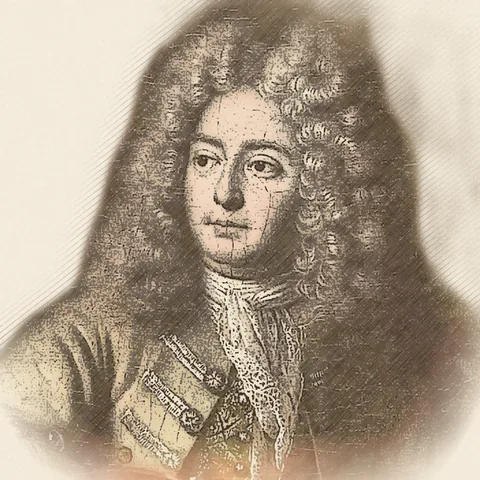 1656 – 1728Baroque
Marin Marais
A court musician under Louis XIV, he elevated the viola da gamba as a solo instrument.
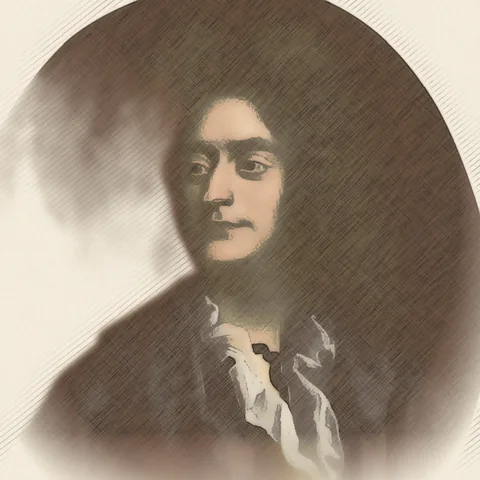 1659 – 1695Baroque
Henry Purcell
His stage music blends melodic subtlety and emotional force.
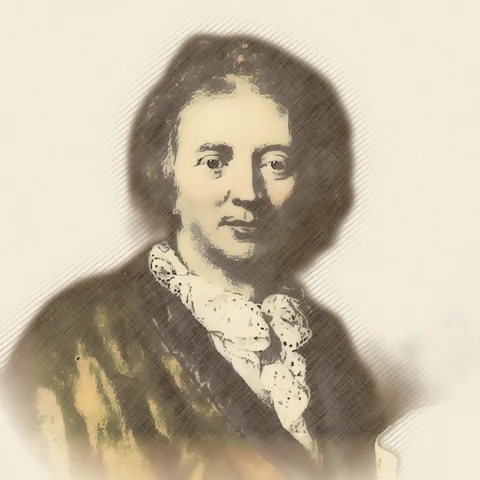 1668 – 1733Baroque
François Couperin
A French court harpsichordist, he blended French elegance and Italian influences.
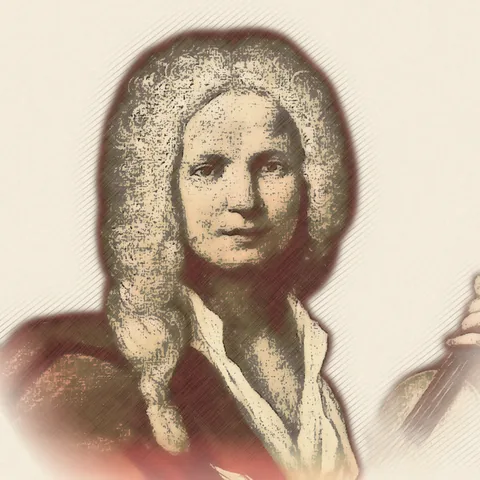 1678 – 1741Baroque
Antonio Vivaldi
A Venetian violinist and priest, he reshaped the concerto through contrast and virtuosity.