 Classical
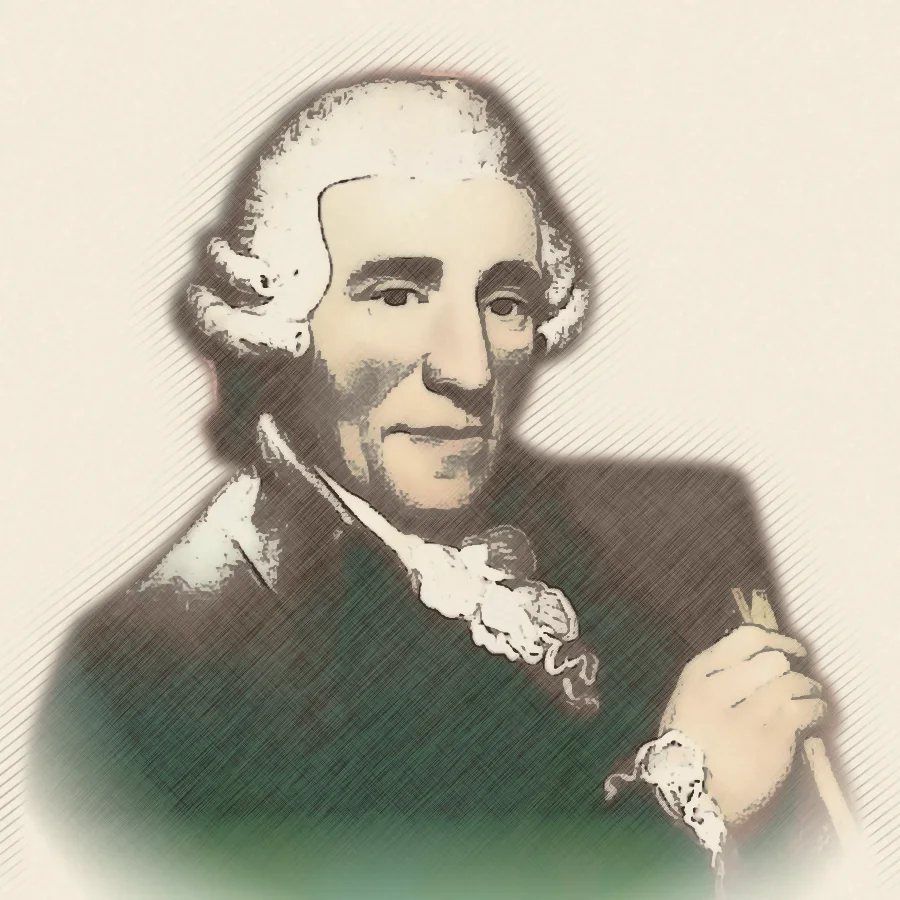
Joseph Haydn
A major figure in symphony and quartet, he combined invention, humor and balance.
A life and its times
The milestones of the life and work, the contemporaries and the major world events, on a single line of time.
A life at a glance
- 1732Birth
Born in Rohrau on 31 March, son of a wheelwright
- 1740Trainingage 8
Choirboy at St Stephen’s Cathedral, Vienna
- 1749Careerage 17
Dismissed when his voice breaks; lives from lessons and odd jobs
- 1751Meanwhile
First volume of Diderot and d’Alembert’s Encyclopédie
- 1755Meanwhile
The Lisbon earthquake
- 1759Workage 27
First symphony, for Count Morzin
- 1761Careerage 29
Enters the service of the Esterházy princes
- 1766Careerage 34
Kapellmeister at the splendid Eszterháza palace
- 1769Meanwhile
James Watt’s improved steam engine
- 1772Workage 40
‘Farewell’ Symphony
- 1776Meanwhile
United States Declaration of Independence
- 1778Meanwhile
La Scala opera house opens in Milan
- 1781Workage 49
String Quartets Op. 33; friendship with Mozart
- 1789Meanwhile
Storming of the Bastille: the French Revolution
- 1791Journeyage 59
First triumphant trip to London; Oxford doctorate
- 1792Workage 60
Symphony No. 94 ‘Surprise’
- 1792Trainingage 60
Teaches the young Beethoven
- 1795Meanwhile
The Paris Conservatoire is founded
- 1797Workage 65
Emperor’s Hymn (tune of today’s German anthem)
- 1798Workage 66
The Creation
- 1801Workage 69
The Seasons
- 1804Meanwhile
Napoleon crowned emperor
- 1809Deathage 77
Dies in Vienna on 31 May, during the French occupation
Listen
Excerpts from freely licensed recordings, with their performers and licences.
Excerpts last up to 90 seconds. Joseph Haydn’s compositions are in the public domain; each recording is streamed from Wikimedia Commons under the licence shown, credited to its performers or uploader.
Listen to complete works on Wikimedia Commons
Wikimedia Commons is a free media library: you will find the complete recordings there, with their reuse conditions.
- Complete recordingSymphony No. 94 “Surprise” — Andante
- Complete recordingSymphony No. 100 “Military” — Allegretto
- Complete recordingThe Creation — The Representation of Chaos
- Wikimedia Commons fileHaydn; Symphony No. 94 "Surprise", 1. Adagio – Vivace assai
- Search for the workSymphony No. 94 ‘Surprise’
- Search for the workThe Creation
- Search for the workSymphony No. 45 ‘Farewell’
- Search for the work‘Emperor’ Quartet, Op. 76 No. 3
- Search for the workTrumpet Concerto
- Search for the workThe Seasons
- Everything on CommonsAll recordings of Joseph Haydn
The life of Joseph Haydn
Joseph Haydn was born on 31 March 1732 at Rohrau, a village in Lower Austria near the Hungarian border. His father, a wheelwright, played the harp by ear, and the whole family loved to sing. Noticed for his voice, little Joseph was sent at six to a relative, a schoolmaster in Hainburg, who taught him the rudiments of music. In 1740 the choirmaster of St Stephen’s Cathedral in Vienna, Georg Reutter, heard him sing and engaged him as a choirboy.
Haydn spent nine years in the cathedral choir school, singing at great court ceremonies but receiving little teaching in composition. When his voice broke in 1749 he was dismissed — according to the anecdote, after cutting off a classmate’s pigtail. He found himself on the street, penniless. For several years he lived on lessons, serenades played in the streets and odd jobs. He taught himself from counterpoint treatises and the sonatas of Carl Philipp Emanuel Bach, and became valet and accompanist to the Italian composer Nicola Porpora, who taught him a great deal.
Around 1757 he became music director to Count Morzin, for whom he wrote his first symphonies. In 1760 he married Maria Anna Keller; the marriage was unhappy and childless. In 1761 he entered the service of the princely Esterházy family, one of the richest in Hungary. He stayed nearly thirty years, first as deputy Kapellmeister and from 1766 as Kapellmeister. Prince Nikolaus, known as “the Magnificent”, built the palace of Eszterháza, a “Hungarian Versailles”, with an opera house and a puppet theatre.
At Eszterháza Haydn directed an orchestra of about twenty musicians and an opera company, composing constantly: symphonies, operas, chamber music and nearly two hundred pieces for the baryton, a string instrument the prince played. Cut off from the world, he was, as he said, “forced to become original”. In 1772, to let the prince know his musicians wanted to go home, he wrote the “Farewell” Symphony: at the end the musicians snuff out their candles and leave the stage one by one. The prince understood and gave everyone leave the next day.
Haydn invented or perfected the great forms of classical music: the symphony, of which he wrote 104, and the string quartet, of which he composed nearly seventy. His Op. 33 Quartets (1781), written “in a completely new manner”, impressed Mozart, with whom he formed a deep friendship. He told Mozart’s father that his son was the greatest composer he knew. Mozart dedicated six quartets to him in return.
When Prince Nikolaus died in 1790, Haydn, now free, accepted the invitation of the impresario Johann Peter Salomon and went to London. His two visits (1791–92 and 1794–95) were triumphs. He composed his twelve London Symphonies, including No. 94, the “Surprise”, with its sudden timpani stroke to wake drowsy listeners. Oxford University made him an honorary doctor. On his return he gave lessons to the young Beethoven.
Inspired by the Handel oratorios he heard in London, he composed The Creation (1798) and The Seasons (1801), both enormously successful. In 1797 he wrote the Emperor’s Hymn, whose melody is now that of the German national anthem. He died in Vienna on 31 May 1809, during Napoleon’s occupation of the city; Napoleon placed a guard of honour outside his house. Nicknamed “Papa Haydn”, he is regarded as the father of the symphony and the string quartet.
Works to know
- 1772
Symphony No. 45 ‘Farewell’
The musicians leave the stage one by one.
Listen on Wikimedia Commons - 1792
Symphony No. 94 ‘Surprise’
A sudden fortissimo wakes up drowsy listeners!
Listen on Wikimedia Commons - 1796
Trumpet Concerto
Written for a new keyed trumpet.
Listen on Wikimedia Commons - 1797
‘Emperor’ Quartet, Op. 76 No. 3
Variations on his imperial hymn.
Listen on Wikimedia Commons - 1798
The Creation
Oratorio of the world’s creation, from chaos to light.
Listen on Wikimedia Commons - 1801
The Seasons
Oratorio on country life through the year.
Listen on Wikimedia Commons
Anecdotes
In the ‘Farewell’ Symphony the musicians blow out their candles and leave one by one.
The tune of the German national anthem was composed by Haydn.
He composed nearly two hundred pieces for the baryton, a rare instrument his prince played.
Napoleon placed a guard of honour outside his house during his last days.
Same era · Classical
 1714 – 1788Classical
Carl Philipp Emanuel Bach
Son of J. S. Bach, he helped shape an expressive transitional style.
 1714 – 1787Classical
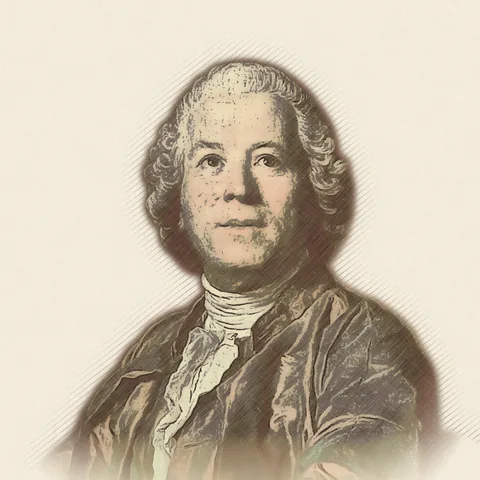
Christoph Willibald Gluck
He reformed opera by prioritizing drama over vocal display.
 1743 – 1805Classical
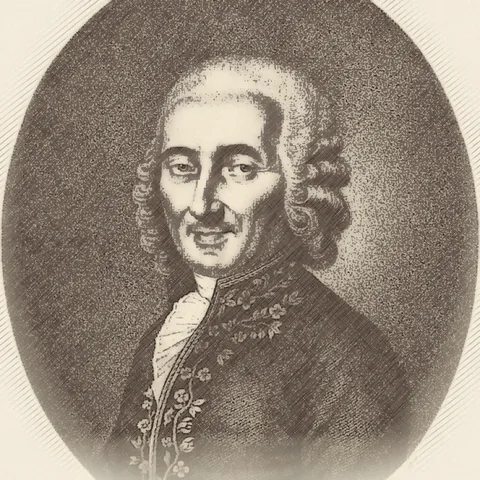
Luigi Boccherini
A virtuoso cellist who greatly expanded classical chamber music.
 1752 – 1832Classical
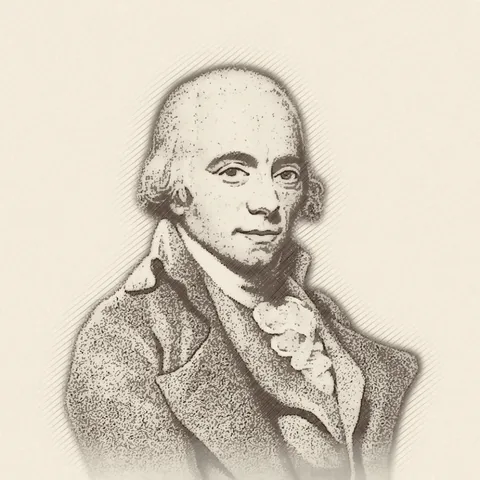
Muzio Clementi
Pianist, publisher and piano maker, he shaped modern piano technique.
 1756 – 1791Classical
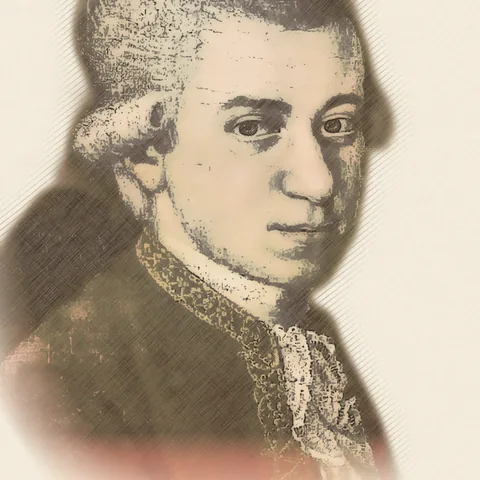
Wolfgang Amadeus Mozart
A child prodigy who mastered opera and symphony, he combined grace with emotional depth.