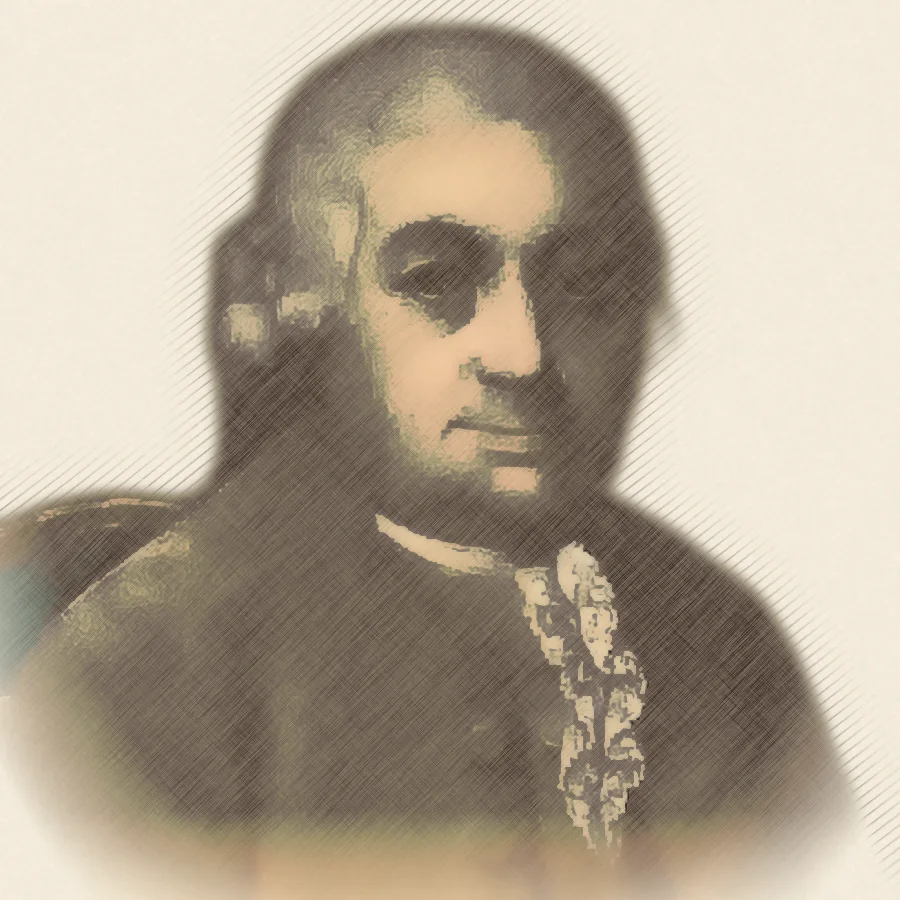
 Classical
Carl Philipp Emanuel Bach
Son of J. S. Bach, he helped shape an expressive transitional style.
A life and its times
The milestones of the life and work, the contemporaries and the major world events, on a single line of time.
A life at a glance
- 1714Birth
Born in Weimar on 8 March; Telemann is his godfather
- 1715Meanwhile
Death of Louis XIV
- 1719Meanwhile
Defoe publishes Robinson Crusoe
- 1723Milestoneage 9
Follows his father Johann Sebastian to Leipzig
- 1731Trainingage 17
Studies law in Leipzig, then Frankfurt an der Oder
- 1738Careerage 24
Enters the service of Crown Prince Frederick of Prussia
- 1740Careerage 26
Harpsichordist to Frederick the Great in Berlin and Potsdam
- 1742Workage 28
Prussian Sonatas
- 1749Workage 35
Magnificat
- 1751Meanwhile
First volume of Diderot and d’Alembert’s Encyclopédie
- 1753Workage 39
Essay on the True Art of Playing Keyboard Instruments
- 1755Meanwhile
The Lisbon earthquake
- 1768Milestoneage 54
Succeeds Telemann as music director in Hamburg
- 1769Meanwhile
James Watt’s improved steam engine
- 1776Meanwhile
United States Declaration of Independence
- 1778Meanwhile
La Scala opera house opens in Milan
- 1779Workage 65
Collections of sonatas ‘for connoisseurs and amateurs’
- 1783Meanwhile
First manned flight in a hot-air balloon
- 1788Deathage 74
Dies in Hamburg on 14 December
- 1789Landmark1 year after death
French Revolution
Listen
Excerpts from freely licensed recordings, with their performers and licences.
Excerpts last up to 90 seconds. Carl Philipp Emanuel Bach’s compositions are in the public domain; each recording is streamed from Wikimedia Commons under the licence shown, credited to its performers or uploader.
Listen to complete works on Wikimedia Commons
Wikimedia Commons is a free media library: you will find the complete recordings there, with their reuse conditions.
- Complete recordingSolfeggietto in C minor
- Complete recordingFlute Concerto in G major — Presto
- Search for the workSolfeggietto in C minor
- Search for the workMagnificat
- Search for the workEssay on the True Art of Playing…
- Search for the workPrussian Sonatas
- Search for the workFlute Concerto in G major
- Search for the workFantasia in F-sharp minor
- Everything on CommonsAll recordings of Carl Philipp Emanuel Bach
The life of Carl Philipp Emanuel Bach
Carl Philipp Emanuel Bach was born in Weimar on 8 March 1714. He was the second surviving son of Johann Sebastian Bach and his first wife, Maria Barbara. His godfather was none other than Georg Philipp Telemann, then the most famous composer in Germany, whose name he bore. In 1723 he followed his father to Leipzig, where he attended St Thomas’s School. His father was his only music teacher: he taught him keyboard and composition and involved him early in copying and performing his works.
Left-handed, Carl Philipp Emanuel could not play the violin properly and devoted himself to the keyboard. Like his elder brother Wilhelm Friedemann, he first studied law, at the University of Leipzig in 1731 and then at Frankfurt an der Oder in 1734, where he also directed concerts. In 1738 he gave up a legal career and entered the service of the Crown Prince of Prussia, Frederick, a great music lover and flautist himself, then living at Ruppin.
When Frederick became king in 1740 — he would be known as Frederick the Great — Carl Philipp Emanuel followed him to Berlin and Potsdam as court harpsichordist. He stayed nearly thirty years. His main task was to accompany the king’s flute concerts on the harpsichord, almost every evening. But the king had conservative tastes and preferred the music of his flute teacher, Johann Joachim Quantz, who was far better paid. Bach felt underappreciated despite his growing reputation.
In 1742 he published the Prussian Sonatas, dedicated to the king, and in 1744 the Württemberg Sonatas. In 1744 he married Johanna Maria Dannemann, a wine merchant’s daughter. In 1747 it was thanks to him that his father was invited to Potsdam, where Johann Sebastian improvised before Frederick II on a theme given by the king. In 1749 he composed a brilliant Magnificat, perhaps as an application to succeed his father in Leipzig.
In 1753 he published the first part of his Essay on the True Art of Playing Keyboard Instruments, a treatise that became the reference of its age. In it he explains fingering, ornaments, accompaniment and above all the art of expression: the musician must be moved himself in order to move his audience. Haydn read it avidly, and Beethoven still recommended it to his pupils. Bach was also a master of the clavichord, a small, intimate instrument on which the sound can be shaded and notes made to vibrate.
In 1768 he succeeded his godfather Telemann as director of music for the five main churches of Hamburg. There he composed much sacred music — Passions, cantatas, oratorios — and organised public concerts. But he devoted himself above all to keyboard music: from 1779 to 1787 he published six collections of sonatas, rondos and fantasias “for connoisseurs and amateurs”. His free, unpredictable fantasias, full of silences, sudden changes and surprising harmonies, represent the so-called “sensitive style” (empfindsamer Stil) and foreshadow Romanticism.
He died in Hamburg on 14 December 1788, a few months before the French Revolution. In his lifetime he was far more famous than his father: when people then spoke of “the great Bach”, they often meant him. Mozart is reported to have said: “He is the father, we are the children.” His Solfeggietto in C minor remains a favourite piece of young pianists. He links his father’s Baroque age to the Classicism of Haydn, Mozart and Beethoven.
Works to know
- 1742
Prussian Sonatas
Keyboard sonatas dedicated to Frederick II.
Listen on Wikimedia Commons - 1749
Magnificat
Brilliant large choral work.
Listen on Wikimedia Commons - 1753
Essay on the True Art of Playing…
The method that trained Haydn, Mozart and Beethoven.
Listen on Wikimedia Commons - 1755
Flute Concerto in G major
For the court of a flute-playing king.
Listen on Wikimedia Commons - 1766
Solfeggietto in C minor
Lively little piece played by every piano student.
Listen on Wikimedia Commons - 1787
Fantasia in F-sharp minor
Turbulent, unpredictable late work.
Listen on Wikimedia Commons
Anecdotes
In his lifetime, ‘the great Bach’ meant him, not his father!
He loved the clavichord, a soft little keyboard that lets notes vibrate.
Being left-handed, he could not play the violin well and devoted himself to the keyboard.
Mozart is reported to have said of him: “He is the father, we are the children.”
Same era · Classical
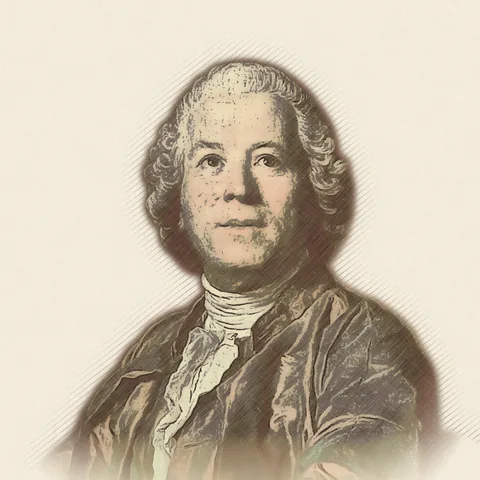 1714 – 1787Classical
Christoph Willibald Gluck
He reformed opera by prioritizing drama over vocal display.
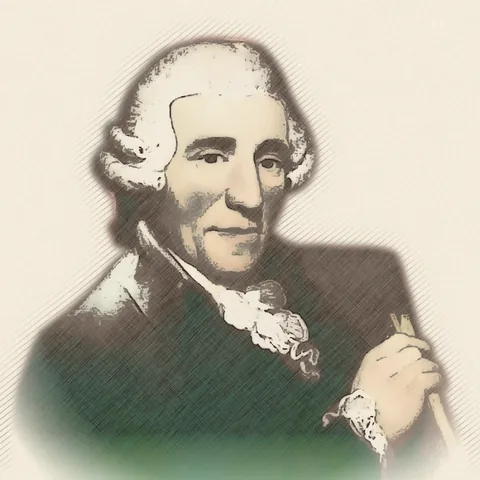 1732 – 1809Classical
Joseph Haydn
A major figure in symphony and quartet, he combined invention, humor and balance.
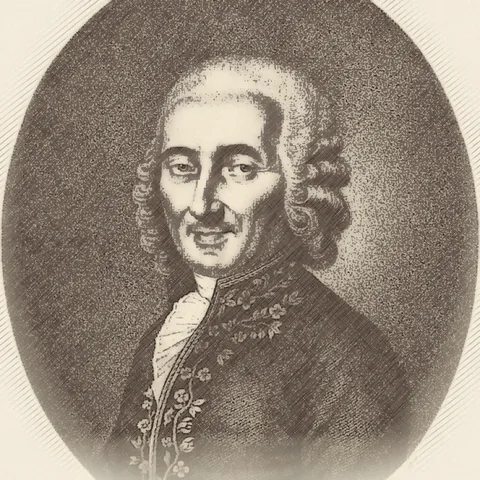 1743 – 1805Classical
Luigi Boccherini
A virtuoso cellist who greatly expanded classical chamber music.
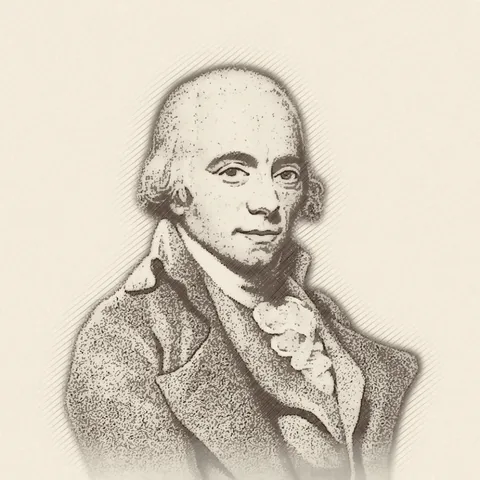 1752 – 1832Classical
Muzio Clementi
Pianist, publisher and piano maker, he shaped modern piano technique.
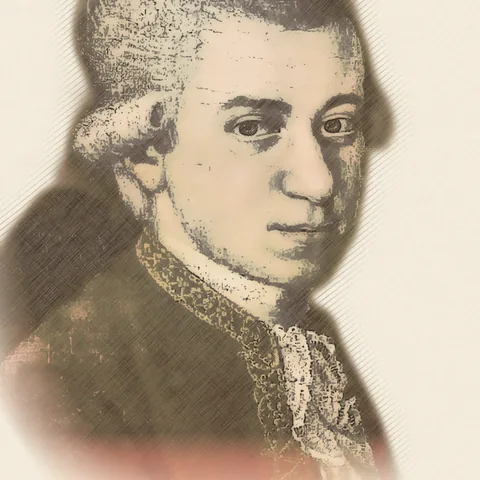 1756 – 1791Classical
Wolfgang Amadeus Mozart
A child prodigy who mastered opera and symphony, he combined grace with emotional depth.