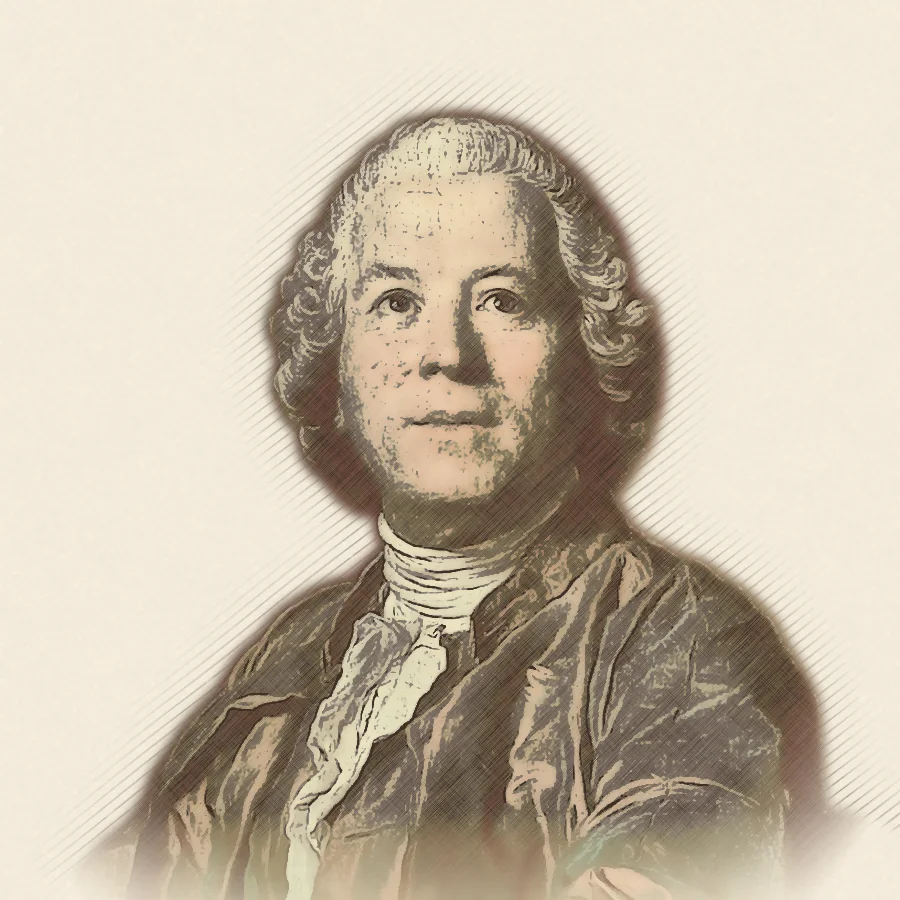
 Classical
Christoph Willibald Gluck
He reformed opera by prioritizing drama over vocal display.
A life and its times
The milestones of the life and work, the contemporaries and the major world events, on a single line of time.
A life at a glance
- 1714Birth
Born in Erasbach on 2 July, son of a forester
- 1715Meanwhile
Death of Louis XIV
- 1719Meanwhile
Defoe publishes Robinson Crusoe
- 1731Journeyage 17
Runs away from home to study music in Prague
- 1737Trainingage 23
Studies in Milan with Sammartini
- 1741Workage 27
First opera, Artaserse, in Milan
- 1745Journeyage 31
Stays in London; meets Handel
- 1750Private lifeage 36
Marries Maria Anna Bergin and settles in Vienna
- 1751Meanwhile
First volume of Diderot and d’Alembert’s Encyclopédie
- 1754Careerage 40
Kapellmeister of the imperial court in Vienna
- 1755Meanwhile
The Lisbon earthquake
- 1762Workage 48
Orfeo ed Euridice: the birth of opera ‘reform’
- 1767Workage 53
Alceste and its manifesto preface
- 1769Meanwhile
James Watt’s improved steam engine
- 1774Journeyage 60
In Paris, protected by his former pupil Marie Antoinette: Iphigénie en Aulide
- 1776Landmarkage 62
United States Declaration of Independence
- 1776Meanwhile
United States Declaration of Independence
- 1778Meanwhile
La Scala opera house opens in Milan
- 1779Workage 65
Iphigénie en Tauride, his Parisian triumph
- 1783Meanwhile
First manned flight in a hot-air balloon
- 1787Deathage 73
Dies in Vienna on 15 November
Listen
Excerpts from freely licensed recordings, with their performers and licences.
Excerpts last up to 90 seconds. Christoph Willibald Gluck’s compositions are in the public domain; each recording is streamed from Wikimedia Commons under the licence shown, credited to its performers or uploader.
Listen to complete works on Wikimedia Commons
Wikimedia Commons is a free media library: you will find the complete recordings there, with their reuse conditions.
- Complete recordingOrfeo ed Euridice — Dance of the Blessed Spirits (Toscanini)
- Complete recordingOrfeo — “Che farò senza Euridice” (1907)
- Search for the workOrfeo ed Euridice
- Search for the workAlceste
- Search for the workIphigénie en Tauride
- Search for the workIphigénie en Aulide
- Search for the workArmide
- Search for the workDon Juan
- Everything on CommonsAll recordings of Christoph Willibald Gluck
The life of Christoph Willibald Gluck
Christoph Willibald Gluck was born on 2 July 1714 at Erasbach in the Upper Palatinate, Bavaria. His father was a forester who later entered the service of Bohemian princes, and the family settled there. He wanted his son to follow him, but Christoph was passionate about music. Around 1731 he ran away from home to Prague, where he earned his living singing in churches and playing the cello, perhaps while attending university courses.
Around 1736 he was in Vienna in the service of Prince Lobkowitz, then went to Italy with Prince Melzi. In Milan he studied with Giovanni Battista Sammartini, a master of the emerging symphony. In 1741 he premiered his first opera, Artaserse, to a libretto by Metastasio, the great poet of opera seria. Success was immediate, and in the following years Gluck composed a series of operas for Italian theatres.
In 1745 he went to London, where he met Handel. Handel is said to have remarked, with a touch of contempt, that his cook knew more counterpoint than Gluck. In London Gluck also gave an astonishing concert on a “glass harmonica” made of water-filled glasses that he made sing by rubbing their rims. He then travelled with an itinerant Italian opera company through Germany, Denmark and Bohemia.
In 1750 he married Maria Anna Bergin, daughter of a wealthy Viennese merchant, which gave him financial security. He settled in Vienna and in 1754 became Kapellmeister at the imperial court. Under the influence of Count Giacomo Durazzo, director of the theatres, he composed comic operas on French libretti and the ballet-pantomime Don Juan (1761), whose final scene, with its Dance of the Furies, is of unprecedented dramatic violence.
In 1762, with the librettist Ranieri de’ Calzabigi, he premiered Orfeo ed Euridice in Vienna. This was the start of his “reform” of opera: Gluck wanted to rid opera seria of the excesses of virtuoso singers, endless da capo arias and convoluted plots. He sought simple, noble, natural music serving the drama. In the preface to Alceste (1767) he set out his principles: music must serve poetry, the overture must announce the action, and nothing must interrupt the emotion. Orpheus’s aria “Che farò senza Euridice” became famous throughout Europe.
Gluck had been music teacher to the young Archduchess Marie Antoinette in Vienna. As dauphine and then Queen of France, she invited him to Paris, where in 1774 he staged Iphigénie en Aulide and then French versions of Orphée and Alceste. His operas sparked a new quarrel between “Gluckists” and “Piccinnists”, supporters of the Italian composer Niccolò Piccinni. In 1779 Iphigénie en Tauride, of overwhelming tragic intensity, was a triumph that secured Gluck’s victory.
That same year the failure of his last opera, Écho et Narcisse, and a first stroke persuaded him to leave Paris. He retired to Vienna, where he received the homage of Mozart and the new generation. He died in Vienna on 15 November 1787 after another stroke. His reform deeply influenced Mozart, Berlioz, who revered him, and Wagner. Gluck restored to opera the power of theatre and emotion.
Works to know
- 1761
Don Juan
Ballet-pantomime with a hellish finale.
Listen on Wikimedia Commons - 1762
Orfeo ed Euridice
Orpheus descends to the Underworld for Eurydice; includes the Dance of the Blessed Spirits.
Listen on Wikimedia Commons - 1767
Alceste
A queen ready to die for her husband.
Listen on Wikimedia Commons - 1774
Iphigénie en Aulide
His first French opera.
Listen on Wikimedia Commons - 1777
Armide
New setting of Lully’s libretto.
Listen on Wikimedia Commons - 1779
Iphigénie en Tauride
Intense tragedy, the summit of his Paris career.
Listen on Wikimedia Commons
Anecdotes
Gluck played the glass harmonica, an instrument of glasses rubbed with the fingers.
In Paris, Gluck’s fans and Piccinni’s argued even in the cafés!
Handel is said to have claimed that his cook knew more counterpoint than Gluck.
He was Marie Antoinette’s music teacher when she was a child in Vienna.
Same era · Classical
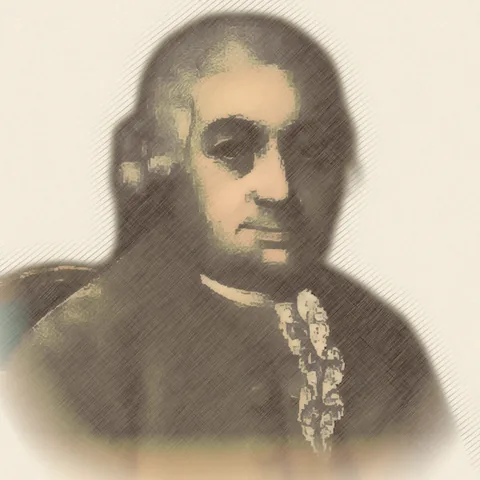 1714 – 1788Classical
Carl Philipp Emanuel Bach
Son of J. S. Bach, he helped shape an expressive transitional style.
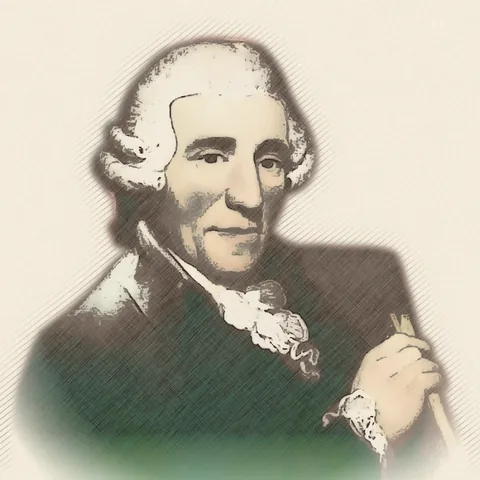 1732 – 1809Classical
Joseph Haydn
A major figure in symphony and quartet, he combined invention, humor and balance.
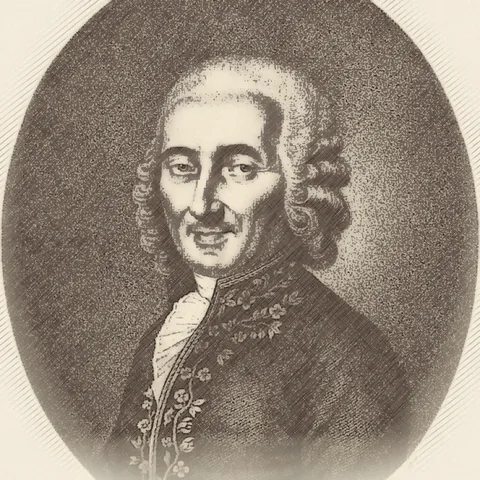 1743 – 1805Classical
Luigi Boccherini
A virtuoso cellist who greatly expanded classical chamber music.
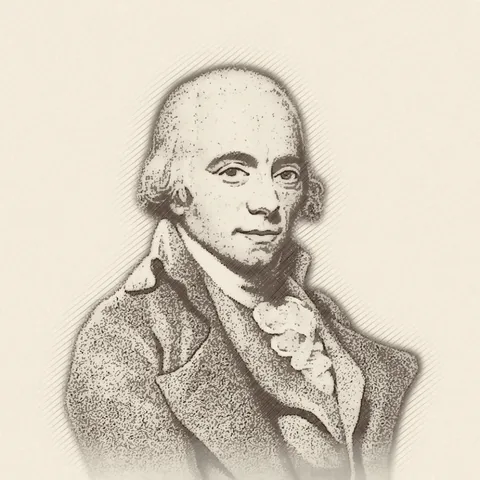 1752 – 1832Classical
Muzio Clementi
Pianist, publisher and piano maker, he shaped modern piano technique.
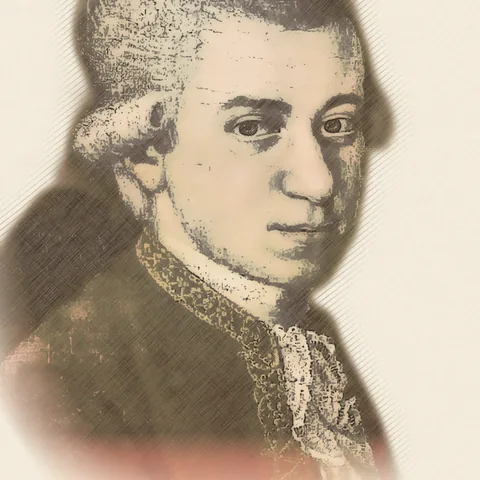 1756 – 1791Classical
Wolfgang Amadeus Mozart
A child prodigy who mastered opera and symphony, he combined grace with emotional depth.