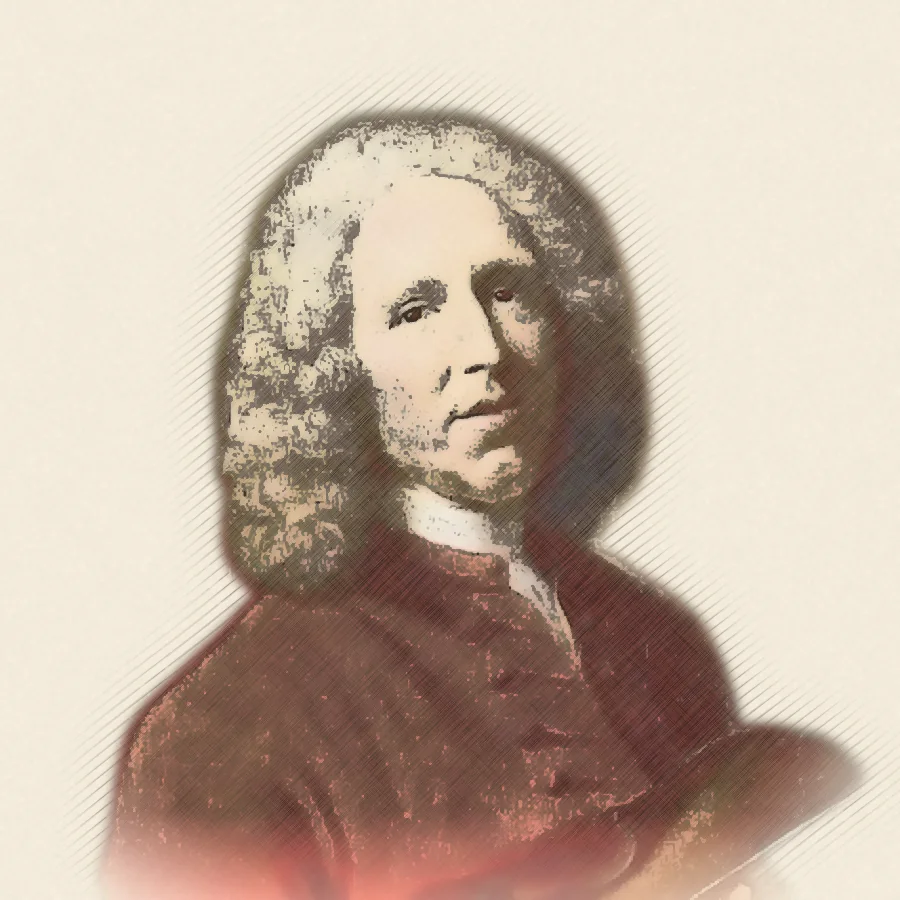
 Baroque
Jean-Philippe Rameau
A harmony theorist and man of the theatre, he brought bold colors to French orchestration.
A life and its times
The milestones of the life and work, the contemporaries and the major world events, on a single line of time.
A life at a glance
- 1683Birth
Born in Dijon; baptised on 25 September
- 1687Meanwhile
Newton publishes the laws of gravitation
- 1700Meanwhile
Bartolomeo Cristofori invents the piano in Florence (c. 1700)
- 1701Journeyage 18
Brief stay in Italy, in Milan
- 1702Careerage 19
Organist in Clermont-Ferrand, then Paris, Dijon and Lyon
- 1706Workage 23
First book of harpsichord pieces
- 1715Meanwhile
Death of Louis XIV
- 1719Meanwhile
Defoe publishes Robinson Crusoe
- 1722Workage 39
Treatise on Harmony, which revolutionises music theory
- 1724Workage 41
Harpsichord pieces including Les Tourbillons and the Tambourin
- 1726Private lifeage 43
Marries Marie-Louise Mangot, a 19-year-old singer
- 1728Workage 45
Nouvelles suites, with La Poule and Les Sauvages
- 1733Workage 50
Hippolyte et Aricie, his first opera, at 50
- 1735Workage 52
Les Indes galantes
- 1737Workage 54
Castor et Pollux
- 1745Careerage 62
Composer of the King’s Chamber Music; Platée
- 1751Meanwhile
First volume of Diderot and d’Alembert’s Encyclopédie
- 1752Landmarkage 69
The ‘Querelle des Bouffons’ between French and Italian music
- 1752Meanwhile
Franklin studies lightning with a kite
- 1755Meanwhile
The Lisbon earthquake
- 1764Deathage 81
Dies in Paris on 12 September
Listen
Excerpts from freely licensed recordings, with their performers and licences.
Excerpts last up to 90 seconds. Jean-Philippe Rameau’s compositions are in the public domain; each recording is streamed from Wikimedia Commons under the licence shown, credited to its performers or uploader.
Listen to complete works on Wikimedia Commons
Wikimedia Commons is a free media library: you will find the complete recordings there, with their reuse conditions.
- Complete recordingLes Sauvages
- Complete recordingLa Poule — The Hen (piano, M. Meyer)
- Complete recordingTambourin (Suite in E)
- Complete recordingLes Tourbillons (piano, M. Meyer)
- Wikimedia Commons fileJean-Philippe Rameau - Les Sauvages
- Search for the workLes Indes galantes
- Search for the workHippolyte et Aricie
- Search for the workPlatée
- Search for the workLa Poule
- Search for the workTreatise on Harmony
- Search for the workLes Boréades
- Everything on CommonsAll recordings of Jean-Philippe Rameau
The life of Jean-Philippe Rameau
Jean-Philippe Rameau was baptised in Dijon on 25 September 1683. His father, Jean, was organist of several churches in the city. The seventh of eleven children, young Jean-Philippe learned music before he could read, but he was a poor pupil at the Jesuit college, where he spent lessons singing and scribbling music. His father intended him for the law, but soon realised that music was his only vocation.
At eighteen, in 1701, he left for Italy but got no further than Milan, where he stayed a few months. He later regretted it, saying he could have refined his taste there. For twenty years he then led the life of a travelling organist: Avignon; Clermont-Ferrand, where in 1702 he was appointed cathedral organist; Paris, where in 1706 he published his first book of harpsichord pieces; then Dijon and Lyon. In 1715 he returned to Clermont, signing a twenty-nine-year contract… which he broke in 1722.
For Rameau had an ambition: to make his ideas on music theory known. In 1722 he published in Paris his Treatise on Harmony Reduced to its Natural Principles, a work that revolutionised the understanding of music. In it he explained that chords are built on a “fundamental bass” and can be inverted without changing their nature. These ideas, based on the physics of sound, still underlie the teaching of harmony today. The treatise made him a respected scholar throughout Europe.
Settled in Paris, he published in 1724 and around 1728 new harpsichord suites containing pieces that became famous: Les Tourbillons, Le Tambourin, La Poule, which imitates a clucking hen, and Les Sauvages, inspired by Native American dancers from Louisiana he had seen in Paris. In 1726 he married Marie-Louise Mangot, a nineteen-year-old singer, with whom he had four children. He became organist at several churches and gave lessons.
The wealthy tax-farmer and patron Le Riche de La Pouplinière welcomed him into his house and entrusted him with his private orchestra. Thanks to him Rameau could at last turn to opera. In 1733, aged fifty, he premiered Hippolyte et Aricie, which sparked a quarrel: Lully’s supporters, the “Lullistes”, found his music too learned and complicated, while his admirers, the “Ramistes”, hailed his genius. The composer André Campra is said to have declared there was enough music in this opera to make ten.
Masterpieces followed within a few years: Les Indes galantes (1735), an “opéra-ballet” whose every act takes place in a distant land — Turkey, Peru, Persia, North America — with its famous Dance of the Great Peace Pipe, then Castor et Pollux (1737) and Dardanus (1739). In 1745 he composed Platée, a hilarious comic opera about a vain and ugly marsh nymph, and became composer of the Chamber music of King Louis XV.
During the Querelle des Bouffons (1752–54), which pitted supporters of French music against those of Italian comic opera, Rameau became, despite himself, the symbol of French tradition and quarrelled with Jean-Jacques Rousseau and the Encyclopédistes. Ennobled in 1764, he died in Paris on 12 September that year, aged eighty, while rehearsing his last opera, Les Boréades, which was not staged until 1982. He is regarded as the greatest French composer of the eighteenth century.
Works to know
- 1722
Treatise on Harmony
Foundational work on the theory of chords.
Listen on Wikimedia Commons - 1728
La Poule
Harpsichord piece imitating a clucking hen.
Listen on Wikimedia Commons - 1733
Hippolyte et Aricie
His first opera, a scandal for its boldness.
Listen on Wikimedia Commons - 1735
Les Indes galantes
Exotic opéra-ballet with the famous ‘Dance of the Peace Pipe’.
Listen on Wikimedia Commons - 1745
Platée
Hilarious comic opera about a frog-nymph.
Listen on Wikimedia Commons - 1763
Les Boréades
His last opera, rehearsed but premiered only in the 20th century.
Listen on Wikimedia Commons
Anecdotes
He wrote his first opera at 50 — it’s never too late!
In the opera Platée the heroine is a marsh nymph who looks like a frog.
His harpsichord piece La Poule imitates a clucking hen.
His last opera, Les Boréades, was not staged until 1982, more than two centuries after his death.
Same era · Baroque
 1659 – 1695Baroque
Henry Purcell
His stage music blends melodic subtlety and emotional force.
 1668 – 1733Baroque
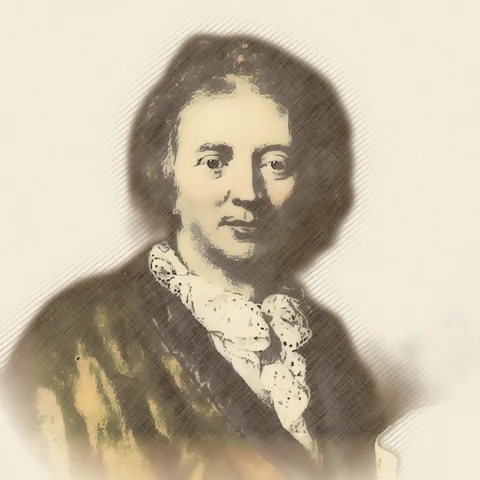
François Couperin
A French court harpsichordist, he blended French elegance and Italian influences.
 1678 – 1741Baroque
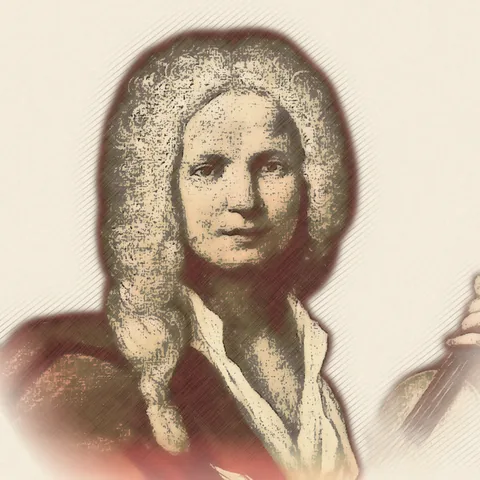
Antonio Vivaldi
A Venetian violinist and priest, he reshaped the concerto through contrast and virtuosity.
 1681 – 1767Baroque
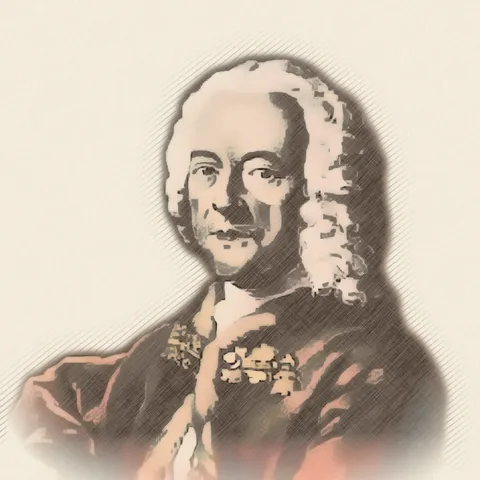
Georg Philipp Telemann
A prolific composer, he led Hamburg's musical life and combined European styles.
 1685 – 1759Baroque
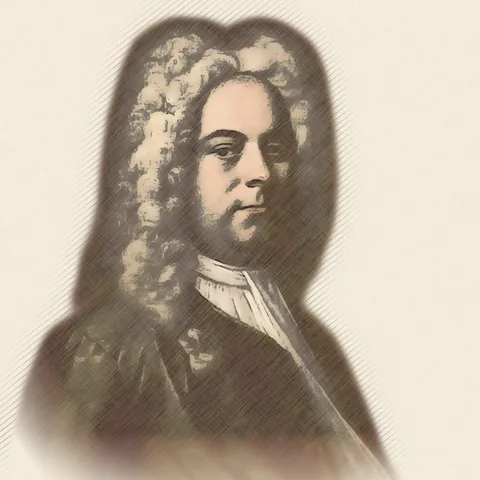
Georg Friedrich Haendel
Born in Germany and active in London, he excelled in oratorio and public spectacle.
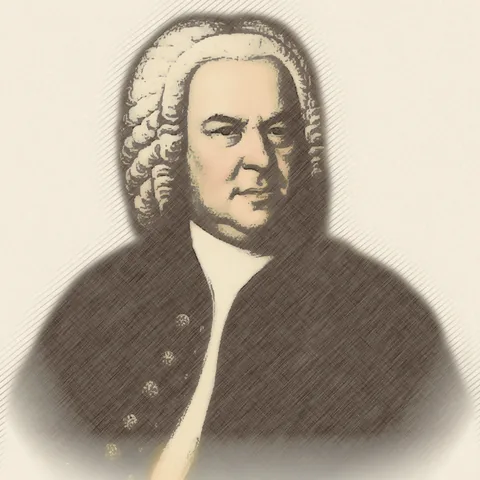 1685 – 1750Baroque
Johann Sebastian Bach
An organist and master of counterpoint, he built musical structures of exceptional depth.