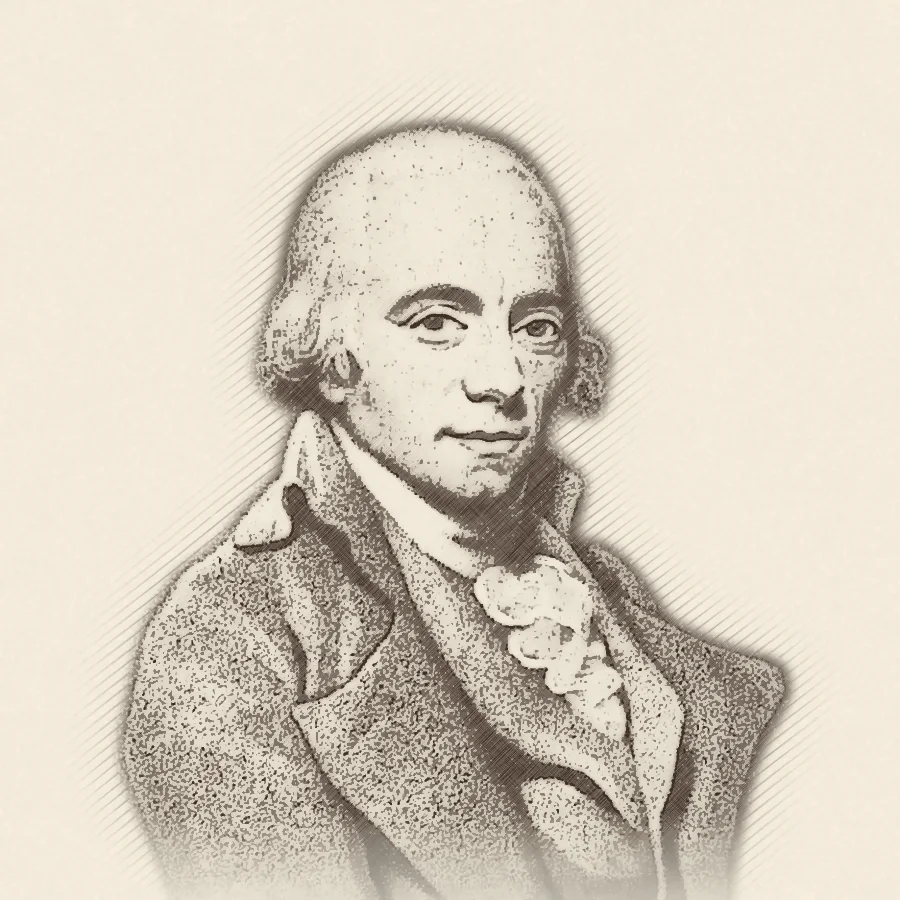
 Classical
Muzio Clementi
Pianist, publisher and piano maker, he shaped modern piano technique.
A life and its times
The milestones of the life and work, the contemporaries and the major world events, on a single line of time.
A life at a glance
- 1752Birth
Born in Rome on 23 January
- 1755Meanwhile
The Lisbon earthquake
- 1766Milestoneage 14
Taken to England by the wealthy Peter Beckford, who educates him for seven years
- 1774Milestoneage 22
Settles in London as harpsichordist and conductor
- 1776Meanwhile
United States Declaration of Independence
- 1778Meanwhile
La Scala opera house opens in Milan
- 1779Workage 27
Sonatas Op. 2, which make his name
- 1781Journeyage 29
Piano duel with Mozart before Emperor Joseph II in Vienna
- 1789Landmarkage 37
French Revolution
- 1789Meanwhile
Storming of the Bastille: the French Revolution
- 1795Meanwhile
The Paris Conservatoire is founded
- 1797Workage 45
Six Sonatinas Op. 36, still played by every student
- 1798Careerage 46
Music publisher and piano maker in London
- 1802Journeyage 50
Grand European tour with his pupil John Field, as far as Russia
- 1807Careerage 55
Secures Beethoven’s publishing rights in England
- 1815Meanwhile
Battle of Waterloo
- 1816Meanwhile
Maelzel patents the metronome (1815–16)
- 1817Workage 65
Gradus ad Parnassum, 100 piano studies
- 1825Meanwhile
First public passenger railway (England)
- 1832Deathage 80
Dies in Evesham on 10 March; buried at Westminster Abbey
Listen
Excerpts from freely licensed recordings, with their performers and licences.
Excerpts last up to 90 seconds. Muzio Clementi’s compositions are in the public domain; each recording is streamed from Wikimedia Commons under the licence shown, credited to its performers or uploader.
Listen to complete works on Wikimedia Commons
Wikimedia Commons is a free media library: you will find the complete recordings there, with their reuse conditions.
- Complete recordingSonatina Op. 36 No. 1 — Allegro
- Complete recordingSonatina Op. 36 No. 3 — Spiritoso
- Wikimedia Commons fileClementi, Sonatina N.1 - 1 Mov. Allegro
- Search for the workSonatina Op. 36 No. 1
- Search for the workGradus ad Parnassum
- Search for the workSonatas Op. 2
- Search for the workSonata in G minor ‘Didone abbandonata’
- Search for the workSymphonies
- Everything on CommonsAll recordings of Muzio Clementi
The life of Muzio Clementi
Muzio Clementi was born in Rome on 23 January 1752, the son of a silversmith. Very precocious, he studied organ, singing and counterpoint and at thirteen became organist of a Roman church. In 1766 a wealthy Englishman passing through, Peter Beckford, cousin of the famous writer William Beckford, heard him play and offered to take him to England to complete his education. In exchange the boy would play for him. His father agreed: Clementi spent seven years on Beckford’s estate in Dorset.
In this isolated countryside he practised the harpsichord alone up to eight hours a day, studying the works of Bach, Handel, Domenico Scarlatti and Carl Philipp Emanuel Bach. There he acquired an extraordinary technique. In 1774, released from his engagement, he moved to London, where he was first harpsichordist and conductor at the King’s Theatre. In 1779 the publication of his Op. 2 Sonatas made him famous: these brilliant pieces, with their octaves and double notes, demanded a new virtuosity.
In 1780 he set off on a great European tour: Paris, where he played for Marie Antoinette, then Strasbourg, Munich and Vienna. On 24 December 1781 Emperor Joseph II staged a friendly “duel” at the Hofburg between Clementi and the young Mozart. The two pianists improvised, played their own works and sight-read sonatas. The emperor declared a draw. Clementi admired Mozart, but Mozart, in a letter to his father, was more scornful, calling him a tasteless “mechanic”. Yet Mozart later borrowed a theme of Clementi’s for the overture to The Magic Flute.
Back in London, Clementi became the most sought-after piano teacher in the city, with pupils such as John Field, Johann Baptist Cramer and later Giacomo Meyerbeer. In the 1790s he went into business, becoming a partner in a music publishing and piano-making firm that would become “Clementi & Co.”. His sturdy, high-quality pianos were sold all over Europe. It was also in 1797 that he published his six Sonatinas Op. 36, still played by every young pianist.
From 1802 to 1810 he made a long European tour, partly with his pupil John Field, whom he presented as a virtuoso while having him sell his pianos. They went as far as St Petersburg, where Field settled. In 1807 in Vienna Clementi met Beethoven and obtained the English publishing rights to several of his works, including the Fourth Piano Concerto and the Violin Concerto. Beethoven thought highly of Clementi’s sonatas and recommended them to his pupils.
Clementi composed about a hundred piano sonatas, symphonies — which he revised at length and which were never published in his lifetime — and teaching works. Between 1817 and 1826 he published his Gradus ad Parnassum, a collection of a hundred studies summing up all his knowledge of the piano, from technical exercises to concert pieces. He is often called “the father of the piano”, as he was one of the first to write truly for that instrument rather than the harpsichord.
In 1830 he retired to the country, first to Staffordshire and then to Evesham in Worcestershire, where he died on 10 March 1832, aged eighty. He was buried in the cloisters of Westminster Abbey. His influence on piano teaching remains immense. In 1908 Claude Debussy paid him a mischievous tribute with Doctor Gradus ad Parnassum, which opens his Children’s Corner by gently poking fun at pupils’ tedious exercises.
Works to know
- 1779
Sonatas Op. 2
Brilliant sonatas that launched the pianistic style.
Listen on Wikimedia Commons - 1797
Sonatina Op. 36 No. 1
The most played teaching piece in the world!
Listen on Wikimedia Commons - 1817
Gradus ad Parnassum
100 studies to climb the heights of piano playing.
Listen on Wikimedia Commons - 1821
Sonata in G minor ‘Didone abbandonata’
Dramatic sonata of his maturity.
Listen on Wikimedia Commons - 1824
Symphonies
Works long lost, later reconstructed.
Listen on Wikimedia Commons
Anecdotes
He also made pianos!
Debussy wrote a funny piece, ‘Doctor Gradus ad Parnassum’, as a nod to his studies.
In 1781 Emperor Joseph II staged a piano duel between him and Mozart and declared it a draw.
Mozart borrowed one of his themes for the overture to The Magic Flute.
Same era · Classical
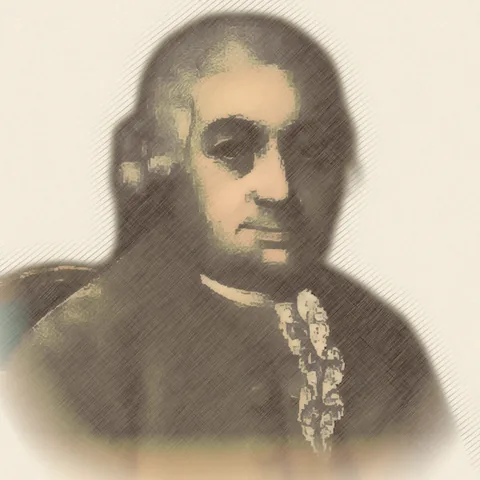 1714 – 1788Classical
Carl Philipp Emanuel Bach
Son of J. S. Bach, he helped shape an expressive transitional style.
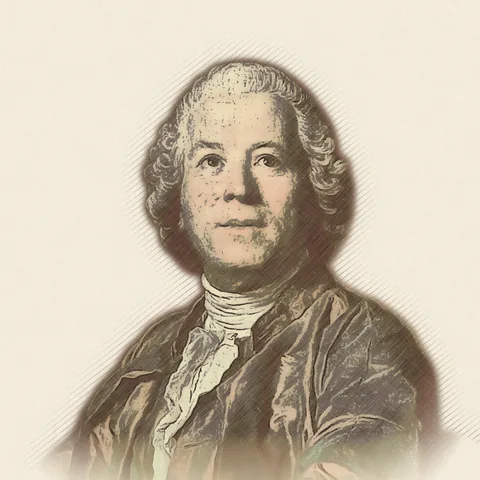 1714 – 1787Classical
Christoph Willibald Gluck
He reformed opera by prioritizing drama over vocal display.
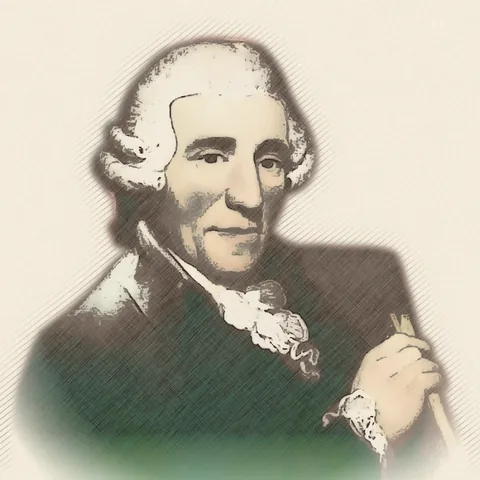 1732 – 1809Classical
Joseph Haydn
A major figure in symphony and quartet, he combined invention, humor and balance.
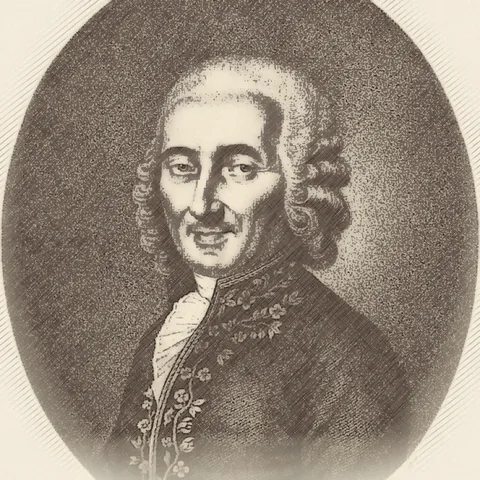 1743 – 1805Classical
Luigi Boccherini
A virtuoso cellist who greatly expanded classical chamber music.
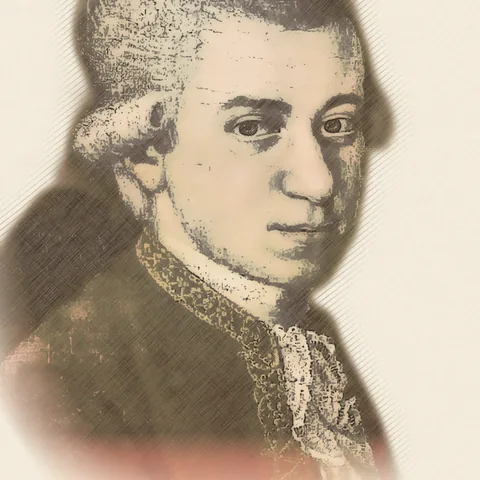 1756 – 1791Classical
Wolfgang Amadeus Mozart
A child prodigy who mastered opera and symphony, he combined grace with emotional depth.