 Classical to Romantic
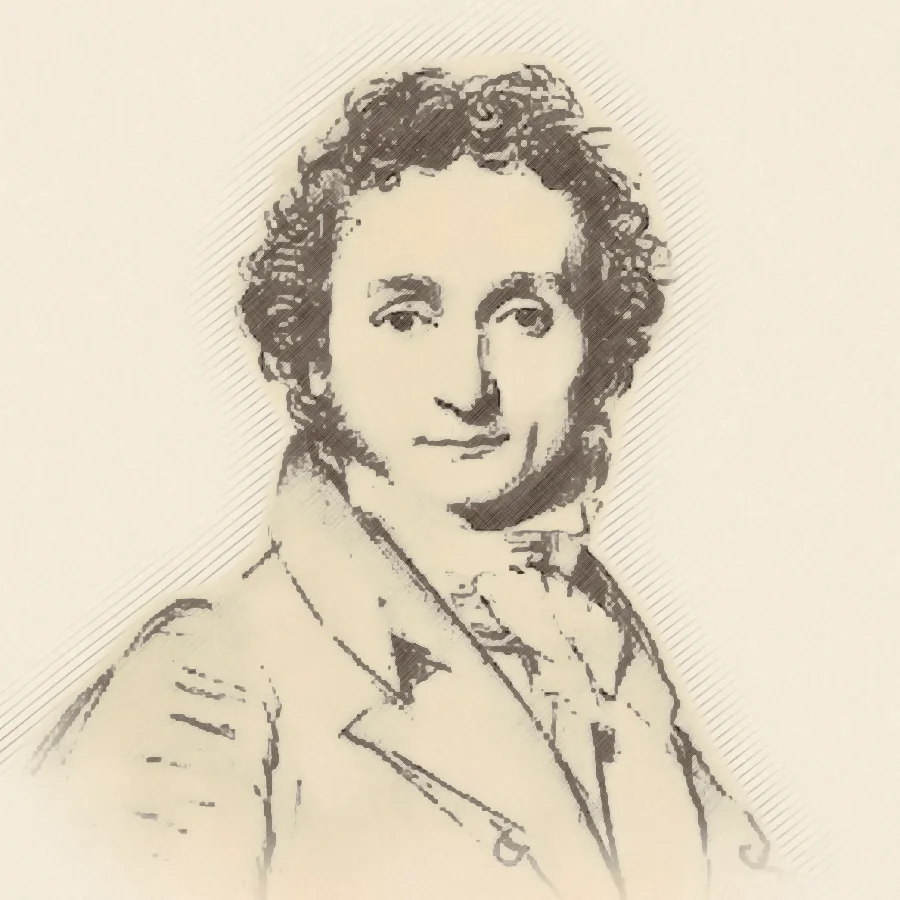
Niccolò Paganini
A virtuoso violinist who transformed instrumental technique and the soloist's public image.
A life and its times
The milestones of the life and work, the contemporaries and the major world events, on a single line of time.
A life at a glance
- 1782Birth
Born in Genoa on 27 October
- 1783Meanwhile
First manned flight in a hot-air balloon
- 1795Trainingage 13
Studies in Parma; already giving concerts
- 1795Meanwhile
The Paris Conservatoire is founded
- 1801Milestoneage 19
Leaves for Lucca, away from his domineering father
- 1804Meanwhile
Napoleon crowned emperor
- 1805Careerage 23
Violinist at the court of Elisa Bonaparte, Napoleon’s sister
- 1813Careerage 31
Triumph at La Scala in Milan with Le Streghe
- 1816Meanwhile
Maelzel patents the metronome (1815–16)
- 1820Workage 38
Publication of the 24 Caprices for solo violin
- 1822Meanwhile
Champollion deciphers hieroglyphs
- 1825Meanwhile
First public passenger railway (England)
- 1828Journeyage 46
Tour of Vienna: ‘Paganini-mania’ begins
- 1831Journeyage 49
Triumphant concerts in Paris and London
- 1834Careerage 52
Commissions Berlioz’s Harold in Italy
- 1839Meanwhile
Photography is invented (daguerreotype)
- 1840Deathage 58
Dies in Nice on 27 May
- 1840Meanwhile
Adolphe Sax invents the saxophone (c. 1840)
Listen
Excerpts from freely licensed recordings, with their performers and licences.
Excerpts last up to 90 seconds. Niccolò Paganini’s compositions are in the public domain; each recording is streamed from Wikimedia Commons under the licence shown, credited to its performers or uploader.
Listen to complete works on Wikimedia Commons
Wikimedia Commons is a free media library: you will find the complete recordings there, with their reuse conditions.
- Complete recordingCaprice No. 24
- Complete recordingMoto perpetuo, Op. 11 (Yehudi Menuhin)
- Wikimedia Commons filePaganini Caprice-24
- Search for the work24 Caprices, Op. 1
- Search for the workViolin Concerto No. 1
- Search for the workViolin Concerto No. 2 ‘La Campanella’
- Search for the workMoto perpetuo, Op. 11
- Search for the workLe Streghe
- Everything on CommonsAll recordings of Niccolò Paganini
The life of Niccolò Paganini
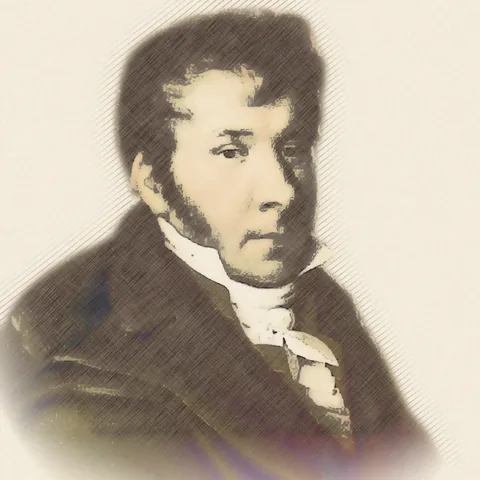
Niccolò Paganini was born in Genoa on 27 October 1782. His father, Antonio, a dock worker and trader, played the mandolin as an amateur and taught his son music. He was very strict, sometimes depriving the boy of food if he did not practise enough. Little Niccolò first learned the mandolin, then the violin at seven. His progress was dazzling: he gave his first public concert in Genoa around 1794, aged eleven or twelve, and studied with the city’s best violinists.
Around 1795 he went to study in Parma with the violinist Alessandro Rolla and the composer Ferdinando Paër. According to the anecdote, Rolla declared he had nothing more to teach him after hearing him sight-read one of his works. Paganini then practised up to fifteen hours a day, inventing new techniques. In 1801, to escape his father’s authority, he left for Lucca, where he became leader of the city orchestra.
For a few years he led a turbulent life of gambling and adventure. According to one anecdote he even lost his violin at cards before being given a magnificent Guarneri del Gesù by an admirer, which he nicknamed “il Cannone”, “the Cannon”, for its powerful sound. From 1805 to 1809 he was violinist at the court of Elisa Bonaparte, Napoleon’s sister, who had become Princess of Lucca. For her he composed pieces for a single string, such as the Napoleon sonata, played on the G string alone.
In 1813 he triumphed at La Scala in Milan with Le Streghe (The Witches), dazzling variations on a ballet tune. He then began a career as a touring virtuoso in Italy. In 1820 he published his 24 Caprices for solo violin, Op. 1, a collection of unheard-of difficulty exploring every possibility of the instrument: double stops, left-hand pizzicato, harmonics, dizzying leaps. The last caprice, in A minor, inspired variations by Brahms, Liszt, Rachmaninoff and many others.
In 1828 he left Italy for a great European tour. In Vienna there was “Paganinimania”: hats, gloves and dishes “à la Paganini” were sold. Then came Prague, Berlin and, in 1831, Paris and London, where his concerts were packed despite very high prices. Tall, thin, very pale and dressed in black, he both fascinated and frightened people: it was said he had sold his soul to the devil to play like that. He fed the mystery himself, keeping his scores secret and publishing almost nothing in his lifetime.
His playing overwhelmed the musicians of his day. On hearing him in Paris, the young Franz Liszt resolved to become “the Paganini of the piano”. Schumann, Chopin and Berlioz were fascinated. In 1834 Paganini, who had just acquired a fine Stradivari viola, asked Berlioz for a work to show it off: the result was Harold in Italy. Disappointed by the viola part, which was not virtuosic enough, he never played it, but later made Berlioz a generous gift after hearing his Symphonie fantastique.
His fragile health declined in the 1830s. He tried to launch a casino in Paris, the “Casino Paganini”, which went bankrupt. He died in Nice on 27 May 1840. Because of his reputed pact with the devil, the bishop refused him Christian burial, and his body wandered for years before being laid to rest in Parma. He bequeathed his violin “il Cannone” to his native Genoa, where it is still kept and played on exceptional occasions.
Works to know
- 1813
Le Streghe
Devilish variations on a ballet tune.
Listen on Wikimedia Commons - 1817
Violin Concerto No. 1
Brilliant concerto, like an opera without words.
Listen on Wikimedia Commons - 1820
24 Caprices, Op. 1
The peak of violin virtuosity; No. 24 inspired Liszt, Brahms, Rachmaninoff…
Listen on Wikimedia Commons - 1826
Violin Concerto No. 2 ‘La Campanella’
The finale imitates a little bell; Liszt adapted it for piano.
Listen on Wikimedia Commons - 1835
Moto perpetuo, Op. 11
An unbroken stream of fast notes.
Listen on Wikimedia Commons
Anecdotes
His violin ‘the Cannon’ is kept in Genoa and played once a year by a great violinist.
He was also an excellent guitarist.
He composed a whole sonata to be played on a single violin string.
On hearing him, the young Liszt decided to become “the Paganini of the piano”.