 Classical
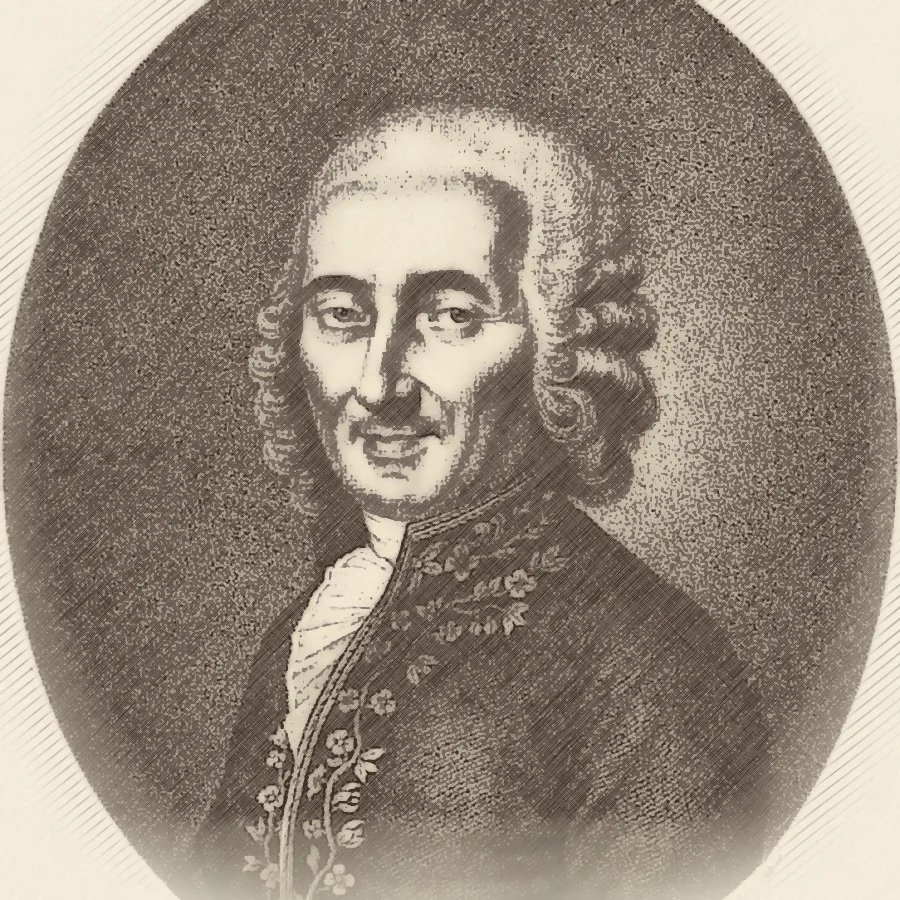
Luigi Boccherini
A virtuoso cellist who greatly expanded classical chamber music.
A life and its times
The milestones of the life and work, the contemporaries and the major world events, on a single line of time.
A life at a glance
- 1743Birth
Born in Lucca on 19 February, son of a double-bass player
- 1751Meanwhile
First volume of Diderot and d’Alembert’s Encyclopédie
- 1755Meanwhile
The Lisbon earthquake
- 1756Trainingage 13
Cello studies in Rome
- 1757Careerage 14
Cellist at the Vienna court theatre with his father
- 1767Journeyage 24
Tour and great success in Paris
- 1769Milestoneage 26
Settles in Spain
- 1769Meanwhile
James Watt’s improved steam engine
- 1770Careerage 27
Cellist and composer to the Infante Don Luis, the king’s brother
- 1771Workage 28
Quintet Op. 11 No. 5 with its famous Minuet
- 1776Meanwhile
United States Declaration of Independence
- 1778Meanwhile
La Scala opera house opens in Milan
- 1780Workage 37
Night Music of the Streets of Madrid
- 1786Careerage 43
Chamber composer to King Frederick William II of Prussia
- 1789Landmarkage 46
French Revolution
- 1789Meanwhile
Storming of the Bastille: the French Revolution
- 1795Meanwhile
The Paris Conservatoire is founded
- 1798Workage 55
Guitar Quintet ‘Fandango’
- 1804Meanwhile
Napoleon crowned emperor
- 1805Deathage 62
Dies in poverty in Madrid on 28 May
Listen
Excerpts from freely licensed recordings, with their performers and licences.
Excerpts last up to 90 seconds. Luigi Boccherini’s compositions are in the public domain; each recording is streamed from Wikimedia Commons under the licence shown, credited to its performers or uploader.
Listen to complete works on Wikimedia Commons
Wikimedia Commons is a free media library: you will find the complete recordings there, with their reuse conditions.
- Complete recordingString Quintet Op. 11 No. 5 — the famous Minuet
- Wikimedia Commons fileBoccerini Op11 n°5 G275 Satz3 Minuett
- Search for the workMinuet from Quintet Op. 11 No. 5
- Search for the workNight Music of the Streets of Madrid
- Search for the workGuitar Quintet ‘Fandango’
- Search for the workCello Concerto in B-flat
- Search for the workStabat Mater
- Everything on CommonsAll recordings of Luigi Boccherini
The life of Luigi Boccherini
Luigi Boccherini was born in Lucca, Tuscany, on 19 February 1743, into a family of artists. His father, Leopoldo, was a double bass player and cellist; his brother Giovanni Gastone became a dancer and poet and wrote libretti for Haydn and Salieri. Luigi learned the cello from his father, then from the choirmaster of Lucca Cathedral. He progressed so quickly that he gave his first public concert at thirteen.
Around 1756 he went to Rome to study further with the cellist Giovanni Battista Costanzi. In 1757 he and his father were engaged in the court theatre orchestra in Vienna, where he made several stays until 1764. He made a name as a virtuoso cellist and began composing, particularly trios and string quartets. Indeed, he was one of the first composers, alongside Haydn, to write string quartets.
Back in Lucca he played in the city chapel and, with the violinist Filippo Manfredi and other Tuscan musicians, formed one of the first permanent string quartets in history. In 1767 he went on tour with Manfredi and performed in Paris at the Concert Spirituel. The success was immense, and Parisian publishers issued his works. The Spanish ambassador encouraged him to go to Madrid.
In 1769 Boccherini settled in Spain, where he spent the rest of his life. In 1770 he became cellist and composer to the Infante Don Luis de Borbón, brother of King Charles III. When the Infante, after a marriage deemed unworthy, was exiled from court, Boccherini followed him to the small village of Arenas de San Pedro at the foot of the Sierra de Gredos. There, in peace, he composed a great deal of chamber music, notably for the Infante’s family quartet.
Boccherini wrote more than a hundred string quintets, a form he made his speciality, often with two cellos, allowing him to play a brilliant high part himself. His Quintet Op. 11 No. 5 contains the famous Minuet, one of the best-known tunes in classical music. In Night Music of the Streets of Madrid (1780) he evokes the bells, soldiers, beggars and guitarists that enliven the Spanish capital at nightfall.
When the Infante died in 1785 Boccherini lost his patron. He obtained a post as chamber composer to King Frederick William II of Prussia, an amateur cellist, to whom he regularly sent new works from Madrid. He also worked for the Duchess of Benavente and her musical salon. In the 1790s he composed quintets with guitar, including the famous “Fandango”, which incorporates a rhythmic Spanish dance with castanets.
His last years were hard: he lost his first wife, Clementina, then his second wife and several of his children. His patrons disappeared and his publishers paid him poorly. He died in poverty in Madrid on 28 May 1805. In 1927 his remains were transferred to the church of San Francesco in Lucca. His elegant, melodious, refined style makes him one of the great masters of chamber music and the cello.
Works to know
- 1770
Cello Concerto in B-flat
Virtuoso concerto for his instrument.
Listen on Wikimedia Commons - 1771
Minuet from Quintet Op. 11 No. 5
One of the most famous minuets in the world.
Listen on Wikimedia Commons - 1771
Stabat Mater
Setting for soprano and string quintet.
Listen on Wikimedia Commons - 1780
Night Music of the Streets of Madrid
Sound picture of Madrid at night: bells, guitars, soldiers.
Listen on Wikimedia Commons - 1798
Guitar Quintet ‘Fandango’
Wild finale with castanets.
Listen on Wikimedia Commons
Anecdotes
He wrote more than 100 quintets with two cellos.
His Minuet appears in many films, including the British comedy The Ladykillers (1955).
With Tuscan friends he formed one of the first permanent string quartets in history.
His remains were brought back from Madrid to his native Lucca in 1927.
Same era · Classical
 1714 – 1788Classical
Carl Philipp Emanuel Bach
Son of J. S. Bach, he helped shape an expressive transitional style.
 1714 – 1787Classical
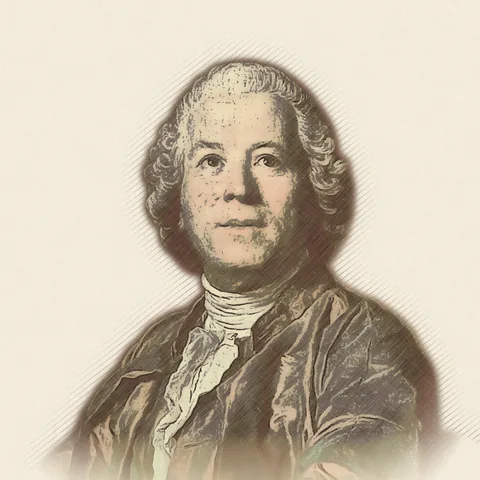
Christoph Willibald Gluck
He reformed opera by prioritizing drama over vocal display.
 1732 – 1809Classical
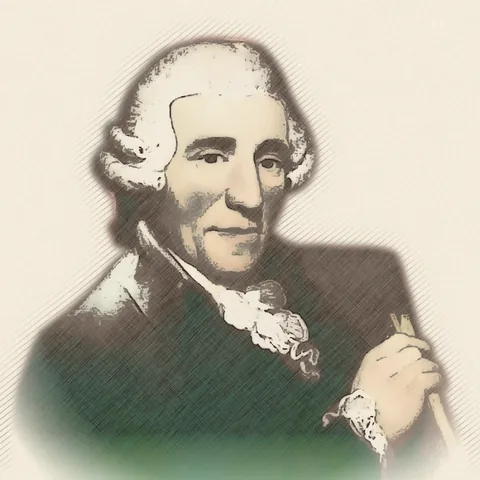
Joseph Haydn
A major figure in symphony and quartet, he combined invention, humor and balance.
 1752 – 1832Classical
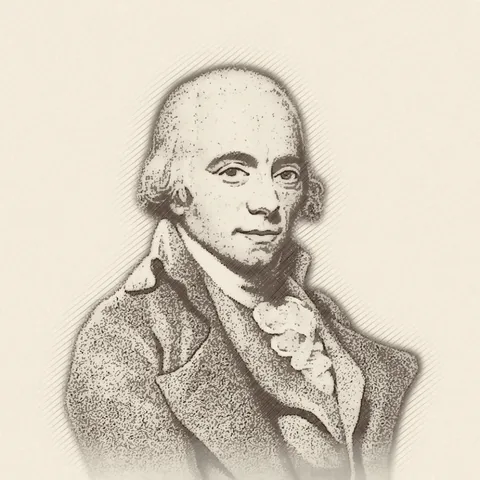
Muzio Clementi
Pianist, publisher and piano maker, he shaped modern piano technique.
 1756 – 1791Classical
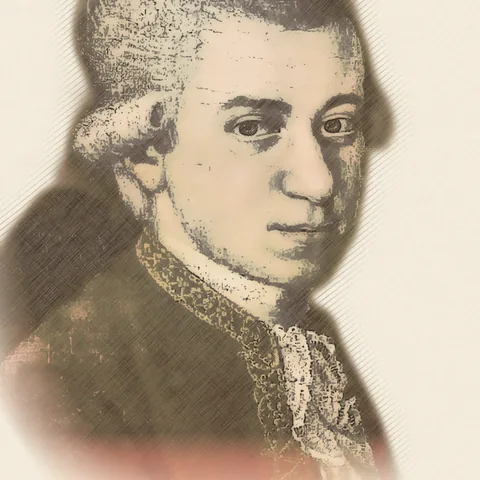
Wolfgang Amadeus Mozart
A child prodigy who mastered opera and symphony, he combined grace with emotional depth.