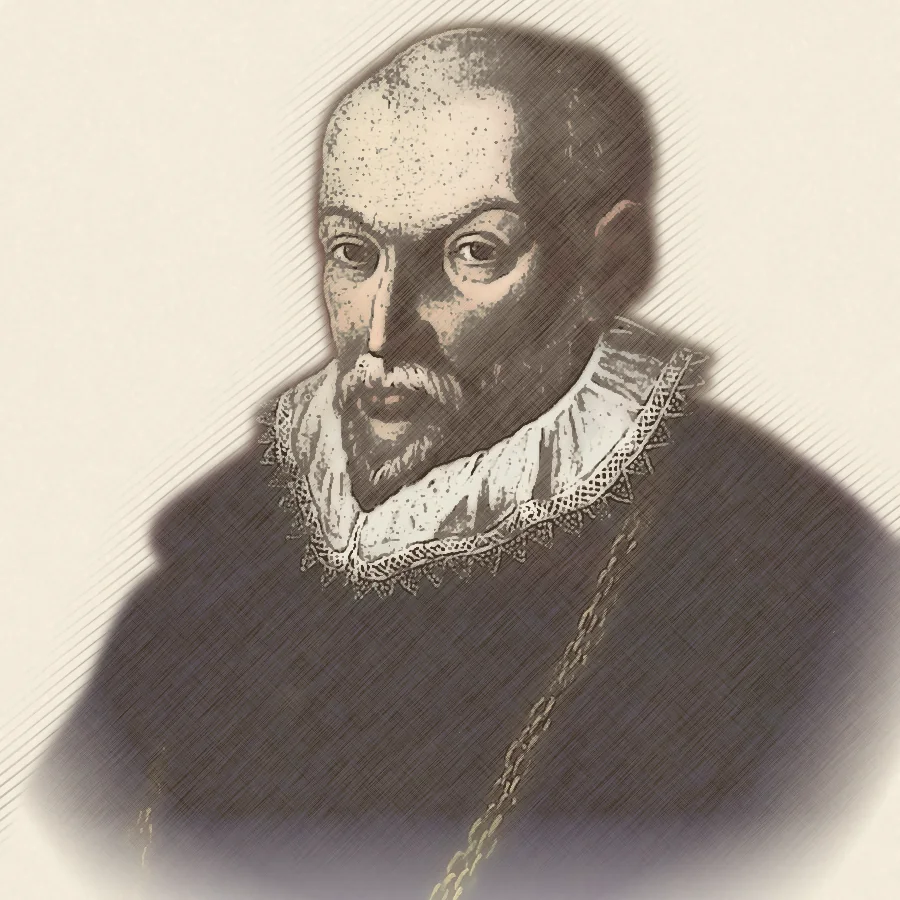
 Renaissance
Orlando di Lasso
A cosmopolitan musician based in Munich, he wrote in many languages and genres.
A life and its times
The milestones of the life and work, the contemporaries and the major world events, on a single line of time.
A life at a glance
- 1532Birth
Born in Mons
- 1540Trainingage 8
Choirboy at St Nicholas, Mons; reportedly kidnapped three times for his voice
- 1543Meanwhile
Copernicus: the Earth goes round the Sun
- 1544Journeyage 12
Goes to Italy with Ferrante Gonzaga: Mantua, Sicily, Milan
- 1545Meanwhile
The Council of Trent opens
- 1553Careerage 21
Chapel master of St John Lateran in Rome, aged 21
- 1555Workage 23
First publications in Antwerp
- 1555Meanwhile
Andrea Amati makes the earliest known violins in Cremona (c. 1555)
- 1556Milestoneage 24
Settles in Munich at the court of Duke Albrecht V of Bavaria
- 1558Private lifeage 26
Marries Regina Wäckinger
- 1563Careerage 31
Becomes chapel master in Munich
- 1570Landmarkage 38
Ennobled by Emperor Maximilian II
- 1571Journeyage 39
Welcomed in Paris by King Charles IX
- 1572Meanwhile
St Bartholomew’s Day massacre
- 1588Meanwhile
Defeat of the Spanish Armada
- 1594Workage 62
Completes the Tears of St Peter
- 1594Deathage 62
Dies in Munich on 14 June
Listen
Excerpts from freely licensed recordings, with their performers and licences.
Excerpts last up to 90 seconds. Orlando di Lasso’s compositions are in the public domain; each recording is streamed from Wikimedia Commons under the licence shown, credited to its performers or uploader.
Listen to complete works on Wikimedia Commons
Wikimedia Commons is a free media library: you will find the complete recordings there, with their reuse conditions.
- Complete recordingMatona mia cara (villanella)
- Complete recordingHodie completi sunt (motet)
- Complete recordingBonjour mon cœur (chanson)
- Search for the workLagrime di San Pietro
- Search for the workMatona mia cara
- Search for the workProphetiae Sibyllarum
- Search for the workPenitential Psalms
- Search for the workBonjour mon cœur
- Search for the workMagnum opus musicum
- Everything on CommonsAll recordings of Orlando di Lasso
The life of Orlando di Lasso
Roland de Lassus, also known by his Italianised name Orlando di Lasso, was born in 1532 in Mons, Hainaut, now in Belgium. A choirboy at the church of Saint-Nicolas in his town, he had such a beautiful voice that, according to a later anecdote, he was kidnapped three times by recruiters of singers. The third time his parents agreed to let him go: at about twelve he entered the service of Ferrante Gonzaga, Viceroy of Sicily and a general of Charles V.
With his patron young Roland crossed Italy: Mantua, Sicily, then Milan. He discovered Italian music, the madrigal and Neapolitan popular song, which left a lasting mark on him. Around 1549 he was in Naples, then Rome. In 1553, aged only twenty-one, he became choirmaster of the basilica of St John Lateran, one of the most prestigious posts in Christendom. He left it the following year to visit his sick parents, then travelled, perhaps to England and France.
In 1555 he settled in Antwerp, a great centre of music printing, where his first collections of madrigals, chansons and motets appeared. His reputation was already great. The following year, 1556, he was engaged at the court of Duke Albrecht V of Bavaria in Munich. He stayed there for nearly forty years. In 1558 he married Regina Wäckinger, daughter of one of the duchess’s ladies-in-waiting, and in 1563 became master of the ducal chapel, an ensemble of some sixty singers and instrumentalists.
In Munich Lassus was a true European star. He travelled to recruit musicians and visited Italy and France, where King Charles IX received him warmly in 1571. Emperor Maximilian II ennobled him in 1570, and Pope Gregory XIII made him a Knight of the Golden Spur. His letters to young Prince Wilhelm, the duke’s heir, reveal a man full of humour, cheerfully mixing German, Italian, French and Latin.
His output is one of the largest in the whole history of music: more than two thousand pieces in every language and genre. There are about sixty masses, more than five hundred motets, Magnificats and passions, but also some two hundred Italian madrigals, a hundred and fifty French chansons and ninety German lieder. He moved effortlessly from the gravity of the Penitential Psalms, written for the duke in a magnificent illuminated manuscript, to the comedy of songs such as Matona mia cara, in which a German soldier clumsily sings a serenade in Italian.
Lassus was renowned for the expressiveness of his music: he coloured every word and image of the text. In the Prophetiae Sibyllarum, an early work, he used daring chromaticism, with strange chord progressions, to evoke the mysterious prophetesses of antiquity. He was also one of the most printed composers of his time: publishers in Paris, Antwerp, Venice, Nuremberg and Munich constantly issued his works.
His last years were darkened by deep melancholy. In 1594 he completed the Lagrime di San Pietro, a cycle of twenty spiritual madrigals on the tears of St Peter after his denial, dedicated to the pope. He died in Munich on 14 June 1594, a few months after Palestrina. In 1604 his sons published a huge collection of more than five hundred of his motets, the Magnum opus musicum. With Palestrina, Lassus is regarded as the summit of Renaissance polyphony.
Works to know
- 1560
Prophetiae Sibyllarum
Motets of startling chromaticism for their time.
Listen on Wikimedia Commons - 1560
Penitential Psalms
Seven psalms for the duke, copied into a sumptuous manuscript.
Listen on Wikimedia Commons - 1564
Bonjour mon cœur
Tender, light French chanson.
Listen on Wikimedia Commons - 1581
Matona mia cara
Comic villanella in which a German soldier mangles Italian.
Listen on Wikimedia Commons - 1594
Lagrime di San Pietro
Cycle of 21 spiritual madrigals, his musical testament.
Listen on Wikimedia Commons - 1604
Magnum opus musicum
Posthumous collection of over 500 motets.
Listen on Wikimedia Commons
Anecdotes
He composed over 2,000 works — a record for his time.
In Matona mia cara he gently mocks a soldier who speaks poor Italian.
It is said that as a child he was kidnapped three times because of his beautiful voice.
He died in the same year as Palestrina, 1594.
Same era · Renaissance
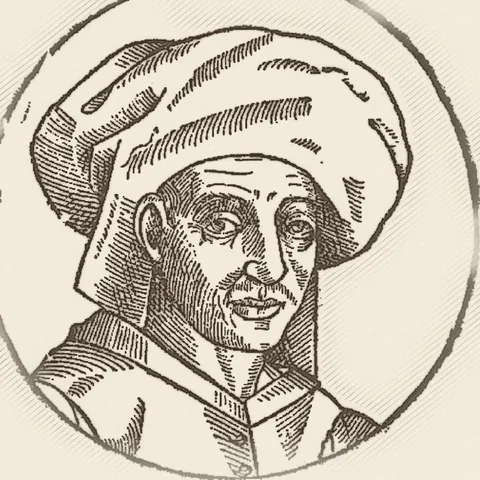
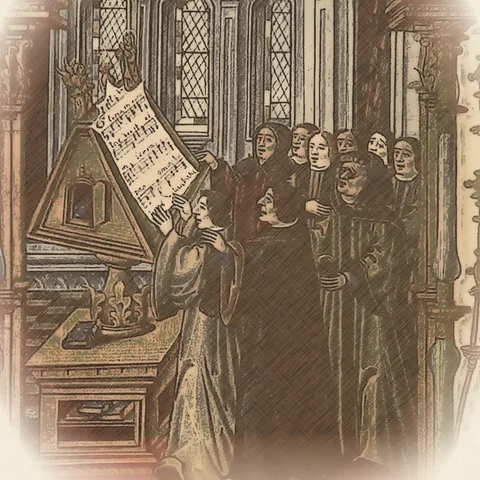 c. 1410 – 1497Renaissance
Johannes Ockeghem
A Franco-Flemish singer and composer, he developed remarkably sophisticated vocal counterpoint.
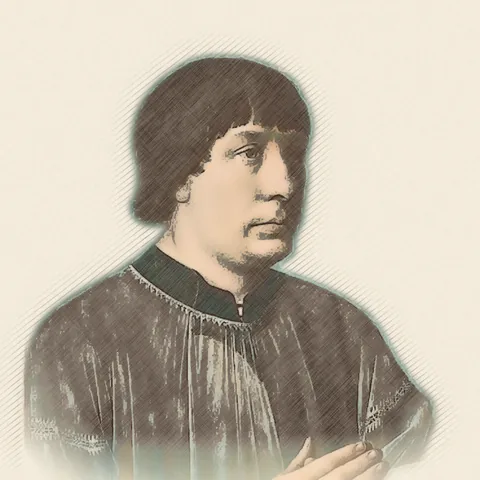
 c. 1450 – 1521Renaissance
Josquin des Prez
His music lets voices converse with striking expressive clarity.
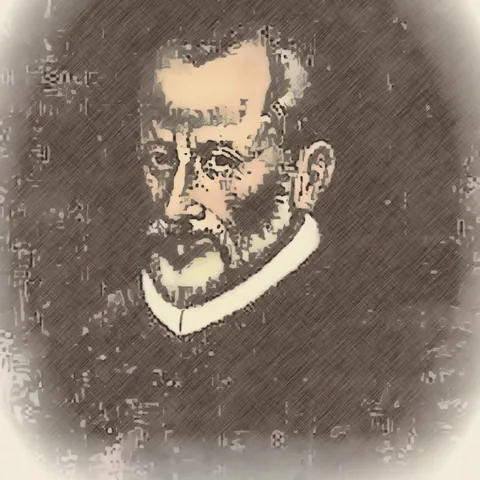
 c. 1457 – 1505Renaissance
Jacob Obrecht
A Franco-Flemish composer celebrated for inventive polyphonic masses.
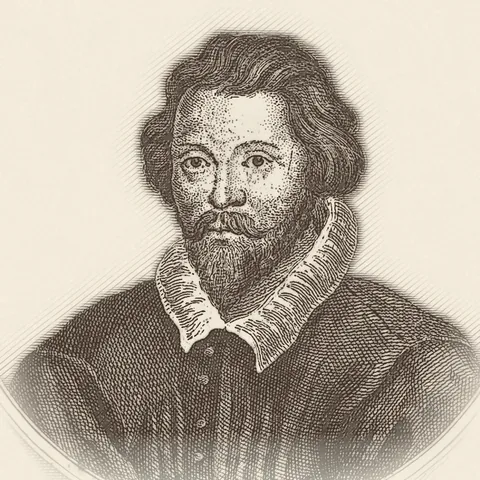
 c. 1525 – 1594Renaissance
Giovanni Pierluigi da Palestrina
He epitomized balanced vocal polyphony in Renaissance sacred music.
 c. 1540 – 1623Renaissance
William Byrd
An English Catholic composer, he wrote deeply expressive music amid religious tensions.
 c. 1548 – 1611Renaissance
Tomás Luis de Victoria
A Spanish priest and composer, he brought remarkable expressive intensity to sacred polyphony.