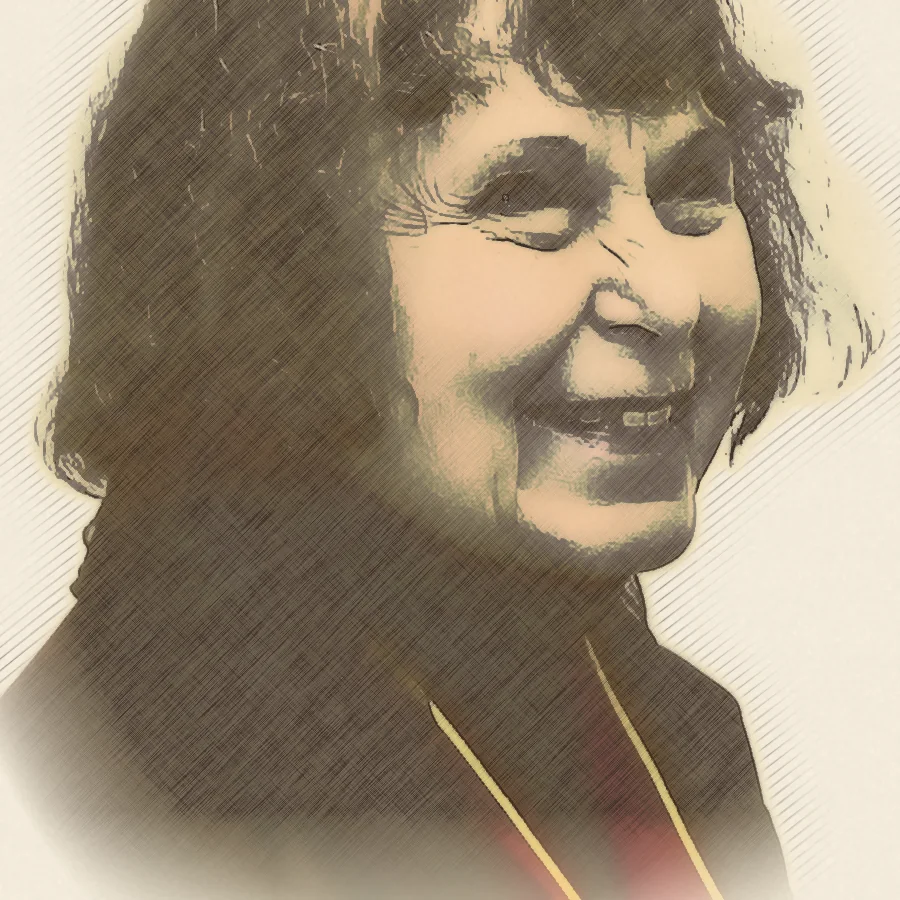
A life and its times
The milestones of the life and work, the contemporaries and the major world events, on a single line of time.
A life at a glance
- 1931Birth
Born in Chistopol on 24 October to a Tatar father and a Russian mother
- 1945Meanwhile
End of the Second World War; United Nations founded
- 1948Meanwhile
The long-playing record (LP) goes on sale
- 1949Trainingage 18
Studies piano and composition at the Kazan Conservatory
- 1954Trainingage 23
Moscow Conservatory
- 1959Private lifeage 28
Shostakovich encourages her to continue on her ‘mistaken’ path
- 1961Meanwhile
Yuri Gagarin, first human in space
- 1964Meanwhile
Robert Moog presents his synthesizer
- 1975Careerage 44
Founds an improvisation group on traditional instruments (Astreia)
- 1977Meanwhile
Voyager probes launched with their Golden Record
- 1978Workage 47
De profundis, for bayan (Russian accordion)
- 1979Landmarkage 48
Blacklisted by the Union of Soviet Composers
- 1980Workage 49
Offertorium, violin concerto for Gidon Kremer
- 1982Meanwhile
The compact disc (CD) is launched
- 1991Meanwhile
The World Wide Web is born
- 1992Milestoneage 61
Settles in Germany, near Hamburg
- 2000Workage 69
St John Passion
- 2002Careerage 71
Receives the Polar Music Prize
- 2007Workage 76
In tempus praesens for Anne-Sophie Mutter
- 2007Meanwhile
The touchscreen smartphone arrives
- 2025Deathage 94
Dies in Appen on 13 March, aged 93
Listen
Excerpts from freely licensed recordings, with their performers and licences.
Sofia Goubaïdoulina’s music is still protected by copyright: to respect the rights holders, no excerpt is hosted here. You can hear it on the radio, in concert or on licensed streaming platforms.
Listen to complete works on Wikimedia Commons
Wikimedia Commons is a free media library: you will find the complete recordings there, with their reuse conditions.
The life of Sofia Goubaïdoulina
Sofia Gubaidulina was born on 24 October 1931 in Chistopol, in the Republic of Tatarstan in the Soviet Union. Her father, an engineer, was Tatar; her mother, a schoolteacher, was Russian. Her grandfather had been a mullah, a Muslim cleric. The family soon moved to Kazan, the capital of Tatarstan. As a child Sofia discovered music on a small piano and felt very early a deep link between music and the sacred, even though religion was opposed by the Soviet regime.
She studied piano and composition at the Kazan conservatory from 1949, then in 1954 entered the Moscow Conservatory, where she studied until 1963. Some teachers thought her work too modern. But in 1959, at her final exam, Dmitri Shostakovich, a member of the jury, encouraged her with words that stayed with her all her life: “I want you to continue along your own, ‘incorrect’ path.”
In the Soviet Union, composers who strayed from the official style struggled to have their music performed. To earn a living, for many years Gubaidulina wrote film scores, notably for animated films such as Mowgli. She took an interest in the Western avant-garde, known through scores circulating secretly, and in electronic music at the Moscow studio. In 1975, with the composers Vyacheslav Artyomov and Viktor Suslin, she founded the group Astreia, which improvised on traditional Russian, Caucasian and Asian instruments.
Deeply religious — she converted to Orthodox Christianity in 1970 — she saw music as a way of linking humanity to the divine. The Latin word religio, she recalled, means “to bind”. Her works often bear spiritual titles. She composed many works for the bayan, a Russian accordion, which she helped bring into classical music, notably De profundis (1978), in which the instrument seems to breathe. In 1979 she was blacklisted by the Union of Soviet Composers, making her premieres even harder in the USSR.
Her music nonetheless began to be played abroad. In 1980 she composed for the violinist Gidon Kremer the concerto Offertorium, built on the royal theme from Bach’s Musical Offering, which gradually unravels and is then rebuilt backwards. Kremer played it all over the world, making her known internationally. In 1982 she composed Seven Words for cello, bayan and strings. She often used numbers, such as the Fibonacci sequence, to build the form of her works.
In 1992, after the end of the Soviet Union, she settled in Germany, at Appen near Hamburg, where she lived for the rest of her life, surrounded by her cats. She received many commissions from the greatest orchestras and performers. In 2000, for the 250th anniversary of Bach’s death, she composed a St John Passion. In 2007 she wrote In tempus praesens, a violin concerto for Anne-Sophie Mutter. She also composed works for orchestra and chorus, such as The Canticle of the Sun, dedicated to Mstislav Rostropovich.
She received many international honours, including the Polar Music Prize in 2002 and the Venice Biennale’s Golden Lion for lifetime achievement in 2013. She continued composing to a great age, notably orchestral works. She died at Appen on 13 March 2025, aged ninety-three. Her intense, spiritual music, combining traditional sounds with modern exploration, makes her one of the great composers of our time.
Works to know
- 1969
Chaconne for piano
Powerful early piece.
- 1978
De profundis
For solo bayan: the accordion becomes a spiritual organ.
- 1980
Offertorium
Violin concerto in which a Bach theme unravels and is reborn.
- 1982
Seven Words
For cello, bayan and strings.
- 2000
St John Passion
Vast choral fresco.
- 2007
In tempus praesens
Second violin concerto, for Anne-Sophie Mutter.
Anecdotes
She turned the bayan, an accordion, into a classical concert instrument.
She used numbers like the Fibonacci sequence to build her works.
Shostakovich advised her to follow her own path, “even if it is judged incorrect”.
To earn a living she wrote music for animated films, including Mowgli.
Same era · 20th century and today
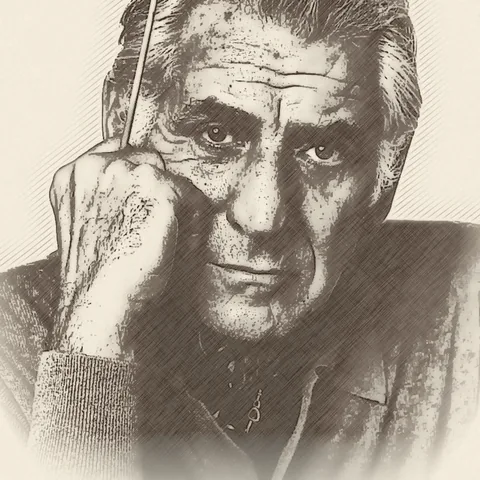 1918 – 199020th century and today
Leonard Bernstein
Conductor, educator and composer, he connected classical music, jazz and musical theatre.
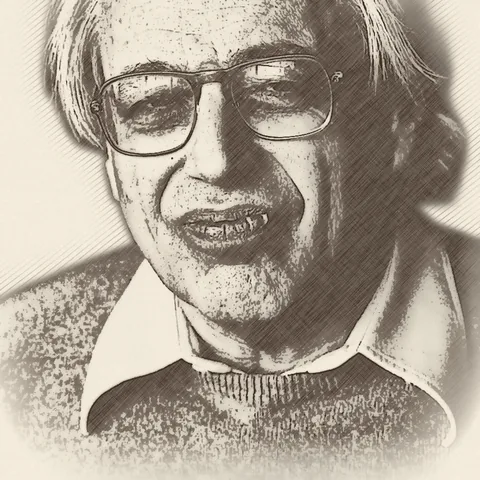 1923 – 200620th century and today
György Ligeti
He created shifting sonic textures that blur the boundary between melody and sound mass.
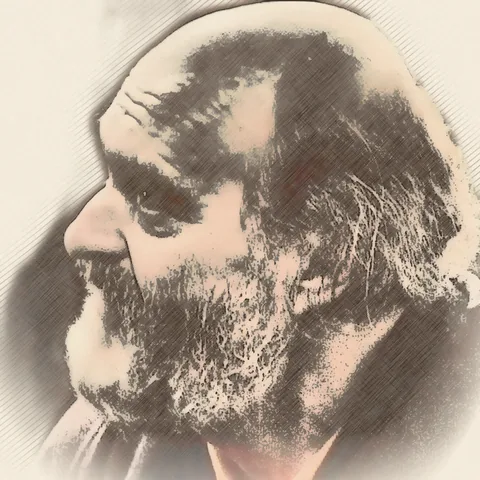 1935 –20th century and today
Arvo Pärt
His tintinnabuli style seeks simplicity and spiritual resonance.
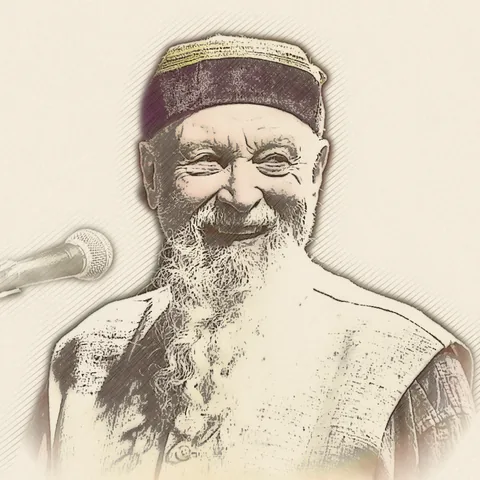 1935 –20th century and today
Terry Riley
An American minimalist composer who explored repetition and improvisation.
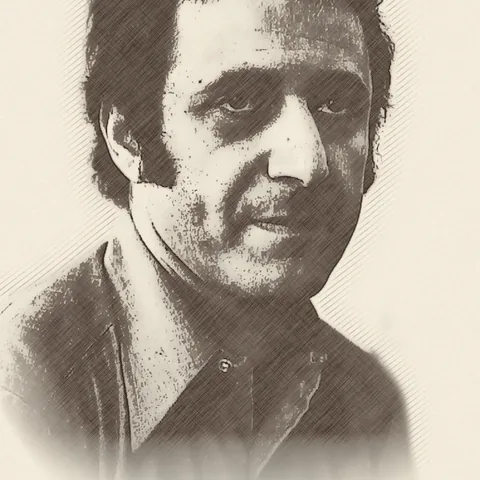 1936 –20th century and today
Steve Reich
He explores rhythmic phasing, repetition and connections between speech and music.
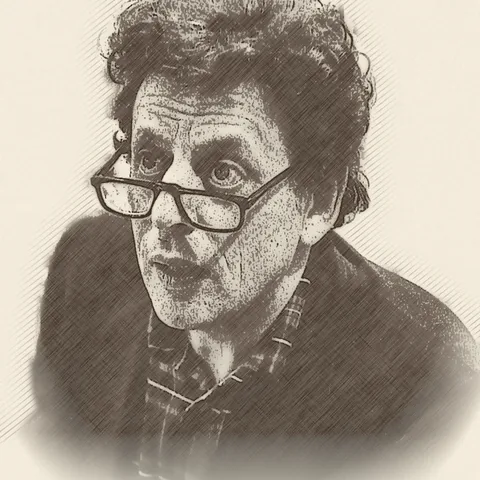 1937 –20th century and today
Philip Glass
His repeated and evolving patterns helped popularize minimalist music.